
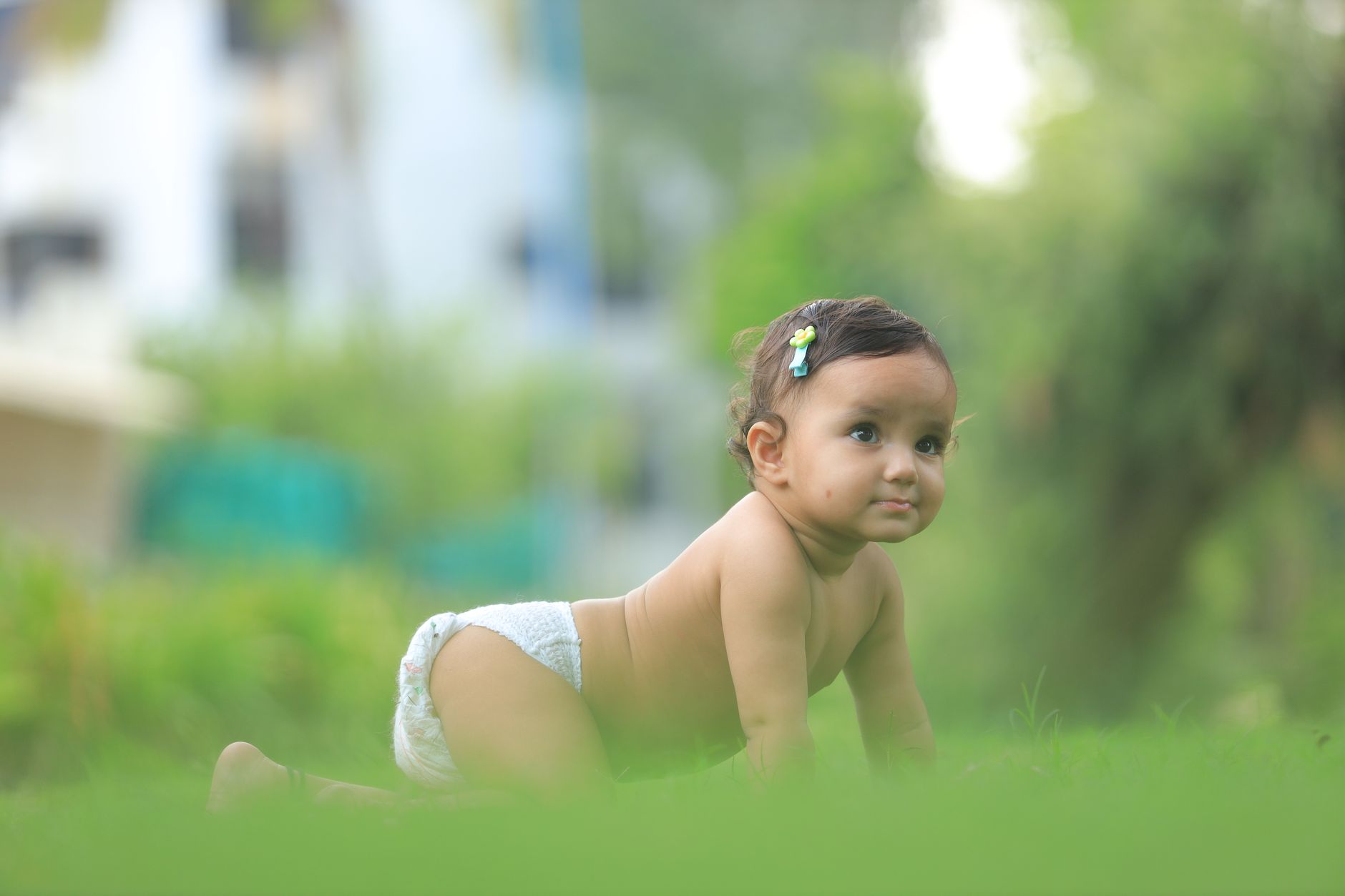
Most babies start crawling between 7 and 10 months old, start clapping or banging toys together around 9 months, and some begin waving as early as 6 to 7 months. But the range either side of these averages is wide and normal — a baby who's a few months "behind" the cousin in the family WhatsApp group is very often just fine.
Not medical advice — consult your pediatrician about your baby's individual development.
Why This Feels Different in India
In a lot of Indian families, milestones get discussed in real time — on video calls, in the building's parents' group, at every relative's visit. There's always some baby said to have hit a skill earlier, and it's hard not to measure your own baby against that one data point.
The truth is that motor development has a wide range that's considered entirely normal, not a single correct age. A systematic review of longitudinal motor-development research, citing WHO data and published on PubMed Central, is a good example of just how wide that researched range actually is — far wider than any one relative's story.
The Crawling Timeline
Most babies start crawling between 7 and 10 months old. Before that, most reach an earlier milestone first: the NIH's MedlinePlus developmental milestones record lists sitting alone without support as a key stage babies typically reach before they crawl or pull up to stand.
Classic hands-and-knees crawling isn't the only route babies take to get moving, and it isn't even a requirement. The American Academy of Pediatrics (via HealthyChildren.org) notes that a few children never crawl at all, using alternative methods like scooting on their bottoms or slithering on their stomachs instead — and that's a normal variant, not a red flag on its own.
| Movement stage | Typical order |
|---|---|
| Sits alone without support | Usually comes first |
| Crawls (hands-and-knees, or scoots/slithers) | Typically 7–10 months |
| Pulls up, cruises along furniture | Follows crawling for most babies |
| Walks independently | Anywhere from 8 to 17 months |
Walking is where comparison anxiety peaks, and it's also where the normal range is widest. A systematic review of longitudinal motor-development research, citing WHO data and published on PubMed Central, states that independent walking is achieved anywhere between 8 and 17 months. A baby who isn't walking by their first birthday is well within that range — not delayed.
Clapping and Fine Motor Milestones
Clapping is usually one of the first "trick" a baby learns to do on cue, and families love it — it's an easy one to show off to grandparents on a video call.
NHS Cambridgeshire & Peterborough Children's Health milestone guidance for 9-month-olds states that babies at this stage typically bang or clap toys together, an early sign of improving hand coordination and the ability to use both hands together purposefully. If your baby is banging two blocks together or clapping along to a rhyme somewhere around the 9-month mark, that's right on schedule.
Waving Bye-Bye
Waving tends to arrive earlier than most parents expect. Healthline reports that waving typically starts a little earlier than clapping, closer to 6 or 7 months, well before the classic deliberate "bye-bye" wave most people associate with a one-year-old. Early waving may look more like an open-and-close hand motion than a crisp wave — it still counts as an early social gesture.
Normal Variation vs. When to Check In
The honest answer is that there's a real range for every one of these milestones, and being on the later end of that range isn't automatically a problem. What matters more than any single skill's exact age is whether your baby keeps making steady progress overall — sitting, then some form of moving, then pulling up, and so on.
Rather than tracking your baby against a relative's baby or a WhatsApp forward, use the structured checkpoints your pediatrician already has built in. A StatPearls clinical reference (NCBI Bookshelf, NIH) states that the American Academy of Pediatrics recommends developmental screening at ages 9, 18, and 30 months, which checks gross motor progress like sitting, crawling, and walking alongside other domains. That's the right, structured place to raise a genuine concern — not a comparison with another baby's timeline.
Bring any specific worry to your pediatrician directly, rather than waiting for the next scheduled check — for example if your baby seems to be losing a skill they'd already gained, or if movement looks very asymmetric (using one side of the body much more than the other). Walking is the one milestone here with a clear, specific trigger point: Cleveland Clinic advises talking to your pediatrician if your baby has achieved all the milestones leading up to walking but still isn't walking independently by 18 months — that's a proactive check-in worth making rather than waiting for the 30-month screening. Beyond that, routine screening at 9, 18, and 30 months is where sitting, crawling, and walking progress gets checked properly against your individual baby's history — a far more useful comparison than another baby's timeline.
Gear That Helps at This Stage
None of this gear is required for a baby to hit these milestones on time — babies crawl, clap, and wave on carpet, tile, or a bedsheet just fine. It just makes the floor-time stage more comfortable for both of you.
| Product | Price Range | Where to Buy |
|---|---|---|
| Play mat / floor gym (foam or cotton) | Rs. 800 – Rs. 2,500 | Amazon.in / FirstCry |
| Corner and edge guards for furniture | Rs. 300 – Rs. 900 | Amazon.in |
| Soft knee pads for crawling | Rs. 250 – Rs. 600 | FirstCry |
| Socket covers / plug guards | Rs. 150 – Rs. 500 | Amazon.in |
Once a baby starts covering ground, that's the real cue to baby-proof low shelves, loose wires, and sharp furniture edges at floor height — well before they're pulling up to stand.
Frequently Asked Questions
My baby is 8 months old and not crawling yet — should I worry? Not necessarily. Most babies start crawling between 7 and 10 months, so 8 months without crawling is still within the typical window. Watch for steady overall progress rather than this one skill in isolation, and raise it at your next pediatrician visit if you're unsure.
My baby scoots on their bottom instead of crawling on hands and knees — is that a problem? No. The AAP notes that a few children never crawl the "classic" way and instead scoot on their bottom or slither on their stomach to get around — this is a recognized normal variant, not a delay by itself.
When should my baby be walking? Independent walking is achieved anywhere between 8 and 17 months, according to a systematic review of longitudinal motor-development research citing WHO data. A baby who isn't walking at their first birthday is still comfortably within the normal range. The specific point to proactively check in with your pediatrician, rather than wait for routine screening, is if your baby has hit every milestone leading up to walking but still isn't walking independently by 18 months.
My baby claps but doesn't wave yet — is that backwards? Not really — the typical order can vary. Waving as a social gesture can start as early as 6 to 7 months in some babies, while clapping or banging toys together is more typical around 9 months — but plenty of babies pick up these skills in a different order, or close together.
Relatives keep comparing my baby to others in the family — how do I handle it? Politely point out that pediatric milestones are given as ranges, not fixed ages, precisely because normal development varies this much from baby to baby. If you want a genuine check, routine developmental screening at 9, 18, and 30 months is the structured, medically meaningful way to track progress — not a relative's comparison.
Do I need to "teach" my baby to crawl, clap, or wave? No special classes or equipment are required. Floor time, modeling claps and waves during play, and placing toys just out of reach are enough — these skills develop on their own timeline either way.