

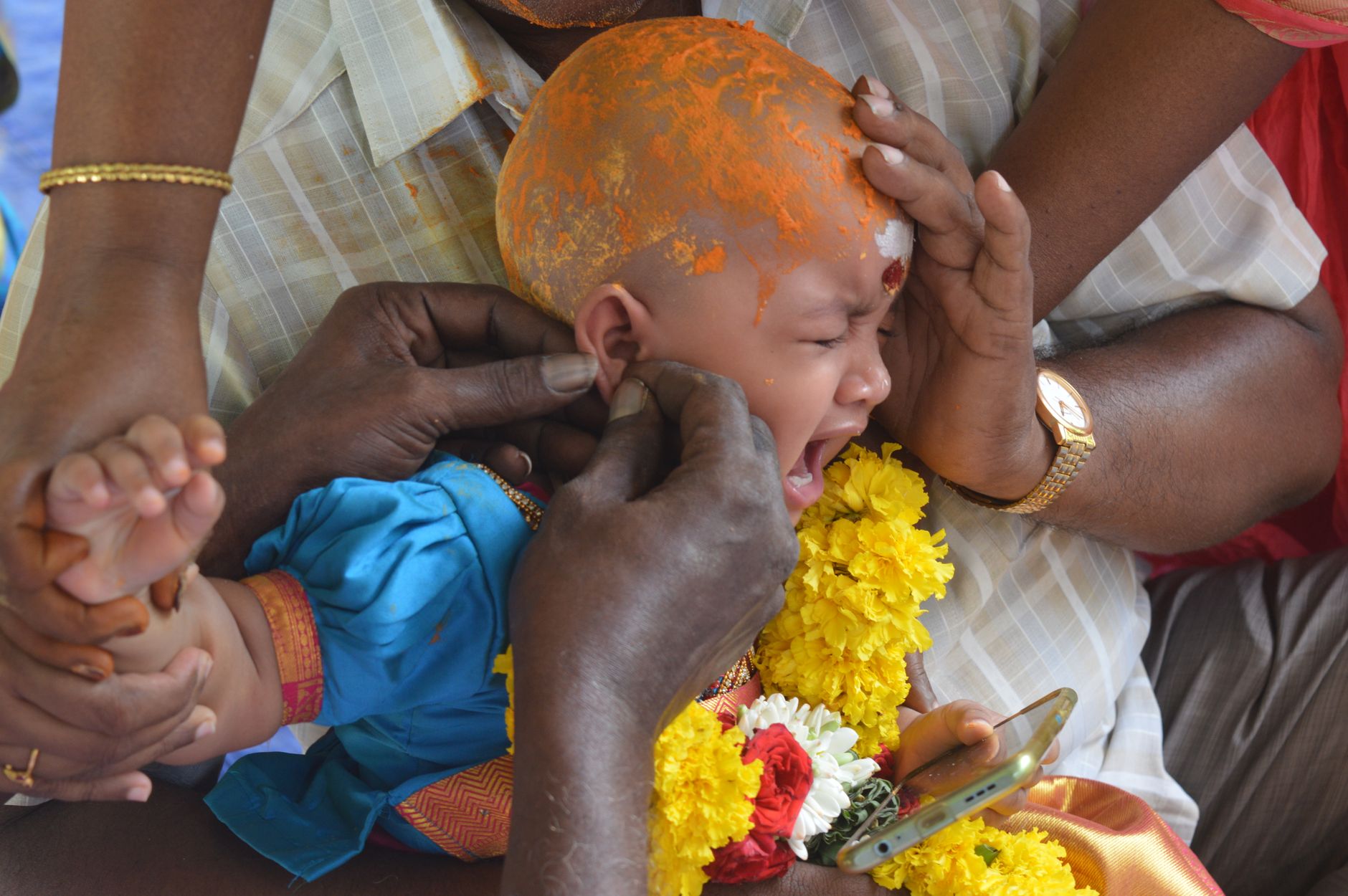
A piercing needle used by a trained professional is safer than a spring-loaded gun, and most pediatric guidance points to waiting until your baby is a little older rather than piercing in the first weeks of life. Some physicians recommend waiting until your baby has had two tetanus shots, around 4 months old, since safety comes down to sterile technique and your ability to keep the site clean afterward, not a fixed birthday.
Not medical advice — consult your pediatrician before piercing your baby's ears, especially if they have a family history of keloids or skin allergies.
Why This Decision Looks Different in India
Ear piercing is often a ceremony here, not just a cosmetic choice. Many families mark it as karnavedh, done with a priest, family gathered, and a specific auspicious date chosen — sometimes in the first weeks after birth. That timing pressure is exactly where the real safety questions matter: the method used, the experience of the person performing it, and whether the date can shift a little if needed.
Tradition and safety aren't in conflict here. You can keep the ceremony and still ask the person doing the piercing to use a sterile needle, wash their hands, and pierce with clean, single-use equipment — any competent piercer or doctor will accommodate that request.
Gun vs Thread (Taar): What the Evidence Says
Many Indian families still use the traditional thread (taar) method, often at home or by a family goldsmith, while pediatric clinics and piercing studios abroad favor a piercing needle. A spring-loaded piercing gun sits in between — common at jewellery-shop counters — but it's the option the evidence favors least.
| Method | How it works | What the evidence shows |
|---|---|---|
| Piercing gun | Spring-loaded, blunt-force push through the earlobe | Causes more soft-tissue trauma than a needle and is linked to more embedded-earring complications, especially in a young child's thick, fleshy earlobe |
| Piercing needle (clinic/studio) | A sharp, hollow needle cuts a clean channel | The lower-trauma option in the same review; preferred by piercing professionals for this reason |
| Thread (taar), by an experienced person | A needle or sharp point followed by a thread pulled through | Safety depends entirely on the tool and hands used — the risk factor is unsterile equipment and inexperienced technique, not the thread itself |
The single biggest safety lever, whichever method your family uses, is who does it. Have a doctor, nurse, or experienced technician perform the piercing, and confirm they're using a new, sterile needle or a single-use cartridge for a gun — never a reused one. This matters more than which specific method the family has traditionally used.
Sterile Equipment Is Non-Negotiable
This is where corner-cutting causes real harm. Piercing with instruments that aren't properly sterilized between uses is significantly associated with a higher risk of hepatitis B and hepatitis C transmission. If a goldsmith, jeweller, or home piercer is reusing a needle across children, or the thread/needle hasn't come straight out of sterile packaging in front of you, that's a real risk — not a formality to skip for convenience on ceremony day. Ask directly, or bring your own sterile piercing kit for whoever performs it.
What Age Actually Makes Sense
There's no single "correct" age, but there is a safety-driven lower bound. Some physicians recommend waiting until your baby has received two tetanus shots, around 4 months old, rather than piercing in the newborn period. If your ceremony date falls earlier, it's reasonable to discuss shifting it, or to at least have your pediatrician confirm the piercer's hygiene practices are sound first.
Managing the Pain
Piercing is a brief, sharp pain, and there's a genuine, evidence-backed way to ease it for a baby. For infants, breastfeeding or a small dose of sucrose solution during a brief needle-type procedure gives real pain relief — a Cochrane review found high-quality evidence that sucrose reduces measured pain during comparable procedures like a heel lance or injection. If your baby is due for a feed, timing the piercing around that, or asking the pediatrician about a sucrose dose beforehand, is worth doing.
Skip the numbing cream unless your pediatrician has specifically approved it. Over-the-counter creams containing lidocaine and prilocaine (such as EMLA) shouldn't be used on infants under 12 months without medical guidance, since young infants are more susceptible to methemoglobinemia from these creams — it's a real risk, not a formality, so don't reach for a chemist-counter numbing cream on ceremony day without checking first.
Two Risks Worth Knowing About in Advance
Keloid scarring. Children of African or Asian descent, and those with a family history of keloids, face a significantly higher risk of keloid scarring after ear piercing. If keloids run in your family, mention it to your pediatrician before piercing — it changes the risk-benefit conversation, not necessarily the decision.
Nickel allergy. Ear piercing substantially raises the risk of developing a nickel allergy — one study found nickel sensitization in nearly 15% of people with pierced ears, versus under 2% of those without. Starting with a hypoallergenic stud (gold, surgical steel, or titanium) rather than a cheap alloy is the practical way to cut this risk from day one.
Aftercare That Actually Prevents Infection
Most piercing complications come down to aftercare, not the piercing itself. Clean the area with rubbing alcohol or an antibiotic ointment twice a day for the first few days, and don't remove the earring for four to six weeks — gently rotate it each day instead. Removing the stud too early lets the new channel start closing before it's healed, which invites problems on re-piercing.
Watch for signs it isn't healing well. Discharge, fever, redness, warmth, swelling, or tenderness around the piercing are signs of infection that need prompt medical attention, especially if the earring becomes embedded in the skin or won't rotate at all. Don't wait out a swollen, warm, or discharging lobe — call your pediatrician the same day.
Starter Studs Worth Buying
| Product | Price Range | Where to Buy |
|---|---|---|
| Surgical steel starter studs | Rs. 200 – Rs. 600 | Amazon.in |
| 22K gold baby studs | Rs. 3,000 – Rs. 8,000 (by weight) | FirstCry |
| Titanium hypoallergenic studs | Rs. 400 – Rs. 900 | Amazon.in |
Choosing a hypoallergenic starter stud in gold, surgical steel, or titanium is the practical way to cut nickel-allergy risk — skip the cheap alloy or gold-plated studs even when that's the default option at the counter.
Frequently Asked Questions
Is the piercing gun really worse than a needle? Yes, for a baby's soft earlobe. A 2022 review found spring-loaded guns cause more soft-tissue trauma and more embedded-earring complications in young children than needle piercing does. If your family jeweller only offers a gun, ask whether a doctor or professional piercer using a needle is available instead.
Is the traditional thread (taar) method safe? It can be, if it's done by an experienced person with sterile, single-use equipment. The risk isn't the thread itself — it's unsterilized instruments, which are significantly linked to hepatitis B and C transmission. Confirm sterile technique regardless of which traditional method your family uses.
What's the earliest safe age to pierce? There's no single mandated age, but some doctors recommend waiting until after two tetanus shots, around 4 months, rather than piercing a newborn.
How do I know if the piercing is infected? Look for discharge, fever, redness, warmth, swelling, or tenderness around the site. If the earring gets stuck or embedded, see your pediatrician promptly rather than trying to remove it yourself.
Can I do anything to reduce the pain during the piercing? Yes. Breastfeeding or a small sucrose solution right before a brief needle procedure gives real, measured pain relief in infants. Ask your pediatrician about timing this around the piercing.
My baby's earlobe looks swollen a week later — is that normal? Mild redness in the first day or two can be normal, but ongoing swelling, warmth, or tenderness are infection signs that need medical attention, not something to wait out. Call your pediatrician the same day.