
A sudden fussy stretch around six months is almost always one of four ordinary things: teething, a growth spurt, a developmental leap, or plain boredom right before a new skill clicks into place. Genuine medical causes are far less common — but the AAP lists specific fever and symptom red flags that mean you should call your pediatrician right away, covered near the end of this guide.
Not medical advice — consult your pediatrician if you're worried about your baby's symptoms.
Why This Age Brings a Fussy Patch
Several things land at once around six months. Primary teeth usually start coming in between six and twelve months, per Cleveland Clinic, so teething discomfort is genuinely common now. Growth spurts are also common in this window, and Cleveland Clinic notes that "any uneasiness during your child's growth spurts is temporary." On the physical side, babies are learning to roll both ways, sit without support, and pass objects hand to hand around this time, per the American Academy of Pediatrics (AAP) — and practicing a new skill can make a baby restless and hard to settle. Finally, stranger and separation anxiety typically emerge in the second half of the first year, which the AAP calls one of the first emotional milestones babies reach — not a parenting problem, and not a step backward.
The India-Specific Part: Too Many Theories, No Clear Answer
The medical picture above is straightforward. What's harder in an Indian household is that everyone around you has a confident, different explanation. Your mother says it's the teeth. Your mother-in-law says it's "nazar" or the weather. A neighbour swears by a home remedy rubbed on the gums. None of this is malicious — it comes from genuine concern — but it can leave you second-guessing a baby that is, most likely, just fine.
The practical fix: keep a two-line note on your phone — what time baby was fussy, what you tried, and whether there was a fever. That turns a swirl of family opinions into a pattern you can describe to your pediatrician, which makes it far easier to tell which explanation below actually fits your baby.
Teething: What It Does — and Doesn't — Explain
Teething gets blamed for almost everything, but the evidence doesn't support that. The AAP states plainly that "teething does not cause fever, diarrhea, diaper rash or runny nose." If your baby has any of those alongside the fussiness, look for another cause rather than waiting it out as teething.
What teething can explain is drooling, gum-rubbing, a mild increase in fussiness, and disrupted naps around the time a tooth is emerging. For pain relief, skip teething gels. The AAP warns that benzocaine-containing teething gels have been linked to a serious, sometimes fatal condition called methemoglobinemia, which affects how a baby's red blood cells carry oxygen — a chilled (not frozen) silicone teether or a clean, cold, wet washcloth is the safer option.
One look-alike worth ruling out: an ear infection. The AAP notes that younger children with an ear infection will cry, act fussy, or have trouble sleeping because of pain, and that about half also run a fever — since teething alone never causes fever, a fussy baby who is also feverish is more likely fighting an ear infection than cutting a tooth, and is worth a pediatrician visit.
Growth Spurts and Developmental Leaps
A growth spurt can show up as extra fussiness, more frequent hunger, and disrupted sleep for a few days. Cleveland Clinic is direct about the timeline: any uneasiness during a growth spurt is temporary and resolves on its own without treatment.
Sleep is often the first thing to wobble. Sleep Foundation links the well-known six-month sleep regression to the same developmental leaps in physical ability and environmental awareness — including separation anxiety — that drive the daytime fussiness, and reports that it typically resolves within days to a few weeks. Extra cuddles and a consistent bedtime routine help more than any product during this stretch.
Boredom Before a New Skill Arrives
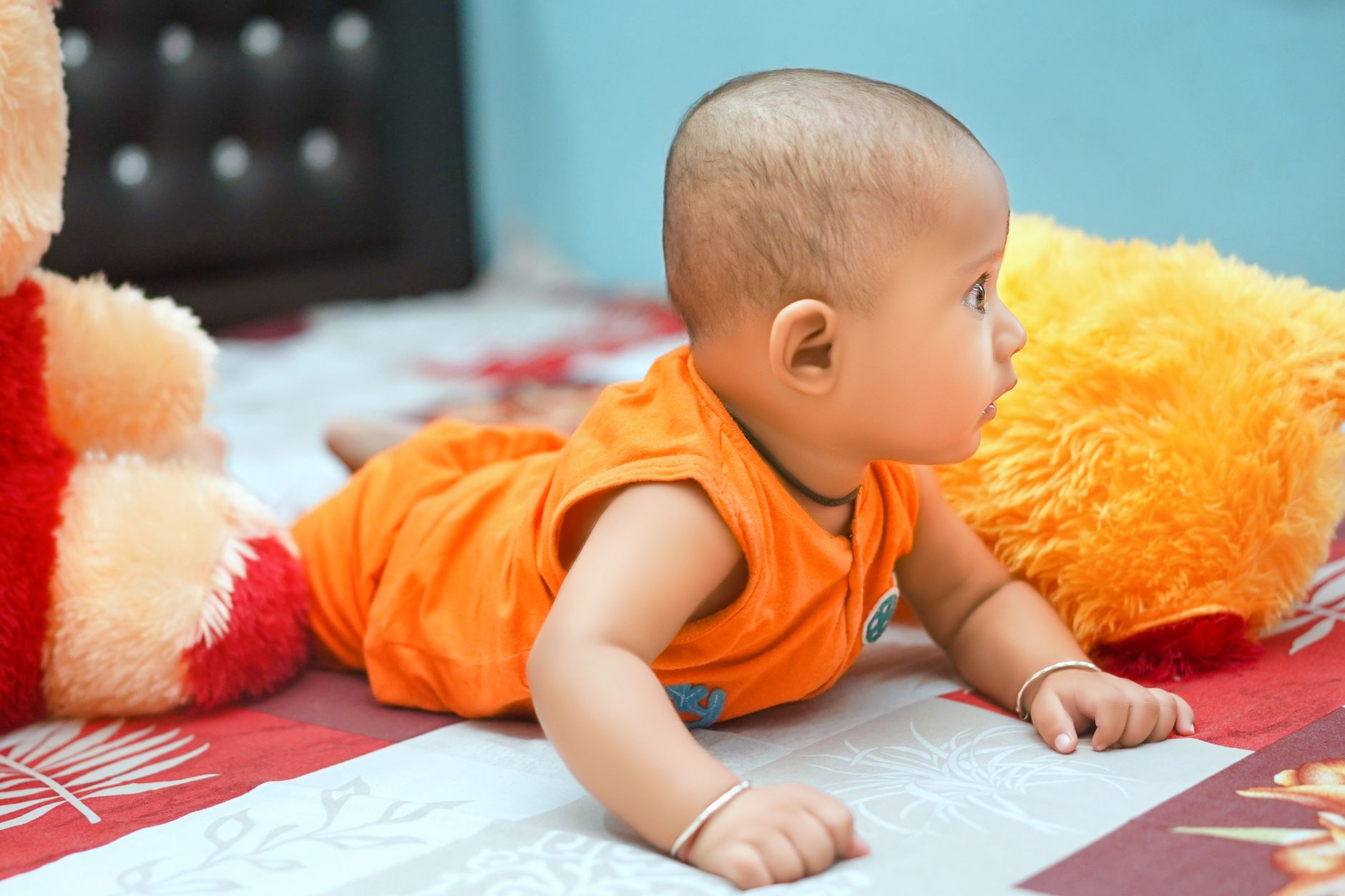
Fussiness that spikes in the late afternoon, or a baby who arches and squirms during tummy time, is often frustration rather than pain. The AAP notes that by six to eight months, babies who are positioned upright will stay sitting without leaning on their arms — a new skill they'll practice, and get frustrated by, over and over before it clicks. Floor time on a firm play mat, supervised, gives a baby room to work through this without needing to be picked up every few minutes. This restless stretch usually has a clear end point: the AAP notes that crawling is a skill usually mastered between seven and ten months, so the frustration of "wanting to move but not being able to yet" tends to ease once mobility arrives.
When to Actually Call the Pediatrician
Most fussy stretches at this age pass on their own. But a few signs move this from "normal phase" to "call now."
The AAP advises calling right away if a fever comes with a stiff neck, severe headache, breathing difficulty, an unexplained rash, or repeated vomiting or diarrhea, or if a fever in a child under two lasts more than 24 hours or tops 104°F. Closer to home, the Indian Academy of Pediatrics advises visiting the pediatrician immediately if a baby's fever tops 104°F, persists more than 5 days, or the baby is younger than 3 months old with any fever.
Watch hydration too. The AAP lists fewer than six wet diapers a day, fewer tears when crying, a dry mouth, and a sunken soft spot on the head as signs that warrant notifying the pediatrician immediately.
| Sign | What it usually means | What to do |
|---|---|---|
| Drooling, gum-rubbing, mild fussiness, no fever | Teething | Chilled silicone teether, extra cuddles |
| Fussy for a few days, hungrier, sleep off | Growth spurt | Feed on demand, ride it out |
| Fussy late in the day, squirmy on the floor | Boredom before a new skill | Supervised floor/tummy time |
| Crying, fussy, trouble sleeping, often with fever | Possible ear infection | Call the pediatrician |
| Clingy with strangers, cries when you leave the room | Separation/stranger anxiety | Reassurance, consistent caregivers |
| Fever with stiff neck, rash, breathing trouble, or repeated vomiting | Needs medical attention | Call the pediatrician right away |
| Fewer than 6 wet diapers/day, dry mouth, sunken soft spot | Possible dehydration | Notify the pediatrician immediately |
Comfort Measures Worth Having on Hand
| Item | Price Range | Where to Buy |
|---|---|---|
| Silicone teether (fridge-safe, not freezer) | Rs. 200 – Rs. 500 | Amazon.in / FirstCry |
| Soft muslin washcloths (for a chilled compress) | Rs. 300 – Rs. 700 (pack) | FirstCry |
| Firm play mat for supervised floor time | Rs. 800 – Rs. 2,500 | Amazon.in |
Keep teething gels and any gum-rubbing products containing benzocaine out of the shopping list — a chilled teether does the same comfort job without that risk.
Frequently Asked Questions
My baby has a fever and is also teething — is the fever from the teeth? No. The AAP is explicit that teething does not cause fever. Treat any fever as a separate issue and watch for the red-flag signs above.
How long does a six-month growth spurt or leap usually last? A few days to a couple of weeks. Sleep Foundation notes the related sleep regression typically resolves within days to a few weeks as baby adjusts to the new skills and awareness driving it.
My in-laws insist it's "just teeth" — how do I know it's not something else? Use the red-flag list, not family opinion. Fever paired with a stiff neck, rash, breathing difficulty, or repeated vomiting or diarrhea needs a same-day call to the pediatrician — teething alone never causes those.
Is sudden clinginess with strangers, including relatives, normal at this age? Yes. The AAP describes stranger anxiety as one of the first emotional milestones a baby reaches — it's a sign of healthy attachment, not something to correct.
Are teething gels really unsafe, or is that overly cautious? It's a genuine safety concern, not caution for its own sake. Benzocaine teething gels have been linked to methemoglobinemia, a condition that affects how red blood cells carry oxygen. Stick to a chilled teether or a cold washcloth instead.
What counts as too few wet diapers to worry about? Fewer than six wet diapers in a day, along with fewer tears when crying or a dry mouth, are signs the AAP says should be reported to the pediatrician immediately.