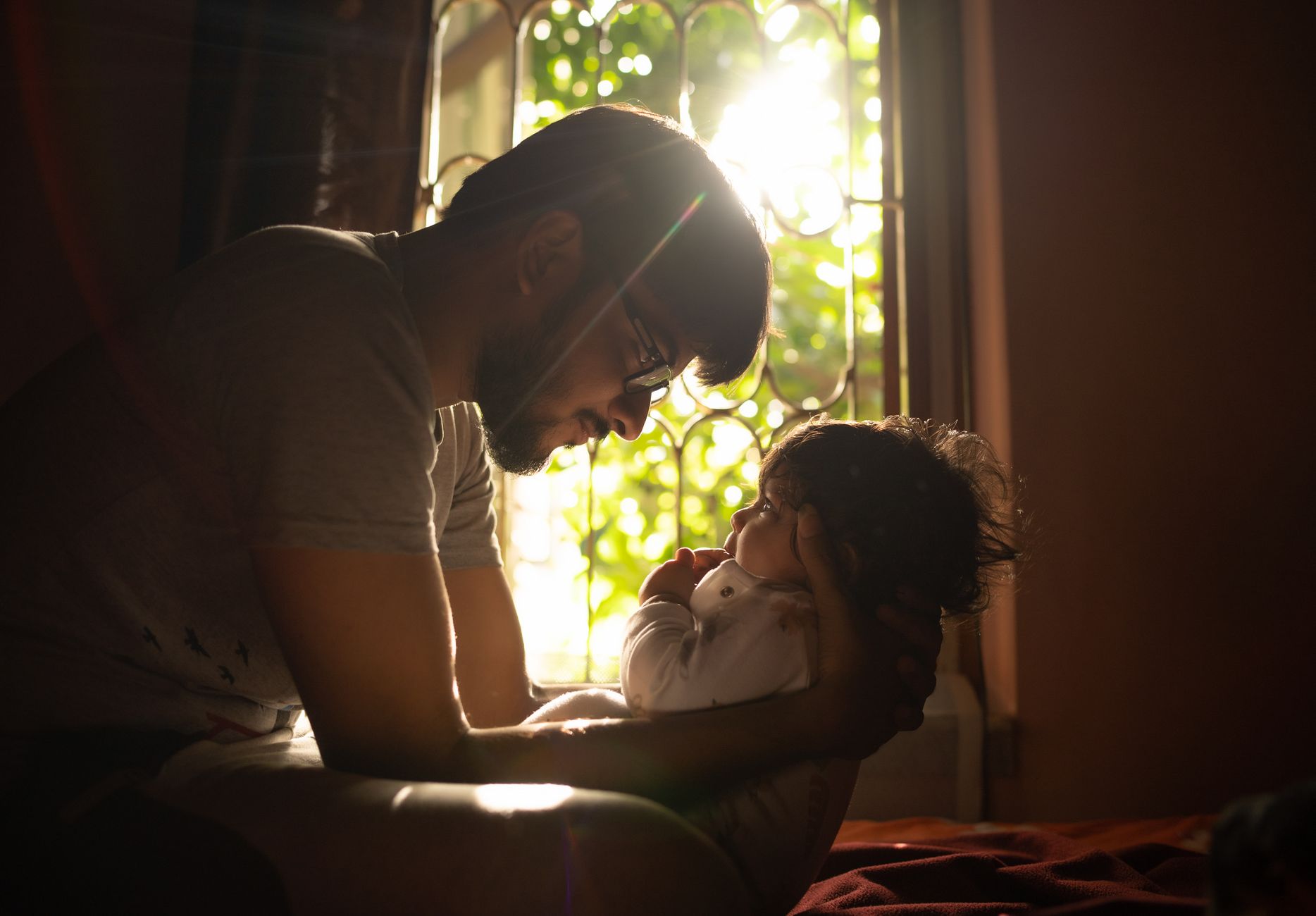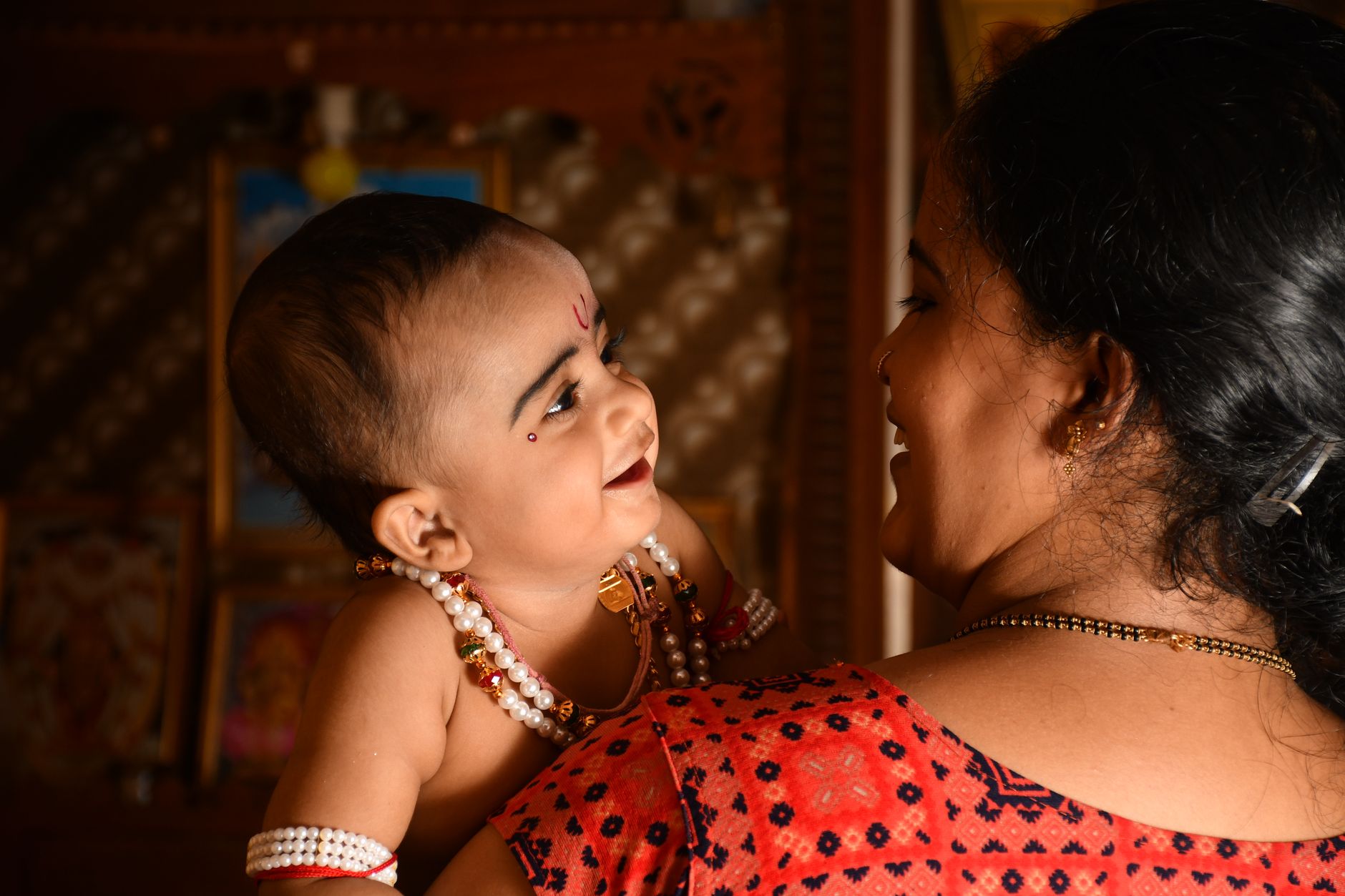
Part of what your cousins are describing is not due yet — and part of it is worth acting on this week. On the American Academy of Pediatrics (AAP) milestone list for 1-4 months, "looks at your face" and "smiles when you talk to or smile at them" sit at 2 months, while "turns head toward the sound of your voice" is listed at 4 months.
A baby who seems not to respond to voices deserves an answer, not reassurance. Two steps: find your baby's newborn hearing screening result, and book a paediatric review now. The AAP is explicit that a suspected hearing impairment should be evaluated promptly at any point.
Not medical advice — consult your pediatrician. Nothing here is a diagnosis, and one observation at this age can have several very different explanations.
What a ten-week-old actually does
The AAP's 2-month list covers watching faces intently, eyes following moving objects, looking at your face, calming down when spoken to or picked up, smiling back when you smile, and reacting to loud noises.
| What gets compared | Where the AAP lists it | What it looks like at home |
|---|---|---|
| Looking at your face | 2 months | Brief, repeated glances when you lean in close |
| Social smile | 2 months | A smile back when you talk or smile first |
| Reacting to loud noises | 2 months | A startle, a blink, a pause in feeding |
| Turning head toward your voice | 4 months | The head actually swivels to find you |
None of that is "eye contact" as people usually mean it. Your baby may lock on to your face for a few seconds, drift to the window, and come back. Brief glances that keep returning are a different picture from no interest at all — and it is the second one your paediatrician needs described.
The AAP also notes that babies prefer the human voice to other sounds and can identify a parent by voice from another room by one month — which is why no apparent response to your voice is worth checking properly.
Why your cousins' babies are the weakest evidence you have
Three babies born a few weeks apart are not a study. As the AAP puts it, while most children meet milestones around a certain age, some may take longer to reach them — and the same page says you know your child best and should act early on concerns. A cousin's baby already swivelling toward a voice is doing something the AAP lists at 4 months, not 2. Family WhatsApp groups trade highlights, not the twenty minutes of staring at a wall.
None of that makes your worry wrong. The comparison is poor evidence; watching your own baby is not.
If your baby arrived early, this matters more. For a preterm baby, the AAP says to track development using adjusted age — actual age in weeks minus the weeks born early — until 2 years.
Hearing is the question to settle first
Of everything you have described, no response to voices points most directly at a test with a clear answer. The AAP asks parents to contact the paediatrician if a child does not startle at loud noises by 1 month old or turn to the source of a sound by 3 to 4 months of age, or if they "don't notice you until they see you", and says hearing impairment needs to be diagnosed as soon as possible so language learning is not delayed.
Hearing is both testable and treatable, which is why this is not a wait-and-watch situation. WHO calls early identification key to effective management and lists newborn babies and infants among the groups to screen, and WHO's childhood hearing loss report notes that congenital hearing loss can be detected in the first few days after birth and that children receiving appropriate interventions before 6 months of age are on a par with their hearing peers in language development by five.
Getting the screening result, the way it works in India
Most urban Indian deliveries include a newborn hearing screen; you may never have been told the result. Under India's Rashtriya Bal Swasthya Karyakram (RBSK), newborns are screened for hearing, vision and congenital heart disease before discharge, first-level screening happens at all delivery points, and an ANM home screening follows from 48 hours up to 6 weeks — with treatment or intervention after referral delivered at zero cost to the family.
In Indian screening programmes, otoacoustic emission testing is typically done in the first days of life, with auditory brainstem response audiometry at about three months for babies who do not pass. The NHS describes the same screen: a small soft earpiece is placed in the baby's ear and gentle clicking sounds are played to check how the baby responds.
Ask for a written copy. Phone the hospital where you delivered and ask for the discharge summary or the newborn screening record, and ask whether the hearing screen was done. Look for "OAE", "TEOAE" or "AABR" on the paperwork.
If nobody can find it, or the baby was never screened, you are still inside the window. NHS guidance notes the screen is usually offered before 4 weeks but can be done up to 3 months of age, and that a baby not offered the test should be referred for it. The AAP adds that when a screen falls outside the typical range, follow-up testing with a hearing professional should happen as soon as possible and no later than 3 months of age. If the result was unclear in either ear, the NHS pathway is a second test at an audiology clinic within 4 weeks — ask your paediatrician to arrange it.
Eyes and social response are a separate question
Hearing and vision are assessed by different specialists. The AAP says that by about 3 months babies should be able to follow or track a moving object with their eyes, and that if your baby cannot make steady eye contact by this time or seems unable to see, you should let the doctor know.
The eye check itself is more than a glance: between birth and 6 months the doctor checks the red reflex with a handheld ophthalmoscope and looks at the pupil and the external parts of the eye, referring on to an eye doctor if a vision screening is not passed. Hearing concerns go instead to a hearing professional.
What to do this week
- Get the screening record from the delivery hospital, or from your ANM or clinic if the screen happened at an RBSK delivery point or home visit.
- Book the paediatric review now, not at the next convenient visit. At a 2-month check the paediatrician weighs the baby, observes development and behaviour, and performs a physical examination.
- Write down two or three specific examples — yours and your partner's — before you go. "Clapped behind her, no startle" beats "she seems distracted".
- Say the word hearing out loud. If the concern remains, the AAP's position is that a suspected hearing impairment warrants a formal hearing evaluation promptly.
Nobody should tell a worried parent to wait and see on hearing or social response. The AAP's advice is to act early by talking to your paediatrician about concerns — your concern is a legitimate reason for a referral all by itself.
FAQ
My baby smiles at the ceiling fan but not at me. Is that bad?
It is a reason to raise it, not a conclusion. The social smile — smiling when you talk to or smile at them — sits at 2 months on the AAP list, and being late to it can have several unrelated explanations. Describe it to your paediatrician exactly as you just did.
The hospital says the hearing test was "pass". Can there still be a problem?
It is worth asking rather than assuming either way. The AAP asks parents to talk to the paediatrician if a baby does not startle at loud noises or turn toward sound even when the newborn screen showed no concerns.
We never got a hearing test. At ten weeks, is it too late?
No. The NHS notes the screen is usually offered before 4 weeks but can be done up to 3 months of age, and under RBSK the referral pathway is free to the family. Ask this week.
My mother-in-law says I am overthinking it. How do I push back?
You do not have to win the argument — only make the appointment. The AAP's guidance is that you know your child best and should act early by talking to your paediatrician about concerns. One clinic visit settles more than a week of comparisons.