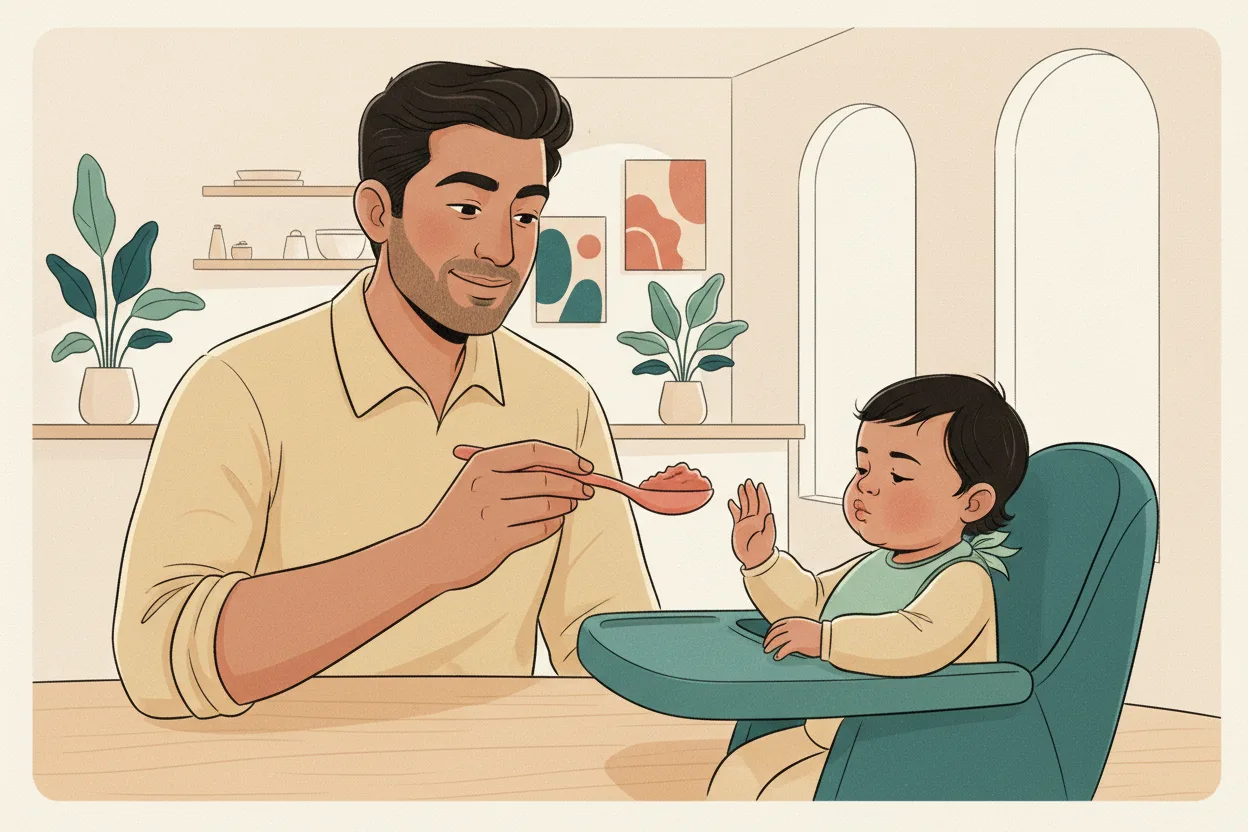


Yes, it's normal — most babies spit up after nearly every feed in the early months, and on its own that is not a sign of illness. The NIH's NIDDK reports that about 70 to 85 percent of infants have daily regurgitation by the age of 2 months.
Not medical advice — consult your pediatrician if you're worried about your baby's feeding, growth, or comfort.
Why This Feels So Alarming in an Indian Household
A baby that "brings up" milk after every feed can set off a chorus of opinions — your mother says you're overfeeding, your mother-in-law says the milk doesn't suit the baby, and a WhatsApp group full of supposedly spit-up-free babies doesn't help. It's worth separating the noise from the medicine: pediatricians have a specific term for this pattern.
Doctors call ordinary, effortless bringing-up of milk "GER" (gastroesophageal reflux), and it's different from GERD. A real-world evidence study in Indian children (PMC) found that most GER episodes are brief, infrequent, and don't cause other symptoms — it's only when reflux triggers troublesome symptoms or complications that it counts as GERD, a distinct and less common condition. A baby who spits up often but is otherwise cheerful is almost always in the first category — parents sometimes call this a "happy spitter."
What's Actually Causing It
Cleveland Clinic explains that a tight muscle valve between the stomach and esophagus is supposed to keep meals down — but in babies, this valve (the lower esophageal sphincter) is still immature and randomly relaxes from time to time, letting milk flow back up. That's the physical mechanism behind almost every spit-up, and it has nothing to do with your milk, your diet, or anything you're doing wrong.
Your mother isn't entirely off base about one thing, though: the AAP's HealthyChildren.org notes that overfeeding, or completely filling a baby's stomach, always makes spitting up worse. It's not that the milk "doesn't suit" the baby — a fuller stomach simply has more to lose through that immature valve. Feeding a bit less at a time, more often, can genuinely help (more on that below).
Normal Spit-Up vs GERD: How to Tell Them Apart
| Normal spit-up ("happy spitter") | GERD (needs medical review) | |
|---|---|---|
| Baby's mood | Content, feeds well, otherwise happy | Fussy or arching during/after feeds, feeds poorly |
| Weight gain | Steady, on track | May gain less than expected, or lose weight |
| Need for a doctor visit | Not usually needed if baby is happy, healthy, and gaining weight | Needs pediatric evaluation |
| What's happening | Effortless overflow of milk | Reflux that causes troublesome symptoms or complications |
The NIH's NIDDK notes that, unlike normal spit-up, GERD can cause a baby to feed poorly or refuse to eat, which can lead to slower weight gain or weight loss — that combination, not the spit-up itself, is what needs medical evaluation. The UK's NHS advises that a baby who spits up does not usually need to see a doctor for it, as long as they're happy, healthy, and gaining weight on their growth chart.
Will It Get Better on Its Own?
For the vast majority of babies, yes. The AAP's HealthyChildren.org explains that spitting up will grow less frequent and stop as your baby's muscles mature, and that it often just takes time — normal spit-up doesn't need tests or medicine. That's genuinely reassuring on a hard night when you've changed your third outfit before 9 a.m.
What Actually Helps Reduce Spit-Up
A few simple habits at every feed make a real difference, and none of them require special equipment.
Burp during and after feeds. Cleveland Clinic advises burping your baby during and after feedings, because excess gas in the stomach can cause them to spit up. Pause halfway through a feed for a burp, then again at the end.
Keep baby upright after feeding. NIH's NIDDK treatment guidance states that holding the infant upright for 20 or 30 minutes after they eat is a practical first step doctors suggest before considering any medication. A shoulder hold, a baby carrier, or simply sitting with baby against your chest all work — just avoid vigorous play or bouncing right after a feed.
Feed calmly and unhurried. A relaxed pace with regular burp breaks, rather than a rushed feed, is the easiest habit to build into your routine.
Avoid overfilling the stomach. Since overfeeding always makes spitting up worse, offering slightly smaller feeds more often — rather than one large feed less often — gives that immature valve less to push back up.
Red Flags — Call Your Pediatrician
Ordinary spit-up looks messy but doesn't worry your baby. A few signs are different and deserve a same-day call or an ER visit:
- Baby is feeding poorly or refusing feeds, and gaining less weight than expected or losing weight — this is the hallmark difference between GERD and ordinary spit-up.
- Vomit contains blood, or a green or yellow fluid (bile) — go to the ER right away, as Nemours KidsHealth advises, since this is not normal spit-up.
- Forceful, projectile vomiting rather than an effortless dribble.
- Baby seems unusually irritable, arches their back repeatedly during feeds, or seems to be in pain.
- Fewer wet diapers than usual, or signs of dehydration.
If you see any of these, don't wait for a scheduled check-up — call your pediatrician the same day, or go to the ER right away for the blood/bile scenario above.
Practical Gear for the Spit-Up Season
None of this is medical, but it makes daily life easier while you wait for baby to grow out of it.
| Item | Why it helps | Price range | Where to buy |
|---|---|---|---|
| Muslin burp cloths (set of 4–6) | Quick clean-up on your shoulder or lap | Rs. 300 – Rs. 700 | Amazon.in / FirstCry |
| Waterproof crib/cot sheet protector | Protects the mattress under a sleepy after-feed baby | Rs. 400 – Rs. 900 | FirstCry |
| Bibs with a catch pocket | Keeps outfit changes to a minimum through the day | Rs. 250 – Rs. 600 | Amazon.in |
Frequently Asked Questions
Is it normal for my baby to spit up after literally every single feed? Yes. Daily regurgitation happens in the large majority of babies by 2 months old, and as long as your baby is otherwise happy and gaining weight well, frequent spit-up alone isn't a cause for concern.
What's the real difference between reflux and GERD? Most reflux episodes are brief, infrequent, and don't cause other symptoms; GERD is diagnosed only when reflux starts causing troublesome symptoms or complications, such as poor feeding or weight loss. Plain spit-up, however frequent, is usually just reflux — not GERD.
Does spitting up mean my baby isn't getting enough milk? Not by itself. Spit-up is milk that's already been swallowed coming back up; it doesn't mean the feed "didn't count." Watch weight gain at your baby's regular check-ups rather than judging by how much comes back up.
What can I do tonight to reduce it? Burp your baby during and after the feed, and keep them upright for 20–30 minutes afterward instead of laying them down right away. Both are simple, free, and genuinely help.
How long until this stops? There's no fixed date, but the AAP explains that spitting up grows less frequent and stops as your baby's digestive muscles mature — for most babies, that's a matter of months, not something that needs active treatment.
Do I need to bring this up at every pediatrician visit? You don't need a special appointment if your baby is happy, healthy, and gaining weight normally — mention it at your next routine visit. Do call sooner if you notice any of the red flags above, especially poor feeding, weight loss, or blood/bile in the vomit.