

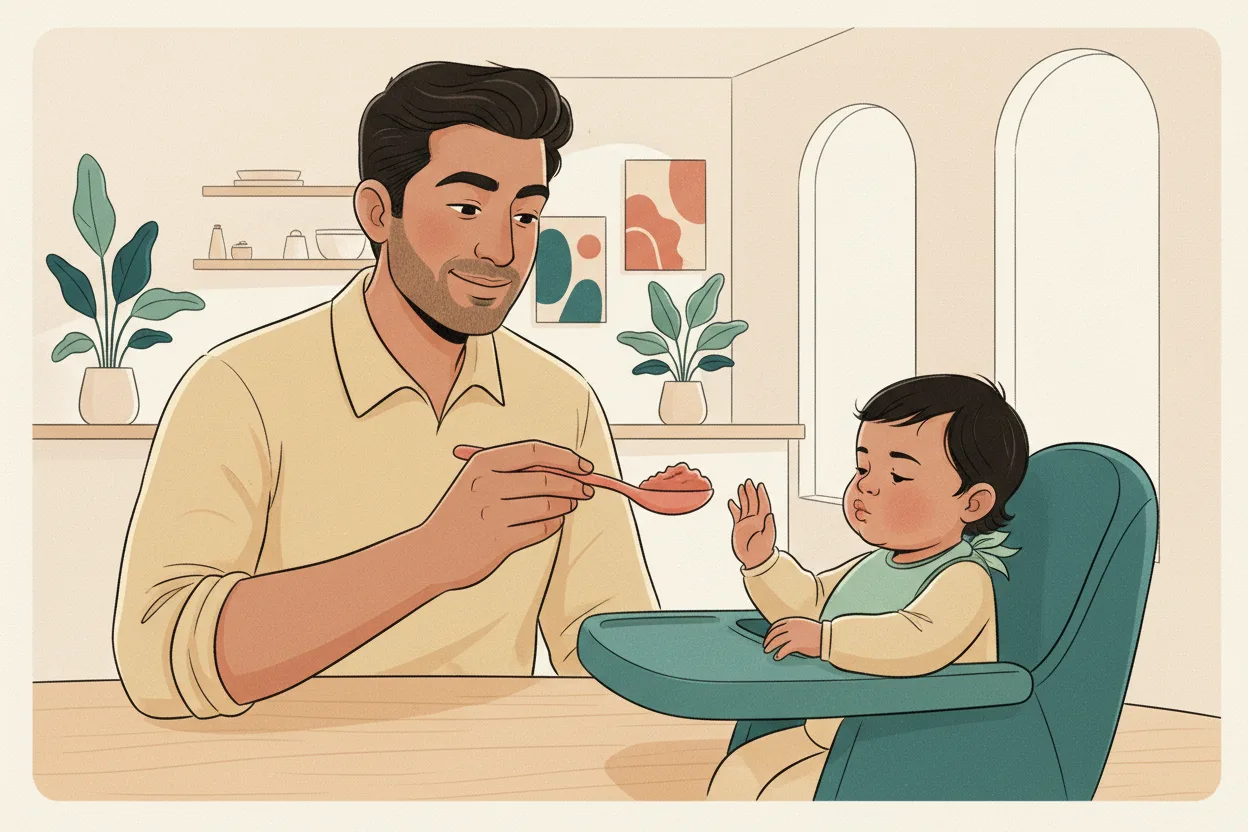
A baby that ate everything just a little while ago and now turns her head from the spoon or clamps her mouth shut hasn't gone backward. This is one of the most common feeding phases in the second half of the first year — and for the vast majority of babies, it resolves on its own without one obvious explanation.
Not medical advice — consult your pediatrician if you're worried about your baby's feeding or weight gain.
Why This Phase Rattles Indian Parents Especially
In most Indian homes, a baby's appetite isn't a private matter — grandparents, aunts, and neighbours all have an opinion, and "one more bite" pressure is real. That instinct comes from love, but pushing harder tends to backfire and turns mealtimes into a standoff. The better response, for you and for whoever is feeding baby, is to stay calm and let the phase run its course rather than turning it into a battle of wills.
Four Real Reasons Behind a Sudden Food Strike
She's Teething
Around 8–9 months, many babies are cutting their first molars or working through a batch of teeth at once, and that discomfort can genuinely dull appetite. A BMJ-published systematic review of teething research found that the days around a tooth's eruption showed real associations with "biting behaviour, drooling, gum rubbing, irritability, sucking, wakefulness, reduced appetite, and temperature more than one standard deviation above normal." A sore, swollen gum makes chewing and swallowing uncomfortable, so bland, soft, cool foods tend to go down easier during a flare-up than anything that needs real chewing.
She's in the Middle of a Developmental Leap
The CDC's list of nine-month milestones includes standing while holding on, getting into a sitting position independently, sitting without support, pulling to stand, and crawling. That's a lot of new physical work happening at once, and babies going through a burst of new motor skills are often too busy or too distracted to sit still and focus on eating. It's common for this restlessness to show up at the table as short, half-hearted meals rather than outright hunger strikes.
She's Coming Down With Something
A brewing ear infection is a common, easy-to-miss reason for a sudden food strike at this age. HealthyChildren.org (AAP) explains that "your child may have less of an appetite because of the ear pain," often alongside a fever. Because sucking and swallowing can worsen the pressure and pain in the middle ear, a baby who was eating fine yesterday may flatly refuse the spoon (and sometimes the bottle or breast too) once an ear infection sets in. If refusal comes with a warm forehead, tugging at an ear, or extra fussiness, it's worth a look from your pediatrician rather than waiting it out as "just a phase."
It's Just an Off Phase
Sometimes there's no single trigger — appetite genuinely swings day to day at this age. HealthyChildren.org, published by the American Academy of Pediatrics, explains that you should "encourage, but don't pressure or force your child to eat at a particular time," because a child's "diet will balance out over several days if you make a range of wholesome foods available." One quiet week at the table is not a sign that something is wrong.
| Likely cause | Other signs to watch for | What tends to help |
|---|---|---|
| Teething | Drooling, gum rubbing, irritability, disturbed sleep | Cool, soft foods; teething rings; extra patience at meals |
| Developmental leap | New crawling, pulling to stand, sitting unaided | Shorter, calmer meals; feed after some floor time, not during it |
| Ear infection / illness | Fever, ear-tugging, extra fussiness, worse with sucking/swallowing | Call your pediatrician; don't wait it out as "just a phase" |
| Normal appetite dip | No other symptoms; baby is otherwise playful and active | Keep offering a range of foods; don't push |
How to Respond Without Turning Meals into a Fight
The WHO's Guiding Principles for Complementary Feeding state that caregivers should "feed slowly and patiently, and encourage children to eat, but do not force them." That single line is the whole playbook for this phase — pressure tends to make a baby dig in harder, while a relaxed, low-stakes approach usually gets appetite back faster.
Keep offering the food that was refused. An NIH-hosted systematic review of infant feeding research found that tasting a food "1 food per day for 8-10 or more days is likely to increase acceptability" — a single refusal, or even ten, doesn't mean the food is off the menu for good.
Hand over some control at the table. HealthyChildren.org (AAP) advises letting a baby "try feeding herself as soon as she's ready — usually around 8 or 9 months old." Soft, safe finger foods she can pick up herself often get eaten when a spoon offered by someone else gets refused outright.
And don't panic about the milk side of things. The WHO's Guideline for complementary feeding of infants and young children states that "breast milk continues to provide a substantial amount of nutrients, including energy, essential fatty acids, vitamins, and minerals, throughout the second year of life" — so as long as milk feeds are holding steady, a few thin days of solids is not a nutritional emergency.
When to Actually Worry
A short appetite dip is normal; dehydration is not something to wait out. HealthyChildren.org (AAP) warns parents to "be alert for the following warning signs of dehydration, and notify the pediatrician immediately if any of them develop" — a dry mouth, noticeably fewer wet diapers, sunken eyes, or unusual sleepiness. If you see any of these, or the refusal drags on well beyond a week alongside weight loss or persistent fussing, call your pediatrician rather than waiting it out.
Practical Tools for This Phase
A few products make a rough patch at the table easier to manage, though none of them fix the underlying phase — patience does that.
| Product | Price Range | Where to Buy |
|---|---|---|
| Silicone soft-tip feeding spoons | Rs. 150 – Rs. 400 | Amazon.in / FirstCry |
| Silicone teether / teething ring | Rs. 200 – Rs. 600 | Amazon.in / FirstCry |
| Divided suction baby bowl | Rs. 350 – Rs. 900 | Amazon.in / FirstCry |
A soft-tip spoon is gentler on tender gums during a teething flare, and a suction bowl that stays put on the high chair tray gives a self-feeding baby something to grab without flipping the whole meal onto the floor.
Frequently Asked Questions
Is it normal for a baby to go from eating well to refusing everything overnight? Yes — appetite at this age is genuinely changeable. Between a possible teething flare, a burst of new motor skills, and ordinary variation from one meal to the next, a sudden dip is common and not a sign that something is wrong.
Should I switch back to purees if my baby is refusing chunkier food? There's no single right texture for every baby during a rough patch. If chewing seems to be the sticking point, softer or smaller pieces can help, but keep offering a range so she has the chance to come back around to what she rejected earlier.
My mother-in-law says I should force-feed a few spoons so baby "doesn't go hungry." Should I? No. The WHO advises feeding "slowly and patiently" and encouraging a child to eat "but do not force them." Forcing food tends to create more resistance, not less, and can turn a short phase into a longer standoff.
How many times should I keep offering a food my baby has refused? Research on infant feeding suggests repeated exposure works — tasting a food on 8-10 or more separate occasions tends to increase how willing a baby is to accept it. Keep offering it alongside familiar foods without pressure.
Could teething be the reason my baby suddenly won't eat? It's a genuine possibility. Research reviewed in the BMJ links the days around a tooth erupting to reduced appetite, along with drooling, gum rubbing, and irritability. Check for these alongside the food refusal.
Could an ear infection be why my baby suddenly stopped eating? Yes — it's one of the more commonly missed causes. HealthyChildren.org (AAP) notes that a child "may have less of an appetite because of the ear pain," and sucking or swallowing can make that pain worse. Check for fever or ear-tugging, and call your pediatrician if you suspect one.
When should I call the pediatrician instead of waiting this out? Call promptly if you notice dehydration warning signs — a dry mouth, fewer wet diapers, sunken eyes, or unusual sleepiness — or if the refusal continues well past a week alongside weight loss.