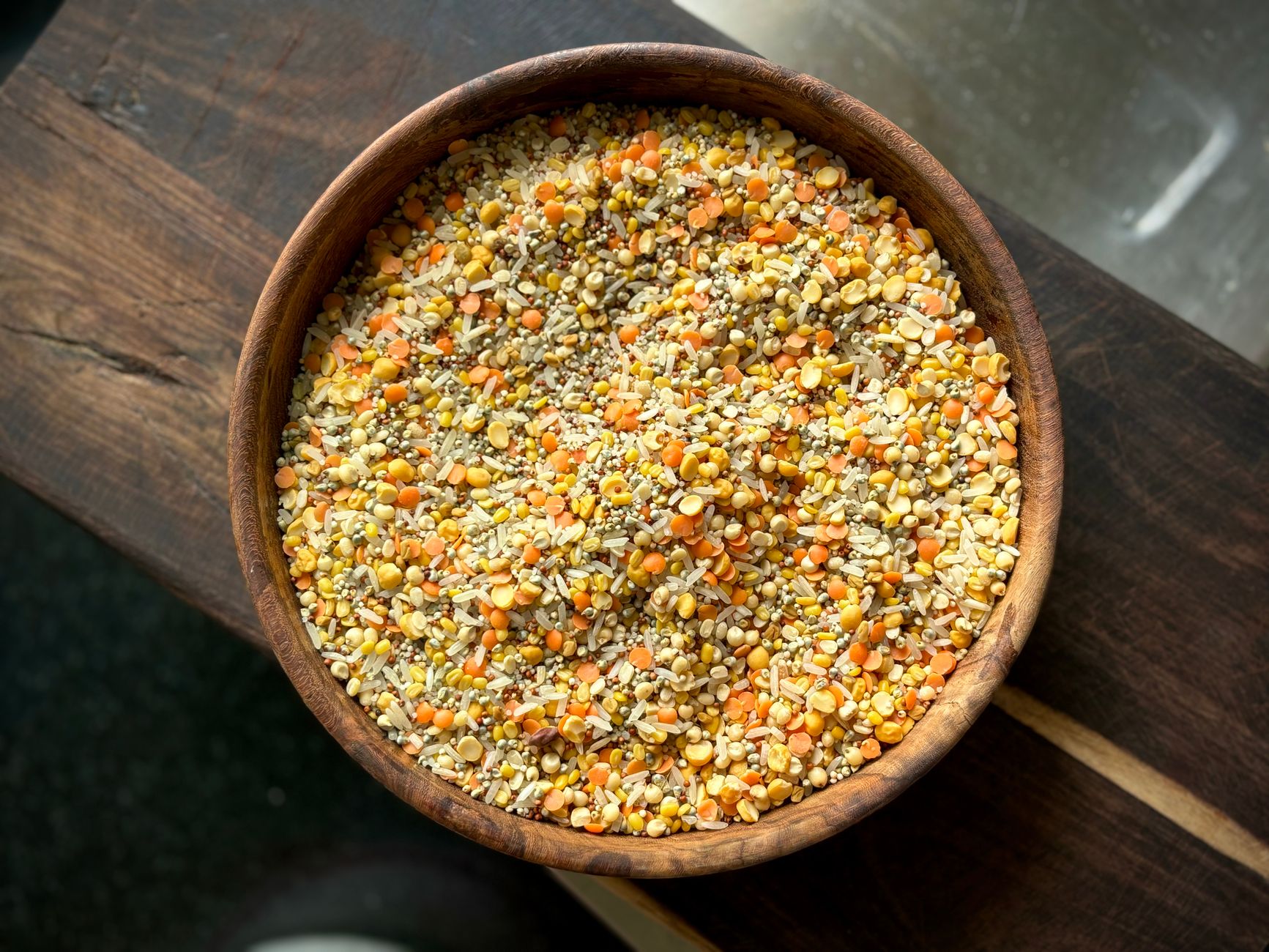
A multigrain health mix is a convenience, not a nutritional intervention. For a toddler already eating what the rest of the family eats, a scoop of sathu maavu in milk is one more grain-and-pulse serving in the day — handy on a rushed morning, and no substitute for a varied plate. WHO's 2023 complementary feeding guideline recommends that children aged 6–23 months eat a diverse diet, with fruits, vegetables and animal-source foods daily.
So the useful question isn't "is this brand good?" It's "what's in this pack, and what am I expecting it to do?" Here are the checks that answer that for any pack.
Not medical advice — consult your pediatrician about your child's growth, appetite and diet.
Why Every Review You Find Sounds Like an Ad
Health mixes are sold on reels, WhatsApp forwards and "honest review" posts that turn out to be sponsored. That's the category's distribution model, not a coincidence. WHO's guidance on the promotion of foods for infants and young children says its aim is to make sure parents get clear and accurate information on feeding their children, and sets out recommendations for controlling the marketing of foods aimed at children under three.
India's own rule is a surprisingly useful lens. FSSAI's Advertising and Claims Regulations state that claims must be truthful, unambiguous and not misleading, and must not suggest that a balanced and varied diet cannot provide the nutrients a body needs. A pack whose pitch is "your child's normal food isn't enough" is arguing against the regulation it's sold under.
What a Health Mix Actually Is
Under the pouch and the pastel typography, it is roasted grains, millets and pulses — usually with groundnut, almond or cashew, sometimes coconut or cardamom — milled fine so it thickens in hot milk. In Tamil homes it's sathu maavu; the grandmother's tin of roasted multigrain flour turns up under other names across the country.
The category exists in Indian law too. FSSAI's Foods for Infant Nutrition Regulations set a standard for "processed cereal based complementary food" — built on cereals, pulses including soybean, millets, nuts and edible oilseeds, with milled cereals and legumes together accounting for not less than 75 per cent. That is the yardstick a pack sold for this age is meant to meet.
What the Evidence Supports — and Where It Runs Out
A systematic review commissioned by WHO compared commercially available complementary foods with home-prepared and local foods, judged the evidence on every question it asked to be of low or very low quality, and found no evidence that these products improved children's nutritional status.
Fortification is where the evidence is better. A 2022 systematic review and meta-analysis reported that fortified complementary foods reduced the risk of anaemia in children aged 6–23 months and raised haemoglobin, but probably make little or no difference to growth. Added iron on a label is doing something real; "helps your child gain weight" is not.
Reading the Pack in Sixty Seconds
- Read the ingredient list before the front of the pack. FSSAI's Labelling and Display Regulations require ingredients to be listed in descending order of their composition by weight at manufacture — the first name is the biggest share of what you're buying.
- Look hard at the first five names. ICMR-NIN's label-reading booklet tells shoppers the first ingredient is present in the maximum amount, and names sugar, fat, salt/sodium and refined flour (maida) as ingredients of concern. Sugar, jaggery powder or maltodextrin in the top few names tells you what the pack mostly is.
- Treat the FSSAI logo as a licence, not a rating. The same booklet is blunt that it is not a quality symbol — it states only that the manufacturer is licensed.
- Compare on the per-100 g column. Serving sizes aren't standardised, so a "per scoop" figure on one pack and a "per serve" figure on another are not comparable.
| What the front says | What to actually check |
|---|---|
| "24 grains and millets" | Where those grains sit in the ingredient list, and what fills the rest of the weight |
| "No added sugar" | Whether jaggery, dates, malt extract or maltodextrin appear instead |
| "Immunity" / "brain development" | Whether the claim survives the rule that claims be truthful and not misleading |
| "FSSAI approved" | Nothing — the logo is a licence, not approval of the recipe |
Homemade Sathu Maavu: The Honest Version
A traditional mix is rice, ragi, jowar or bajra, moong dal, chana dal, roasted gram, groundnut and almond — cleaned, dried, dry-roasted separately until each smells right, cooled fully, then milled at the neighbourhood flour mill. It isn't difficult. It is a Sunday morning, and it comes with constraints nobody posts about.
The first is rancidity. A 2025 study of pearl millet flour found that the grain's own lipase splits its fats into free fatty acids, and the volatile aldehydes and ketones this produces cause the off-odour and bitter taste of rancid flour, severely reducing shelf life. A mix heavy on bajra and nuts turns bitter well before a big tin is finished.
The second is humidity. WHO's mycotoxins fact sheet warns that aflatoxin-producing moulds affect cereals, oilseeds and tree nuts, often under warm, damp and humid conditions, and advises buying grains and nuts as fresh as possible and storing food dry, cool and free of insects. Through a Mumbai or Kochi monsoon, an airtight jar in the fridge beats a steel tin on an open shelf.
| Homemade mix | Bought pack | |
|---|---|---|
| Control over ingredients | Complete | Only by reading the label |
| Added sugar | Only if you add it | Check the ingredient order |
| Added iron and vitamins | None beyond the grains | Sometimes — the one evidence-backed edge |
| Sensible batch size | Two to three weeks' worth | Whatever the pack is |
| Effort | A morning of roasting, plus a mill trip | None |
Nuts are worth a thought either way. The NHS advises serving nuts and peanuts to young children finely ground or as nut butters, and notes that delaying peanut and hen's egg beyond 6 to 12 months may increase the risk of an allergy — so a finely milled mix is the right form, and a first taste is worth giving on a calm day at home.
Where a Health Mix Fits in a Toddler's Day
One drink most days, alongside meals, is the honest ceiling. The NHS advises that a toddler eats a variety of foods like the rest of the family, gets at least 350ml of milk a day or two milk-based servings, keeps added sugar to a minimum, and needs no added salt. A health mix drink can sit inside that milk quota; it can't supply the variety.
ICMR-NIN's Dietary Guidelines for Indians advise preferring home-made complementary foods, limiting salt and avoiding sugar in what you prepare for a young child — a steer towards homemade or a plainly-labelled pack, not a ban on buying one.
If you're reaching for a mix because your child eats little, note that WHO's guideline also recommends responsive feeding, encouraging the child to eat autonomously and in response to their own needs. A filling milk drink just before a meal works against that, so when it's offered matters more than whose brand it is. Whichever parent runs the morning shift is the one making that call.
Where to Look
Health mixes sell across Amazon.in and FirstCry, and loose in South Indian provision stores, where it's ground locally and turns over faster than a sealed pack. Buy the smallest size first, whatever the per-kilo maths says, and size up only once your child has actually drunk it for a fortnight.
Frequently Asked Questions
Is a health mix necessary if my toddler eats family food?
No. WHO's guideline is built around a diverse diet — daily fruits and vegetables, daily animal-source foods — and a grain powder is one item inside that, not a replacement for it.
Is a shop-bought mix as good as my mother-in-law's?
It depends on the label, not on who made it. The WHO-commissioned review rated the evidence comparing commercial and home-prepared complementary foods as low or very low quality, with no evidence that commercial products improved nutritional status — neither side wins on principle.
My child eats very little. Will a health mix fix that?
It isn't a treatment for a small appetite. Fortified complementary foods reduce anaemia risk but probably make little or no difference to growth, so a persistent feeding worry is a conversation with your pediatrician, not a purchase.
Is added sugar a deal-breaker?
Treat it as a reason to pick a different pack. ICMR-NIN advises avoiding sugar in food prepared for a young child, and sugar high in the ingredient order means a large share of what you're paying for is sweetener.
How should I store a homemade mix?
Cool, dry, airtight and in small quantities. WHO advises buying grains and nuts as fresh as possible and keeping stored food dry, free of insects and not too warm — in most Indian cities that means the fridge and a batch you finish inside a few weeks.