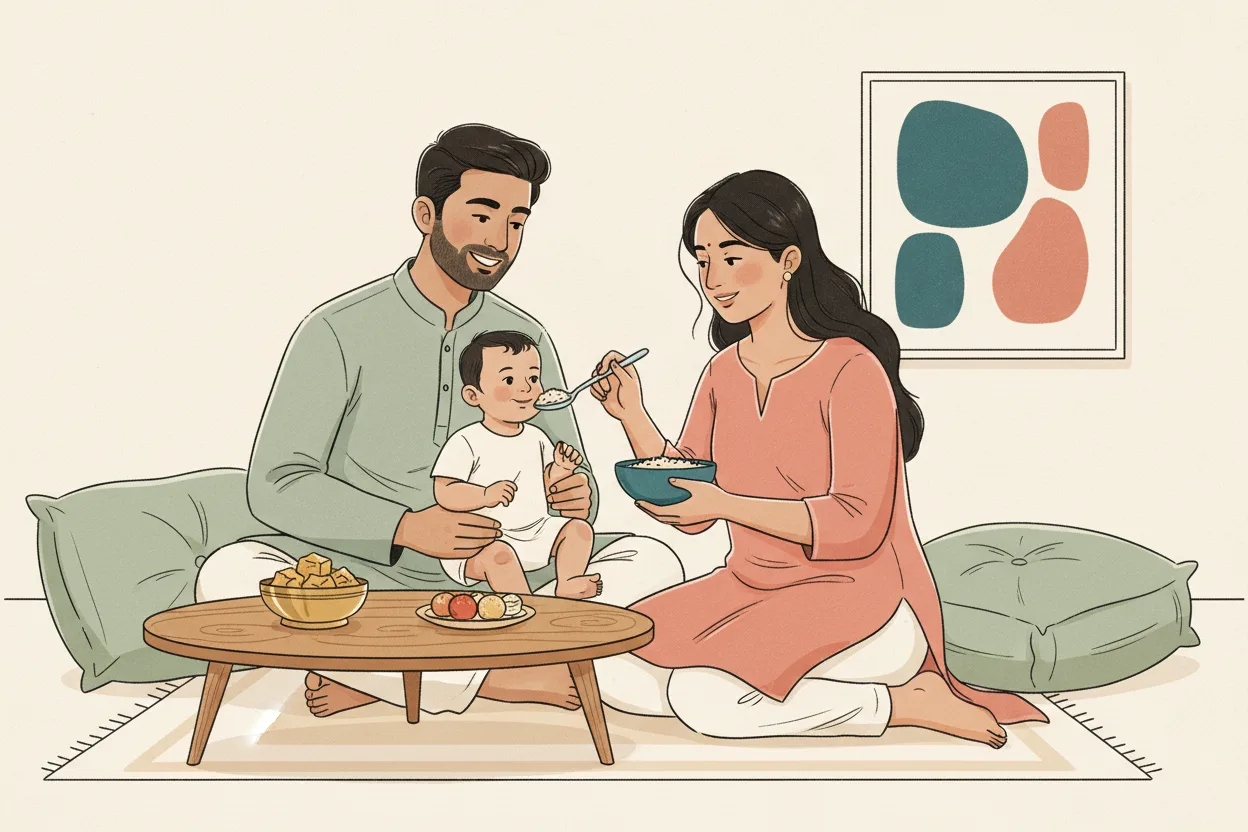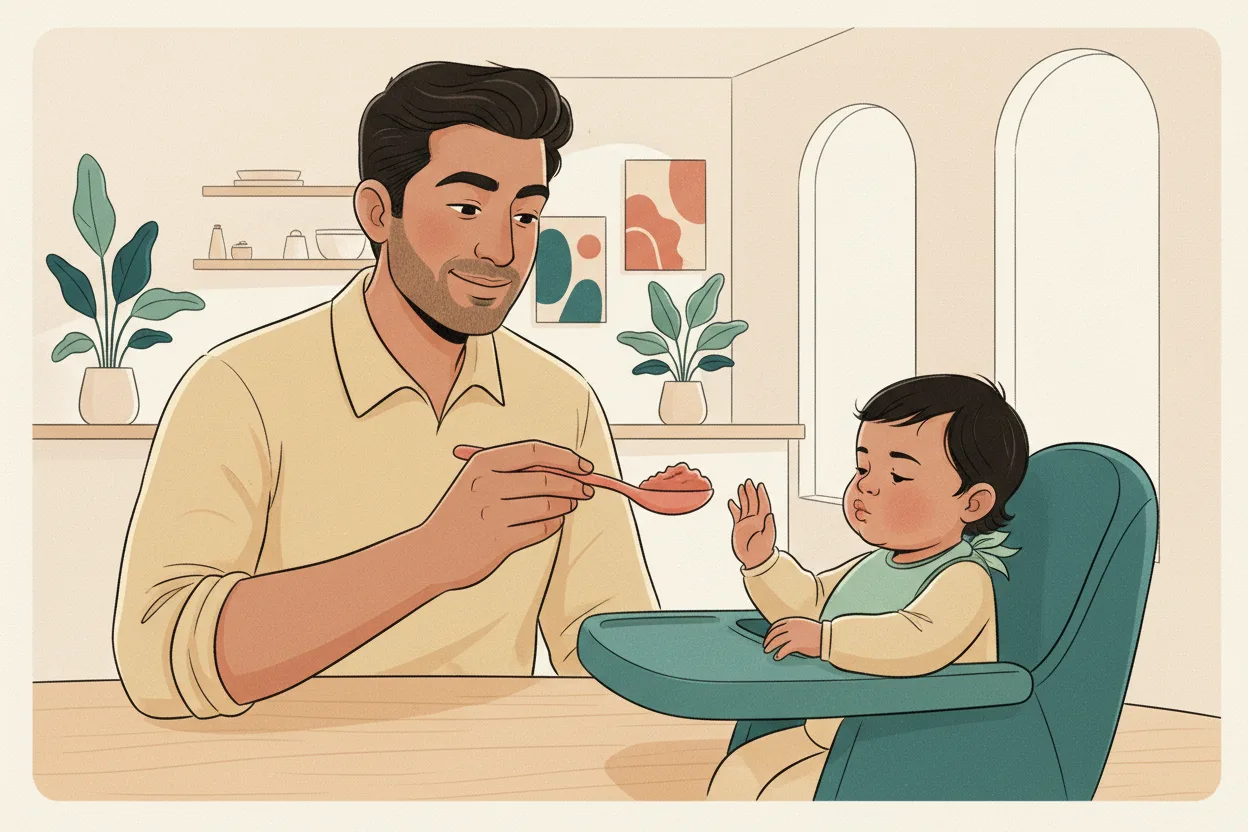

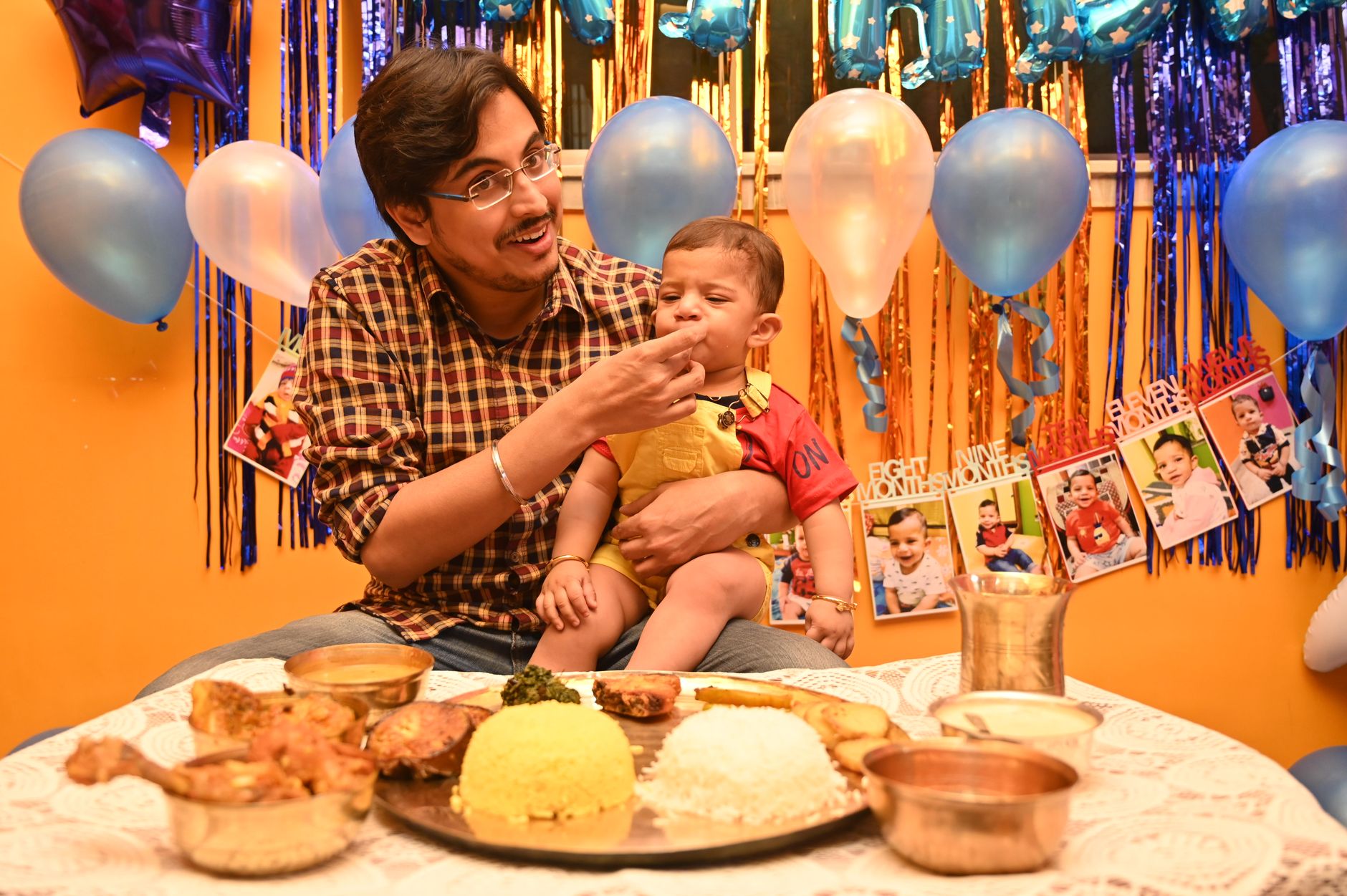
Yes, your baby can have eggs, cheese, and non-veg food — most Indian pediatric guidance says to start around 6 months, the same time as any other complementary food, and there's no medical reason to wait longer. Not medical advice — consult your pediatrician before starting solids, especially if there's a family history of food allergy.
Why 6 Months, and Why Not Later
WHO's infant and young child feeding fact sheet states that around the age of 6 months, an infant's need for energy and nutrients starts to exceed what is provided by breast milk, and additional complementary foods are necessary to meet those needs. That includes eggs, cheese, and non-veg — they aren't "extra" foods you add later; they're part of what closes the nutrition gap from 6 months.
Iron is the specific reason timing matters. A 2021 review in the journal Nutrients explains that iron stores become gradually depleted at about this time, and breast milk alone can no longer meet the infant's iron requirements. Meat, fish, and eggs are some of the most efficient ways to close that gap, which is why the WHO's guideline for complementary feeding of infants and young children states that animal source foods, including meat, fish, or eggs, should be consumed daily from 6 months.
The "Eggs and Non-Veg Are Harmful for Children" Myth
Many Indian families hold onto the idea that eggs and meat are somehow "heaty" or unsuitable for young children. The Indian Academy of Pediatrics' parent guideline on complementary feeding states this directly: "Eggs and nonvegetarian foods are sometimes considered as 'harmful' to the child. False… Animal origin foods are special foods for children and are nutritious." If your family is vegetarian by choice, that's entirely valid — but if the hesitation is about safety, the guidance is clear that it isn't a health concern.
This is a good conversation to have with grandparents and other caregivers before you start solids, not after — showing them the reasoning up front usually goes further than debating it over a meal.
Should You Wait Because of Allergy Risk?
A common instinct is to delay egg because it's a known allergen. The AAP's HealthyChildren.org explains that there is no evidence that delayed introduction of allergenic foods like egg, peanut, dairy, and sesame prevents allergies. In practice, that means you can introduce egg around 6 months along with your baby's other first foods, rather than holding it back for later. Many parents still choose to introduce one new food at a time and watch how their baby responds before moving to the next — a reasonable practice, and one to discuss with your pediatrician if your family has a history of food allergy.
Eggs: How to Serve Them Safely
Eggs are one of the most useful first non-veg foods — easy to mash, cheap, and rich in protein and iron. The one rule that matters: HealthyChildren.org (AAP) advises that you be sure to thoroughly cook eggs, poultry, and ground beef. No runny yolk, no runny white — a fully hard-boiled or well-cooked scrambled egg is what you're aiming for, to prevent Salmonella infection.
If your baby spits out scrambled egg the first few times, texture is often the reason, not taste — the slightly rubbery, crumbly mouthfeel is new to them. Mashing a hard-boiled yolk into a familiar food like khichdi or dal, or making a thin egg bhurji, often gets a better reaction than plain scrambled egg on a spoon. Try it again another time before deciding your baby "doesn't like eggs."
Cheese: What's Fine, What to Skip
Cheese can be part of your baby's diet, but two rules matter more than the type of cheese you pick.
Cut it small. HealthyChildren.org (AAP) recommends cutting food for infants and young children into pieces no larger than one-half inch, and teaching them to chew their food well — that applies directly to cheese cubes, which are a genuine choking risk when served in chunks. Thin, small slices or a light grating over food is safer than a cube on a plate.
Skip unpasteurized soft cheese. HealthyChildren.org (AAP) warns that you should avoid raw (unpasteurized) milk and dairy foods made from it, including unpasteurized soft cheeses like feta, brie, and queso fresco, because of Listeria risk. Check the label on imported or artisanal soft cheeses; most branded Indian paneer, cheese cubes, and processed cheese are pasteurized, but it's worth confirming rather than assuming.
If your family already gives curd (dahi) at home, that's a reasonable dairy choice too — the WHO's guideline for complementary feeding of infants and young children lists fermented milk or yogurt, the category curd falls into, as a suitable type of animal milk for babies. It doesn't replace breast milk or formula as the main drink before 12 months, but a few spoons alongside a meal is fine.
Cheese also shouldn't become an everyday filler food. The Indian Academy of Pediatrics' complementary feeding guideline states that high fat/sugar/salt foods — its list explicitly includes cheese alongside biscuits, pastry, chocolates, and packaged foods — should be avoided during complementary feeding. A little cheese folded into a home-cooked meal is fine; cheese as a frequent standalone snack isn't what the guidance recommends.
Fish and Meat: The One Caution Worth Knowing
If your family eats fish, it's a good first non-veg food — but not every fish. HealthyChildren.org (AAP) lists tilefish, shark, swordfish, king mackerel, orange roughy, marlin, and bigeye and bluefin tuna as fish to avoid for young children because of high mercury levels. Everyday Indian choices like rohu, katla, pomfret, and salmon are lower-mercury options and don't carry that caution.
Quick Reference: First Non-Veg Foods
| Food | When | Key Safety Point |
|---|---|---|
| Egg | ~6 months | Cook fully — no runny yolk or white |
| Cheese (pasteurized) | ~6 months | Cut into small, thin pieces, never chunks |
| Soft cheese (feta, brie, etc.) | Only if pasteurized | Avoid unpasteurized versions |
| Chicken / mutton | ~6 months | Cook thoroughly, shred or mince fine |
| Fish (rohu, katla, pomfret, salmon) | ~6 months | Avoid high-mercury fish like shark and swordfish |
Frequently Asked Questions
Is it true that non-veg food is too "heavy" for a baby's digestion? No — the Indian Academy of Pediatrics' guideline calls the idea that eggs and non-vegetarian foods are harmful to a child false, and notes that animal-origin foods are nutritious for children. Cook and cut it appropriately for your baby's age, the same way you would any first food.
My baby gags and spits out scrambled egg — should I stop trying? Not necessarily. Gagging on a new texture is common and different from choking or an allergic reaction. Try mashing egg into a familiar dish, offer it on a different day, and watch for actual allergy signs — hives, vomiting, facial swelling — rather than assuming dislike from one attempt.
Can I give my baby paneer or processed cheese cubes? Yes, as long as it's pasteurized and cut into small, thin pieces rather than chunks to avoid choking. Keep it as part of a meal rather than a daily snack, in line with IAP's guidance on limiting high-fat, high-salt foods during complementary feeding.
We're a vegetarian family — does my baby need eggs or meat? No. The guidance that animal source foods should be consumed daily reflects one efficient way to meet iron and protein needs, not a requirement. If you're vegetarian, talk to your pediatrician about iron-rich vegetarian sources (dals, ragi, leafy greens) to make sure the gap that opens up around 6 months is still being met.
Do I need to introduce egg early to prevent an allergy? No — there's no evidence that delaying allergenic foods like egg prevents allergies, so there's no need to rush it earlier than 6 months either. Introduce it around the same time as your baby's other first foods.
What if there's a family history of egg or food allergy? Talk to your pediatrician before introducing egg or other common allergens — they may suggest a specific approach or observation for your baby's first taste, especially with a first-degree family history of food allergy.
What does a serious allergic reaction actually look like, and when is it an emergency? Mild reactions can look like a few hives around the mouth. A serious reaction (anaphylaxis) is different and needs emergency care right away — HealthyChildren.org (AAP) advises that if epinephrine is available, it should be given immediately to anyone showing symptoms of anaphylaxis, followed by a call to emergency services and a trip to the emergency department. Signs to watch for after a first taste of egg or any new food include widespread hives, swelling of the lips or face, vomiting, or trouble breathing or swallowing — if you see these, don't wait it out at home.