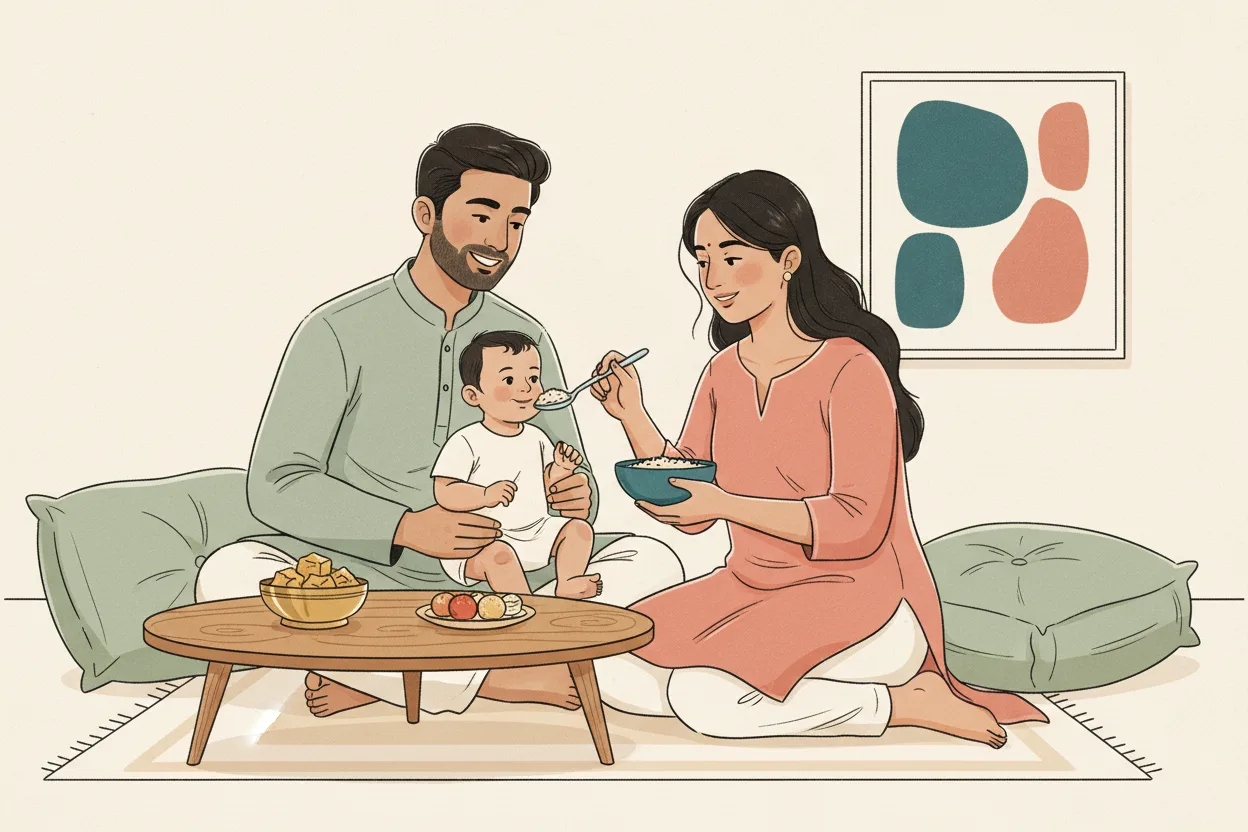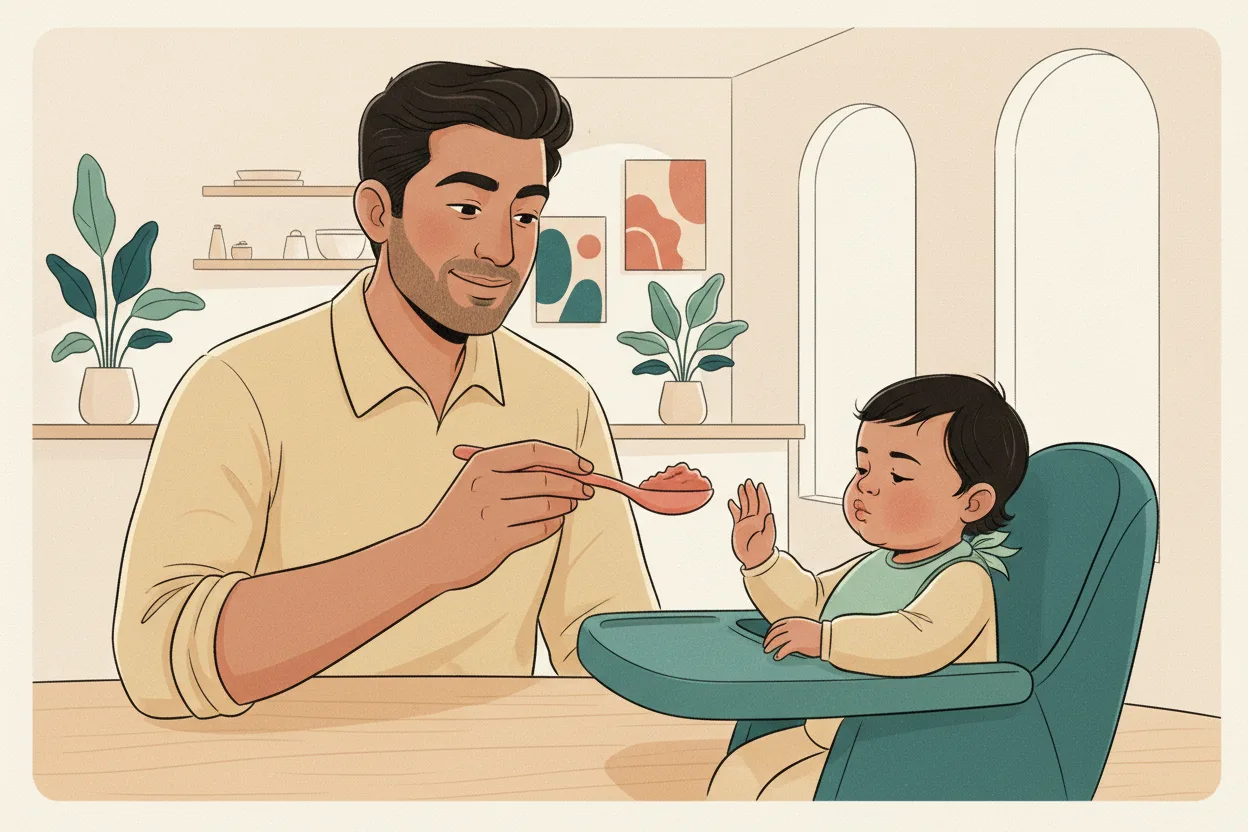

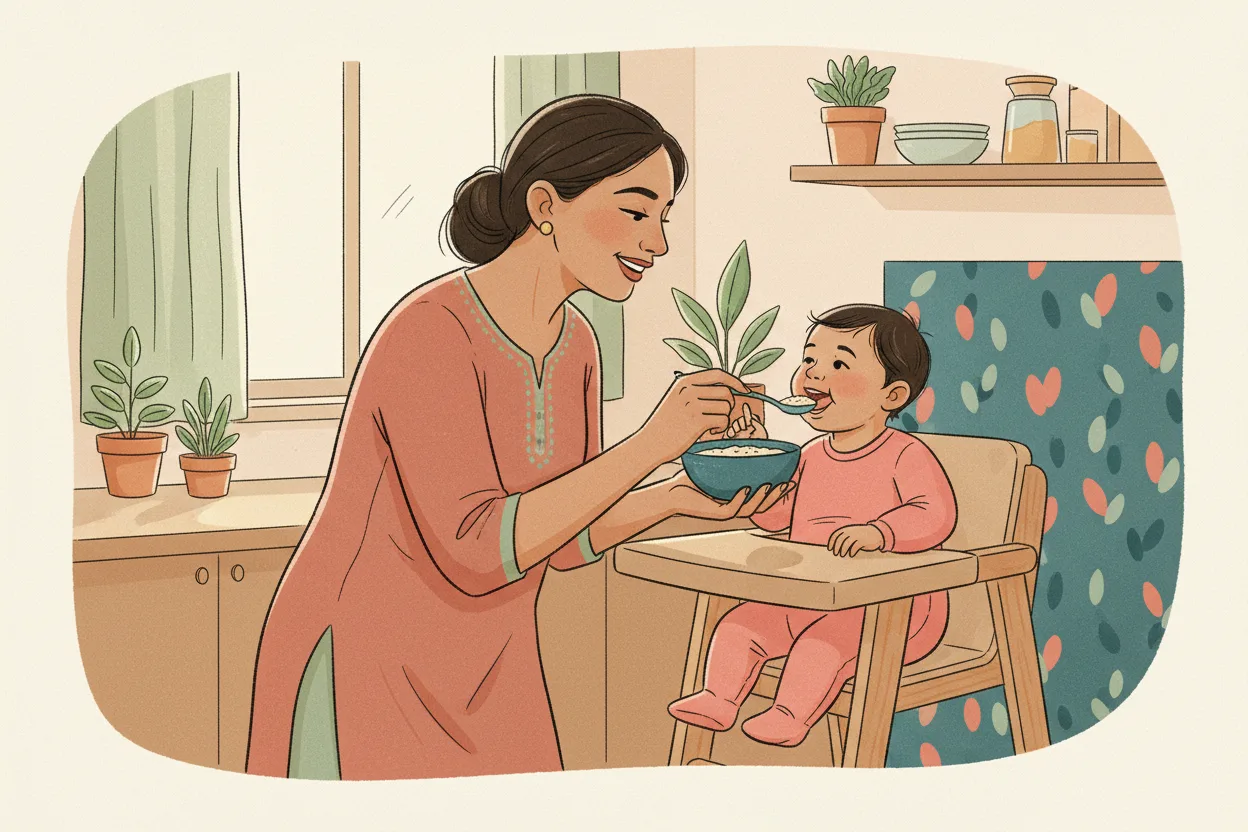
Most Indian pediatricians are comfortable with ragi, jowar, and bajra from 6 months, alongside other complementary foods, once your baby is sitting well and showing interest in eating. WHO's 2023 complementary feeding guideline recommends infants be introduced to complementary foods at 6 months (180 days) while continuing to breastfeed — millets fit naturally into that first wave of foods.
Not medical advice — consult your pediatrician before starting solids or introducing a new food, especially if your baby has a health condition or family history of allergies.
Why Millets, and Why 6 Months
By around 6 months, a review in Current Developments in Nutrition (PMC) explains, a baby's birth iron stores become gradually depleted, and breast milk alone can no longer meet the infant's iron requirements — this is a big part of why complementary foods matter from this age, not just millets specifically. To put a concrete number on that: a PMC review of ICMR-NIN's Recommended Dietary Allowances for Indians reports that the RDA of iron for Indian infants aged 7-12 months is 5 mg/day — a useful daily target when you're judging whether a day's mix of iron-rich foods, including millets, is on track.
Ragi (finger millet), jowar (sorghum), and bajra (pearl millet) are useful additions to that first-foods lineup for a concrete reason: calcium. A peer-reviewed nutrition review on PubMed found that of all cereals and millets, finger millet has the highest amount of calcium, at about 344 mg per 100 g. That makes ragi porridge a genuinely useful addition to a weaning diet, alongside breast milk and other complementary foods.
Millets also have official backing in Indian dietary guidance. A 2025 Frontiers in Nutrition study citing ICMR-NIN dietary guidelines notes that for children under 10, 20% by raw weight of cereals should come from millets, and millets are one of the five food groups recommended for minimum dietary diversity in infant and child complementary feeding.
Readiness check, not just age: HealthyChildren.org (AAP) advises that your baby should be able to sit in a high chair, a feeding seat, or an infant seat with good head control before starting solids. If your baby hits 6 months but isn't quite there yet on head and trunk control, wait a couple of weeks and try again — the calendar date matters less than this physical readiness.
The Safety Note Every Parent Should Know: Phytates
Millets aren't a free pass to serve however you like. A Frontiers in Sustainable Food Systems review of traditional millet processing found that anti-nutrients such as phytic acid, tannins, and polyphenols present in millets tend to reduce the bio-accessibility of minerals like iron and zinc — meaning a baby's body can absorb less of the iron and zinc actually present in the grain unless the millet is processed well first.
The fix is simple and already part of traditional Indian cooking: soak, sprout, or ferment. A PMC study on pearl millet processing found that simple processing procedures like soaking, germination, or fermentation enhanced mineral bioaccessibility, due to a reduction in phytic acid content. In practice, this means:
- Ragi flour: buy sprouted/malted ragi flour, or soak whole ragi grains overnight before grinding at home.
- Jowar and bajra: soak the grains for 6-8 hours (or overnight) before cooking, and drain the soaking water rather than cooking in it.
- Fermented batters (like a thin ragi-rice dosa batter left to ferment) get an extra mineral-absorption benefit on top of soaking.
This is simply a reason to prepare millets the way most Indian grandmothers already do, rather than serving raw or unsoaked flour cooked quickly in hot water.
On thyroid concerns: many families worry millets affect the thyroid because of goitrogen content. A 2024 systematic review in Frontiers in Nutrition found that consuming millet as part of a diversified diet would not pose any risk to thyroid functioning in healthy individuals. A varied diet with adequate iodine (iodised salt is standard in most Indian kitchens) is the key qualifier — millets aren't the sole food in a baby's diet, and they shouldn't be.
Ragi, Jowar, and Bajra by Age
| Age | Texture | What to try |
|---|---|---|
| 6-7 months | Thin, smooth porridge (single-grain) | Ragi porridge thinned with breast milk or water; well-cooked, soaked jowar porridge |
| 7-9 months | Thicker porridge, then mashed textures | Ragi-banana mash; jowar-moong dal khichdi, mashed |
| 9-12 months | Mashed with soft lumps, finger foods | Bajra-vegetable khichdi with soft lumps; soft ragi idli pieces; jowar roti torn into soft strips |
The NHS advises that once you've started solids from around 6 months, you should try to move your baby on from puréed or blended foods to mashed, lumpy, or finger foods as soon as they can manage them — don't stay on smooth purees longer than needed, since the texture progression itself is part of learning to eat.
Simple recipes to start with
Ragi porridge (6+ months): Whisk 1 tsp soaked-and-ground ragi flour into a paste with a little water. Cook in 1 cup water or breast milk on low heat for 5-7 minutes, stirring until smooth and thickened. Cool before serving.
Jowar-moong khichdi (7+ months): Cook 2 tbsp soaked jowar with 1 tbsp yellow moong dal and a small piece of pumpkin or carrot in 1.5 cups water until soft. Mash well before serving.
Bajra-vegetable khichdi (9+ months): Cook 2 tbsp soaked bajra with dal and finely chopped vegetables (carrot, spinach, pumpkin) until soft, then mash to a texture with small soft lumps rather than a smooth puree.
What to Avoid
WHO's 2023 complementary feeding guideline (Recommendation 5) states that foods high in sugar, salt, and trans fats should not be consumed by infants and young children — so keep millet porridges and khichdis unsalted or very lightly salted, and skip jaggery or sugar as a sweetener in the early months; mashed fruit like banana works well instead. For a concrete ceiling: NHS's salt guidance states that babies under 1 year old should have less than 1g of salt a day in total, counting salt already present in dal, vegetables, and any store-bought ingredients — not just what you add at the stove.
Don't sweeten ragi porridge with honey. HealthyChildren.org (AAP) states that honey is a source of botulism spores and should be avoided in babies under 12 months of age. This applies to raw and cooked honey alike — heat doesn't reliably destroy the spores.
How Much and How Often
Portion size matters less than consistency in the early weeks — a few spoons is a full "meal" for a 6-month-old. WHO's Global Health Observatory indicator guidance states that breastfed infants aged 6-8 months should be offered complementary foods 2-3 times per day, rising to 3-4 times per day plus 1-2 nutritious snacks for breastfed children aged 9-23 months. Millet dishes can be one or more of those meals — they don't need to replace rice, wheat, or other grains, just rotate alongside them.
Frequently Asked Questions
Can I give ragi porridge every day? Yes, ragi can be part of a daily rotation alongside other grains like rice and wheat — millets are recommended as one of the food groups for dietary diversity in Indian complementary feeding guidance, not a single food eaten to the exclusion of others.
Do I need to soak millets every single time? Yes, for whole grains and homemade flour. Soaking, germinating, or fermenting reduces phytic acid and improves mineral absorption, so it's worth the extra step, especially since babies need every bit of iron and zinc they can get from food at this age. Store-bought sprouted/malted ragi flour has already had this step done for you.
Will millets affect my baby's thyroid? Not as part of a normal, varied diet. A 2024 systematic review found that millet consumption as part of a diversified diet does not pose thyroid risks to healthy individuals. If your baby has a diagnosed thyroid condition, ask your pediatrician for personalised guidance.
Can I mix ragi with breast milk instead of water? Yes, this is a common and fine way to thin the first porridges — it keeps the taste familiar and adds calories. WHO recommends continuing to breastfeed alongside complementary foods from 6 months, so combining the two in the same bowl works well in the early weeks.
My mother-in-law wants to add jaggery to ragi porridge for taste. Is that okay? It's best to skip added sugars, including jaggery, in the early months. WHO's guideline advises against foods high in sugar for infants and young children — mashed banana or a ripe fruit puree gives natural sweetness instead.
What if my baby refuses jowar or bajra but likes ragi? Babies often take time to accept new tastes and textures. Keep offering small amounts alongside foods your baby already likes, and try the refused food again a little later rather than dropping it entirely.
Are ragi, jowar, and bajra safe if there's a family history of celiac disease or gluten sensitivity? Yes, on the grain itself. A PMC narrative review on the nutrition and therapeutic potential of millets states that millets are gluten-free and are the choice diet for celiac patients, so ragi, jowar, and bajra are naturally gluten-free alternatives to a wheat-based dalia during weaning. If there's a diagnosed celiac condition in the family, check the packaging for a certified gluten-free label, since some mass-milled millet flours are processed alongside wheat and can pick up trace cross-contamination — and loop in your pediatrician either way.