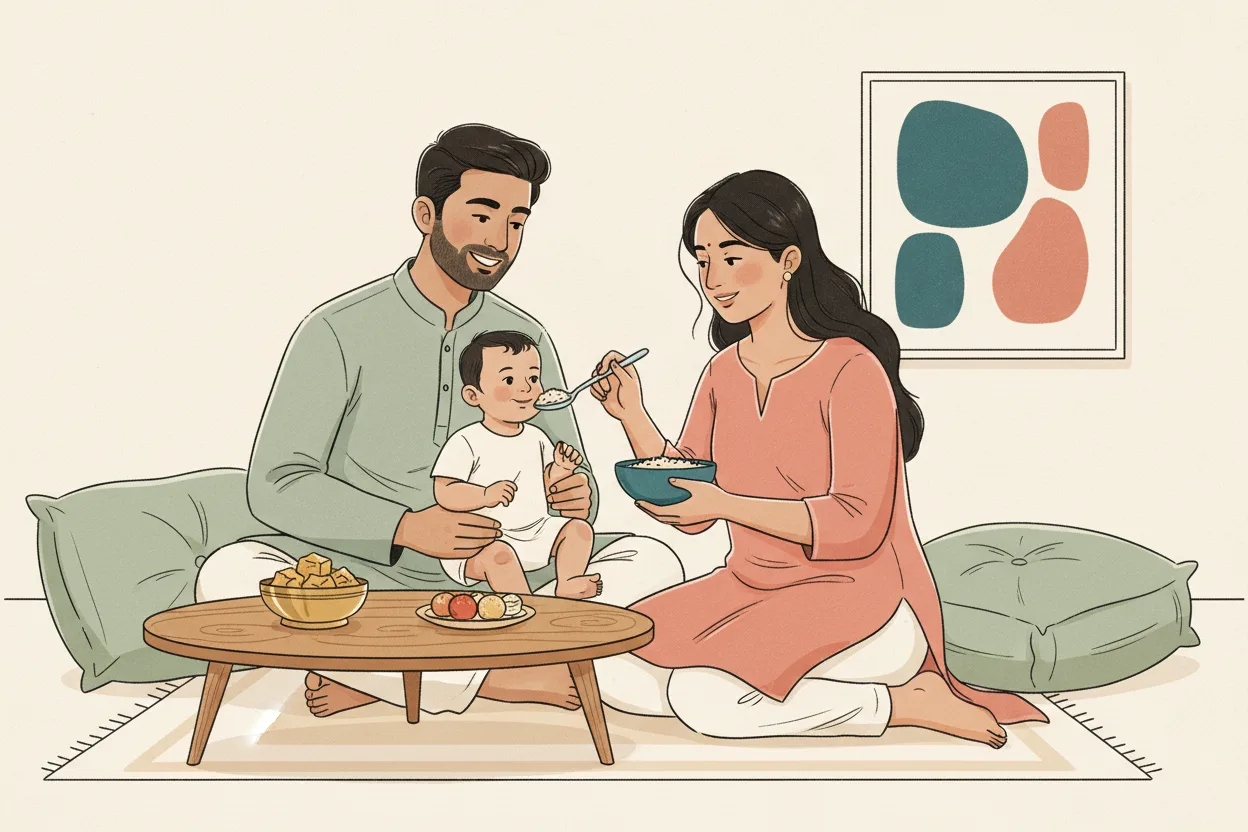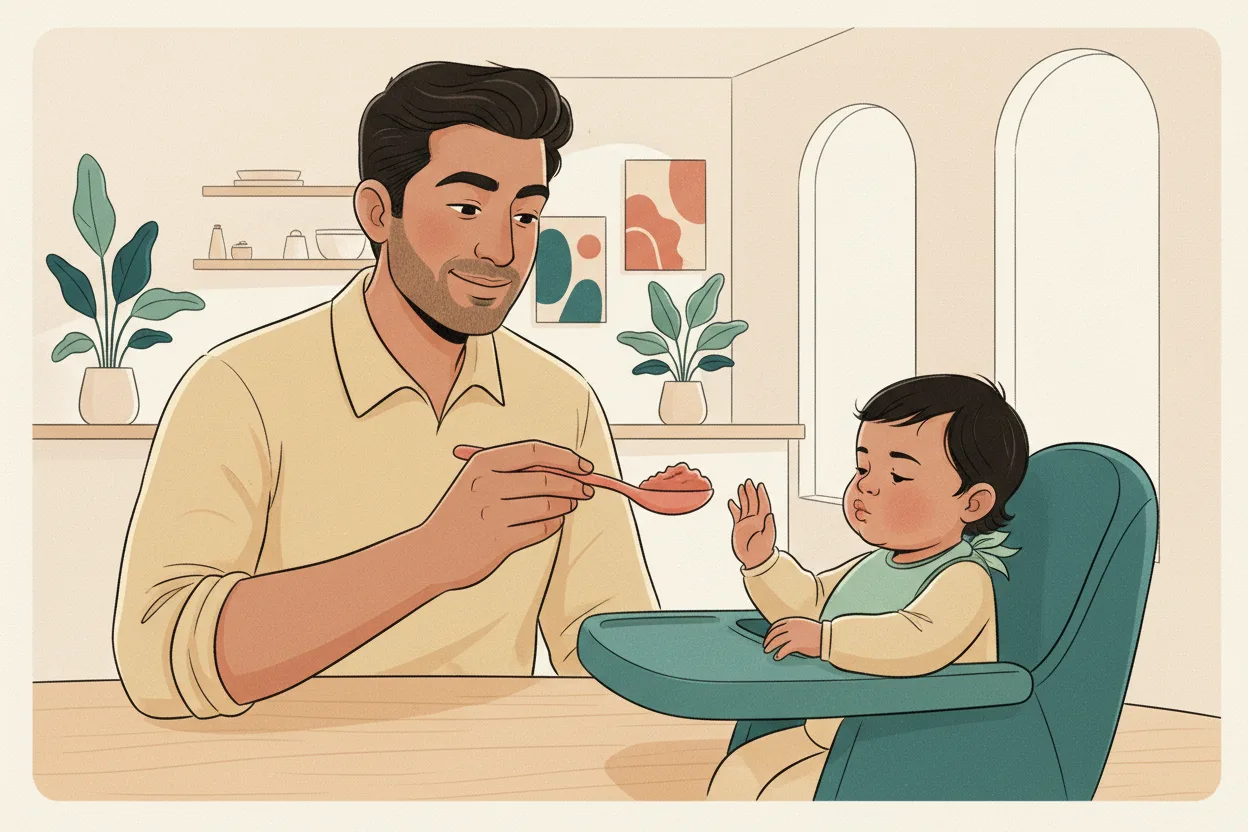

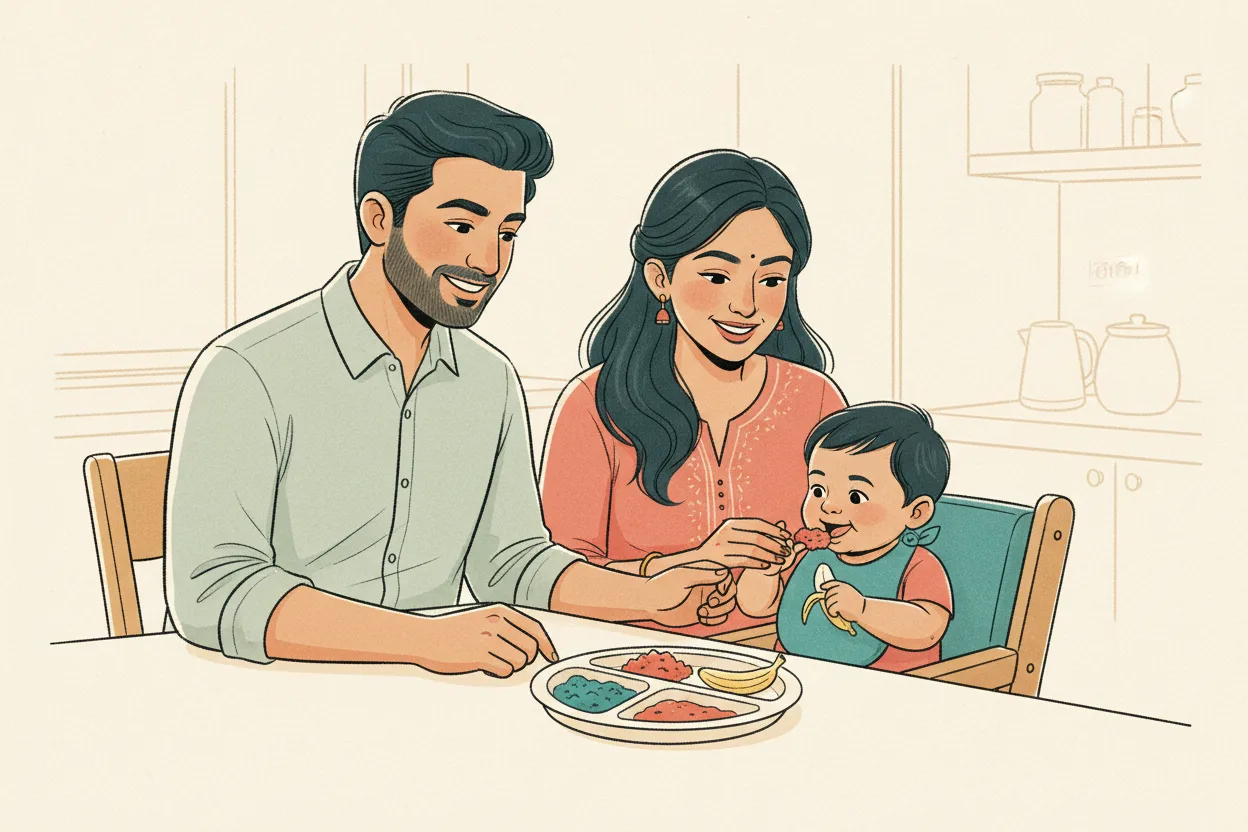
Gagging and choking are not the same thing, and mixing them up is the biggest reason parents get stuck on purees. NHS guidance explains that gagging is "the automatic body function that prevents your baby from choking" — loud, dramatic-looking, and your baby's safety reflex doing its job.
Not medical advice — consult your pediatrician for guidance specific to your baby.
Why This Fear Runs Deep in Indian Homes
You're not imagining the pressure. A grandmother watching a baby gag on a piece of banana will often say "stop, go back to purees" — and because gagging looks alarming, that advice feels right in the moment. But around 6 months, a baby's nutrient needs start to exceed what breast milk alone can provide, and blending everything smooth past that point quietly slows a skill your baby needs to build now, with both parents sharing the job of watching closely.
The fix isn't to drop your guard — it's to get sharp about telling gagging and choking apart, so you can move forward with real confidence instead of guessing.
Gagging vs. Choking: The Difference That Matters
Gagging is loud, forward, and self-resolving. Baby's face may scrunch up, they may cough or retch — but they are making noise, and often push the food back out or swallow it down within seconds. NHS guidance is direct about this: gagging is loud and protective, not a sign something has gone wrong.
Choking is silent, and that's what makes it dangerous. NHS first aid guidance is clear that if your child's coughing "isn't effective (it's silent or they can't breathe in properly), shout for help immediately." A choking baby often can't cough, cry, or make sound at all — the airway is blocked, not just irritated.
| Signal | Gagging | Choking |
|---|---|---|
| Sound | Loud — coughing, retching, gasping | Silent, or a thin high-pitched wheeze |
| Baby's reaction | Pushes tongue forward, face scrunches, often resolves alone | Can't cough, cry, or breathe; may grab at throat |
| What you do | Stay calm, let them work it out | Act immediately — back blows and chest thrusts |
| What it means | The safety reflex is working | The airway is blocked |
Every parent moving past purees should learn infant first aid before starting — it removes the guesswork the day it matters (more on this in the FAQ below).
When and How to Move Past Purees
There's a real timeline here, not "whenever baby seems ready" in the vague sense. The Indian Academy of Pediatrics' parent guideline lays out the progression: "At 6 months of age, start with pureed, mashed, and semi-solid foods. Most infants can eat 'finger foods' around 8 months. Most children can eat the family foods by the end of 1 year."
Two checks before you move a stage forward:
Is your baby sitting well? HealthyChildren.org (AAP) notes that your baby should be able to "sit in a high chair, a feeding seat or an infant seat with good head control" before textured foods are on the table. A slumped, unsupported baby struggles more with a lump of food than one sitting upright.
Is the food actually semi-solid, not runny? ICMR-NIN's Dietary Guidelines for Indians 2024 are specific that "a child should not be fed a diet that is of liquid consistency (flows in a plate or thali) but is semisolid (spreads in a plate or thali)." A puree thinned with extra milk or water to slide down easily works against you — it removes the texture practice your baby needs.
In practice, move in small steps rather than jumping from smooth khichdi to whole idli: mash with a fork instead of blending, leave small soft lumps, then move to soft finger-sized pieces — a well-cooked carrot stick, a slice of ripe banana, soft roti strips — baby can pick up and gum themselves.
The Cost of Waiting Too Long
If you've been putting off lumps because purees feel safer, waiting has its own downside. A study in Maternal & Child Nutrition by Coulthard, Harris & Emmett found that children "introduced to lumpy solids after the age of 9 months ate less of many of the food groups at seven years, including all 10 categories of fruit and vegetables" than children introduced to lumps between 6-9 months, and had "significantly more feeding problems at seven years." The window for building comfort with texture is real, and closing it too long shapes eating habits for years, not weeks.
What to Actually Avoid (Real Choking Hazards)
Being sharp about gagging vs. choking doesn't mean every food is fine once baby is on textures. Some foods stay genuine hazards regardless of age unless prepared correctly.
HealthyChildren.org (AAP) advises that "round, firm foods, such as hot dogs or grapes, can be served if completely chopped into tiny pieces" — never served whole.
Nemours KidsHealth lists hard, smooth foods to keep away from children under 4 altogether, because they "can block the windpipe": nuts, sunflower and watermelon seeds, cherries with pits, raw carrots, popcorn, hard candy, and raw apple or pear pieces. Skip these entirely until your child is much older.
Feeding Gear That Actually Helps
| Product | Price Range | Where to Buy |
|---|---|---|
| High chair with harness and footrest | Rs. 3,500 – Rs. 9,000 | Amazon.in / FirstCry |
| Soft-tip weaning spoon set | Rs. 250 – Rs. 600 | FirstCry |
| Silicone divided feeding plate (suction base) | Rs. 400 – Rs. 900 | Amazon.in |
| Mesh feeder for firm fruit pieces | Rs. 200 – Rs. 450 | Amazon.in |
A high chair with good head and back support is worth prioritising — it directly supports the sitting posture that makes textured food safer to manage.
Frequently Asked Questions
My baby gagged and turned red — was that choking? Turning red, coughing loudly, and pushing the tongue forward is the gag reflex working as designed, not choking. Stay close, stay calm, and let your baby work through it. True choking looks and sounds different — silent, or with visible difficulty breathing — and needs immediate action.
My mother-in-law says purees are safer past 9 months. Is she wrong? The evidence points the other way. Research shows delaying lumpy foods past 9 months is linked to more feeding problems and lower fruit and vegetable intake years later. Purees longer than needed don't reduce risk — they delay a skill your baby needs to practise.
When can my baby handle grapes, cherry tomatoes, or nuts? Round foods like grapes and cherry tomatoes are only safe chopped into tiny pieces, never served whole. Hard foods like nuts, seeds, popcorn, and hard candy should wait until your child is at least 4 — that's not a texture step to rush.
Should I do baby-led weaning or spoon-feed purees for longer? Either can work as long as texture progresses. The IAP's guideline frames it by stage, not method: semi-solids from 6 months, finger foods around 8 months, family food by a year. Whichever style you choose, the goal is the same texture timeline.
Should I take a first aid course before starting textured foods? Yes. Knowing what to do if true choking happens removes the panic that makes parents retreat to purees. Many Indian hospitals and the Indian Red Cross run short infant first aid sessions covering this in an afternoon.