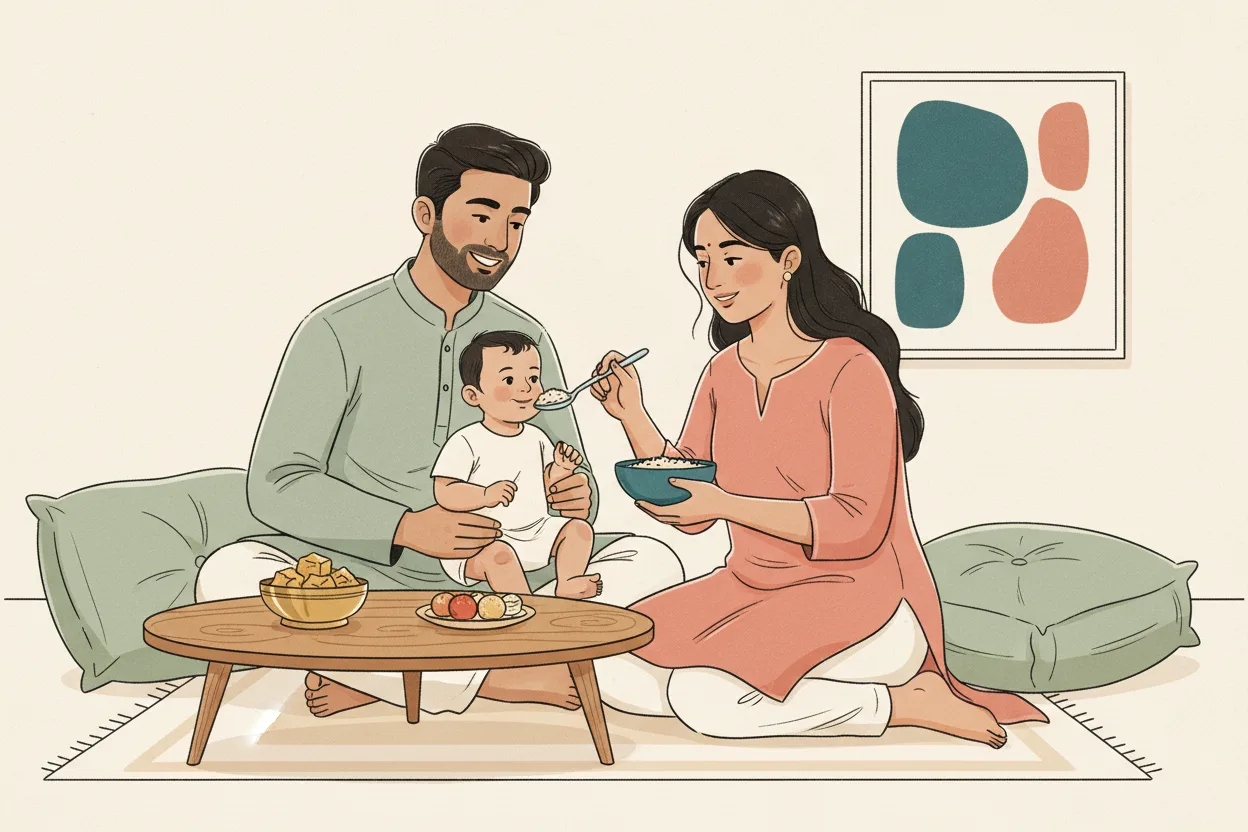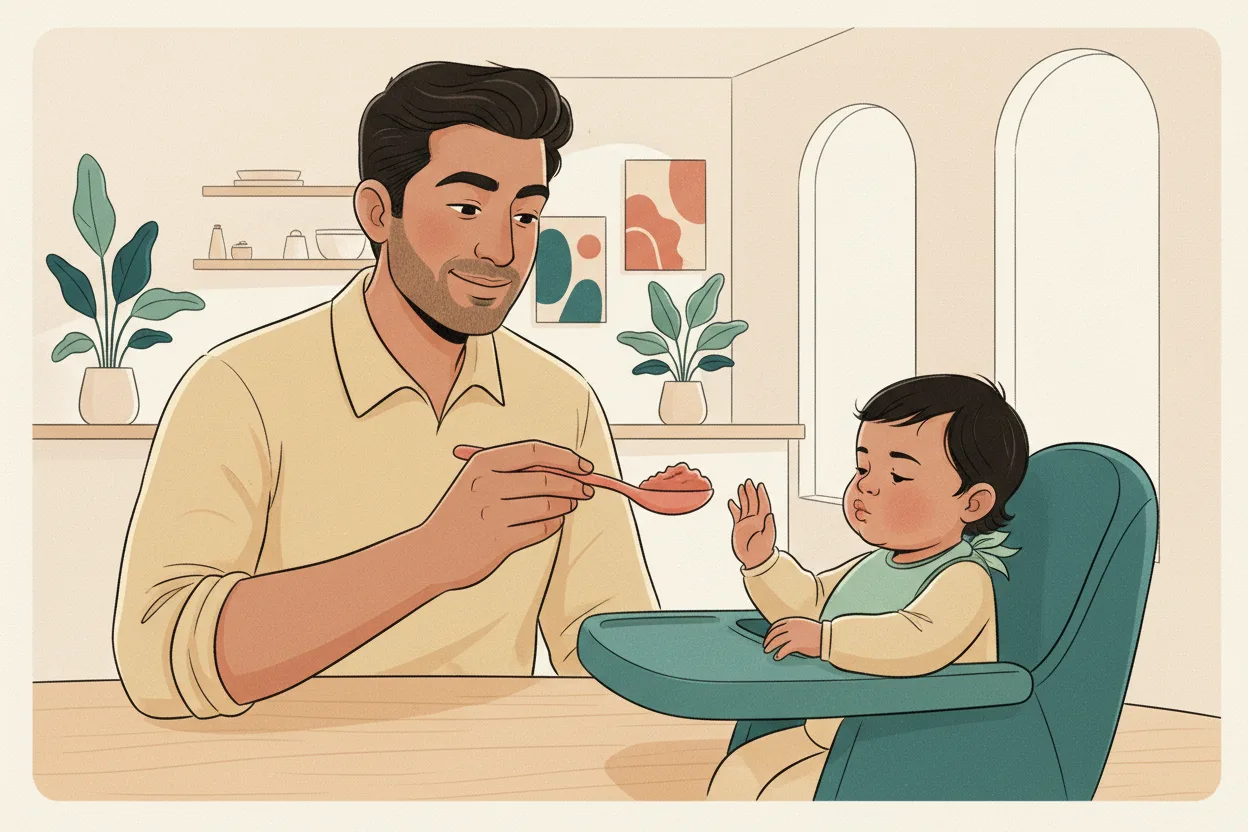

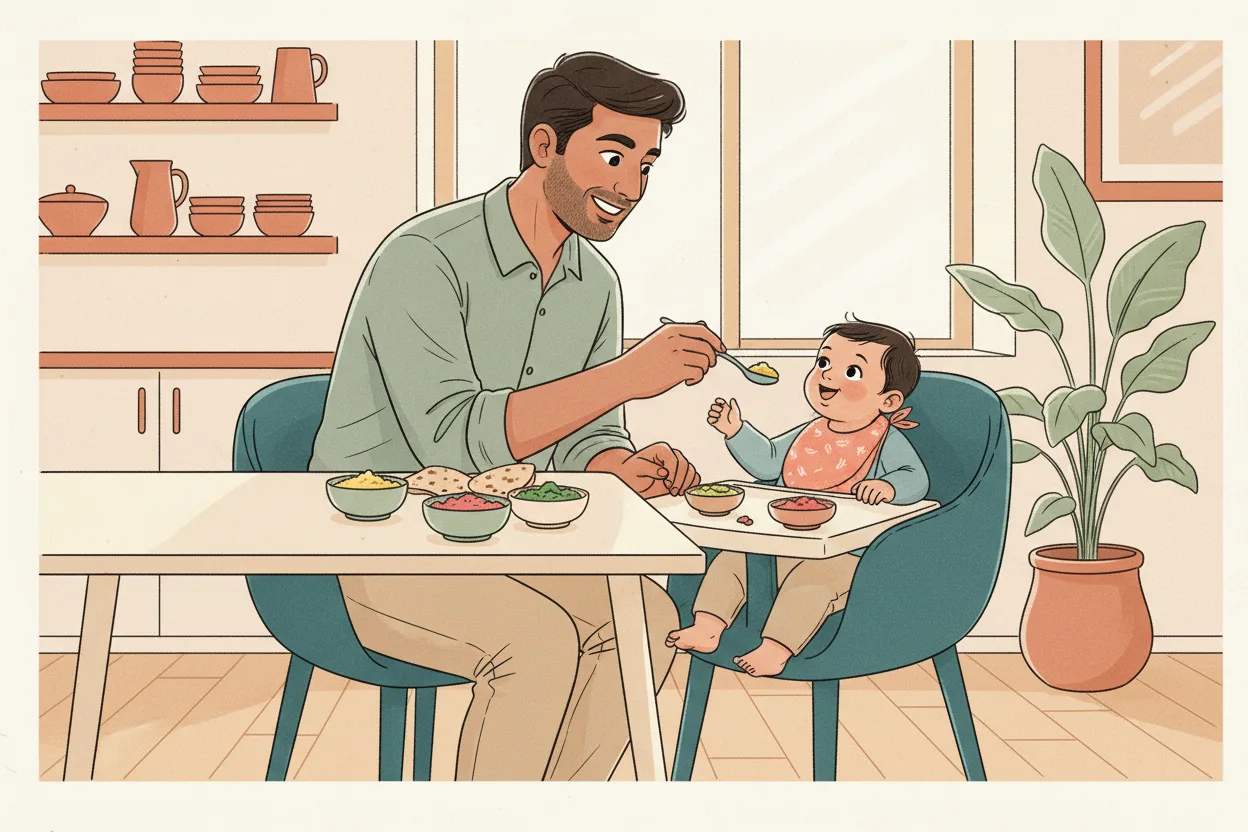
Rotate in new proteins, a wider range of fruits and vegetables, and thicker, lumpier textures — WHO's complementary feeding guideline states that babies 6-23 months need a genuinely diverse diet, not a narrow rotation of the same two or three foods. If you've been stuck on dal-khichdi for weeks, this is your cue to branch out.
Not medical advice — consult your pediatrician before making major changes to your baby's diet, especially around allergens or any feeding difficulty.
Why the Same Rotation Stops Working
Most parents start solids with a handful of safe, easy foods — mashed banana, dal water, khichdi, a single vegetable puree. That's the right way to begin. But sticking with that same short list for weeks becomes a problem for two reasons.
First, the AAP notes that adding iron-rich foods to a baby's diet at around 6 months matters because breast milk alone no longer meets rising iron needs, and a rotation of low-iron foods like rice, banana, and plain dal doesn't close that gap. Second, WHO's complementary feeding guideline is specific that infants and young children 6-23 months should consume a diverse diet, with animal-source foods (meat, fish, or eggs) and fruits and vegetables consumed daily — a rotation of two or three repeating dishes falls well short of that.
How Many Meals a Day, Alongside Milk
Variety matters, but so does structure. NHS guidance states that by around 7-9 months, babies should gradually move towards eating 3 meals a day (breakfast, lunch, and an evening meal), alongside their usual milk feeds. The same NHS guidance notes that babies under 12 months don't need snacks between meals — if your baby seems hungry in between, an extra milk feed is the better fill-in than a between-meal snack.
What to Add Next: A Variety Checklist
Use this as a rough weekly target rather than a rigid menu. The goal is variety across groups, not any single "superfood."
| Food Group | Indian Options to Rotate In | Why It Matters |
|---|---|---|
| Iron-rich foods | Ragi, moong dal, spinach, egg yolk, minced chicken or mutton, fortified cereal | AAP: iron needs rise sharply from 6 months |
| Animal-source foods | Egg, fish, chicken, mutton (well-cooked, minced or shredded) | WHO: daily animal-source foods recommended 6-23 months |
| Fruits | Papaya, mango, sapota (chikoo), pear, mashed apple | WHO: daily fruit intake recommended |
| Vegetables | Pumpkin, bottle gourd (lauki), carrot, beetroot, spinach | WHO: daily vegetable intake recommended |
| Grains beyond rice | Ragi, jowar, oats, wheat (soft roti, dalia) | Rounds out the same "diverse diet" WHO recommends above |
Introduce Allergens Now, Not Later
If you've been avoiding egg, peanut, or fish out of caution, the current guidance points the other way. HealthyChildren.org (AAP) advises that once a baby is ready for solids, offering small amounts of allergenic foods like egg and peanut early can actually help, rather than delaying them.
In practice, that same AAP guidance translates to a thin smear of peanut butter mixed into a familiar puree, a spoon of well-cooked egg yolk, or a small piece of soft fish, introduced one at a time, in small amounts, at home where you can watch for a reaction.
Know what a reaction looks like. Introducing a new allergen at home only works as a safety plan if you know what to watch for. If your baby shows signs such as widespread hives, facial or lip swelling, repeated vomiting, or breathing difficulty after a new food, treat it as a possible serious reaction: HealthyChildren.org (AAP) states that for anyone experiencing anaphylaxis, epinephrine should be given right away, followed immediately by a call for emergency help and transfer to a hospital. A mild reaction limited to a small rash around the mouth can usually just be reported to your pediatrician, but any sign of swelling or breathing trouble needs urgent care, not a wait-and-see approach.
Move Past Purees: Textures Matter Too
Variety isn't just about which foods you offer — it's also about how they're prepared. KidsHealth (Nemours) advises offering a baby a variety of tastes and textures from all food groups by 8-9 months, including fork-mashed or cut-up family foods rather than only smooth purees.
This is good news for Indian kitchens: soft roti torn into small pieces, fork-mashed dal-rice, or well-cooked vegetable sabzi mashed with a fork are exactly the kind of family food this stage calls for. Once your own cooking is soft and mild enough, it can double as baby food directly, with no separate "baby menu" required.
If baby refuses a new food: don't give up after one try. The AAP advises that repeatedly offering a food a baby initially refuses, rather than giving up, increases the odds it will later be accepted, and that it can take ten or more tries before a baby's taste buds accept something new.
Safety Rules That Don't Change
A few rules stay fixed no matter how much variety you add.
- No honey before 12 months. HealthyChildren.org (AAP) warns that honey should not be given to babies under 12 months because of the risk of infant botulism — this includes honey mixed into food or used to sweeten anything.
- No added salt or sugar. NHS guidance states that salt and sugar should not be added to a baby's food or cooking water — season with mild spices, ghee, or a squeeze of lemon instead.
- Cut round or hard foods small. HealthyChildren.org (AAP) recommends cutting new foods into pieces no larger than half an inch to reduce choking risk, especially round foods like grapes — the same applies to grapes, cherry tomatoes, or small pieces of paneer.
Keep Breastfeeding Going Alongside the New Foods
Expanding the food list doesn't mean cutting back on milk. WHO states that breastfeeding should continue alongside complementary foods up to 2 years of age or beyond, not stop once solids expand. New foods are additions to milk feeds, not replacements for them at this stage.
What about water? Once solids are underway, it's fine to offer small sips of plain water with meals. HealthyChildren.org (AAP) advises that around 6 months, you can start offering your baby a little water — roughly 4-8 oz (0.5-1 cup) a day — from an open or straw cup, mainly to build cup-drinking skills rather than for hydration, since that water intake isn't meant to replace breast milk or formula as the main fluid source at this age.
Gear That Makes Variety Easier
| Product | Price Range | Where to Buy |
|---|---|---|
| Soft-tip weaning spoon set | Rs. 200 – Rs. 500 | Amazon.in / FirstCry |
| Steamer-cum-masher / food mill | Rs. 500 – Rs. 1,500 | Amazon.in |
| Divided silicone plate | Rs. 400 – Rs. 900 | FirstCry |
| Ice-cube tray for freezing purees | Rs. 150 – Rs. 400 | Amazon.in |
A steamer-cum-masher lets you cook and mash a new vegetable or dal in one step, which makes trying a new food most days far less effort than it sounds. Freezing extra portions in an ice-cube tray also means one bigger cooking session can cover several days of variety.
How long batch-cooked food actually keeps. Since Indian households often cook dal, khichdi, or a sabzi puree in bulk for the week, it helps to know the limits. University of Illinois Extension's Feeding My Baby program advises that homemade baby food should be refrigerated in a tight-fitting container and used within about 1-2 days — cooked meat, fish, and eggs are more perishable and best used within 1 day — while portions moved to the freezer stay at best quality for about a month. Label each batch with the date so nothing lingers past that window.
Frequently Asked Questions
My 7-month-old still only eats khichdi and banana. Is that a problem? It's a common starting point, but it's time to branch out. WHO's guideline recommends a genuinely diverse diet with daily animal-source foods and daily fruits and vegetables from 6 months onward, and the AAP notes that iron-rich foods specifically matter at this stage since breast milk alone isn't enough. Add one new food group at a time rather than overhauling everything at once.
When can I give egg or peanut butter? The AAP advises offering small amounts of allergenic foods like egg and peanut early, once your baby is ready for solids, rather than delaying them. Start with a small amount at home, one new allergen at a time.
Can I just mash up whatever the family is eating? Yes, once the texture is right. KidsHealth advises fork-mashing or cutting up whatever the rest of the family eats by 8-9 months, as long as it's free of added salt, sugar, and honey, and cut small enough to avoid choking.
My baby spat out a new vegetable — should I stop offering it? No. The AAP's advice on picky eating is to keep offering foods a baby initially refuses — it can take ten or more tries before a food is accepted.
Do I need to cut back on breastfeeding as I add more foods? No. WHO recommends continuing breastfeeding alongside complementary foods up to 2 years or beyond. Treat new foods as additions to milk feeds, not a replacement.
Is it safe to give grapes or cherry tomatoes at this age? Only if cut small. The AAP recommends cutting round foods like grapes into pieces no larger than half an inch to prevent choking.
How many solid meals should my baby be having by now? NHS guidance says babies should gradually move towards 3 meals a day by 7-9 months, alongside milk feeds, and that babies under 12 months don't need separate snacks — offer extra milk instead if your baby seems hungry between meals.
Should I be giving my baby water now that they're eating solids? Small sips are fine. HealthyChildren.org (AAP) advises offering around 4-8 oz of water a day from an open or straw cup from about 6 months, mainly to build cup-drinking skills — it isn't meant to replace breast milk or formula as the main source of hydration yet.