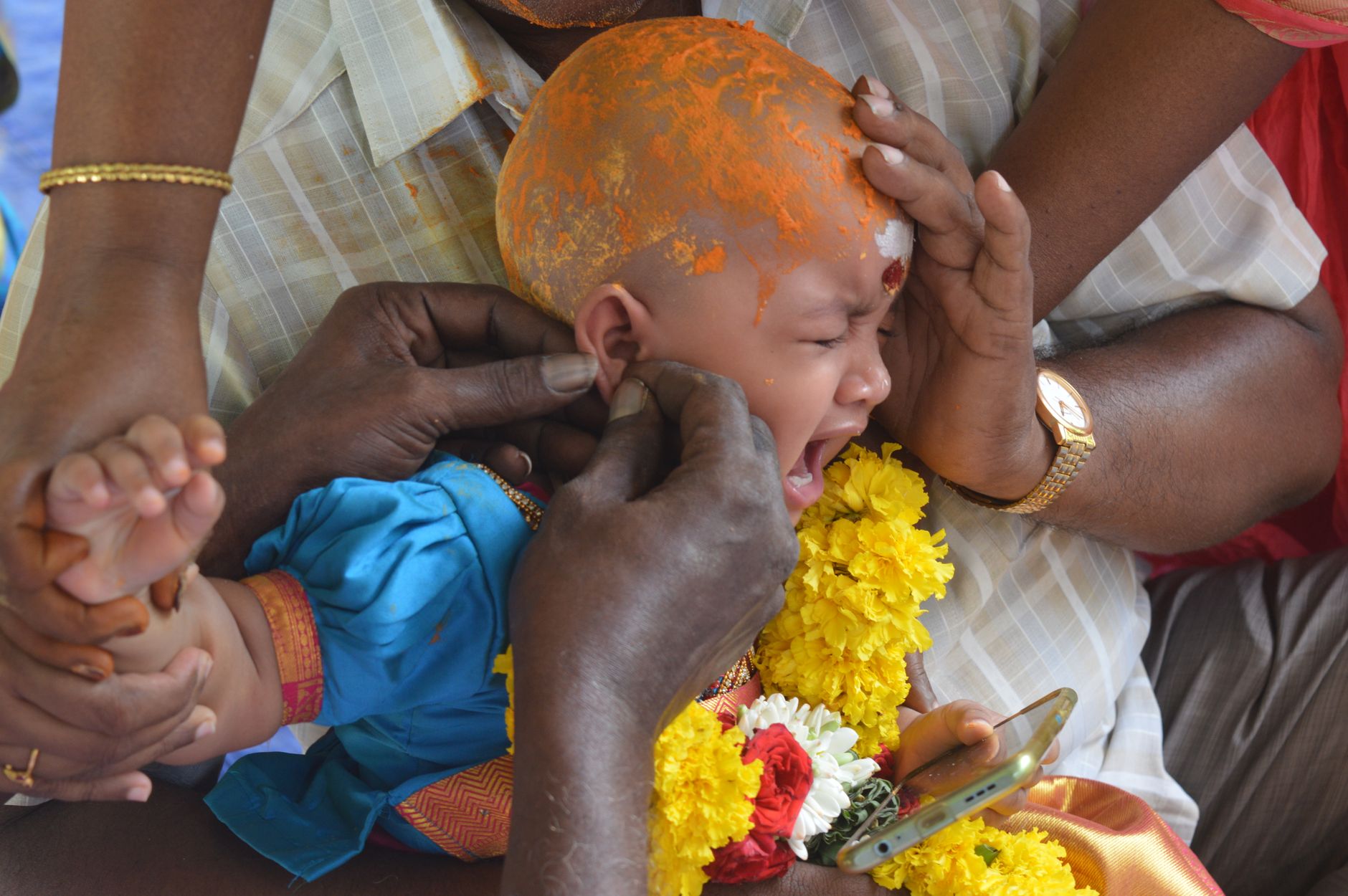

Sudden, ear-piercing screaming in an otherwise healthy 11-month-old is almost always a normal part of development, not a medical problem — HealthyChildren.org (AAP) explains that babies this age are developing object permanence, the understanding that people and objects still exist even when out of sight, which drives a strong new urge to keep a parent close and audible. If your baby has no fever, isn't tugging at an ear, and seems well otherwise, the screaming is very likely this phase rather than something needing treatment.
Not medical advice — consult your pediatrician if you're worried about pain, fever, or any of the red flags below.
Why This Starts Around 11 Months
HealthyChildren.org (AAP) explains that somewhere between 8 and 12 months, babies develop object permanence — understanding that people and things still exist even out of sight. Once she knows you still exist even when you've stepped out of the room, the new goal becomes getting you back — fast, and loudly.
At the same time, real words are still a way off. HealthyChildren.org (AAP) explains that toward the end of the first year, babies communicate what they want by pointing, crawling toward it, or gesturing at their target, alongside sounds like "mama" used to summon a parent. Screaming is simply the loudest tool in that same toolbox — the one that's guaranteed to get a reaction.
Grandparents and relatives may frame this as "spoiled" or "too much pampering." It isn't. It's a baby whose brain and communication skills are developing exactly on schedule, using the only volume control she has.
Screaming for Attention vs. Something Else
Before you settle into "it's just a phase," rule out the two things that get confused with it most often at this age: pain and separation anxiety.
Rule out pain first. HealthyChildren.org (AAP) states that the most common symptom of an ear infection is pain, and a baby too young to say her ear hurts often shows it only through irritability and crying — so you can't rule out an infection by mood alone. If the screaming is new, sudden, and paired with pulling at an ear, fussing more at night, or feeding poorly, get it checked.
Don't blame teething. HealthyChildren.org (AAP) states that teething does not cause fever, diarrhea, diaper rash, or a runny nose. A new symptom like sudden screaming shouldn't be written off as teething if any of these show up alongside it — that delays finding the real cause.
Know the one sign that means "call the doctor now." Cleveland Clinic guidance states that a fever of 100.4°F (38°C) or higher is a clear sign that crying needs medical attention rather than being ordinary developmental fussiness.
| Sign | Likely explanation | What to do |
|---|---|---|
| Screams when you leave the room, calms once you're back, no fever | Attention-seeking / object permanence | Respond calmly, don't rush every time |
| Screams mainly at bedtime or when handed to someone else, clings hard | Separation anxiety | Short practice separations, warm goodbyes |
| Tugging an ear, poor feeding, fussier at night | Possible ear infection | See your pediatrician |
| Fever of 100.4°F (38°C) or higher | Needs medical attention | Call your pediatrician the same day |
Is It Separation Anxiety Instead?
Attention-seeking screaming and separation anxiety look similar and often overlap around this age, but they aren't quite the same thing. HealthyChildren.org (AAP) states that most babies develop more robust separation anxiety at around 9 months of age — a genuine fear of a parent being gone, not just a bid for attention.
The practical difference: separation anxiety spikes specifically at goodbyes and drop-offs — with a grandparent, a crèche, or when you leave for work. Attention-seeking screaming happens any time your baby wants you, even when you're already right there in the room.
How to Respond Without Reinforcing It
The instinct in most homes — understandably — is to run to the baby the instant she screams. That instinct is right for real distress, and wrong to drop out of worry about "spoiling" her.
HealthyChildren.org (AAP) states that you cannot spoil a young baby with attention, and responding to her cries doesn't teach her to cry more — in fact it's linked to less crying overall. Keep answering real needs: hunger, a wet diaper, being startled, being scared.
Where you can gently shift things is in the moments that are clearly attention-seeking rather than a real need. HealthyChildren.org (AAP) advises that positive attention is the most powerful tool for shaping behavior — praising and noticing calm, happy moments reinforces them, while calmly ignoring mild, non-dangerous screaming (once your baby is already getting plenty of attention for good behavior) tends to reduce it over time.
In practice, that looks like this:
- Give her lots of attention, eye contact, and praise when she's playing calmly or babbling instead of screaming.
- When she screams for attention with no other explanation, acknowledge her calmly ("I'm here") without a big, excited reaction, and stay nearby.
- Keep the response consistent across everyone at home — if grandparents react dramatically every single time, she'll pick up that screaming gets a bigger reaction from them than from anyone else.
- Offer an early word or gesture as a replacement — encourage pointing, reaching, or a word like "up" so she has a quieter way to ask.
Getting the Whole Family on the Same Page
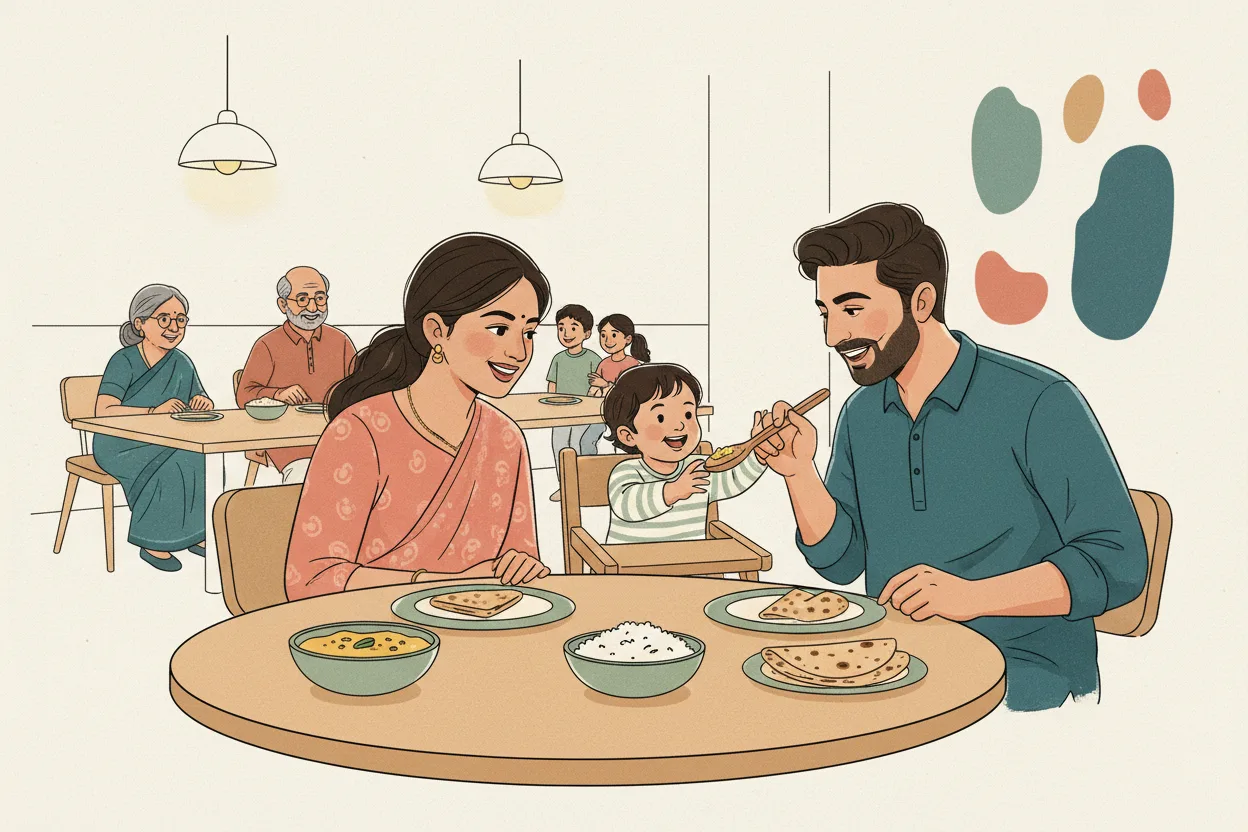
This is often the hardest part in a multi-generation Indian home: everyone loves the baby, and everyone has a theory. A grandparent may worry she's in pain, or that not rushing in every single time is neglect.
Share the same simple checklist with everyone in the house: no fever, no ear-tugging, feeding normally, happy otherwise — and it's fine to respond calmly rather than urgently. Getting dad and other caregivers to react the same calm, consistent way (not just mum) tends to shorten the phase, since the baby isn't getting a more dramatic reaction from one particular person.
Frequently Asked Questions
Is it normal for an 11-month-old to suddenly start screaming when she didn't before? Yes. HealthyChildren.org (AAP) explains that babies this age are developing object permanence — realizing you exist even out of sight — which often shows up as a new, louder push to keep you close.
Could this be teething instead? Probably not the screaming itself. HealthyChildren.org (AAP) states that teething does not cause fever, diarrhea, diaper rash, or a runny nose, so if any of those are present, look beyond teething for the explanation.
When should I actually worry and call the doctor? When there's a fever. Cleveland Clinic guidance states that a fever of 100.4°F (38°C) or higher means the crying needs medical attention, not just patience. Ear-tugging, poor feeding, or new fussiness at night are also reasons to get her checked.
Will responding to her every scream spoil her? No. HealthyChildren.org (AAP) states that you cannot spoil a young baby with attention, and answering her calls for help is linked to less crying overall, not more.
How is this different from separation anxiety? HealthyChildren.org (AAP) states that most babies develop more robust separation anxiety around 9 months — a real fear tied to a parent leaving. Attention-seeking screaming, by contrast, happens even when you're already in the room, purely to get a reaction.
My mother-in-law says I'm ignoring her too much. What do I say? Explain that you're answering every real need — hunger, discomfort, fear — the moment it happens. The only shift is skipping the big, dramatic reaction when there's no fever, pain, or hunger behind it — everyone in the house doing that the same way is what makes it work.