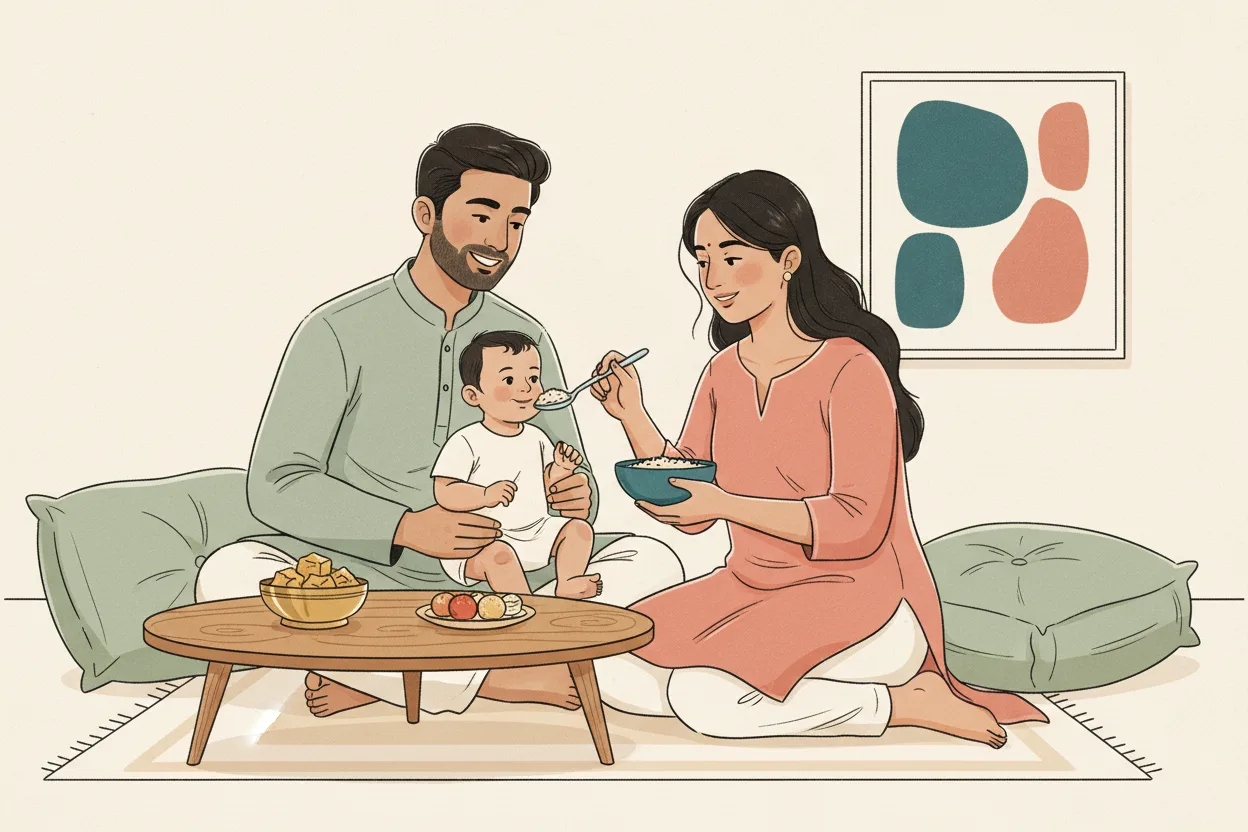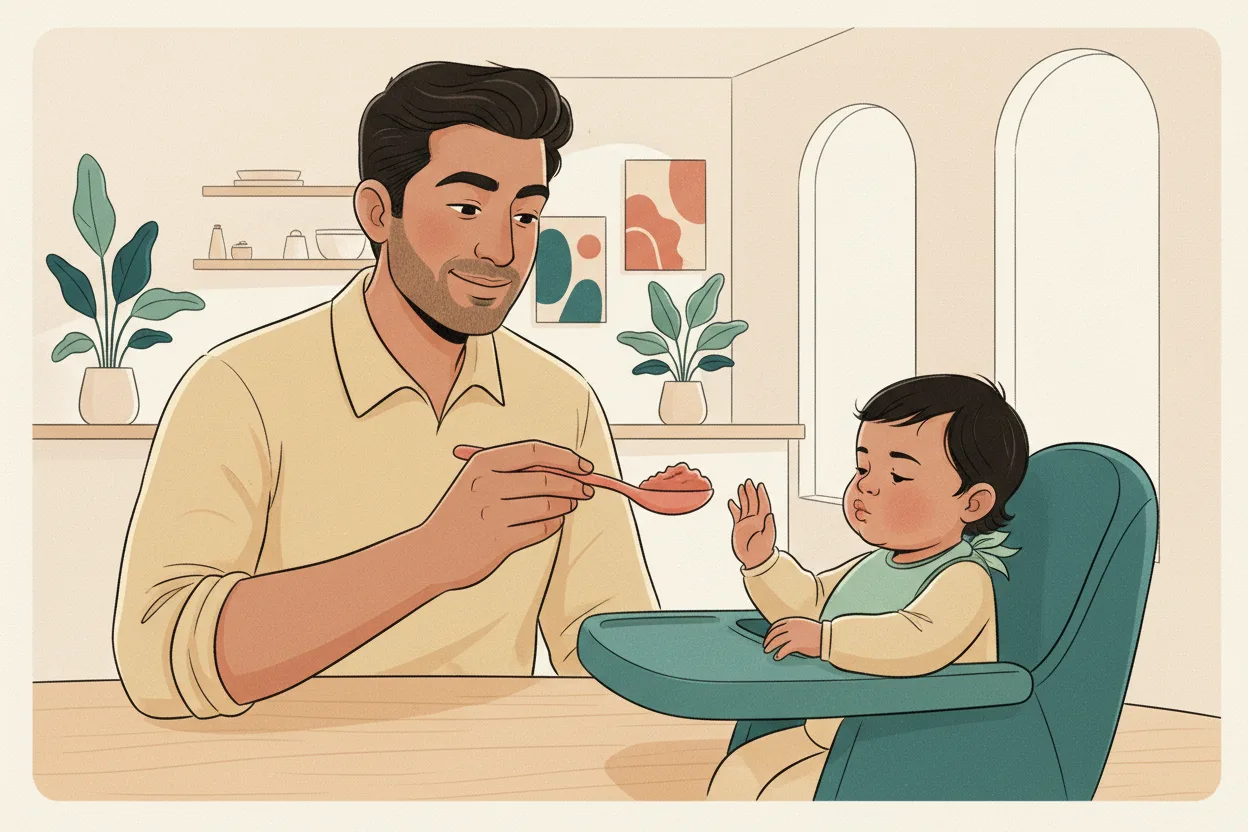

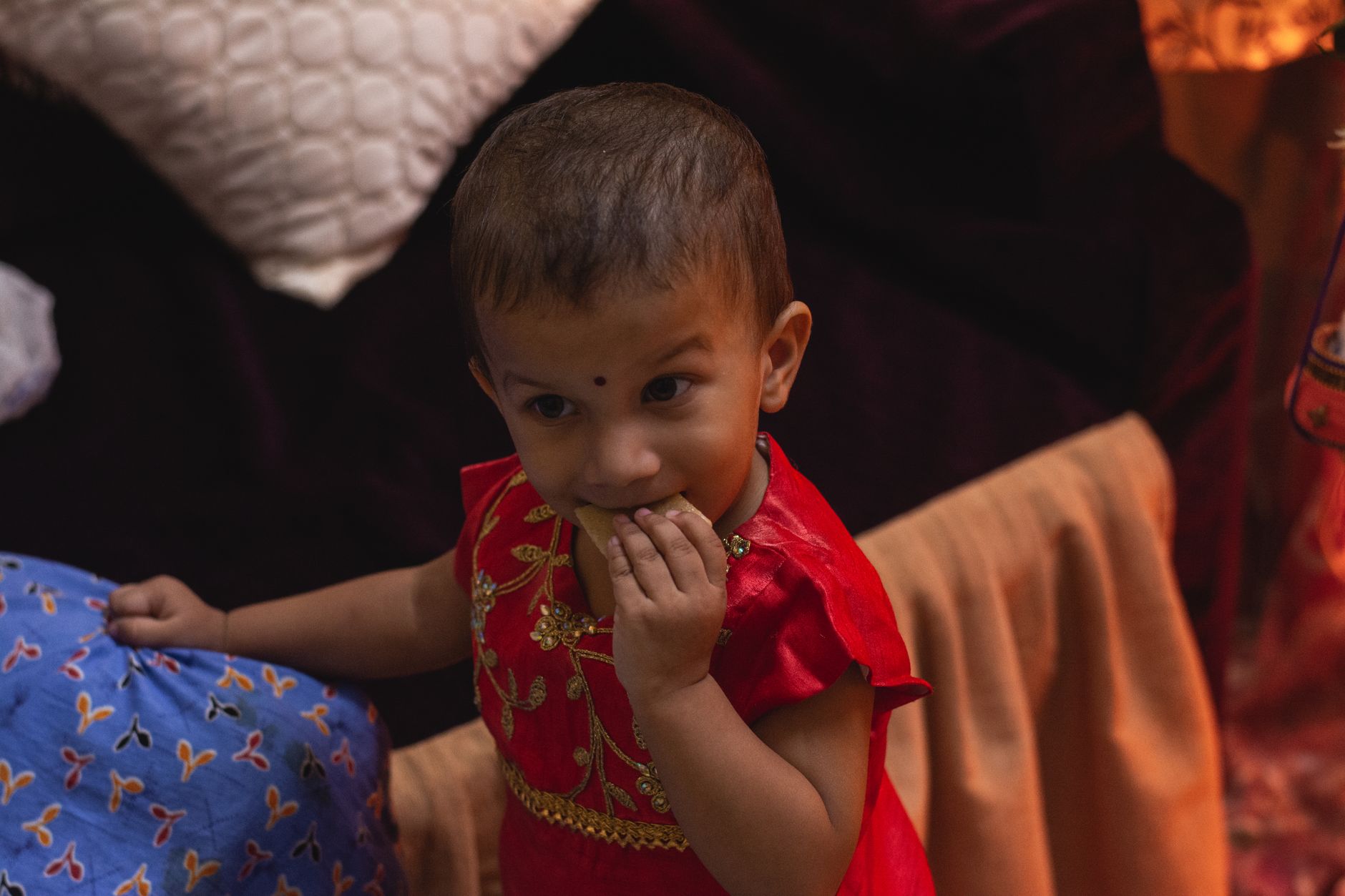
Your toddler suddenly finishing two idlis, asking for more khichdi, and going back for a second helping of upma is normal — not a growth-spurt myth and not overeating. WHO's complementary feeding guideline (via NCBI Bookshelf) states that a child needs about 550 kcal a day from food on top of breastmilk at 12–23 months, up from roughly 300 kcal a day at 9–11 months. That's a real, measurable jump in what their body needs — right around the age many Indian toddlers are also cutting down on breastmilk and leaning harder on table food.
Not medical advice — consult your pediatrician for guidance specific to your child.
Why This Feels Like Such a Big Jump
A few months ago, your baby was managing a few spoons of puree. Now they're working through real portions of dosa, idli, khichdi, and upma, and it can feel like they're eating constantly. WHO/UNICEF's Infant and Young Child Feeding guidance (via NCBI Bookshelf) states that a breastfed infant 9–23 months needs 3–4 meals a day, plus 1–2 nutritious snacks depending on appetite. That's five to six eating occasions in a day — more than double what a younger baby was doing — so the sheer frequency of "wanting food" goes up on its own, separate from any single meal getting bigger.
A small katori of khichdi, a soft idli mashed into dal, or a scrambled egg with a piece of buttered toast can each cover a meaningful share of that daily energy need. There's no single "correct" Indian meal template here — what matters is offering that 3–4 meals plus 1–2 snacks rhythm and letting your toddler's appetite decide the amount within it. If you want a rough size to aim for on the plate, HealthyChildren.org (American Academy of Pediatrics) advises that a child's serving should be approximately one-quarter of an adult's — so a quarter-sized katori of dal or khichdi next to a quarter portion of dosa or upma is a reasonable amount to start with, topped up if your toddler asks for more.
The Appetite Swings the Other Way Too
Confusingly, the same age range where appetite jumps is also where it can suddenly drop. HealthyChildren.org (American Academy of Pediatrics) advises that after the first birthday, growth rate slows and a one-year-old really doesn't need as much food as before — about 1,000 calories a day divided across three meals and two snacks is enough for growth, energy, and good nutrition. So a toddler who eats a lot one week and barely touches their plate the next isn't doing anything wrong; appetite naturally becomes less predictable once the rapid infant growth rate levels off.
| Age | Extra energy needed from food (on top of milk) | Typical meal pattern |
|---|---|---|
| 9–11 months | ~300 kcal/day | 3–4 meals, appetite-led snacks |
| 12–23 months | ~550 kcal/day | 3–4 meals + 1–2 snacks |
| From 12 months | ~1,000 kcal/day total | 3 meals + 2 snacks |
Keep Breastfeeding Alongside the Bigger Appetite
A bigger appetite for solids doesn't mean it's time to stop the breast. WHO recommends continued, on-demand breastfeeding up to two years of age or beyond, alongside solid foods. If your toddler still wants to nurse morning and night even while eating full plates of khichdi and dal during the day, that's exactly the pattern WHO describes — solids and breastmilk are meant to work together at this stage, not replace each other on a fixed schedule.
Why the Poop Changes Too
The same diet shift that's driving the bigger appetite is also behind the change you're probably noticing at diaper time. HealthyChildren.org (American Academy of Pediatrics) notes that as babies and toddlers eat more solid food, all the varying shades of yellow, brown, and even green that follow are considered perfectly acceptable. A darker, thicker, more food-flecked stool than the milk-fed poop you were used to is exactly what a solids-heavy diet looks like — only red, black, or white stool needs a doctor's attention.
Frequency shifts too, and that's also normal. HealthyChildren.org (American Academy of Pediatrics) explains that normal bowel movement frequency at this stage ranges anywhere from one poop every several days to several poops every day. If your toddler used to go once a day and now goes every other day — or the reverse — that swing alone isn't a red flag.
What actually counts as constipation is much narrower than most parents assume. Cleveland Clinic explains that constipated toddlers typically poop fewer than two times a week, and the stool is hard, dry, and painful to pass. A bulkier or less frequent stool that's still soft and passes without straining doesn't meet that bar — it's just what digesting more solid food looks like.
The Nutrient This Big-Appetite Phase Is Really About: Iron
As your toddler relies less on iron-fortified breastmilk or formula and eats more table food, iron becomes something to actively watch. NIH's Office of Dietary Supplements states that children 1–3 years need about 7 mg of iron a day, and lists lentils, spinach, kidney beans, and peas among the food sources that supply it. In Indian kitchen terms, that's regular servings of moong or masoor dal, rajma, palak, and matar worked into the same meals driving the bigger appetite — the extra eating is a chance to build these in, not just extra volume for its own sake.
Practical Products That Help at This Stage
| Product | Price Range | Where to Buy |
|---|---|---|
| Divided/partition toddler plate | Rs. 250 – Rs. 700 | Amazon.in / FirstCry |
| Stainless steel toddler katori-thali set | Rs. 400 – Rs. 1,200 | Amazon.in |
| Silicone bib with food-catcher pocket | Rs. 300 – Rs. 800 | FirstCry |
A divided plate is genuinely useful once portions grow — it keeps dal, sabzi, and a grain visually separate so you can see at a glance whether a meal covers the different food groups, rather than judging by total volume alone.
Frequently Asked Questions
My 13-month-old wants to eat almost non-stop — is that a growth need or just habit? Mostly a real growth need. WHO's guideline puts the extra energy needed from food at 550 kcal/day at this age, and WHO/UNICEF's feeding guidance expects 3–4 meals plus 1–2 snacks daily — which naturally reads as "eating a lot" compared to a few months ago.
His poop got darker and bulkier since he started eating more solids. Should I worry? No, as long as it's soft and passes easily. HealthyChildren.org considers shades of yellow, brown, and green all normal on a solids-heavy diet. Cleveland Clinic reserves the "constipation" label for fewer than two stools a week with hard, painful poop.
How many times a day should my toddler poop now? There's a wide normal range. HealthyChildren.org says anywhere from one poop every several days to several a day is normal at this stage, so a change in frequency alone isn't a cause for concern.
Should I stop breastfeeding now that he's eating so much solid food? No. WHO recommends continuing on-demand breastfeeding to two years or beyond, right alongside a growing solids intake — the two aren't in competition.
Is there a nutrient I should be focusing on now that he's off milk-heavy feeds? Iron. NIH's Office of Dietary Supplements puts the requirement at 1–3 years at about 7 mg a day, easily built from dal, rajma, spinach, and peas worked into regular meals.
Everyone told me toddlers eat a lot, so why did his appetite suddenly drop after turning one? That's also normal. HealthyChildren.org notes that growth slows sharply after the first birthday, and about 1,000 calories a day across three meals and two snacks is enough — so a drop in appetite around now is expected, not a feeding problem.