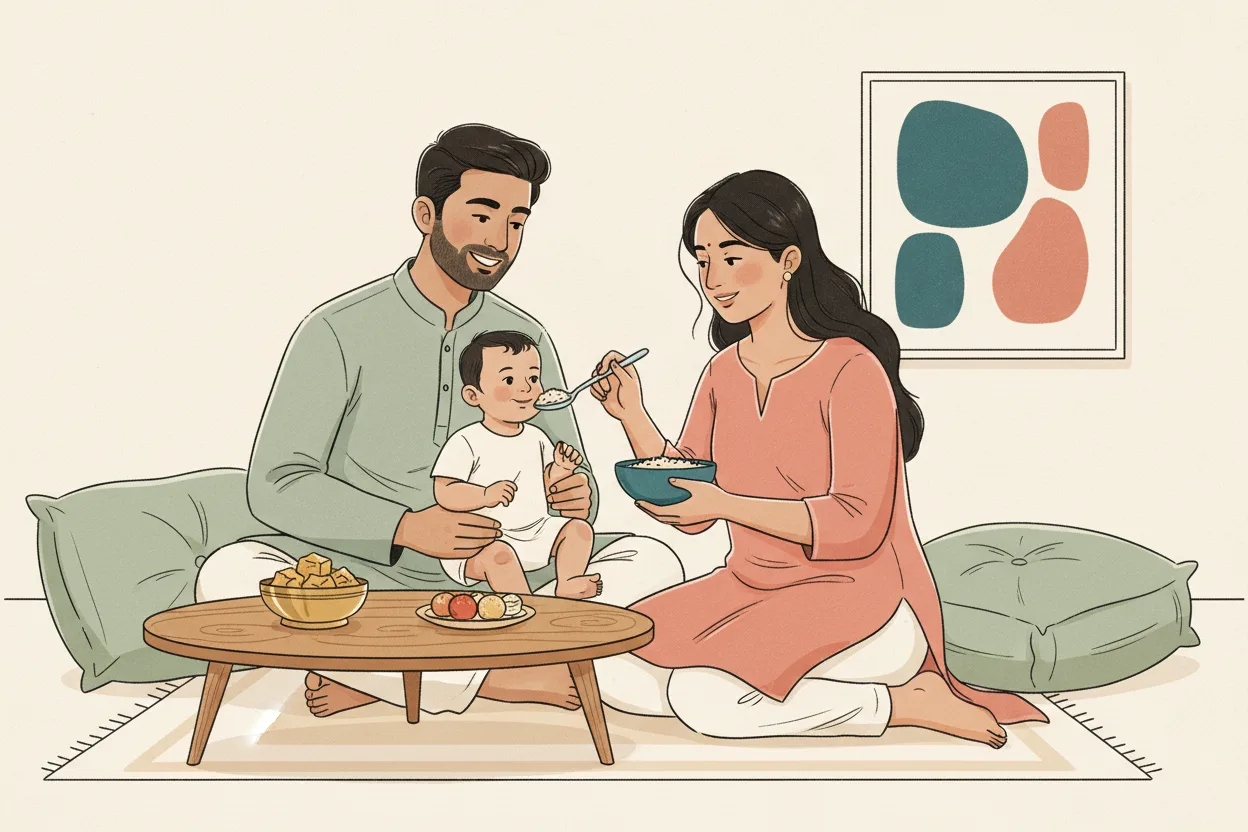

A toddler's weight gain slowing down once they start walking is usually normal, not a warning sign — growth velocity is highest at birth and progressively decreases all the way through the toddler years. The real question is whether your child's plateau is that normal slowdown, or something worth flagging to a pediatrician — and what to actually put on the plate for a small eater who still needs to gain.
Not medical advice — consult your pediatrician about your child's individual growth.
Why the Plateau Happens Once They Start Walking
Once a baby becomes a toddler — walking, exploring, burning energy all day instead of lying still — their rate of weight gain naturally tapers off. That's expected biology, not a sign that something has gone wrong.
It gets more layered if you're still breastfeeding and your toddler is resisting cow's milk — a common combination in Indian homes. WHO recommends continuing breastfeeding to 2 years of age or beyond alongside complementary foods, so a nursing toddler skipping the milk glass hasn't dropped off any recommended path.
WHO's minimum meal frequency standard for breastfed toddlers aged 9–23 months is at least three feedings of solid, semi-solid, or soft food a day, on top of breastfeeds — their stomachs are small, so frequent, calorie-dense meals matter more than any single "big" meal.
Normal Plateau, or Time to See the Pediatrician?
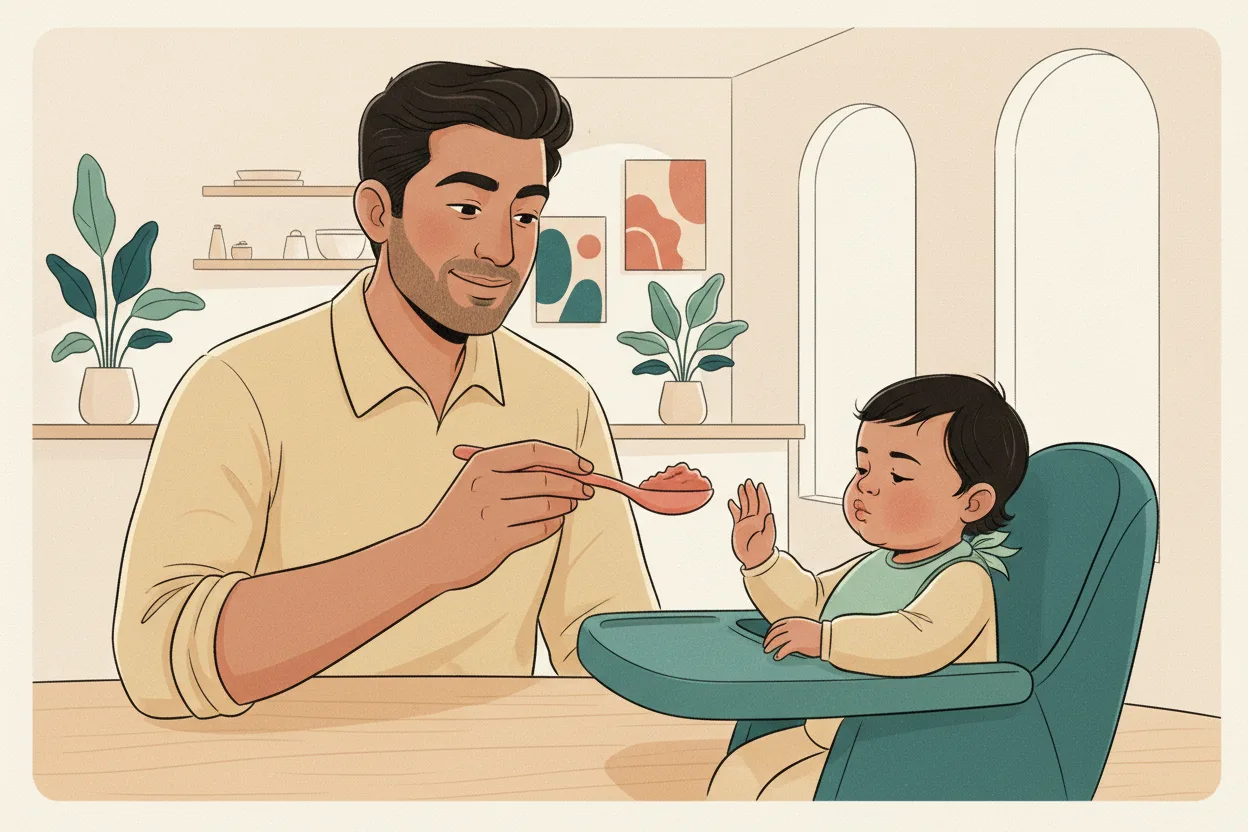
Picky eating and food refusal are a normal developmental stage for toddlers, not automatically a sign of a feeding problem — most toddlers go through a phase of eating less, or eating the same three things on repeat.
The growth chart is what turns a feeling into a fact. Minor shifts up or down a percentile line are common in the first couple of years. But a toddler's weight crossing two or more major percentile lines downward is considered a sign of faltering growth that a pediatrician should evaluate. Bring your child's growth chart (from their vaccination booklet or pediatrician records) to the next visit and ask directly: has she crossed percentile lines, or just moved along the same curve more slowly?
Calorie-Dense Foods That Help a Small Eater
Once your pediatrician has ruled out a concern and you just need to help a small eater eat more in fewer bites, the fix isn't more food — it's denser food.
The Indian Academy of Pediatrics' parent guideline on complementary feeding recommends raising the energy density of everyday food by adding ghee, oil, or jaggery, rather than serving larger portions a small eater won't finish. This is where South Indian home cooking already has an advantage — most of these ingredients are pantry staples.
IAP's community nutrition guidance lists dairy products, eggs, and legumes/nuts among the food groups a toddler's daily diet should draw from — the same everyday ingredients (curd, paneer, egg, dal, groundnuts) already at the center of most Indian kitchens.
| Add this | To | Why it works |
|---|---|---|
| A spoon of ghee | Khichdi, dal-rice, idli, roti | Raises energy density without adding bulk |
| An extra egg | Bhurji, upma, dosa batter | Eggs are a heme-iron food toddlers can eat daily |
| Finely ground nuts (almond, cashew) | Porridge, dal, laddoo mixed in | Calorie-dense, but must be ground — see below |
| Paneer or curd | Cubed into meals, or mixed into rice | Dairy protein and fat in a small volume |
| Mashed banana or dates | Mixed into porridge or given as snack | Naturally sweet, calorie-dense finger food |
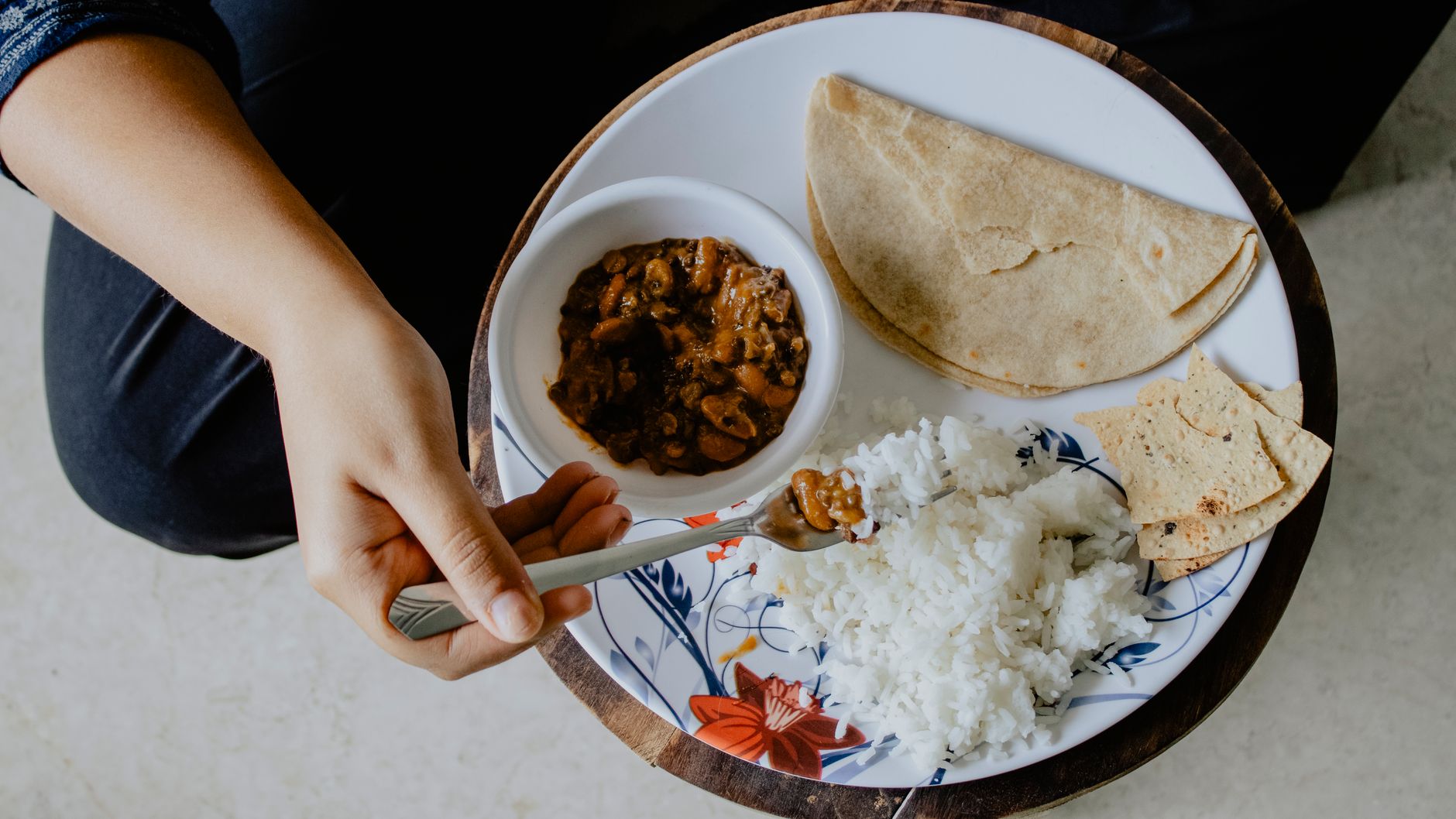 A simple roti-dal-rice plate — the everyday base most of these calorie-dense additions go into. Photo: Vivaan Rupani on Pexels.
On nuts specifically: they're one of the most calorie-dense foods you can offer, but whole or chopped nuts are a choking hazard and should be kept from children until about 4 years old. For a toddler, that means finely ground into a powder and stirred into porridge, dal, or a laddoo — never handed over whole or roughly chopped.
Iron matters here too. A National Family Health Survey-5 analysis found an estimated 67.1% anemia prevalence among under-five children in India — a useful reminder that a small eater who's also skipping iron-rich foods needs those covered, not just calories. Eggs, dal, and leafy greens cooked soft are the easiest wins alongside the ghee and dairy.
The Cow's Milk Question
If your toddler is over a year and resisting the milk glass, that's usually not the crisis it feels like. Plain whole cow's milk is suitable to introduce at 12 months as part of a balanced diet — but it's one part of the diet, not the whole thing, and a toddler who's still breastfeeding and eating solids well doesn't need to be pushed hard on the milk glass. For a toddler between 1 and 2 years who isn't breastfeeding, IAP guidance points to roughly 300-500 mL of milk a day as the appropriate range — less if breastfeeding continues, so a nursing toddler drinking little or no milk from a cup isn't falling short of anything.
Don't overcorrect by offering milk in place of meals: too much cow's milk can blunt a toddler's appetite for other foods, and some experts say it makes it harder for the body to absorb iron. A toddler who won't drink milk but eats dal, curd, paneer, egg, and ghee-laced khichdi well is doing better than one who drinks milk but eats little else.
Feed Without Turning It Into a Battle
The instinct when a toddler is a small eater is to push — "one more bite," a chase around the room with the bowl, a screen on to distract her into finishing the plate. CDC guidance advises letting your child decide how much they want — she doesn't need to finish everything on the plate at every meal.
In practice, that means offering the calorie-dense food (the ghee-laced khichdi, the egg bhurji, the paneer cubes) early in the meal while she's hungriest, rather than saving it as a reward for finishing something else. Small, frequent plates beat one large meal she's pressured through — especially with a small stomach and WHO's recommended minimum of three solid meals a day on top of breastfeeds.
Pantry Staples Worth Stocking
| Item | Typical price | Where to buy |
|---|---|---|
| A2/cow ghee (500g) | Rs. 350 – Rs. 700 | Amazon.in |
| Multigrain atta (1kg) | Rs. 90 – Rs. 160 | Amazon.in |
| Almonds/cashews for grinding (250g) | Rs. 150 – Rs. 300 | Amazon.in |
| Paneer (fresh, 200g) | Rs. 60 – Rs. 100 | Local dairy or grocery store |
None of this requires anything you can't already find in a nearby kirana store — the shift is in how you cook what's already in your kitchen, not in buying new products.
Frequently Asked Questions
My toddler started walking and suddenly seems to be eating less. Is that normal? Often, yes. Growth velocity naturally decreases as babies move into the toddler years, and busier, more mobile toddlers often eat smaller amounts more often rather than large sit-down meals. Track it on the growth chart at your next pediatrician visit rather than judging by a single week.
Should I stop breastfeeding to get her to drink more cow's milk? No. WHO recommends continuing breastfeeding to 2 years or beyond alongside solid foods. Breastfeeding and cow's milk aren't a trade-off — a toddler who nurses well and eats solids doesn't need to be forced onto milk.
Is it okay that she won't touch nuts? Whole and chopped nuts are a choking hazard until about age 4 anyway, so she shouldn't be given them whole. Grind them into a fine powder and mix into porridge, dal, or a laddoo — most toddlers won't notice they're there.
How do I know if this is picky eating or something more serious? Picky eating is a normal developmental stage for most toddlers. The clearer signal is the growth chart: crossing two or more percentile lines downward is what pediatricians look for as a sign of faltering growth, not day-to-day appetite swings.
How many meals should a still-breastfeeding toddler get? At least three solid or semi-solid meals a day for a breastfed toddler aged 9–23 months, on top of continued breastfeeds — their stomachs are small, so frequency matters as much as portion size.
Should I worry about iron, not just weight? Worth asking your pediatrician about, especially if solids are limited. Anemia affects an estimated two-thirds of under-five children in India nationally, and eggs are one of the easiest iron-rich foods to add to a toddler's daily plate alongside dal and leafy greens.