
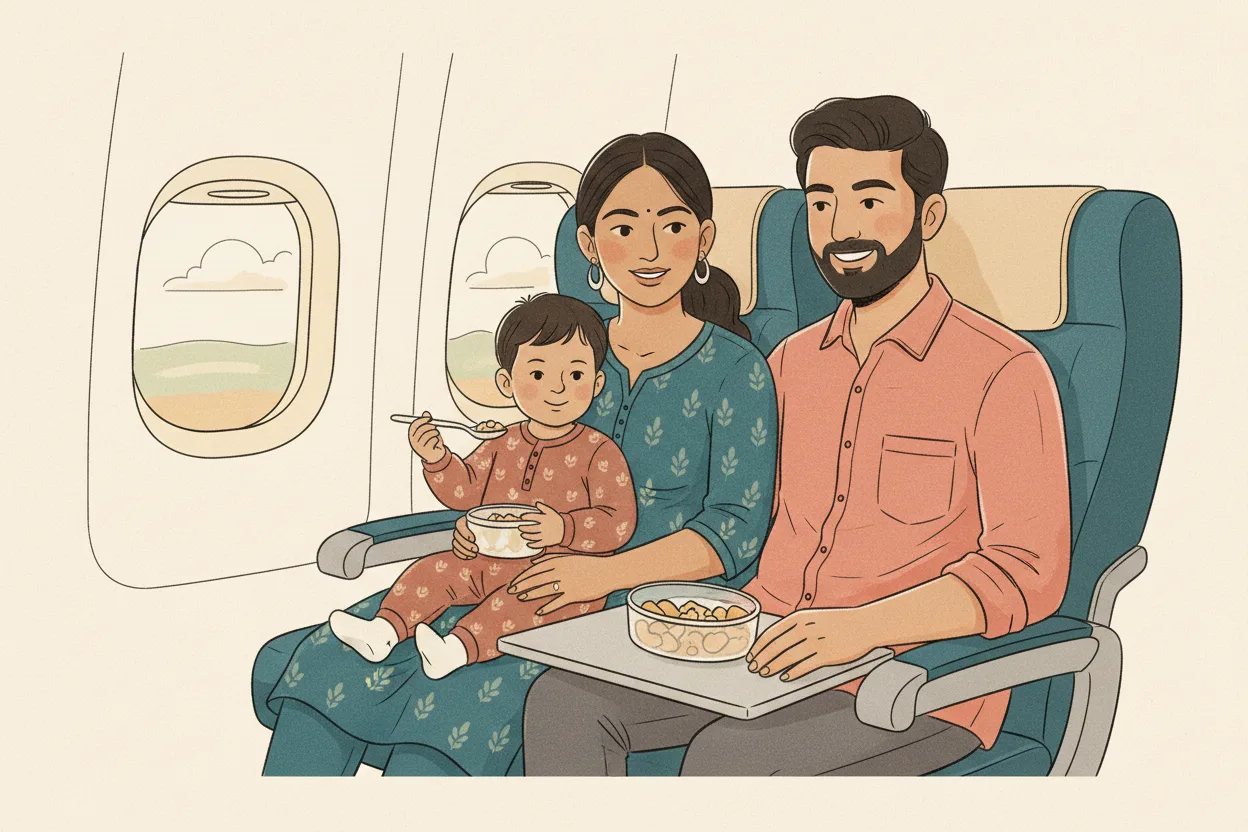
Pack snacks your toddler already eats, keep them sealed and shelf-stable for a long layover, and save something to suck or chew for takeoff and landing. That covers most of what makes a toddler snack bag work on an international flight from India — the rest is knowing what to leave out.
Not medical advice — consult your pediatrician before travel, especially with a known food allergy or any ongoing health condition.
Why a Long-Haul Flight Needs a Different Snack Plan
Two things set an international trip apart from packing for a quick outing. Customs: many countries restrict or discard fresh fruit, dairy, and meat at the border, so lean on factory-sealed, shelf-stable snacks that need no refrigeration. Duration: a non-stop long-haul or a layover routing means feeding your toddler for hours with no kitchen, no fridge, and a trolley on its own schedule — pack enough to be independent of it.
What to Pack: Safe, Shelf-Stable Options
Good picks travel well, need no heating or cooling, and stay tidy in a middle seat:
- Roasted chana, murmura (puffed rice), or roasted makhana in a spill-proof pouch
- Idli or dhokla cubes, cooled and packed airtight, for the first few hours
- Plain crackers, rice cakes, or unsalted rusks
- Cheese or paneer cubes (check the destination's dairy customs rules first)
- Soft-cooked sweet corn or steamed vegetable sticks in a leak-proof container
- Ripe banana, cut fruit in a spill-proof container, or unsweetened fruit purée pouches
Bring more than you think you'll need — delays add unplanned hours, and an empty snack box mid-flight is worse than an overpacked bag.
What to Leave at Home
Skip a few categories, no matter how convenient they look at the airport shop:
- Round, firm, or hard foods. HealthyChildren.org (the AAP's parent site) advises that "round, firm foods, such as hot dogs or grapes, can be served if completely chopped into tiny pieces" — and that nuts, popcorn, and hard or sticky candy should be skipped altogether until age 4. Pre-cut grapes at home; a moving cabin is not the place to do it.
- Anything sugary. The AAP advises avoiding foods and drinks with added sugar for children under 2 — that rules out most airport-shop cookies, candy, and flavoured yoghurt tubes.
- Extra-salty snacks "just in case." HealthyChildren.org (AAP) notes that almost 80% of the sodium in most diets already comes from processed foods like breads, salty snacks, and packaged meats — a toddler on a modern travel diet is not short on sodium.
Takeoff, Landing, and the Long Haul
Ears. Cabin pressure changes during takeoff and landing cause that sharp ear pain in small children. The CDC's Yellow Book (2026 edition) advises that "pressure in the middle ear can be equalized by swallowing or chewing; thus, infants should nurse or suck on a bottle, and older children can try chewing gum." For a toddler past the bottle stage, a sippy cup of water or a chewy snack timed to the descent works the same way.
Hydration. Cabin air is dry, and a toddler can get dehydrated without obvious symptoms early on. HealthyChildren.org (AAP) lists a dry mouth and urinating less frequently than usual as early warning signs — worth checking periodically on a long sector.
Juice and sleep. A juice box is a useful, mess-contained option mid-flight, but keep it in check. The AAP recommends limiting fruit juice to no more than 4–6 oz (120–180 ml) a day for a toddler — and it's worth skipping right before sleep on an overnight leg, since a sugary drink close to bedtime works against you.
Jet lag. Once you land, don't fight the clock in silence — the CDC's Yellow Book (2026 edition) jet lag guidance advises timing "eating, sleeping, getting light" to your destination's time zone, not your home one. Serving your toddler's meals and snacks on destination time from day one is one of the simplest ways to nudge their body clock into sync.
Motion sickness. It's one thing you likely don't need to plan snacks around: the CDC's Yellow Book (2026 edition) notes that children under 2 years old don't usually get motion sickness, with susceptibility rising later and peaking between ages 7 and 12 — so a toddler in this age group is unlikely to need any special snack timing for it.
Before You Fly
Test new snacks at home first. A long-haul flight is not the place to discover a food allergy. The AAP (via HealthyChildren.org) recommends giving one new food at a time, waiting at least a day, and watching for reactions such as diarrhea, rash, or vomiting. Do this at home, days before departure — not with a snack bought at duty-free.
Have a diarrhea plan. Travel, new water, and new food sometimes upset a toddler's stomach mid-trip. The CDC's Yellow Book (2026 edition) states that "the main treatment for TD in children is ORS" — oral rehydration solution, not solid snacks — and young children face greater dehydration risk than adults. Pack a couple of ORS sachets in your carry-on; they take almost no space and solve a problem solid food can't.
What to Buy: Travel Snack Gear
| Item | Price Range (INR) | Where to Buy |
|---|---|---|
| Spill-proof snack container / snack cup | Rs. 250 – Rs. 600 | Amazon.in / FirstCry |
| Insulated lunch pouch (keeps cut fruit/idli cool for a few hours) | Rs. 400 – Rs. 900 | Amazon.in |
| Reusable silicone food pouches (for purées) | Rs. 300 – Rs. 700 for a set | FirstCry |
| Travel bib (wipeable, rolls up small) | Rs. 200 – Rs. 500 | Amazon.in |
| Oral rehydration solution (ORS) sachets | Rs. 20 – Rs. 50 per sachet | Amazon.in / any pharmacy |
A spill-proof snack container and an insulated pouch cover most of this list — buy those two first, then fill them with foods your toddler already enjoys.
Frequently Asked Questions
Can I carry cut fruit and homemade snacks through international security and customs? Rules vary by country, so check your destination's customs website before you fly. Factory-sealed, shelf-stable snacks clear more easily than fresh produce or homemade food — pack those as your main stock and treat home-cut fruit as a same-day extra.
My toddler refuses to chew gum for ear pain — what else works? A sippy cup of water or a chewy snack timed to start just before descent does the same job — the mechanism is swallowing and chewing, not gum specifically.
Is it okay to give my toddler a sugary treat just this once, since it's a long flight? That's a judgment call, but the AAP's baseline guidance is to avoid added sugar under age 2 — plan a non-sugary distraction (a new toy, a screen, a window seat) as your main tool, and keep treats occasional.
How much water should I offer during a long flight? There's no single number to hit — instead, watch for the early signs of dehydration, like a dry mouth or fewer trips to the toilet than usual, and offer water regularly.
What should I pack in case my toddler gets diarrhea on the trip? A few ORS sachets and a plan for where to buy more at your destination. ORS, not solid food, is the main treatment for travel-related diarrhea in children — call your pediatrician if it doesn't improve within a day or two.
Should I introduce a new snack brand or flavour for the first time on the flight? No — test any new food at home first, one at a time, days before you travel, so you're not managing a first reaction thousands of feet in the air.