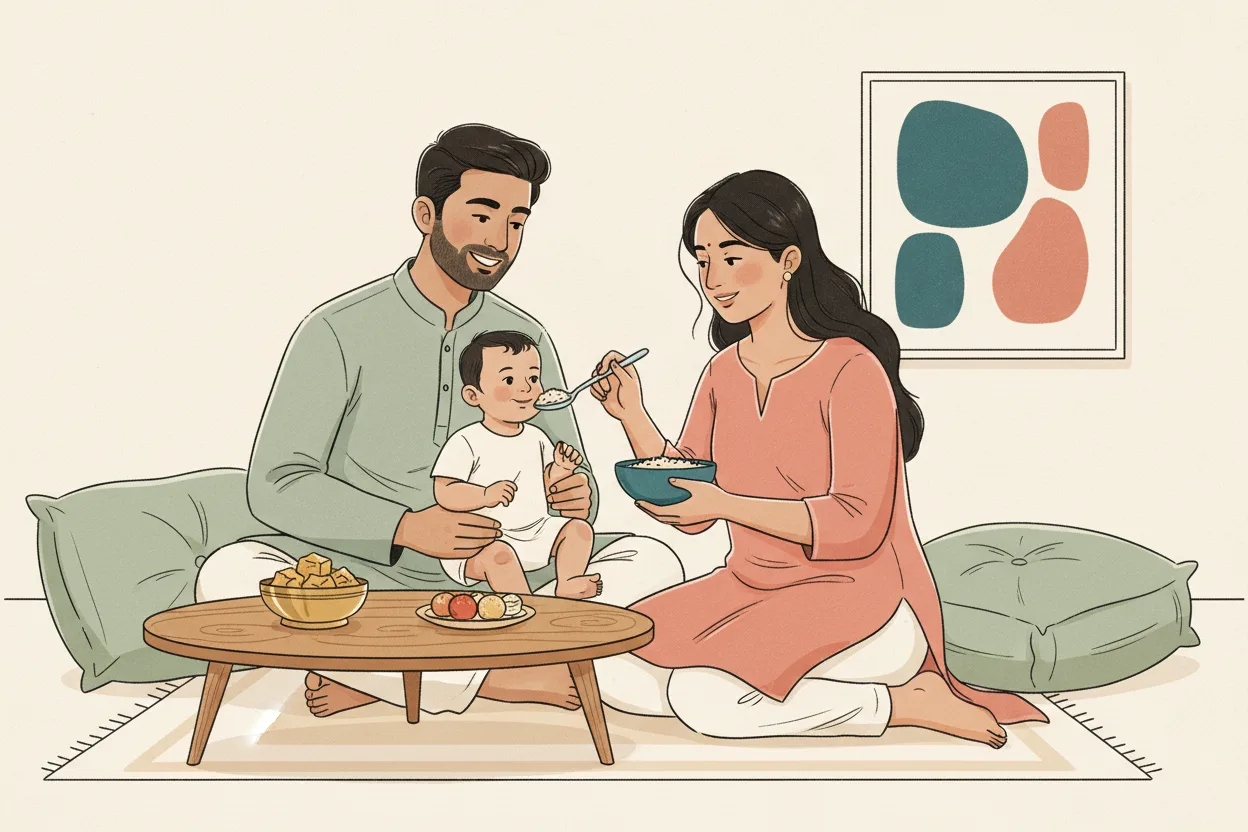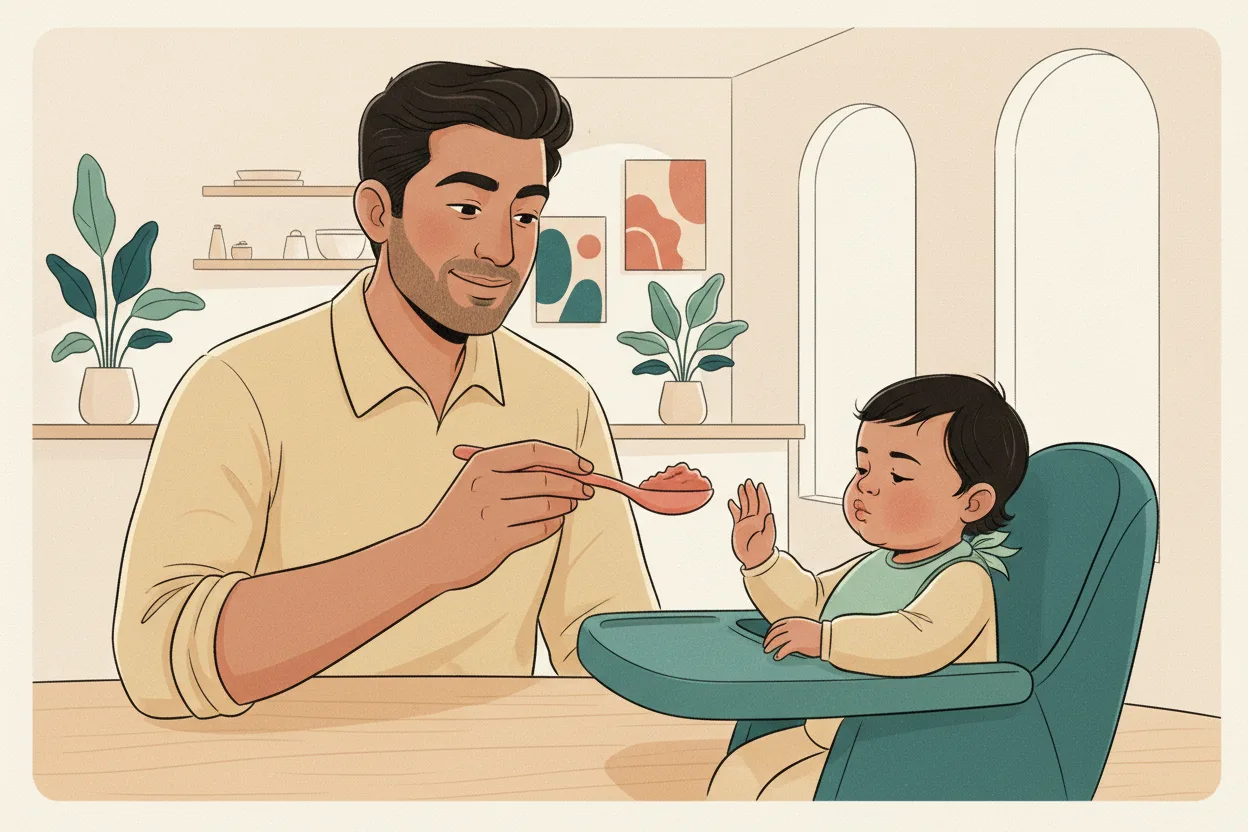


There's no medical deadline that says breastfeeding must stop at one year. WHO's infant and young child feeding guidance states that parents should continue frequent, on-demand breastfeeding until 2 years of age or beyond — so a first birthday is not a cutoff, only a milestone. If you and your baby are ready to wean now, that's a valid choice too. This is how to do it gradually, comfortably, and without the guilt.
Not medical advice — consult your pediatrician for guidance specific to your baby.
The India-Specific Pressure
In many Indian families, the pressure runs both ways. One grandparent may push you to stop nursing "before the baby gets too attached," while another insists you're stopping far too early. The Indian Academy of Pediatrics' 2016 Infant and Young Child Feeding Guidelines state that continued breastfeeding for up to two years and beyond, alongside appropriate complementary foods, is the recommended approach after six months — so if anyone tells you a one-year-old "should" be off the breast, that isn't backed by India's own pediatric guidance.
Either way, this is a decision for you and your baby, not the room full of relatives. Dad's support matters here too — distracting a toddler during a dropped feed, taking over a bedtime or two, or simply backing you up when advice gets loud all make weaning easier on you.
Why Gradual Beats Cold Turkey
HealthyChildren.org (AAP) advises that weaning goes more smoothly when the number and length of feeding sessions taper off over weeks or even months, rather than stopping all at once. Your body and your toddler both adjust better to a slow decline than a sudden stop.
Stopping abruptly isn't just harder on your toddler — it's harder on you physically too. La Leche League International warns that weaning too quickly, instead of reducing feeds gradually, can lead to plugged ducts, mastitis, or a breast abscess.
A practical way to pace it: KellyMom's lactation guidance recommends working on eliminating one feeding at a time, spacing each drop 3 to 7 days apart — slower is always fine, but going faster than that raises your risk of discomfort and supply problems.
Start with the feed your toddler seems least attached to — often a daytime feed rather than the first-thing-in-the-morning or before-bed ones. Replace it with a cuddle, a snack, or a cup of milk at the same time each day, so the routine stays even as the feed disappears.
If your breasts feel full and uncomfortable between dropped feeds, KellyMom's lactation guidance advises hand-expressing or pumping just enough to relieve the fullness, not a full feed's worth — removing only a small amount for comfort still lets your supply keep tapering down.
There's No "Right" Age to Be Ready
If your one-year-old still nurses often and shows no sign of slowing down, that is completely normal. KellyMom notes that children reach readiness to wean at very different ages — one child may be ready around 18 months, while another isn't ready until closer to 2, 3, or 4 years old.
If you're wondering whether your toddler is showing early signs, Nemours KidsHealth notes that nursing in shorter sessions than before, getting easily distracted while nursing, and breastfeeding less as solid foods take up a bigger share of the diet are all signals a child may be ready to start dropping feeds.
It's also common to feel touched-out and want your body back, while still treasuring the bond nursing gives you — both feelings can sit together side by side. Weaning at one year doesn't erase that bond, and continuing past one year is just as valid a choice.
What Changes Once Nursing Stops
Once your toddler is fully weaned after 12 months, MedlinePlus (NIH) explains that a child of 1 or 2 years old should move to plain whole cow's milk, because the fat in whole milk is needed for their developing brain — skip low-fat or skimmed versions at this age.
More milk isn't automatically better, though. HealthyChildren.org (AAP) cautions that after the first birthday, milk should be capped at no more than 24 ounces (about 700 ml) a day, since milk is low in iron and can fill a toddler up, crowding out the iron-rich foods — dal, eggs, leafy greens, meat — they need at this stage.
| Stage | What to offer | Roughly how much |
|---|---|---|
| Still nursing 1–2 times/day | Breast milk + whole cow's milk in a cup at other times | As baby wants at the breast |
| Fully weaned, 1–2 years old | Plain whole cow's milk | Up to ~700 ml (24 oz) a day, max |
| Any age post-weaning | Iron-rich solids (dal, egg, greens, meat) | At every main meal |
Managing the Guilt and the Advice
Some days weaning will feel like relief; other days it may feel like a loss, especially around the last feed you ever give. Both reactions are a common, ordinary part of this transition. If you feel unexpectedly low or weepy after cutting feeds, especially if you weaned quickly, that isn't just in your head — KellyMom's lactation guidance notes that weaning causes a drop in prolactin and oxytocin, and the faster the weaning, the more abrupt that hormonal shift and the more likely you are to feel it. If that low mood lingers or feels heavy rather than passing, it's worth mentioning to your doctor. If relatives keep commenting either way, a simple "we're doing what works for us" is a complete answer — you own the decision about your body and your baby.
If you'd rather make the cup transition easier, a few things help:
| Product | Price range | Where to buy |
|---|---|---|
| Toddler open/sippy cup (spill-proof) | Rs. 250 – Rs. 700 | Amazon.in / FirstCry |
| Soft comfort toy for the dropped bedtime feed | Rs. 300 – Rs. 900 | FirstCry |
Frequently Asked Questions
Do I have to stop breastfeeding once my baby turns one? No. WHO recommends continued, on-demand breastfeeding until 2 years of age or beyond. One year is just a common milestone people mention, not a medical requirement to stop.
How fast can I wean without hurting myself? KellyMom recommends dropping one feed at a time, spacing each drop 3 to 7 days apart. Going faster than that raises your odds of engorgement and discomfort.
What happens if I stop too suddenly? La Leche League International warns that sudden weaning can lead to plugged ducts, mastitis, or a breast abscess — another reason to taper gradually rather than stop overnight.
My in-laws say one year is too long to still be nursing — are they right? Not according to India's own pediatric guidance. The Indian Academy of Pediatrics states continued breastfeeding for up to two years and beyond is the recommended approach.
What milk should my toddler drink after weaning? MedlinePlus explains toddlers aged 1–2 should have plain whole cow's milk for the fat it provides. But HealthyChildren.org cautions to cap it at about 700 ml (24 oz) a day so it doesn't crowd out iron-rich foods.
My one-year-old shows zero interest in stopping — is something wrong? No. KellyMom notes that readiness to wean varies widely — some toddlers aren't ready until well past two years old. There's no single right age.