
Most healthy babies past the newborn stage do not need bottles sterilised after every single use — thorough washing is usually enough. The CDC states that daily sanitizing of feeding items may not be necessary for older, healthy babies, if those items are cleaned carefully after each use. The exceptions are the early months and babies with extra health risks — covered below.
Not medical advice — consult your pediatrician for guidance specific to your baby.
Who Still Needs Extra Precaution
Extra care matters more for some babies than others. The CDC advises taking extra steps when preparing feeds for babies younger than 2 months old, babies born prematurely (before 37 weeks), or babies with a weakened immune system. If your baby fits any of these, keep sterilising bottles and teats through the early months rather than switching straight to a simple wash.
What "Sterilising" Actually Means Now
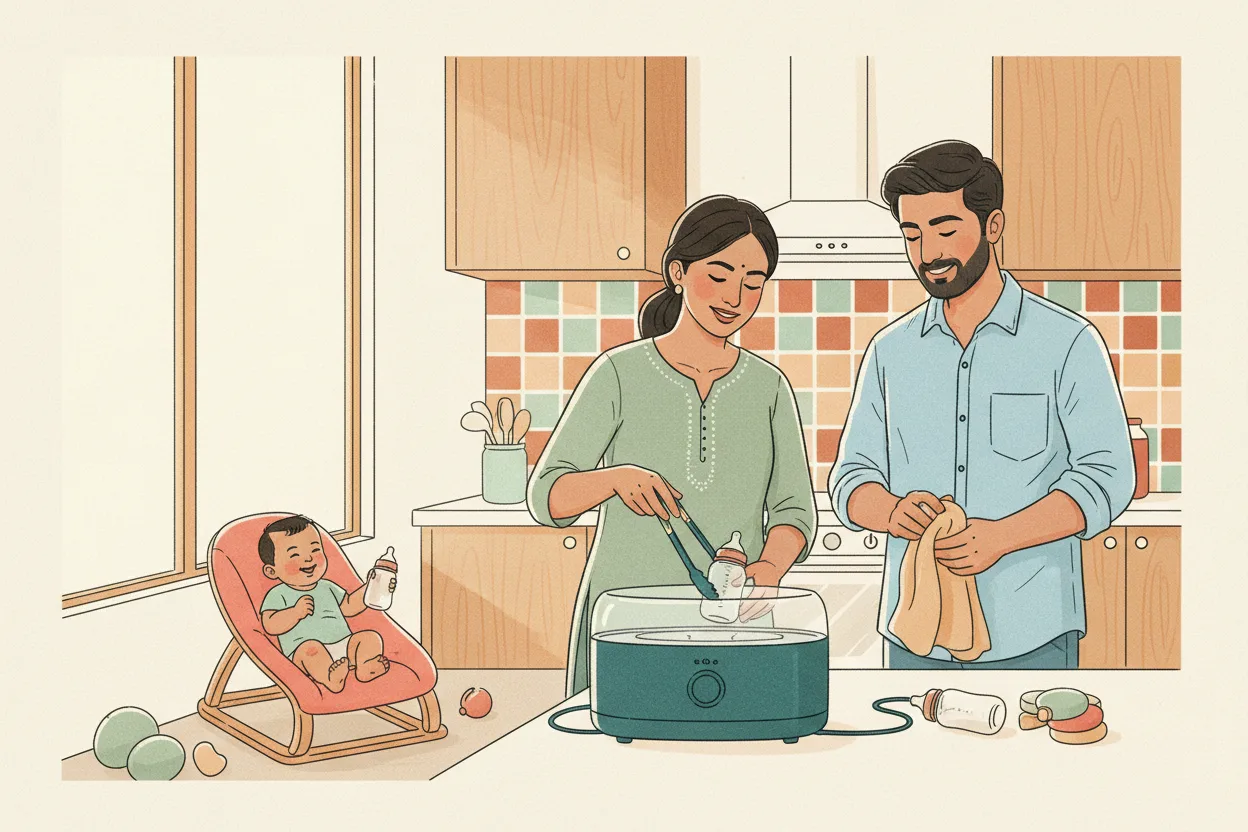
Washing in hot, soapy water and rinsing thoroughly is the baseline for every feed, at every age. The American Academy of Pediatrics (AAP) advises that washing bottles in hot, soapy water and rinsing thoroughly should kill most germs for most healthy babies. If you use a dishwasher, the CDC notes that a hot-water cycle with heated drying, or a sanitising setting, does the sanitising step for you — so a separate boil or steam cycle on top of that is not necessary.
Why the NHS Says 12 Months and the CDC/AAP Say Otherwise
Guidance genuinely differs by country, and it helps to know that upfront rather than get conflicting advice from different sources and assume one of them is wrong.
| Authority | What they say |
|---|---|
| NHS (UK) | Sterilise all feeding equipment, including bottles and teats, until baby is at least 12 months old |
| CDC / AAP (US) | Thorough washing in hot, soapy water is enough for most older, healthy babies |
Both positions come from credible authorities. The NHS sets the more cautious 12-month default for the UK, while the AAP takes a more relaxed view for older, healthy babies in the US. If you'd rather keep sterilising through baby's whole first year, that's a reasonable choice too — the two differ on what's strictly required, not on whether extra caution causes harm.
Once Baby Starts Solids and Shares Family Utensils
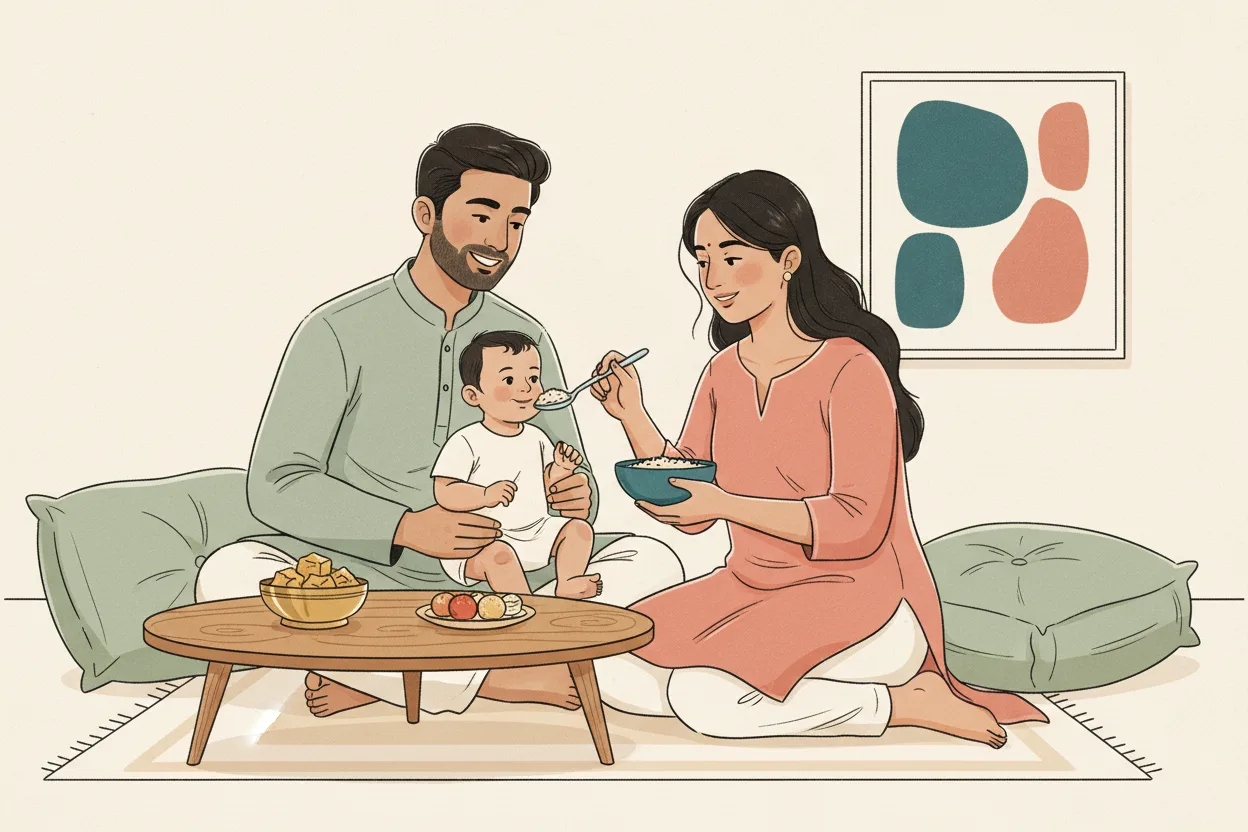
Once your baby is eating solids and starts sharing spoons, cups, or a plate with the rest of the family, sterilising the feeding bottle specifically becomes less central to the conversation — but hygiene overall still matters just as much. The Indian Academy of Pediatrics (IAP) states that bottle feeding carries its own hygiene risk because bottles are difficult to clean and maintain properly, and that unsafe bottle feeding is linked to diarrhoea, dehydration, and malnutrition in children. That is the IAP's case for moving toward an open cup once your baby is developmentally ready, rather than a note about sterilising schedules specifically.
The WHO states that diarrhoeal disease spreads through contaminated food, water, or poor hygiene, and remains a leading cause of death in young children worldwide. That's the real reason behind all the washing and sterilising advice in the first place — it's about what grows on any feeding item that isn't cleaned properly, bottle or cup, not the bottle itself.
Hand Hygiene Matters as Much as the Method
Whoever prepares the feed — parent, grandparent, or nanny — clean hands matter as much as how the bottle was cleaned. The CDC states that washing hands is one of the most effective ways to prevent the spread of diarrhoeal infections. A study in The American Journal of Tropical Medicine and Hygiene found that contamination levels on a caregiver's hands tracked closely with contamination levels inside the baby's bottle in the same household. In other words, however carefully you sterilise, dirty hands at the moment of feeding can undo the work. Make handwashing before every feed as much a habit as the sterilising routine — especially when care is shared across family members or a nanny.
A Simple Way to Think About It
- Under 2 months, premature, or a weakened immune system: keep sterilising, per CDC guidance.
- Older, healthy baby, following US-style guidance: switch to thorough hand-washing or a dishwasher's sanitising cycle — AAP and CDC say this is enough.
- Prefer the more cautious route: continue sterilising until 12 months, per NHS guidance — this is not wrong, just more conservative.
- On solids, sharing family utensils: wash everything — bottle, cup, spoon, thali — thoroughly in hot, soapy water, and keep hands clean at every feed.
Products That Help
| Product | Price Range | Where to Buy |
|---|---|---|
| Electric steam steriliser | Rs. 1,800 – Rs. 4,500 | Amazon.in / FirstCry |
| Bottle and teat cleaning brush set | Rs. 200 – Rs. 600 | Amazon.in / FirstCry |
| Bottle drying rack | Rs. 350 – Rs. 900 | Amazon.in / FirstCry |
A stovetop pot of boiling water is a low-cost alternative to an electric steriliser if you'd rather not buy one, and it's useful to have as a backup during power cuts. The CDC advises putting disassembled feeding items in a pot, covering with water, bringing it to a boil, and boiling for 5 minutes — then removing items carefully and air-drying them without rinsing.
Frequently Asked Questions
Do I need to sterilise bottles differently once my baby starts solid food? Not because of solids specifically — what matters is age and health, not diet. The CDC advises extra sterilising mainly for babies younger than 2 months, born prematurely, or with a weakened immune system. Past that stage, washing well is enough for most healthy babies, whether or not they've started solids.
Is it true I need to sterilise until my baby is a year old? That's the NHS position for the UK: sterilise feeding equipment until baby is at least 12 months old. CDC and AAP guidance for the US takes a more relaxed view for older, healthy babies. Neither is "wrong" — continuing to sterilise through the first year is a safe, reasonable choice if you prefer the more cautious approach.
My mother-in-law insists on boiling the bottles even though my baby is 8 months and eating everything. Is she wrong? Not necessarily — she's following the more cautious guidance some authorities recommend up to 12 months, per the NHS. It isn't required by every guideline for a healthy 8-month-old, but it isn't harmful either, and it can be an easy compromise with family.
Do I need to sterilise the family's utensils if my baby shares food from the same thali? Wash them properly in hot, soapy water, the same as you would a bottle. The IAP notes that hygiene, not the specific item, is what protects against diarrhoea and malnutrition in young children — so clean utensils matter whether it's a bottle, a spoon, or a shared plate.
If I'm careful about sterilising, why does my baby still get an upset stomach sometimes? Handwashing may be the gap. A study found that contamination on a caregiver's hands correlated closely with contamination inside the bottle — so however well the bottle itself was cleaned, hands at the moment of feeding matter just as much. The CDC lists handwashing as one of the most effective ways to prevent diarrhoeal infections.
Is a dishwasher enough, or do I still need to boil bottles separately? If your dishwasher has a hot-water cycle with heated drying or a sanitising setting, the CDC confirms a separate sanitising step is not necessary. If your dishwasher doesn't have that setting, wash thoroughly by hand in hot, soapy water instead.