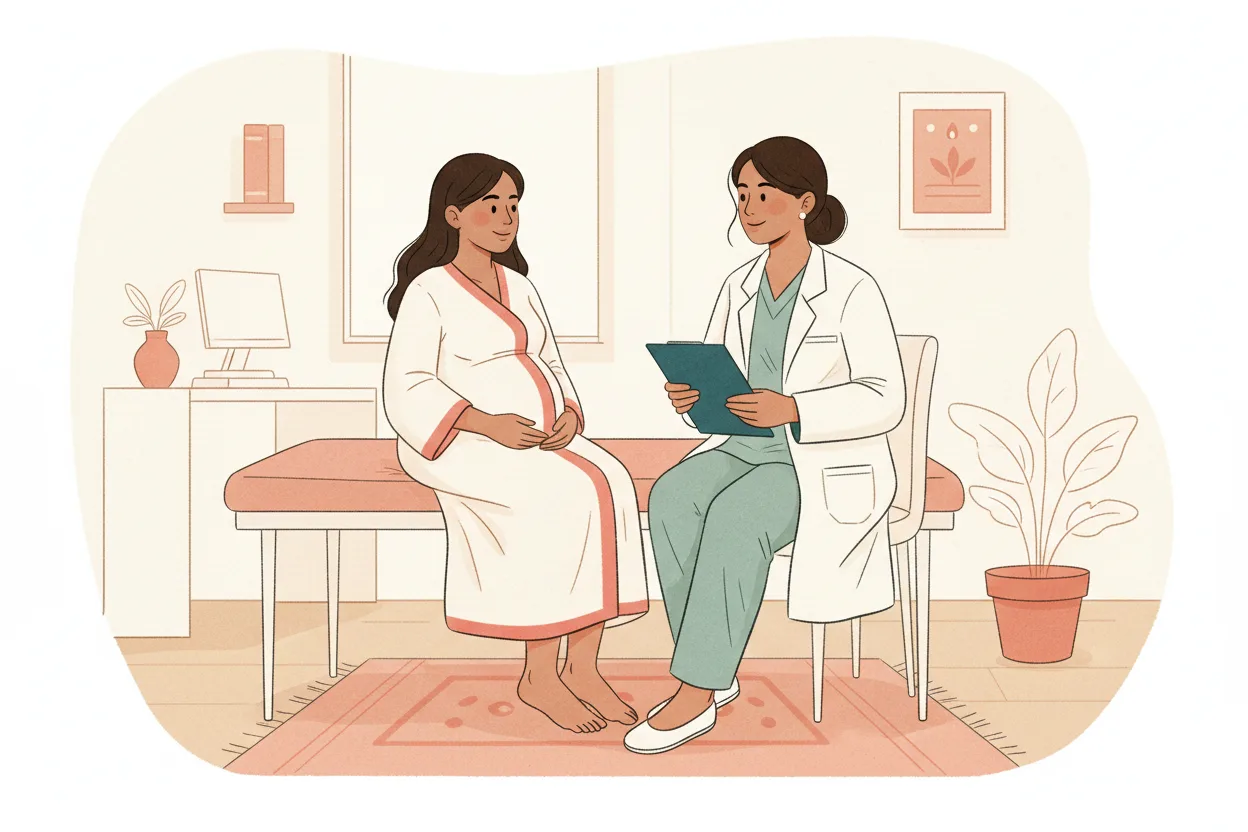


A dilation and curettage (D&C) is a short surgical procedure used to clear the uterus after an incomplete miscarriage or early pregnancy loss. NIH's NCBI Bookshelf (StatPearls) explains that it happens in two steps — dilation, where the cervix is gently opened, and curettage, where tissue is removed from inside the uterus.
Not medical advice — consult your gynaecologist for guidance specific to you.
Why a D&C, and What the Alternatives Are
If you've just learned a pregnancy has ended in the first trimester, a D&C is one of three paths your doctor may lay out. ACOG's Practice Bulletin No. 200, via PubMed, states that clinicians should offer the full range of options — expectant management (waiting for the body to pass the tissue on its own), medical management (medication to help it pass), and surgical management (a D&C). Which is right for you depends on how far along you are, how you're bleeding, and your own preference. It's worth asking your doctor to walk through all three rather than assuming surgery is the only route.
The Night Before: Fasting Rules
A D&C in India is almost always done under general anaesthetic, so you'll be asked to fast beforehand. Exact cut-off times differ by hospital — confirm yours directly — but the pattern is consistent. An NHS Foundation Trust pre-operative fasting leaflet states the rule from midnight is "no food, no chewing gum, no sweets, no fizzy drinks, no soup." Solid food stops, though clear fluids like water are usually still allowed until a couple of hours before you're taken in. India doesn't publish its own separate fasting protocol for this — a study in the Indian Journal of Anaesthesia, via PMC, notes that "in the absence of specific guidelines suited for local practice, the guidelines provided by ASA or ESA and others are followed," so an Indian hospital's instructions will track the same international standard rather than a locally-invented one.
Pack an overnight bag the evening before: admission papers, a phone charger, front-opening nightwear for afterwards, and maternity pads.
The Morning: Admission to Discharge
Most hospitals check you in well ahead of the actual operation. A tablet called misoprostol is often given first, a few hours before surgery, to soften and open the cervix. An NHS clinical guideline on cervical priming states that misoprostol reduces the force needed to dilate the cervix and lowers the rate of failed procedures — which is also why there's usually a wait of a few hours between the tablet and going into theatre, a gap few patients are warned about in advance.
The operation itself is quick. An NHS Foundation Trust patient information leaflet notes that the surgery takes about 10 minutes, but you'll be in the hospital for a few hours in total once you count admission, the wait for the priming tablet to work, anaesthesia, the procedure, and recovery time before you're discharged. Ask your hospital for a realistic total-time estimate for their day-care package, since it varies by facility — plan to be there most of the day, not for a quick in-and-out visit.
| Stage | What happens |
|---|---|
| Admission | Paperwork, vitals check, change into a hospital gown |
| Cervical priming | Misoprostol tablet given; wait for it to take effect |
| Pre-op | Anaesthetist review, IV line placed |
| Surgery | The D&C itself — about 10 minutes |
| Recovery | Monitored as anaesthesia wears off |
| Discharge | Once stable, with home-care instructions |
Recovery at Home
The Royal College of Obstetricians and Gynaecologists (RCOG) states that you can expect some vaginal bleeding for one to two weeks after the operation — use pads rather than tampons while this settles. Cramping similar to period pain for a day or two is common; a hot water bag can help alongside whatever pain relief your doctor advises.
Call your hospital or gynaecologist promptly if anything looks off. An NHS Trust post-procedure care leaflet advises getting urgent medical attention for severe or continuous pain, heavy bright red or prolonged bleeding, a high temperature, generally feeling unwell or flu-like, or a smelly vaginal discharge — these can point to infection or retained tissue and shouldn't wait for a routine follow-up appointment.
Risks Worth Knowing About
A D&C is routine and generally safe, but it isn't risk-free, and this is where a lot of information online oversimplifies things. A peer-reviewed study in PMC found that women who have had multiple miscarriages or repeated D&C procedures face a meaningfully higher risk of intrauterine adhesions, known as Asherman syndrome, with a pooled prevalence around 19%. It's one reason doctors are cautious about repeat curettage and may lean toward expectant or medical management for a future loss where surgery isn't essential.
Uterine perforation — a small tear in the uterine wall from a surgical instrument — is uncommon but recognised. A peer-reviewed study on PubMed found it occurred in about 0.16% of procedures reviewed, roughly 1 in 600, and it's typically identified and managed at the time of surgery.
Trying Again, and Looking After Yourself Emotionally
There's no fixed rule for when it's safe to try to conceive again, and your period returning isn't a clean signal either way. Cleveland Clinic states that some providers prefer patients have at least two or three menstrual cycles before trying to conceive again, and your first period after the procedure may arrive earlier or later than usual. Ask your own doctor what they'd recommend for your specific history, rather than assuming a fixed number of weeks applies to everyone.
The physical recovery is usually straightforward, but the emotional side often isn't, especially with limited privacy to process a loss at home around family. NHS guidance states that counselling and other emotional support are available after a miscarriage, and you can ask your GP or pregnancy unit for a referral. The equivalent step in India is asking your gynaecologist or hospital for a counsellor referral — it isn't always offered up front, so ask directly.
What to Pack for the Hospital
| Item | Why it helps | Where to buy |
|---|---|---|
| Maternity/postpartum pads | Heavier absorbency for the first days | Amazon.in / FirstCry |
| Front-opening nightwear | Comfortable for post-op checks and IV access | Amazon.in |
| Hot water bag | Soothes cramping once home | Amazon.in |
| Loose, easy clothing for the ride home | Comfort over a still-tender abdomen | FirstCry |
Frequently Asked Questions
How long am I actually in the hospital for a D&C? Longer than most people expect. An NHS Foundation Trust patient leaflet notes that the operation itself takes about 10 minutes, but between admission, the cervix-softening tablet, the wait for theatre, anaesthesia, and recovery, plan to be there for a few hours, not a quick visit.
Do I need to fast before the procedure? Yes, if you're having general anaesthesia. An NHS Foundation Trust pre-operative fasting leaflet states no solid food from midnight — no food, chewing gum, sweets, fizzy drinks, or soup — though clear fluids are typically fine until shortly before. Confirm exact timing with your own hospital, since protocols vary.
Is a D&C the only option after a miscarriage? No. ACOG's Practice Bulletin No. 200, via PubMed, states doctors should offer expectant, medical, and surgical management as options for early pregnancy loss. Ask your doctor to talk you through all three before deciding.
How much bleeding is normal afterward, and when should I worry? RCOG states some bleeding for one to two weeks is expected — use pads, not tampons. An NHS Trust leaflet advises getting urgent medical attention for heavy or prolonged bleeding, severe pain, fever, generally feeling unwell, or smelly discharge.
Will a D&C affect my ability to have children later? Usually not from a single procedure, but repeated ones carry more risk. A peer-reviewed study in PMC found that multiple miscarriages or repeated D&C procedures raise the risk of intrauterine adhesions. A single D&C for one pregnancy loss is not typically a fertility concern; ask your doctor about your specific history if you've had more than one.
When can we start trying to conceive again? There's no universal answer. Cleveland Clinic states some providers ask patients to wait at least two or three menstrual cycles before trying again, and your first period after the procedure may come earlier or later than usual. Talk to your own gynaecologist about timing that fits your situation.