The fastest way to a magical first-birthday look is a flowy tutu dress or lehenga-style set in tulle, cotton, or soft silk, paired with bare feet or soft-soled booties and no long ties or drawstrings. You can shop the whole outfit online from Indian stores for anywhere between Rs. 800 and Rs. 4,000.
Not medical advice — consult your pediatrician for any health or feeding questions about your child.
Why This Shopping Trip Is Different From Any Other
A first birthday in an Indian family is often the biggest photographed event of the baby's life so far — a smash cake shoot, a family function, maybe a small puja before the party. Parents want a look with impact: layers, colour, maybe a little cape or crown. But a one-year-old is also newly mobile, puts everything in her mouth, and will wear the outfit for hours at a stretch through cake, crawling, and being passed between relatives. The outfit has to photograph beautifully and hold up to an active, curious toddler.
Building the Look: Silhouette and Fabric
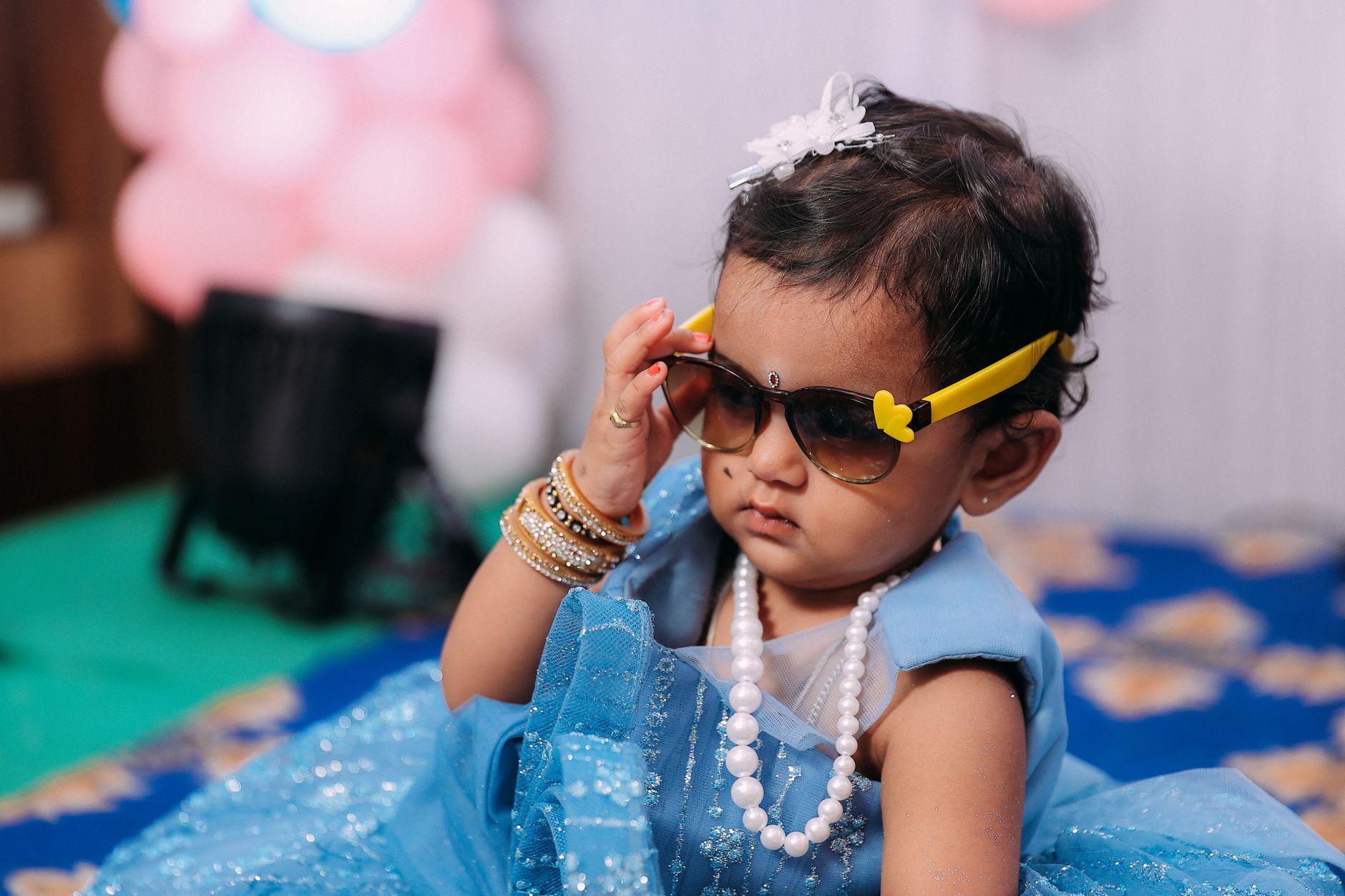
Tulle and tutu dresses are the most popular first-birthday choice in India right now — full skirts that photograph well against both indoor mandap-style setups and outdoor lawns. Cotton and silk lehenga-cholis or pattu pavadai sets work for families doing a traditional shoot alongside the Western-style smash cake look. Both can be found from Indian sellers in the Rs. 800–2,500 range for tulle party dresses and Rs. 1,500–4,000 for a lehenga or pattu set.
Whatever silhouette you pick, keep the fabric touching baby's skin soft and breathable rather than heavily sequinned or textured. Medical News Today's dermatology-reviewed guidance notes that cotton and silk are gentler against a baby's skin, while "items with textured embellishments, such as sequins, may cause irritation." Save the heavy sequin work for an overlay cape or headband that never sits against her skin, and let the base layer be plain cotton or silk.
Whichever outfit you choose, run a finger over every button, bow, and gem or rhinestone applique before she wears it. A peer-reviewed choking-hazard study published on PMC (National Library of Medicine) found that children's products "release small parts through detachment or breakage during normal play, which pose choking hazards and may be undetectable to parents and caregivers" — a real risk for a one-year-old, "the age group most likely to mouth objects." Skip anything with a loose or wobbly embellishment, and recheck it once more right before the party once she's been handling it.
Before the big day, wash the new outfit once, even if it looks clean off the rack. A Cleveland Clinic dermatologist advises washing new clothes before wearing them to rinse away "harsh chemicals or irritants" left over from manufacturing and dyeing — worth doing a few days ahead so the outfit is dry and ready.
Skip the Long Ties and Drawstrings
Capes, hoods, and wrap-style tops look wonderful in photos, but check the closures before you buy. A peer-reviewed clothing-injury analysis published on PMC (National Library of Medicine) found that among clothing-related child deaths, "a significant relationship was observed between death and accidental suffocation," most linked to "the entanglement of a drawstring" in hoodies, capes, and waist ties. Choose outfits that fasten with snap buttons, velcro, or short ribbons you tie once and trim close, rather than long, loose drawstrings a crawling baby can catch on furniture, stroller handles, or her own neck.
The same logic applies to rompers, leggings, or wrap skirts that pin baby's legs straight down and pressed together. The International Hip Dysplasia Institute states that healthy hip development needs the legs to "bend up and out at the hips" rather than being held straight and tight — so look for a fuller skirt or a romper cut roomy through the hips and thighs, not a snug legging set that clamps her legs together for hours of sitting, crawling, and being carried.
Footwear: Bare Feet Photograph Better Anyway
Skip the stiff decorative shoes for an indoor party or photoshoot. The American Academy of Pediatrics (HealthyChildren.org) states that "babies' feet develop best if they're not confined in shoes; socks are all that's needed to keep their feet warm; however, once children start walking outdoors, they need shoes for protection." If your daughter isn't yet walking outdoors on her own, bare feet, ruffle socks, or soft-soled booties are both the more comfortable choice and, honestly, the more photogenic one — most professional cake-smash shots go barefoot anyway. Save the cute jutti or bow-front shoes for the moment she actually steps outside.
Dressing for the Weather, Not Just the Occasion
Whether the party is in an air-conditioned hall in Delhi in December or a lawn function in Chennai in August, the American Academy of Pediatrics (HealthyChildren.org) advises dressing baby "in one more layer of clothing than you are wearing to be comfortable in the same environment" — and going lighter, not heavier, once it's genuinely warm. A heavy velvet lehenga looks stunning but can leave a baby overheated and cranky through a long function in a warm hall; a breathable tulle or cotton option with a light shrug or cape she can wear for photos and shed afterward gives you both the look and the comfort.
If part of your shoot or celebration is outdoors — a garden, a terrace, a beach trip for the occasion — the American Academy of Pediatrics (HealthyChildren.org) recommends dressing babies "in lightweight long sleeve clothing, long pants and wide brimmed hats to protect the skin." A lightweight full-sleeve cover-up or a matching cape, plus a soft wide-brimmed sun hat that coordinates with the outfit, checks that box without looking out of place in the photos.
Where to Shop: Price Comparison
| Store | Best For | Price Range |
|---|---|---|
| FirstCry | Widest range of tutu and party dresses, fast delivery | Rs. 800 – Rs. 2,500 |
| Amazon.in | Quick comparison shopping, easy returns | Rs. 700 – Rs. 3,000 |
| Myntra | Branded kidswear labels, curated sets | Rs. 1,200 – Rs. 4,000 |
For a traditional pattu pavadai or lehenga, search the same stores with the specific term (e.g. "baby pattu pavadai" or "baby lehenga set") — regional festive wear is usually listed under kidswear ethnic categories rather than "birthday dress."
Frequently Asked Questions
Should I buy the outfit in her exact size or one size up? One size up is the safer bet. Babies grow fast between ordering and the party, and a slightly looser fit is more comfortable for hours of sitting, crawling, and being picked up than something snug. A looser fit also keeps skirts and rompers from pinning her legs together, which is gentler on her hips as she moves.
Is it okay to keep shoes on for the whole party? It's fine either way for comfort, but if she isn't walking outdoors, bare feet or soft socks are just as good for her feet and usually easier for her to sit and crawl in during a long function. Save real shoes for when she's actually walking on an outdoor surface.
How do I stop a cape or dupatta from becoming a hazard around a crawling baby? Choose a cape or wrap that fastens with a snap or velcro rather than a long tie, keep it short, and take it off for any stretch of time she's crawling unsupervised or near stroller straps or furniture. PMC's clothing-injury analysis found drawstring and tie entanglement to be the specific risk behind most clothing-related suffocation deaths in young children, so that's the detail worth checking before you buy.
Do I need to wash a festive outfit before the party if it's only worn for a few hours? Yes — even a short wear is worth a quick wash first, since it's the manufacturing residue and dye, not the wear time, that can irritate her skin.
What if the outfit has sequins or heavy embroidery — is that a problem? Only where it touches her skin. A sequinned cape, headband, or overlay is fine as an accent as long as the base layer against her body is soft cotton or silk.
Is a heavier, more "grand" outfit worth it if the function is indoors and air-conditioned? It can be, since the room stays cool — but still dress for the room's actual temperature rather than the occasion, and have a lighter backup ready in case the AC isn't reliable or the party runs into a warmer stretch.