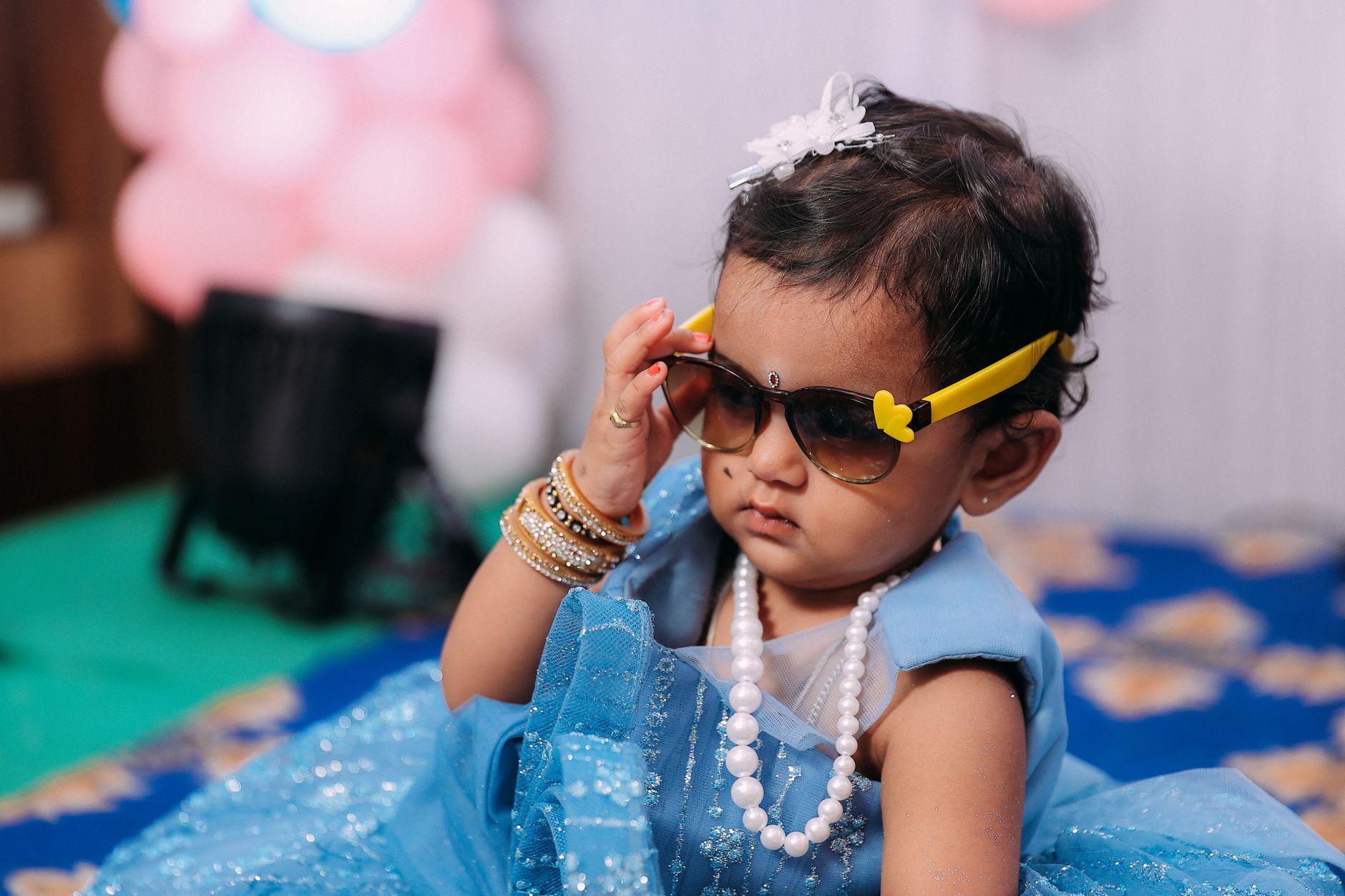
If she will not keep anything on her head, the thing that protects your baby's hearing this Diwali is not something you put on her — it is where she is standing when the cracker goes off. Distance, an interior room and a closed window do more for her than any ear covering, and loose cotton does almost nothing at all.
Not medical advice — consult your pediatrician for personal guidance.
How loud a cracker actually is
Indian law already treats firecrackers as a hearing hazard rather than a nuisance. The Noise Standards for Fire-crackers, notified under the Environment (Protection) Rules, 1986, prohibit the manufacture, sale or use of any cracker generating more than 125 dB(AI) or 145 dB(C)pk measured 4 metres from the point of bursting — and the limit is tightened further for joined series crackers.
Those are legal ceilings, not a description of what is on sale. When the Maharashtra Pollution Control Board tested crackers bought from local markets, every one of the 52 series ("ladi") brands it sampled violated the impulse or peak standard. For scale, the US NIDCD puts a fireworks show at 140–160 dBA and notes that your distance from the source and the length of exposure are both important factors in protecting hearing.
The thresholds that matter are lower than most parents assume. The American Academy of Pediatrics explains that noise above 70 decibels over a prolonged period may start to damage hearing, and that loud noise above 120 decibels — a thunderclap, a jet taking off — can cause immediate harm to the ears. A cracker bursting a few metres from your gate sits in that second band, not the first.
Loudness is only half of it; the other half is how long. NIOSH sets its recommended exposure limit at 85 dBA averaged over an eight-hour day and halves the allowable duration for every 3 dBA increase. Run that exchange rate upwards past 120 dB and the safe window collapses from hours to seconds — one close burst is a real exposure, not just a startle.
She is also not a small adult. The AAP's 2023 policy statement notes that children have smaller ear canals than adults, which intensifies higher frequency sounds — the shorter canal raises the sound pressure arriving at her eardrum, so the same burst outside your window hits her harder than it hits you.
Cotton wool and cotton buds are not ear protection
This is worth being blunt about: it is the most commonly offered advice in every family WhatsApp group. Ordinary cotton balls or tissue wads stuffed into the ear canal reduce noise by only about 7 dB and are not considered adequate protection. Against a 140 dB burst, 7 dB is a rounding error — it changes the number without changing the risk.
It is also not a harmless placebo. A study of US emergency-department records published in The Journal of Pediatrics found that cotton-tip applicator ear injuries fell most heavily on the youngest children, at 32.2 per 100,000 for ages 0–3, with a foreign body in the ear and eardrum perforation among the commonest diagnoses. The NHS is equally direct: do not use fingers or any objects like cotton buds in the ear. A wriggling eleven-month-old plus a soft plug you have pushed past the canal opening is exactly the combination that ends in a clinic visit.
So nothing goes into her ear canal — not cotton wool, not a bud, not a rolled-up corner of a dupatta. The protection you are reaching for is not in the ear at all; it is in the room she is in.
What actually protects her
Sound pressure falls off steeply with distance, which is why the NIDCD's rule of thumb is simply to avoid noise that is too loud, too close, or lasts too long. You cannot quieten your street. You can put more metres and one shut window between her and it, and that single move outweighs anything you could strap to her head.
| What you do | Why it works |
|---|---|
| Keep her in an interior room, away from the street-facing side | Every doubling of distance takes a meaningful bite out of the sound pressure reaching her |
| Shut windows and balcony doors during peak bursting | Glass and a closed frame are real attenuation; an open window is none |
| Plan the pram walk, the drive and the temple trip for daylight | The street is simply quieter before evening |
| Hold or feed her through the loudest stretch | Being held is what a startled baby needs; it does not reduce decibels, but it reduces distress |
Timing is the other lever, and it is free. The Supreme Court has placed a complete ban on bursting sound-emitting firecrackers between 10 p.m. and 6 a.m., and official Diwali advisories allow firecrackers only from 8:00 p.m. to 10:00 p.m. on Diwali and similar festivals. Enforcement in a residential lane is imperfect, but the window still tells you how to plan: feed, bathe and settle her before eight, and treat eight to ten as indoor time.
Two neighbouring issues have their own guides — the festival air and festival obligations in the postpartum weeks. And if the real worry is her hearing rather than this week's noise, the AAP's guidance on noise and children is the background, with the warning signs in our piece on a baby not responding to her name.
Trying the earmuffs anyway
The AAP does advise caregivers to avoid bringing young children to excessively noisy venues such as fireworks displays, and to use protective earmuffs — including on young infants — when they do attend. So they are worth one more attempt, with better staging than last time.
The usual mistake is producing them for the first time in the middle of the noise, when she is already wound up. Try them on an ordinary quiet afternoon instead: on for ten seconds while you play, off before she objects, repeat tomorrow. Babies often tolerate infant ear defenders far better than their parents expect once the muffs are a familiar object rather than an ambush. The product class to look for is padded over-ear "baby ear defenders" — on Amazon.in or FirstCry.
And if she still refuses them — say it plainly — environmental control is the plan, not a consolation prize. Distance from the source and length of exposure are protective in their own right. A baby in an interior room with the windows shut while the lane is at its loudest is a protected baby, earmuffs or no earmuffs.
FAQ
Is cotton in her ears better than nothing? Barely, and not worth the risk it adds. Cotton reduces noise by roughly 7 dB and is not adequate protection, and the NHS says not to put fingers or objects like cotton buds in the ear. Move her instead.
How far away is far enough? There is no single safe number, which is why the NIDCD frames it as avoiding noise that is too loud, too close, or lasts too long. Practically: off the street, inside, windows shut, away from the side of the flat the crackers are on.
She slept through it last night — does that mean she is fine? Sleeping through is not the same as being unexposed. Noise above 120 decibels can cause immediate harm to the ears whether or not she wakes, so judge the plan by where she was, not by how she reacted.
Can we take her down to the society's fireworks for ten minutes? The AAP advises against bringing young children to fireworks displays, and recommends protective earmuffs including on young infants if they do go. Watching from an upper-floor window with the glass shut is the version that works.
Aren't the crackers sold near us within the legal limit anyway? Often not — MPCB's testing found every series-cracker brand it sampled breached the standard. Plan for the loud version.