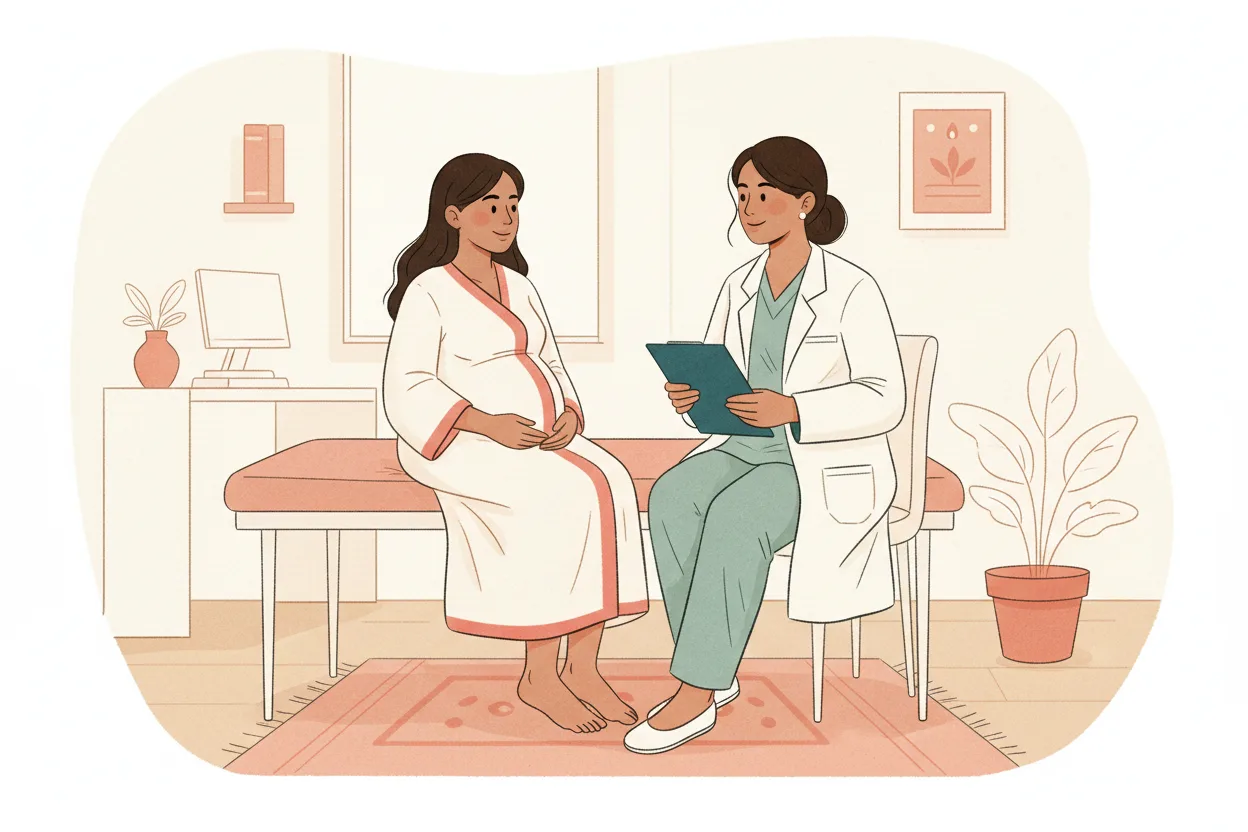

Count backward from a buffer before your due date, not from the due date itself. NICHD (NIH) states that for most women, labor begins sometime between week 37 and week 42 of pregnancy — so your due date is only the midpoint of a five-week window, never a guarantee of when the baby actually arrives. If your employer's policy requires you to exhaust annual leave before maternity leave officially starts, that five-week window is exactly what your planning has to protect against.
Not medical advice — consult your obstetrician for your health, and your HR or legal team for your exact leave entitlement.
Why the Due Date Is the Wrong Number to Plan Around
In many Indian workplaces, HR policy requires you to run down your annual or earned leave balance before maternity leave formally begins. That math only works if you plan around a range, not a single date. MedlinePlus (NIH) defines preterm labor as labor that starts before 37 completed weeks of pregnancy — which means the safe assumption for your annual-leave math is that your baby could arrive several weeks before the date on your file, not after it.
You also want your maternity leave clock to start the moment real labor begins, not on a day you're still deciding whether it's real. MedlinePlus (NIH) explains that true labor is marked by regular contractions that come closer together over time — that's the practical signal to tell your manager "today," rather than a day of occasional tightening that fades on its own.
What the Final Weeks Actually Cost You at Work
The last stretch of pregnancy is also when work gets harder, not easier. MedlinePlus (NIH) notes that fatigue increases in the third trimester because more of the body's energy goes toward supporting the rapidly growing fetus, and that heartburn and low back pain are also common at this stage. If your job means a commute, long meetings, or a desk you can't easily step away from, this is the stretch where annual leave "saved for later" quietly gets spent on getting through the workday instead of preparing for the baby.
If your role is physically demanding — long shifts on your feet, lifting, or manual work — the timing question gets sharper. A systematic review and meta-analysis found that a high physical workload during pregnancy, such as demanding manual labor or long hours on one's feet, is associated with a moderately increased risk of preterm birth. The Ministry of Health & Family Welfare's 'My Safe Motherhood' booklet advises pregnant women to avoid hard work such as lifting heavy weight, not overexert themselves, and delegate tasks to others — guidance that's easier to follow once you're not also clocking in. That's a real reason to front-load your annual leave earlier in the third trimester if your job is physically demanding, rather than banking every day for after the due date.
Daily monitoring also gets more important, not less, in these weeks. Cleveland Clinic explains that kick counting becomes more important in the third trimester, since changes in the baby's movement pattern can sometimes signal a problem — something that's genuinely easier to track consistently once you're not also managing a full workday. And MedlinePlus (NIH) warns that a headache that won't go away, and vision changes such as blurred vision or seeing spots, are warning signs of preeclampsia that need prompt medical attention — symptoms that are easy to wave off as "just tired from work" if you're still commuting and sitting through meetings at 36 weeks.
Working Backward: A Sample Timeline
| Stage | What's typically happening | Leave decision |
|---|---|---|
| Early third trimester | Still working full-time; routine check-ups | Confirm the exact leave policy with HR in writing; flag your file |
| Mid third trimester | Fatigue, heartburn, and back pain build; start daily kick counts | Begin winding down travel and physical tasks; hold back some annual leave in reserve |
| From 37 weeks | Baby is no longer considered preterm if born now | Confirm maternity leave can start immediately, whatever annual leave remains |
| Day of true labor | Regular contractions, coming closer together | Maternity leave begins that day — this is not a day to finish out at your desk |
Talking to HR When Annual Leave Must Run First
Ask HR in writing, early, for two specific things: exactly what annual leave balance must be used before maternity leave starts, and whether a doctor's note can move that start date earlier without penalty if a complication comes up. Get the answer in writing rather than relying on a verbal answer from your manager — policy interpretation can vary between teams and payroll coordinators, and a written confirmation protects you if your delivery date shifts.
Keep a few days of annual leave unspent even after you think you've worked out the math. Real labor can start earlier than the timeline suggests, and a partner or family member may need those same days to support you in the immediate days after discharge.
What Your Leave Also Needs to Cover After Birth
The leave question doesn't end at delivery. WHO's postnatal care guideline recommends at least four postnatal care contacts in the first six weeks after birth — within the first 24 hours, between 48 and 72 hours, between 7 and 14 days, and again around six weeks. Build your return-to-work planning around that schedule, not just around the delivery date, so you're never choosing between a follow-up appointment and a work call.
The first hours after birth matter for feeding and bonding too. WHO and UNICEF recommend that breastfeeding be initiated within one hour of birth, and HealthyChildren.org (AAP) reports that a father holding his newborn skin-to-skin in the first hours after birth measurably calms the baby — compared to newborns in a bassinet, a baby placed on their father's chest cries less, falls asleep sooner, and shows less agitation. If your partner's leave can start on the delivery day itself rather than being scheduled around an office notice period, that's worth negotiating alongside your own dates, not as an afterthought.
Frequently Asked Questions
My due date could change — how much buffer should I actually keep? More than most people plan for. NICHD (NIH) states that for most women, labor begins sometime between week 37 and week 42 of pregnancy, so treat your due date as the middle of a window, not a fixed day, when deciding how much annual leave to hold in reserve.
Is it legal for my employer to make me use annual leave before maternity leave? Start from the floor the law guarantees, then ask HR about the rest. A Press Information Bureau (Government of India) backgrounder on the Code on Social Security, 2020 states that the maximum duration of paid maternity leave is 26 weeks, of which up to 8 weeks can be taken before delivery. Whether your specific employer can require you to run down annual leave on top of that entitlement depends on your company policy and contract, so confirm the details directly with HR or a labour consultant rather than relying on a general answer. What you can control yourself is the timing math around it, which is what the rest of this guide covers.
What symptoms mean I should stop working immediately, even if I've saved my leave for later? Two, specifically. MedlinePlus (NIH) warns that a headache that won't go away and vision changes such as blurred vision or seeing spots are warning signs of preeclampsia that need prompt medical attention. And once MedlinePlus (NIH) explains your contractions are regular and coming closer together — true labor, not false labor — that's the day leave starts, not a day to push through at your desk.
Should I keep tracking my baby's movements once I stop commuting? Yes. Cleveland Clinic explains that kick counting becomes more important in the third trimester, since changes in the baby's movement pattern can sometimes signal a problem — a habit that's genuinely easier to keep consistently once you're not also managing a workday.
How much leave do I actually need after the birth, not just before it? Plan past the delivery date, not just up to it. WHO's postnatal care guideline recommends at least four postnatal care contacts in the first six weeks after birth, and WHO and UNICEF recommend breastfeeding be initiated within one hour of birth — both easier to manage without also answering work messages.
Does my partner's leave timing matter as much as mine? More than most couples plan for. HealthyChildren.org (AAP) reports that a father holding his newborn skin-to-skin in the first hours after birth measurably calms the baby, with less crying and faster settling than in a bassinet. If his leave notice period means he can't be there for those first hours, it's worth renegotiating before the due date, not after it.