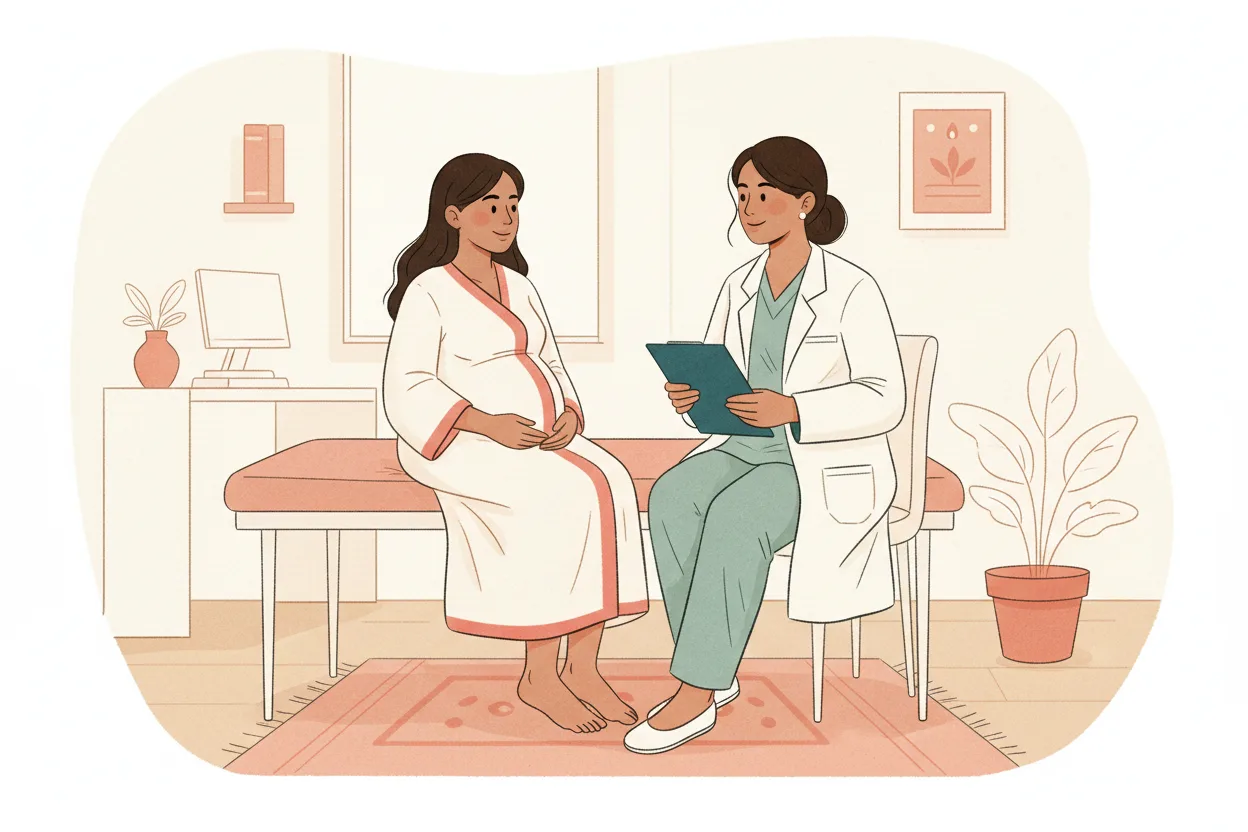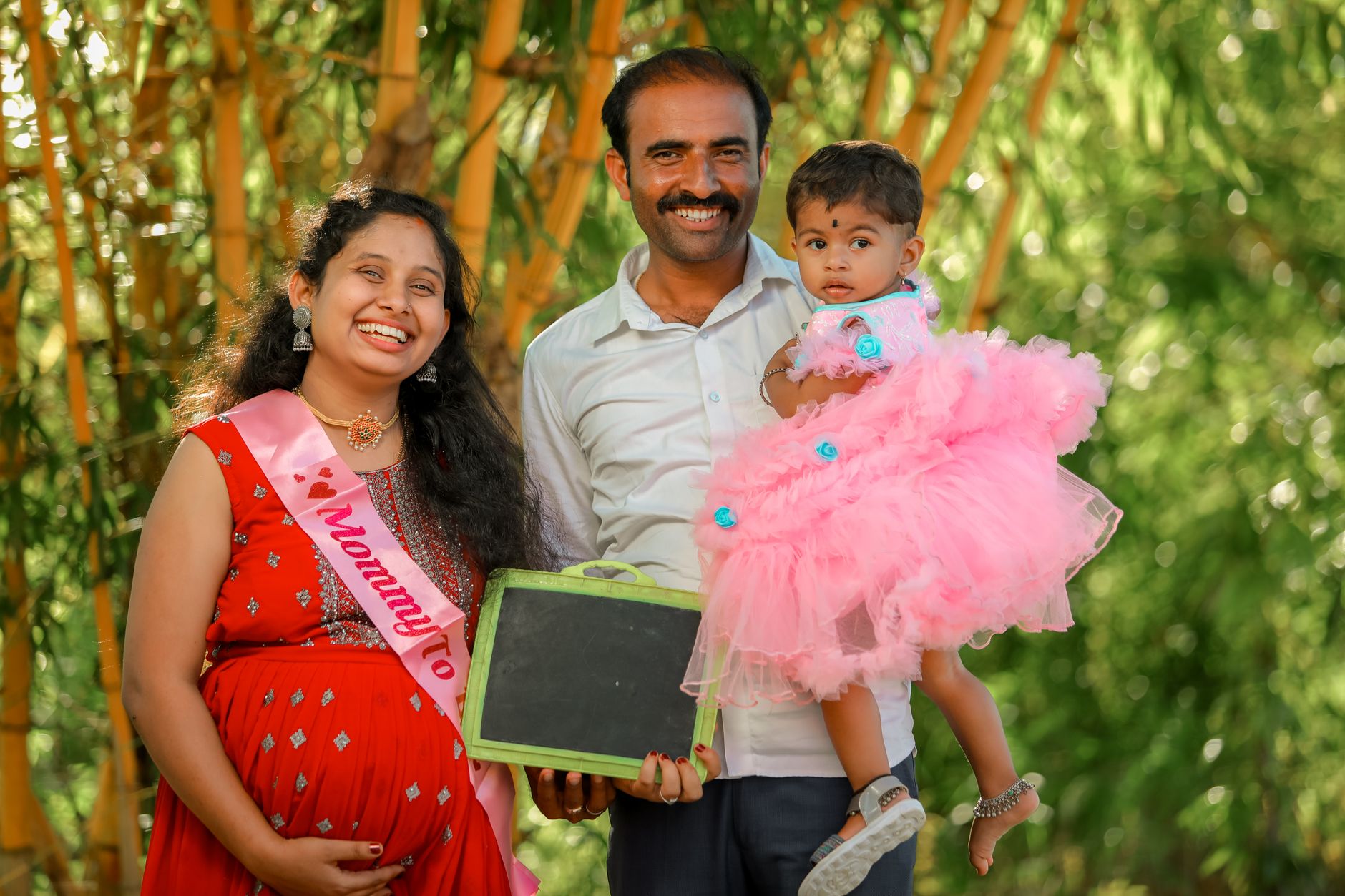

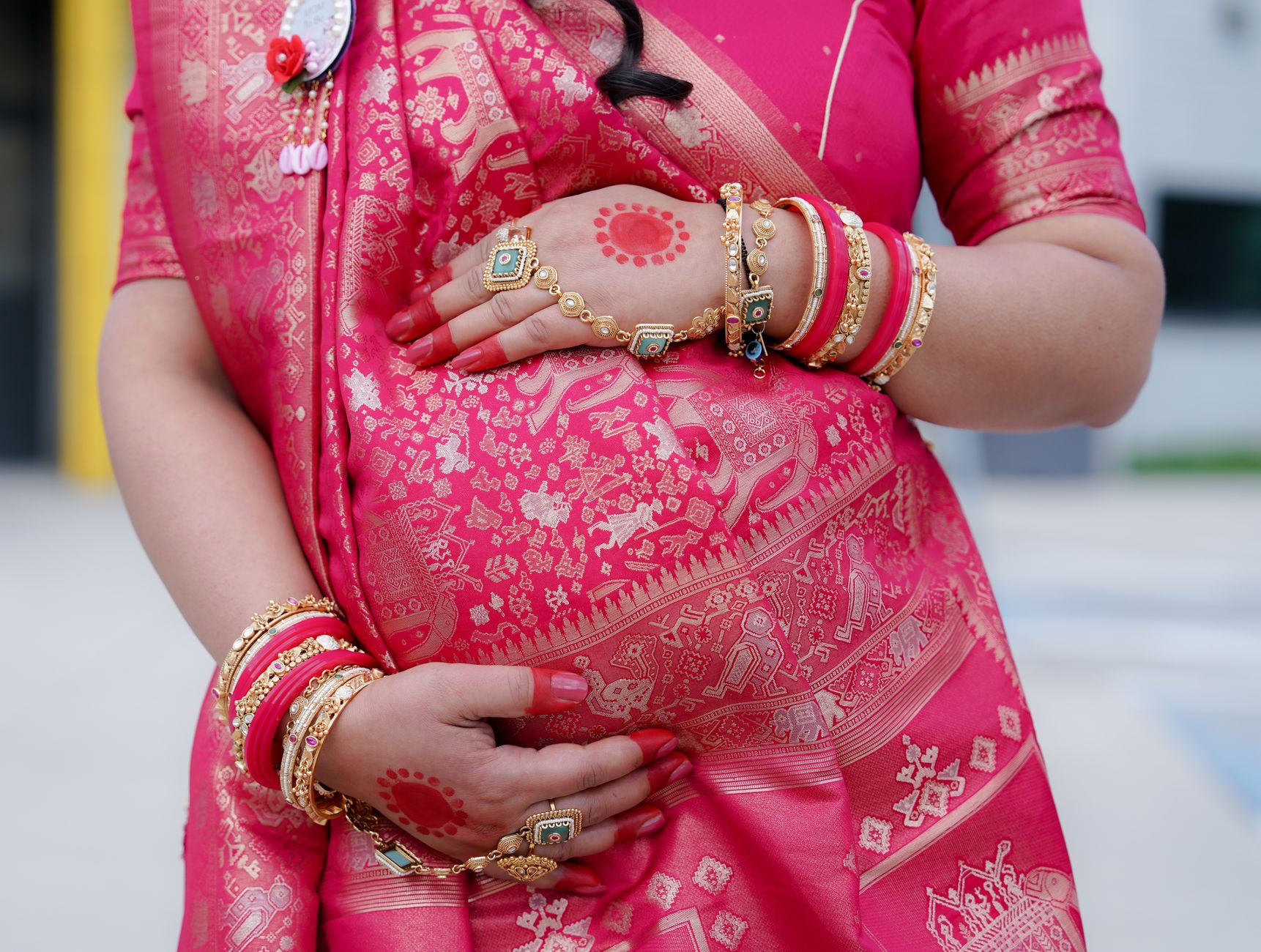
There's no medical rule against mehendi (henna) in the third trimester — the "inauspicious" idea is a cultural belief, not a health one. But two real, evidence-based cautions do apply this late in pregnancy: "black henna" carries a genuine skin-reaction risk, and a long, still mehendi session is simply harder on your body now than it was earlier.
Not medical advice — consult your obstetrician for guidance specific to your pregnancy.
Why Family Calls It Inauspicious
In many Indian homes, mehendi is tied closely to celebration — weddings, festivals, and the godh bharai or valaikappu baby shower, often held around the seventh month. Some elders read fresh mehendi outside a proper ceremony, especially very late in pregnancy, as tempting fate or as something reserved only for auspicious occasions. This belief varies a lot by region, family, and community — there's no single "rule," and it isn't grounded in medical evidence. It's worth knowing where the discomfort is coming from before you decide how to respond to it.
What's Actually Myth vs What's Medically Relevant
The paste itself isn't the risk — "black henna" is
Natural henna is a paste made from the dried Lawsonia inermis leaf; it stains skin orange to reddish-brown and fades over a couple of weeks. NHS guidance even lists "a semi-permanent pure vegetable dye, like henna" as a safer alternative during pregnancy, compared with chemical dye. The real risk comes from a different product sold as "black henna," which is often mixed with a chemical dye. Cleveland Clinic's dermatology guidance warns that this ink "can cause serious allergic reactions," with effects that "outlast the tattoo itself: redness, blisters, raised red weeping lesions, loss of pigmentation, increased sensitivity to sunlight and permanent scarring." StatPearls (NCBI) notes that the chemical involved, PPD, is absorbed through the skin, and "although severe systemic manifestations, such as anaphylaxis, have been reported" beyond the local skin reaction.
It's not a one-time risk, either. A case-report review in PMC (National Library of Medicine) found that once a person reacts to the chemical in black henna, they can go on to react to "other PPD-containing products that include black hair dye, leather shoes, fur, textiles, nylon, rubber, paints, photographic prints and industrial printing inks" for the rest of their life. That's a good reason to be selective about where you get mehendi done at any point in pregnancy, not just the third trimester.
| Natural henna paste | "Black henna" (PPD-adulterated) | |
|---|---|---|
| Colour | Orange to reddish-brown | Near-black, very fast staining |
| How it's sold | Fresh cones from a known artist or a labelled "100% natural, PPD-free" cone | Pre-made "black henna" tattoo stalls, unlabelled cones |
| Real concern | Low, for most people, with a patch test first | Allergic reaction, blistering, lifelong sensitisation |
Sitting still for hours is the harder part now
A detailed mehendi design, especially a full-hand or bridal-style one, means reclining or sitting still for two to four hours while it dries. This is where the third trimester genuinely changes things. ACOG advises that in the second and third trimesters, "lying on your back may compress a major blood vessel that takes blood to your uterus, making you feel dizzy and possibly reducing blood flow to your fetus" — so if you're reclining for a long session, stay propped up on your side, not flat on your back.
Your hands are also different by now. NHS guidance notes swelling in pregnancy is normal but "often worse at the end of the day and further into your pregnancy" — exactly when a fiddly, hours-long design gets uncomfortable, and rings may stop fitting. The same goes for sitting cross-legged or on a low stool: Cleveland Clinic notes third-trimester leg discomfort and varicose vein symptoms tend to be "worse when you sit or stand for a long time." None of this is dangerous — it's just less comfortable, whatever the folklore says.
If Your Family Wants You to Skip It
There's a lot of middle ground between a full ceremony-style session and giving up mehendi altogether: keep it simple — a smaller design on just the palms takes 30–40 minutes instead of hours; sit propped up with pillow support rather than reclining flat; or save the elaborate design for the actual godh bharai/valaikappu, when you'll likely be more comfortable anyway. If the belief matters deeply to your in-laws or parents, waiting a few weeks often costs little against the peace it buys at home.
Choosing Henna That Won't Cause Problems
If you do go ahead, the artist and product matter more than the trimester. Look for a fresh henna cone labelled "natural" or "PPD-free" from a known brand rather than a pre-mixed "black henna" tattoo, especially from a roadside stall or an unfamiliar vendor at a mela. A small patch test on your inner arm 24–48 hours beforehand shows you how your skin reacts before it goes on your hands.
| Product | Price Range | Where to Find |
|---|---|---|
| Natural/organic henna cones (multi-pack) | Rs. 150 – Rs. 400 | Amazon.in / FirstCry |
| Ready-made natural henna paste (tube) | Rs. 100 – Rs. 250 | Amazon.in |
What About Henna for the Baby, Later
Some families also want to mark a newborn with a small dot of mehendi during naming or other early ceremonies. Here there's a real, separate caution: a study in Annals of Tropical Paediatrics found that over a 10-year period, 15 G6PD-deficient newborn boys were hospitalised "with acute haemolysis a few days after applying henna dye over the body." G6PD deficiency is a genetic condition that's more common in some Indian communities — a study in PMC (National Library of Medicine) found reported incidence rates of "1:66–1:1,000," calling it a "high prevalence in the Indian population," and noted that comprehensive newborn screening for it is still being built out across the country rather than yet routine everywhere. So it's sensible to skip applying henna directly onto a newborn's skin, and to mention it to your pediatrician if there's a family history of G6PD deficiency or unexplained newborn jaundice.
Frequently Asked Questions
Is mehendi actually unsafe in the third trimester? No — natural henna paste on the skin has no documented pregnancy-specific danger here. The real caution is "black henna" (PPD), which can cause serious allergic reactions at any trimester, plus the discomfort of sitting still for hours late in pregnancy.
What's the difference between henna and "black henna"? Natural henna is a plant paste that stains orange-brown. "Black henna" is often mixed with a chemical dye, and Cleveland Clinic warns it can trigger reactions that outlast the design itself, including blistering and permanent scarring.
Can I do a full bridal-style mehendi session in my ninth month? You can, but a two-to-four-hour session is genuinely more tiring now. If you recline, stay on your side, not flat on your back — ACOG notes lying flat late in pregnancy can compress a major blood vessel. A shorter design or more breaks works just as well.
My hands feel too swollen for an intricate design — is that normal? Yes. NHS guidance notes swelling in the hands and fingers is a normal pregnancy symptom that's most pronounced later in pregnancy. Remove rings beforehand and choose a simpler design if your hands feel tight.
Is it safe to put henna on my newborn's hands or feet? Talk to your pediatrician first, especially if there's any family history of G6PD deficiency. A study documented newborns hospitalised with acute hemolytic anemia days after henna was applied to their skin — a real, if uncommon, risk that's worth ruling out before any naming-ceremony mehendi.
How do I tell my mother-in-law I'd rather skip it this time without a conflict? Frame it as timing, not refusal — "let's do a small one after the baby shower" or "let's wait till I'm more comfortable sitting" tends to land better than an outright no, and keeps the ceremony itself intact for when you're ready.