
Pelvic girdle pain (PGP) happens because the joints in your pelvis start moving unevenly, which makes the whole pelvic girdle less stable and more painful, according to the Royal College of Obstetricians and Gynaecologists (RCOG). It's common — the NHS states that PGP affects up to 1 in 5 pregnant women to some degree, with pain felt in the pubic area, lower back, hips, and thighs. If a 9-hour desk job is making it worse, you're not imagining it — and there's a lot you can do about it.
Not medical advice — consult your gynaecologist or a physiotherapist for guidance specific to you.
Why a Desk Job Makes It Worse
Sitting still all day feels like the opposite of strain, but for PGP it isn't. South Tees Hospitals NHS Foundation Trust's patient guidance lists sitting or standing for prolonged periods under "activities to avoid" — which describes most desk jobs by default, from the morning stand-up to the afternoon slump into your chair.
How much control you have over your own day matters too. A scoping review of PGP risk factors in PubMed Central found that women who had more influence over taking breaks at work were less likely to report PGP than women who couldn't step away when they needed to — occupational factors are a genuine risk factor, not just bad luck. And the scale of the problem in office settings is real: a study of back pain among pregnant office workers found that the prevalence of back pain in pregnancy was 84.6%, with occupation type a significant risk factor. If you're in Bengaluru, Gurugram, or Mumbai clocking a full workday at a screen, you're in a group where this is genuinely common, not something to push through silently.
This isn't just an international statistic imported for an Indian audience, either: a cross-sectional study of Indian postpartum women found that 41% reported PGP in the first three months after delivery, so the condition is well-documented in Indian women specifically, not only in UK or European studies.
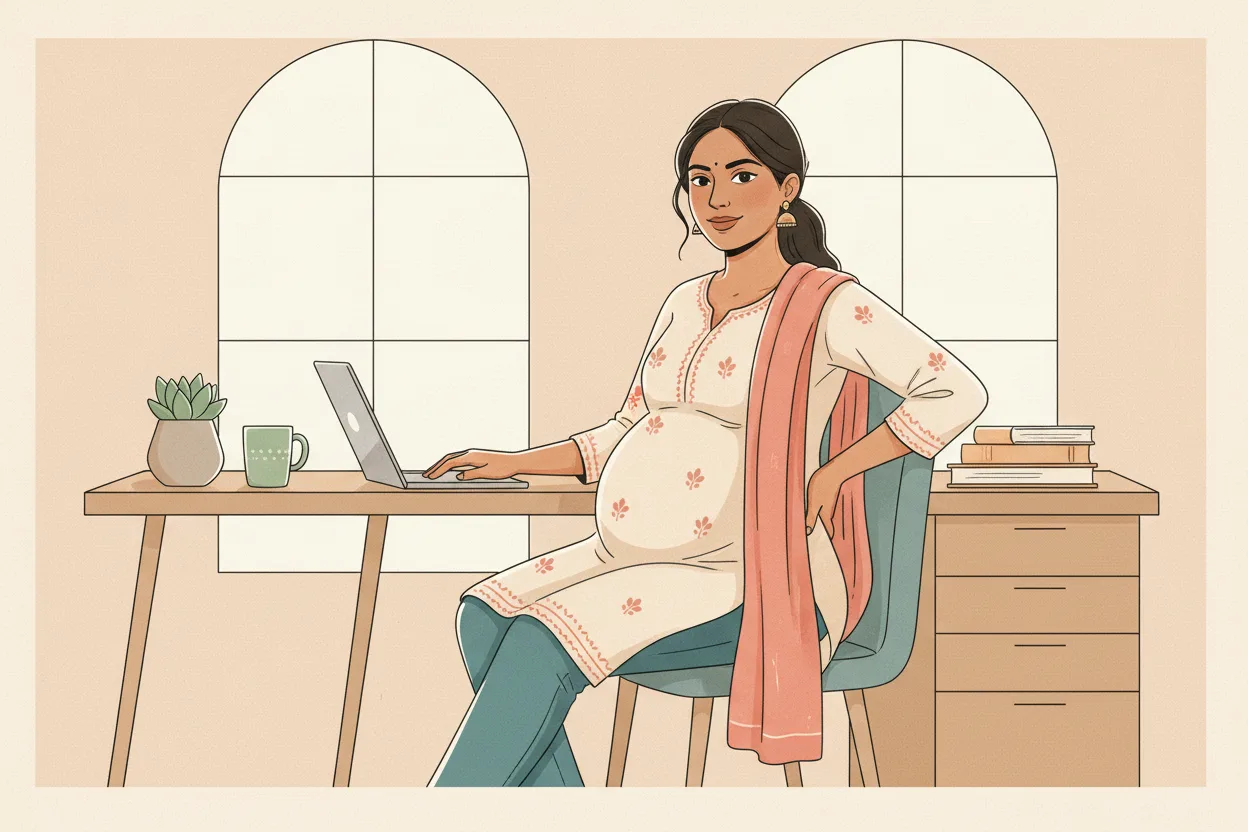
The fix isn't quitting your job — it's changing how you sit through it. Two things help more than any gadget: shorter, more frequent breaks, and permission to move without asking twice. If you have any say in your schedule, use it — even five minutes every hour to stand, walk to refill water, or stretch changes the load on your pelvis over a full day.
Desk Stretches and Posture Fixes
A gym session or a physio visit isn't required to make your workday easier on your pelvis. A few habits, repeated through the day, do most of the work:
- Change position every 20–30 minutes. Stand up, walk a lap of the floor, or simply shift your weight from sitting to standing at your desk if you have an adjustable one.
- Keep your knees together when you move. Getting out of a chair, turning in bed, or getting out of a car all put uneven strain on the pelvis if one leg moves independently of the other. Keep your knees together and move as one unit.
- Support your lower back. A small lumbar cushion or a rolled towel against your chair back keeps your spine in a more neutral position through long meetings.
- Rest a foot on a low box or footrest under your desk to take pressure off your lower back and pelvis when you're sitting for a long stretch.
- Ask about a sit-stand setup if you have one. A review of ergonomic stressors among pregnant workers notes that sit-stand ergonomic units and standing desks are potential solutions for alternating work posture during repetitive desk tasks — a reasonable request if your office has one available.
East Lancashire Hospitals NHS Trust advises trying to avoid standing on one leg — such as while getting dressed — and changing position regularly, since standing on one leg puts uneven strain across the pelvic joints. The same principle carries over to a workday: reaching for a file on one leg, or standing lopsided at the printer, adds up over a full day at the office.
Rest and Sleep Positions
Pain that builds up during office hours often shows up worst at night. Cleveland Clinic recommends sleeping on your side with a pillow under your knees, which keeps your hips and pelvis better aligned through the night. A full-length pregnancy pillow, or two firm regular pillows — one under the knee, one behind the back — does the same job and is widely available in India for well under Rs. 1,500.
Do Exercises Actually Prevent It?
It's tempting to think a structured pregnancy workout will stop PGP before it starts. The evidence is more nuanced: a systematic review and meta-analysis found that exercise did not prevent low back pain or PGP from developing, but it was an effective therapy to lessen the severity of the pain once it appeared. In practical terms — a prenatal yoga or physiotherapist-guided exercise routine is still worth doing through your second and third trimester. It just isn't a guarantee you'll avoid PGP altogether; it's a way to make the pain you do get more manageable.
Choosing a Maternity Support Belt in India
A maternity or pelvic support belt is one of the few desk-friendly tools with real evidence behind it. A randomized pilot trial published in BMC Pregnancy and Childbirth found that function and pain were significantly improved after three weeks of use — a meaningful, if not dramatic, benefit for something you can wear under your regular work clothes.
| Belt type | What it does | Price range (India) | Where to buy |
|---|---|---|---|
| Basic elastic maternity band | Light support under a kurta or shirt for a full workday | Rs. 500 – Rs. 900 | Amazon.in |
| Rigid pelvic support belt (with side panels) | Firmer support for stronger pubic/hip pain | Rs. 900 – Rs. 1,800 | FirstCry |
| Adjustable maternity back-and-belly belt | Combined lower-back and belly support for long sitting days | Rs. 1,200 – Rs. 2,500 | Amazon.in |
Try a belt on before a long meeting day rather than saving it for when the pain is already bad — it works best as prevention through the day, not as a rescue once you're already in pain. It's a comfort tool, not a cure: pair it with the position changes and stretches above rather than relying on it alone.
There's no strict rule for how many hours a day to wear one — a systematic review of maternity support garments found that garments are recommended for use during waking and activity time, with no clear number of hours required. In practice, that means wearing it while you're up and moving through your workday, and taking it off to sleep and when you're resting at home.
When to See a Physiotherapist
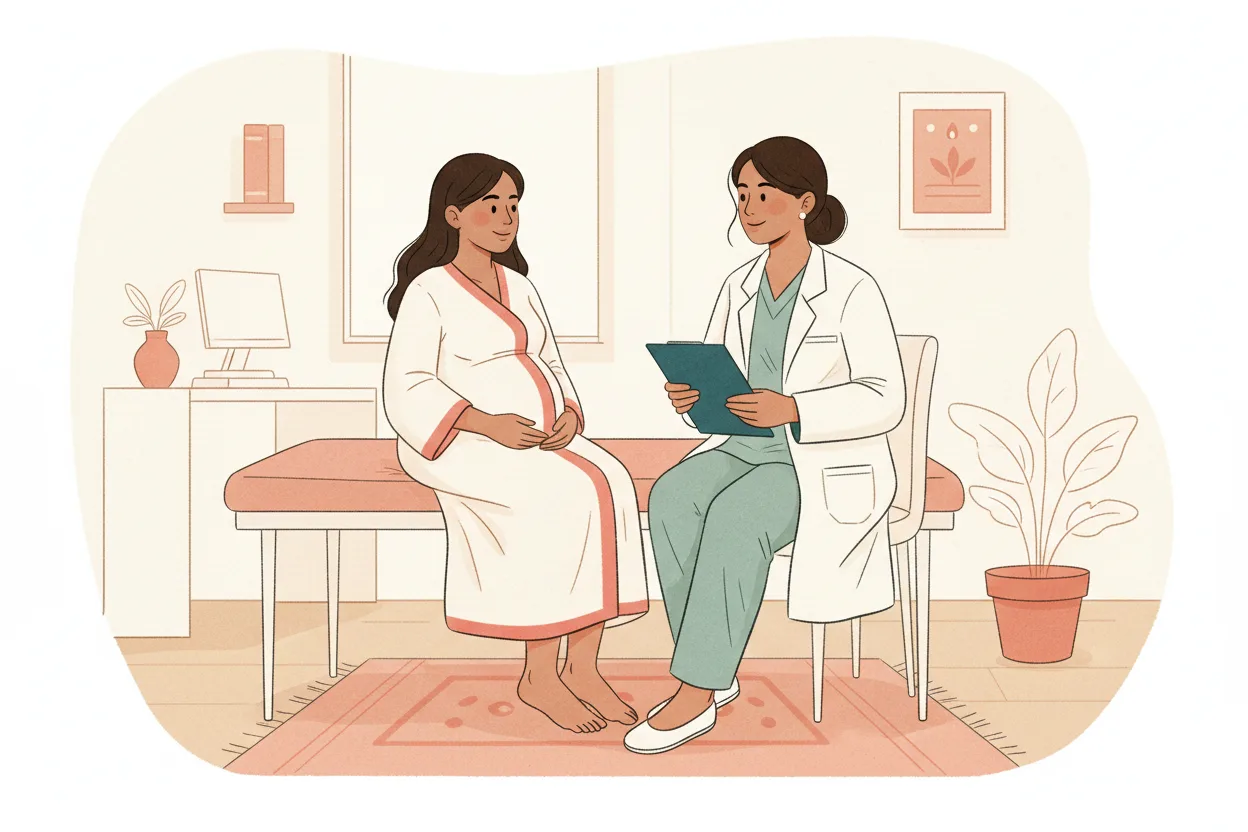
Desk fixes and a belt solve most day-to-day PGP for most women. But if the pain isn't easing, Wirral Community Health and Care NHS Foundation Trust advises arranging an appointment with your midwife or GP for a referral to a pelvic health physiotherapy service if self-management advice isn't making your symptoms more manageable. In India, ask your obstetrician for a referral to a physiotherapist experienced in antenatal or pelvic health care — most maternity hospitals in metro cities have one on staff or can point you to one.
Frequently Asked Questions
Is pelvic girdle pain dangerous for my baby? No — the NHS is clear that PGP is a mechanical, joint-related pain, and it does not harm your baby. It's uncomfortable and can be exhausting to manage at work, but it isn't a sign that anything is wrong with the pregnancy itself.
Should I ask for a standing desk or work-from-home days? It's a reasonable ask. A scoping review of PGP risk factors found that more control over breaks at work is linked to less reported PGP, so a flexible setup — a sit-stand desk, or a couple of work-from-home days where you can move more freely — is a legitimate way to manage the condition, not a luxury ask.
Can I keep wearing a maternity belt after I stop working, closer to delivery? Yes. There's nothing about a support belt that's specific to office wear — the pain and function benefits documented in the pilot trial apply through pregnancy generally, so most women keep wearing one at home through the third trimester if it's helping.
Will pelvic girdle pain go away after delivery? For most women, yes. Cambridge University Hospitals NHS Foundation Trust's patient guidance states that once they have given birth, most women find the symptoms settle, though around 7% still have some discomfort after giving birth. If pain is still troubling you postpartum, the same route applies — ask your midwife or GP for a physiotherapy referral rather than assuming you have to live with it.
What if stretches and a belt aren't enough? Don't wait it out. Wirral Community Health and Care NHS Foundation Trust's guidance is to see your midwife or GP for a physiotherapy referral once self-management isn't controlling your symptoms — a hands-on assessment can catch things a desk routine can't fix on its own.