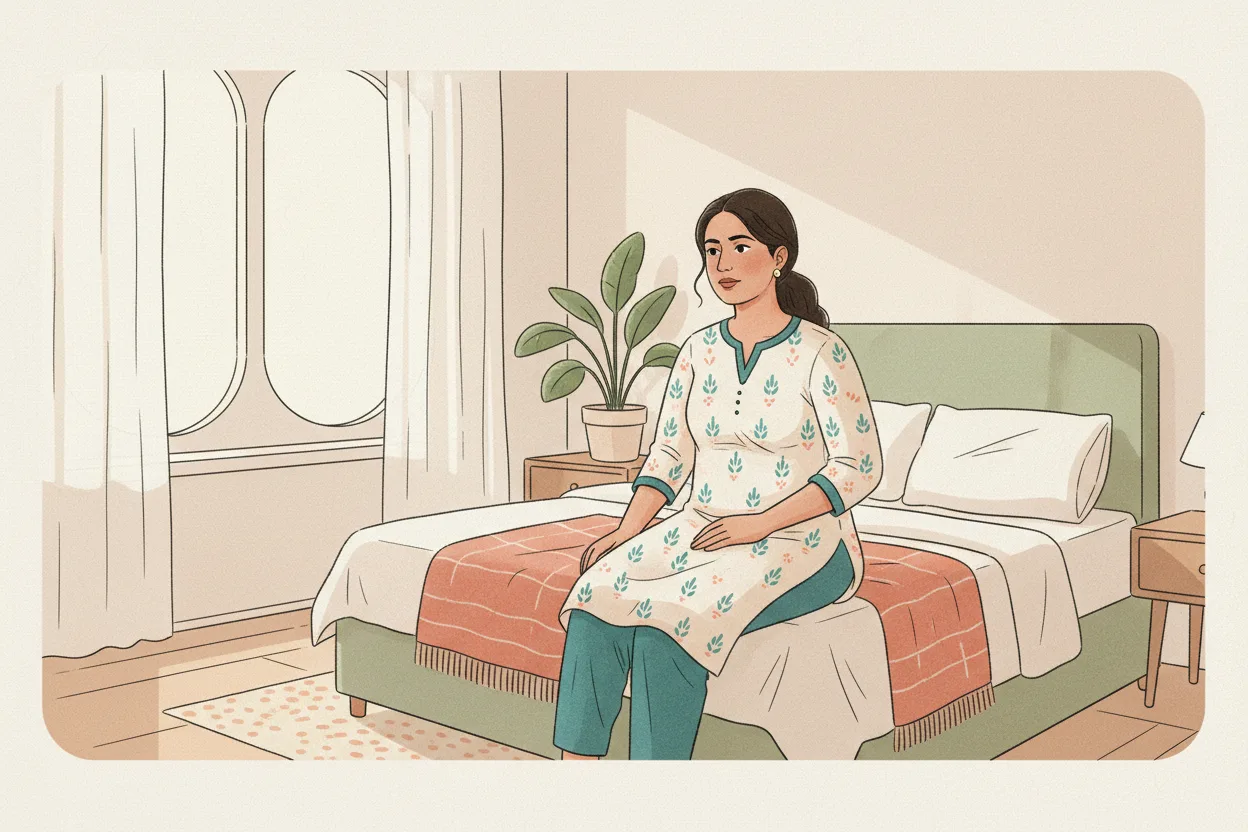

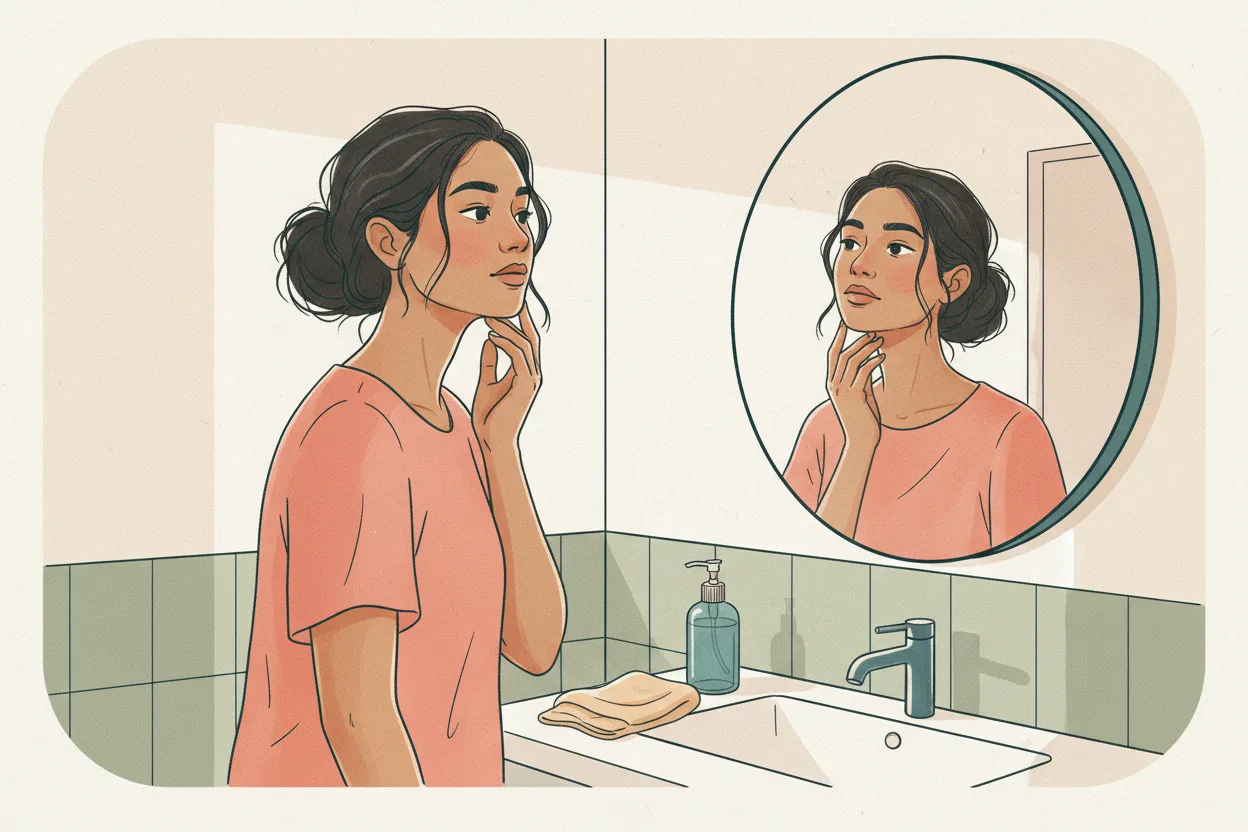
Postpartum acne is a hormonal breakout along your jaw, chin, and neck in the months after delivery — Cleveland Clinic explains that it is a type of hormonal acne that results from the changing levels of estrogen and progesterone once the placenta is delivered. It is not a sign you're washing your face wrong, and it is not permanent.
Not medical advice — consult your dermatologist or your baby's pediatrician before starting any acne treatment while breastfeeding.
Why It Happens After Delivery
Your body spent nine months with hormone levels climbing steadily. Within days of birth, they fall sharply, and skin that looked settled in the third trimester can suddenly break out. Cleveland Clinic explains that postpartum acne results from changing estrogen and progesterone levels, the same hormonal mechanism behind teenage acne or a pre-period breakout, just triggered by childbirth instead.
Oil glands respond to that hormone swing by producing more of the sebum behind breakouts. That excess oil doesn't just sit on the surface — NIH's StatPearls explains that the extra sebum builds up with keratin to plug the hair follicle, creating an oil-rich environment where C. acnes bacteria feed on the sebum and multiply, which is what turns a clogged pore into a visible breakout. For most mothers, this settles down on its own as hormones find a new baseline. Cleveland Clinic notes it can take several weeks for hormone levels to stabilize and skin to clear up, though it varies a lot from person to person.
Why Indian Summers Make It Worse
Heat and humidity aren't just uncomfortable during recovery — they add fuel to hormonal breakouts. A 2020 review in Frontiers in Public Health found that sebum excretion rises with skin temperature, by roughly 10% for every 1°C increase. In a hot, humid Indian summer, that means your skin is producing more oil right when your hormones are already pushing it to do the same — a combination that can make jawline and neck breakouts feel more stubborn than they would in a cooler season.
Sweat from daily heat, plus the extra warmth of postpartum recovery routines (hot water baths, heavier oils used in some family traditions), can add to clogged pores. None of that means you did anything wrong — it just means a lighter, non-comedogenic routine matters more here than it might elsewhere.
What's Safe to Use While Breastfeeding
Most topical acne ingredients are absorbed into breastmilk only in tiny amounts. A few need extra care, and one oral option is best left for after you've weaned.
| Ingredient | While Breastfeeding | Why |
|---|---|---|
| Benzoyl peroxide (topical) | Low risk | Only about 5% is absorbed through the skin |
| Azelaic acid (topical) | Low risk | Only about 4% of a dose is absorbed |
| Salicylic acid (topical) | Considered safe | Not appreciably absorbed into breastmilk |
| Tretinoin (topical, prescription) | Use with care | Must not touch the nipple, areola, or baby's skin |
| Doxycycline (oral, short course) | Usually fine short-term | Milk levels stay low; calcium blocks infant absorption |
| Isotretinoin (oral) | Not while nursing | No breastfeeding safety data exists |
Benzoyl peroxide. NIH's LactMed database states that benzoyl peroxide is considered a low risk to the nursing infant because only about 5% of a topical dose is absorbed through the skin. It's one of the most-studied acne ingredients and a reasonable first pick.
Azelaic acid. NIH's LactMed database states that azelaic acid is considered a low risk to the nursing infant, with only about 4% of a topical dose absorbed — and it also occurs naturally in food, so trace exposure isn't unusual for a baby anyway.
Salicylic acid. NIH's LactMed database states that topical salicylic acid is considered safe to use during breastfeeding because it is unlikely to be appreciably absorbed or appear in breastmilk. Keep it off areas where your baby's mouth might contact your skin right before a feed.
Tretinoin. This prescription retinoid needs more care. NIH's LactMed database states that tretinoin should never be applied directly to the nipple and areola, and that treated skin must not come into direct contact with your baby's skin, while you are nursing. Apply it only to areas away from where your baby's face or hands will rest, under your dermatologist's guidance.
Doxycycline. Dermatologists sometimes prescribe a short course of oral antibiotics for stubborn, cystic acne. NIH's LactMed database states that short-term doxycycline during lactation is not likely to harm the infant because milk levels stay low and the calcium in breastmilk limits how much the baby actually absorbs. That applies to short courses — your prescribing doctor decides the length.
Isotretinoin. Oral isotretinoin is the one to set aside while nursing. NIH's LactMed database states that there is no safety data for isotretinoin during breastfeeding, so less-absorbed topical treatments are preferred while breastfeeding, especially while nursing a newborn. If your acne is severe enough that a dermatologist is weighing isotretinoin, that conversation should include your feeding timeline.
A Simple Routine for the Indian Climate
A few habits do more than any single product:
- Cleanse twice a day, not more. A gentle, sulfate-free face wash morning and night is enough — over-cleansing strips the skin barrier and can leave it producing even more oil to compensate.
- Introduce one active ingredient at a time. Layering benzoyl peroxide, azelaic acid, and a retinoid together at once tends to irritate postpartum skin, which is already more sensitive.
- Moisturize even if your skin feels oily. A lightweight, oil-free moisturizer keeps the skin barrier balanced through sweaty days.
- Wear a light sunscreen daily. Acne treatments like tretinoin and salicylic acid can leave skin more reactive to sun, and Indian sun is intense most of the year.
- Keep your hands off breakouts. Picking prolongs healing and raises the odds of dark marks that linger longer than the pimple itself.
Products Worth Trying
| Product Type | Look For | Price Range | Where to Buy |
|---|---|---|---|
| Benzoyl peroxide face wash (2.5–5%) | Fragrance-free, gel or foaming | Rs. 250 – Rs. 600 | Amazon.in |
| Azelaic acid serum (10%) | Lightweight, fragrance-free | Rs. 500 – Rs. 1,200 | Amazon.in |
| Salicylic acid cleanser (2%) | Non-drying formula | Rs. 200 – Rs. 500 | FirstCry |
| Oil-free moisturizer | Non-comedogenic label | Rs. 300 – Rs. 700 | Amazon.in |
| Broad-spectrum sunscreen (SPF 30+) | Lightweight, non-greasy | Rs. 350 – Rs. 800 | Amazon.in |
Start with one product from this list, not all five at once. Postpartum skin — already dealing with hormone swings and heat — reacts poorly to a sudden new routine.
Frequently Asked Questions
Is postpartum acne different from regular acne? Not in mechanism. Cleveland Clinic explains it's a type of hormonal acne driven by shifting estrogen and progesterone — the same hormonal pathway behind teenage or pre-period breakouts, just set off by childbirth.
How long does postpartum acne last? Cleveland Clinic explains it can take several weeks for hormone levels to stabilize and skin to clear up, though it varies a lot from person to person. If it isn't improving after a few weeks, or it's leaving marks, a dermatologist visit is worth it.
Can I use my regular acne face wash while breastfeeding? If it contains salicylic acid or benzoyl peroxide, most likely yes. NIH's LactMed database states topical salicylic acid is considered safe during breastfeeding, and benzoyl peroxide is considered low risk since only about 5% is absorbed through the skin. Check the label for anything beyond these common actives before starting.
Is it safe to take antibiotics for acne while nursing? A short course often is. NIH's LactMed database states short-term doxycycline during lactation is unlikely to harm the infant because milk levels stay low. Oral isotretinoin is different — NIH's LactMed database states there is no safety data for isotretinoin during breastfeeding, so it's set aside until you've weaned.
Does the Indian heat actually make acne worse, or is that just a feeling? It's real. A 2020 review in Frontiers in Public Health found sebum output rises about 10% for every 1°C increase in skin temperature, so a hot, humid season genuinely means more oil on your skin, on top of postpartum hormone swings.
What if nothing over-the-counter is working? Some postpartum acne is cystic and needs a prescription. A dermatologist familiar with your feeding plan can choose an oral or topical option that fits it — this is a common combination for Indian dermatology clinics to manage, so it's worth asking for specifically at your appointment.