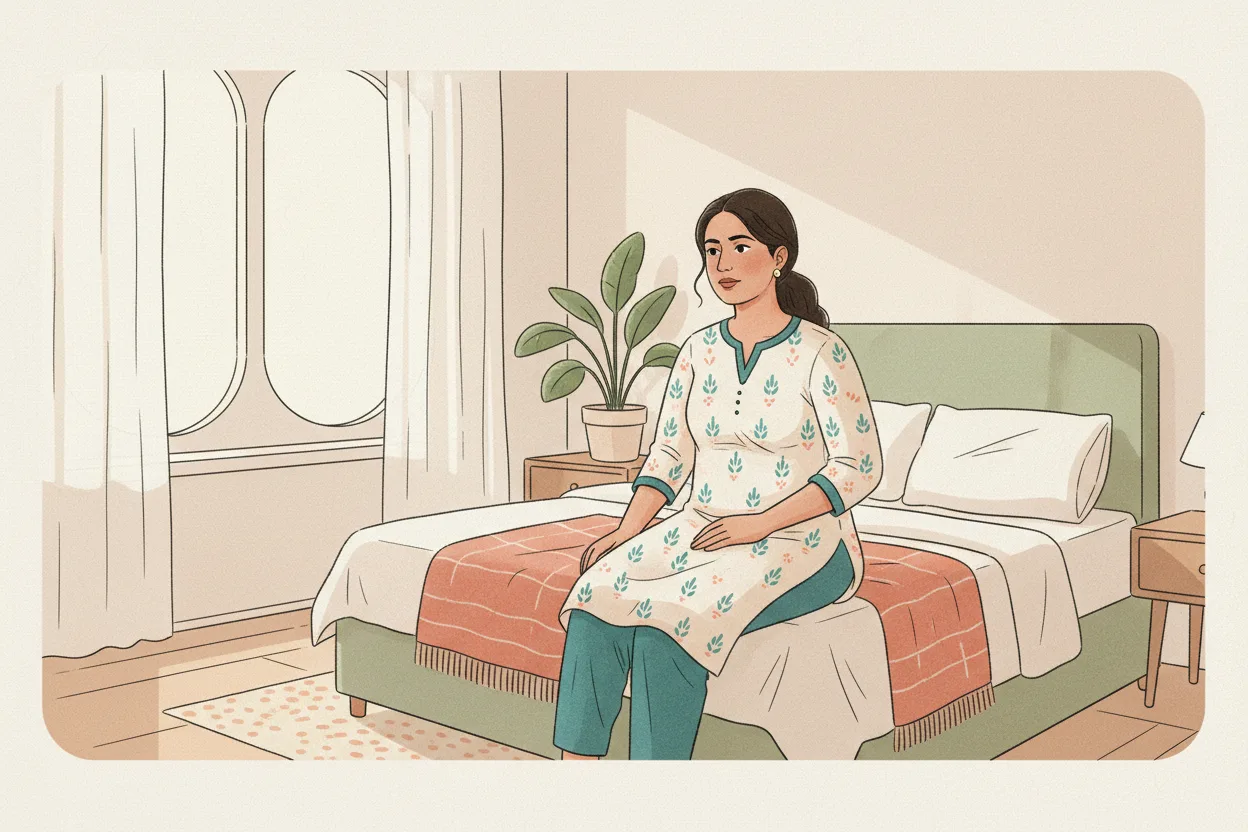

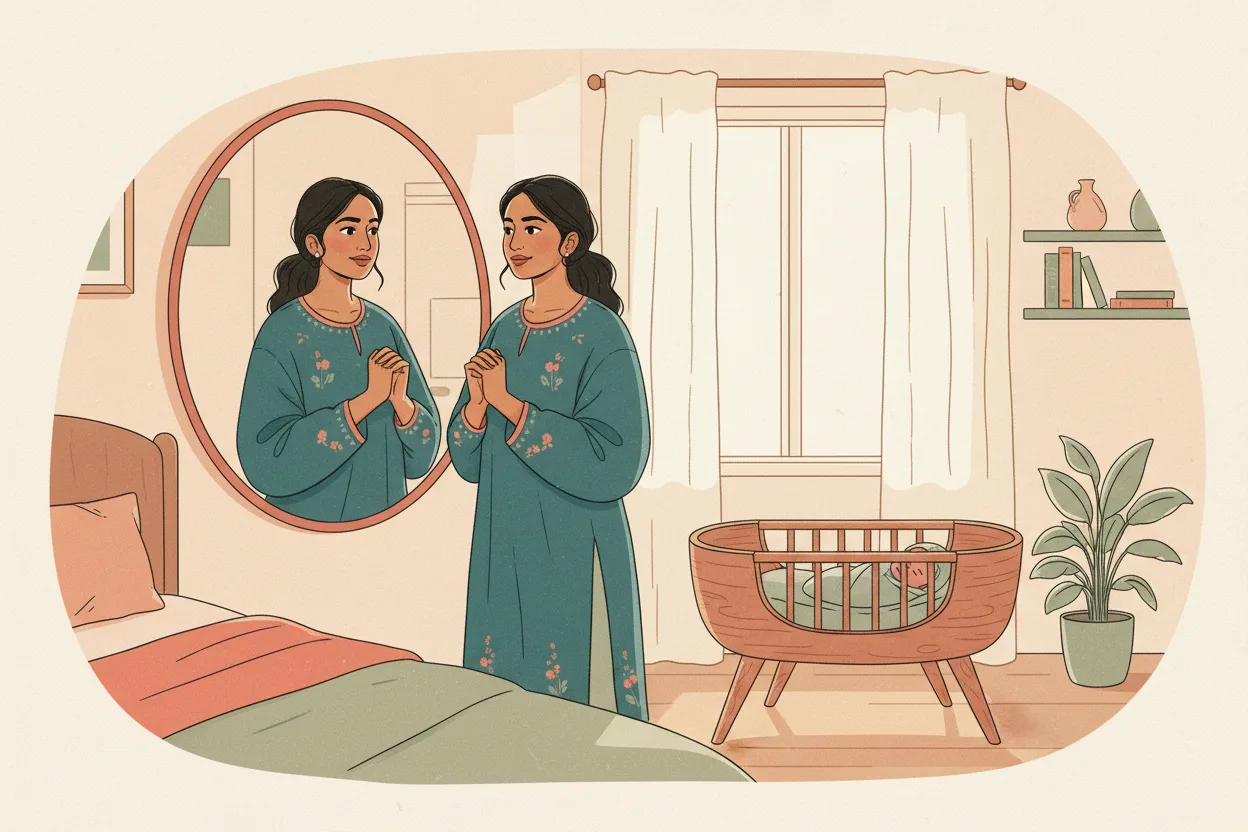
The body you have right after birth is not the body you'll have in six months, and it isn't a preview of "forever" either — most postpartum body changes follow a fairly predictable timeline, and knowing that timeline is what turns panic in front of a mirror into something you can actually sit with. You're allowed to feel unsettled by how you look, and you're also allowed to know, with real numbers, when things start to shift.
Not medical advice — every recovery is different; talk to your gynaecologist or physician about your own postpartum body.
Why It Can Feel Louder Here
In a lot of Indian families, the early days after birth come with visitors — parents, in-laws, extended family dropping in for the namkaran (naming ceremony), the baby's first outing, or simply "to see the baby." That often means being seen, and photographed, before you feel ready. Relatives may comment on your weight, your face, or how "tired" you look, generally meaning no harm, but landing hard anyway when you're sleep-deprived and still bleeding, sore, or leaking milk.
There's also a common, well-meaning script — "just enjoy this phase" — that skips past the real feeling instead of addressing it. Enjoying a body that feels unfamiliar is not a requirement for being a good mother, and no one is owed a photograph before you feel ready to be in one.
What's Actually Happening, and On What Timeline
The weight
The dramatic drop happens fast, then the rest is slow. Cleveland Clinic explains that after about a week postpartum, you'll have lost the majority of the "delivery weight" — the baby, placenta, and fluid that made up a large share of what you gained. What's left is the weight your body built up over nine months, and it comes off gradually, not on a set schedule.
If you're trying to lose that remaining weight while breastfeeding, La Leche League International advises that a slow, steady pace of about half a kilogram a week is generally considered safe and sustainable, and cautions against severely restricting calories to speed things up. In the same spirit, NHS guidance states that if you're breastfeeding and overweight, the best way to lose weight is a healthy, balanced diet and regular, moderate exercise — not a crash diet before the next family function.
Stretch marks and skin tone
Stretch marks rarely vanish, but they do fade substantially. Cleveland Clinic notes that stretch marks generally take between six and 12 months to fade from dark, raised lines to thinner, lighter ones closer to your skin tone. If pregnancy left dark patches across your face — sometimes called the "mask of pregnancy" — Cleveland Clinic explains that melasma will likely fade within three months of no longer being pregnant, as your hormone levels come back down.
Before you spend on a stretch-mark cream because a relative or an ad swears by it: NHS guidance is direct that there's very little evidence creams, oils, or lotions actually prevent, reduce, or remove stretch marks, despite the marketing. A moisturiser can still make dry, tight skin feel more comfortable — that's worth doing for the comfort alone — but it isn't a treatment that will change your timeline.
The belly and abdominal muscles
If your stomach still looks rounded or "pooched" months out, you're not imagining it and you're not alone. Cleveland Clinic states that diastasis recti — separation of the abdominal muscles — is a common condition that affects 6 in 10 women after childbirth, and for many it continues to narrow on its own in the months after delivery. Ask your doctor or a physiotherapist to check it at your postpartum follow-up rather than guessing from the mirror.
Hair
If you're shedding handfuls of hair in the shower a few months in, that's a known, temporary phase, not damage. Cleveland Clinic notes that postpartum hair loss is a very common type, and most people notice some hair loss after childbirth, with fullness typically returning by around the baby's first birthday.
Why the Feelings Deserve to Be Taken Seriously
This isn't just about vanity, and it isn't something to push aside because "you just had a baby." A 2022 peer-reviewed study found that body dissatisfaction was positively correlated with postpartum depression — meaning mothers who feel worse about how their postpartum body looks are more likely to also be dealing with postpartum depression. That link matters especially here: a systematic review and meta-analysis of Indian studies found that postpartum depression affects roughly one in five mothers in India (a pooled prevalence of 22%), so what you're feeling about your body is not a rare or unusual reaction. If avoiding the camera, avoiding the mirror, or feeling persistently low about your body isn't easing up after a few weeks, it's worth raising with your doctor at your postpartum check-up, the same way you'd raise any other symptom.
Not medical advice — if these feelings are affecting your daily life, talk to your gynaecologist or a mental health professional.
Handling Family and Photos Without Faking It
None of this needs a script that pretends everything feels fine. A few things that actually help:
Decide your own photo boundary in advance. It's fine to hand someone the phone and say "you two take this one" instead of stepping in. Being in some photos with the baby doesn't require being in all of them, and you can revisit that boundary as you start feeling more like yourself.
Have one honest line ready for comments. Something like "I'm healing, give it time" closes the conversation without you having to justify your body to a room. No one is owed your weight, your stretch marks, or an explanation.
Dress for the body you have right now. Wearing pre-pregnancy clothes that no longer fit is one of the fastest ways to feel bad in a photo. A few comfortable, well-fitting pieces — not your "before" wardrobe — make a bigger difference to how a photo feels than the number on the scale does.
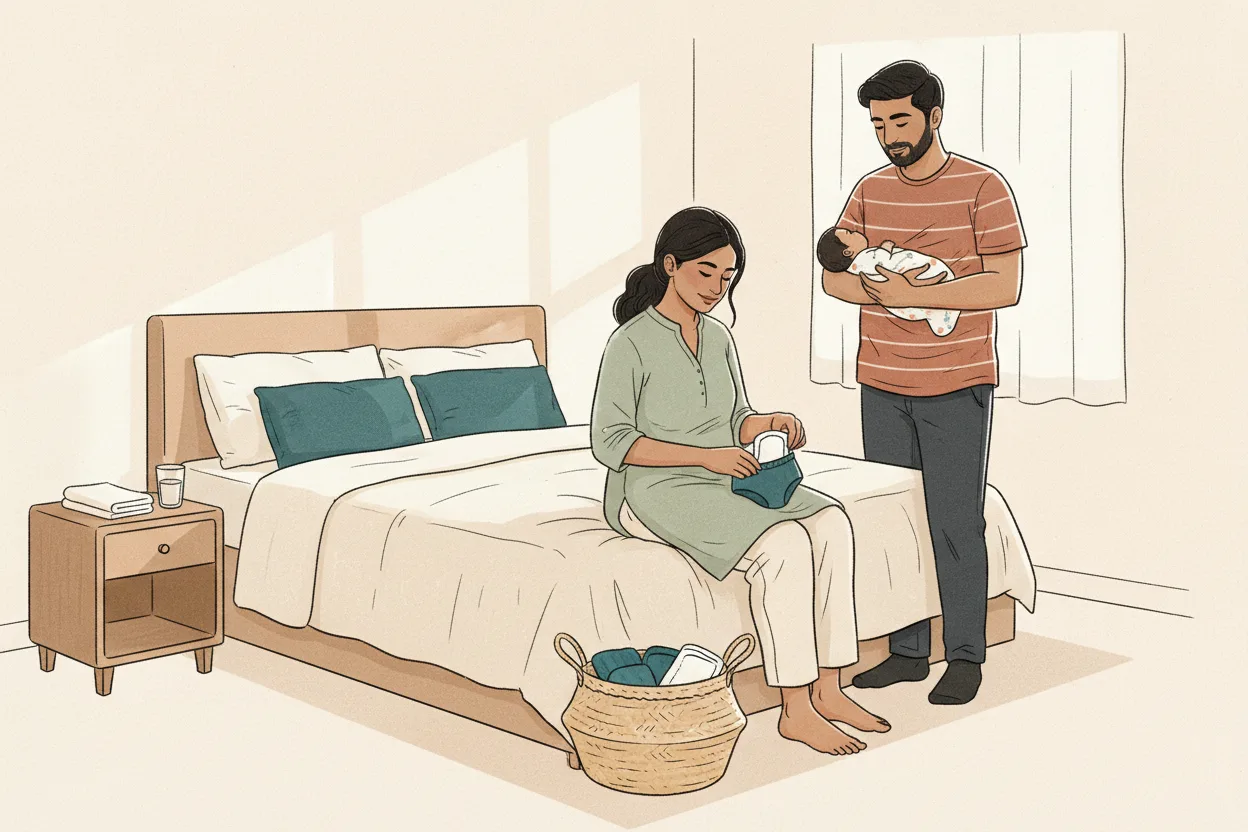
Loop your partner in specifically. Ask him to field a comment, redirect a relative, or simply notice if you've gone quiet at a gathering. This is a shared recovery, not just yours to manage alone — a systematic review found that greater partner support was significantly associated with lower body dissatisfaction in postpartum mothers, so his role here isn't a nice-to-have, it's protective.
Practical Things Worth Having on Hand
None of these change your timeline — they just make the weeks in between more comfortable.
| Item | Why it helps | Price range | Where to buy |
|---|---|---|---|
| High-waisted seamless leggings | Comfortable over a healing belly, works under kurtas | Rs. 500 – Rs. 1,200 | Amazon.in |
| Soft postpartum belly wrap | Gentle support and comfort while moving around | Rs. 600 – Rs. 1,800 | FirstCry |
| Nursing-friendly kurta sets | Easy to feed in, doesn't cling, works for visitors | Rs. 800 – Rs. 2,000 | FirstCry / Amazon.in |
| Well-fitting nursing bras | Comfort matters more than "snapping back" right now | Rs. 350 – Rs. 1,200 | Amazon.in |
Frequently Asked Questions
Is it normal to still look pregnant weeks after delivery? Yes. Cleveland Clinic explains that while most of the "delivery weight" is gone within about a week, the remaining pregnancy weight comes off gradually over months — a rounded lower belly at 4–6 weeks is common, not a sign anything is wrong.
Do stretch marks ever go away completely? They usually don't disappear entirely, but Cleveland Clinic notes they generally fade substantially within six to 12 months, becoming thinner and lighter.
Should I try to lose weight quickly before a family event like the naming ceremony? No — La Leche League International and NHS guidance both point to a slow, steady pace with a balanced diet and moderate exercise, especially while breastfeeding. Crash dieting before an event isn't recommended and can affect your energy and milk supply.
I'd rather not be in every family photo with the baby right now. Is that okay? Yes. It's your body and your comfort. You can be present at the gathering and still choose which photos you're in — that's a boundary, not a failure to bond with your baby.
When should I actually talk to a doctor about how I feel about my body? If the feeling doesn't ease up over a few weeks, or if it's making you avoid people, the mirror, or the baby, mention it at your postpartum visit. A 2022 study found a real link between body dissatisfaction and postpartum depression, so this is worth flagging early, not waiting out.
Is postpartum hair loss going to be permanent? No. Cleveland Clinic describes it as very common and temporary, with fullness typically back by around your baby's first birthday.