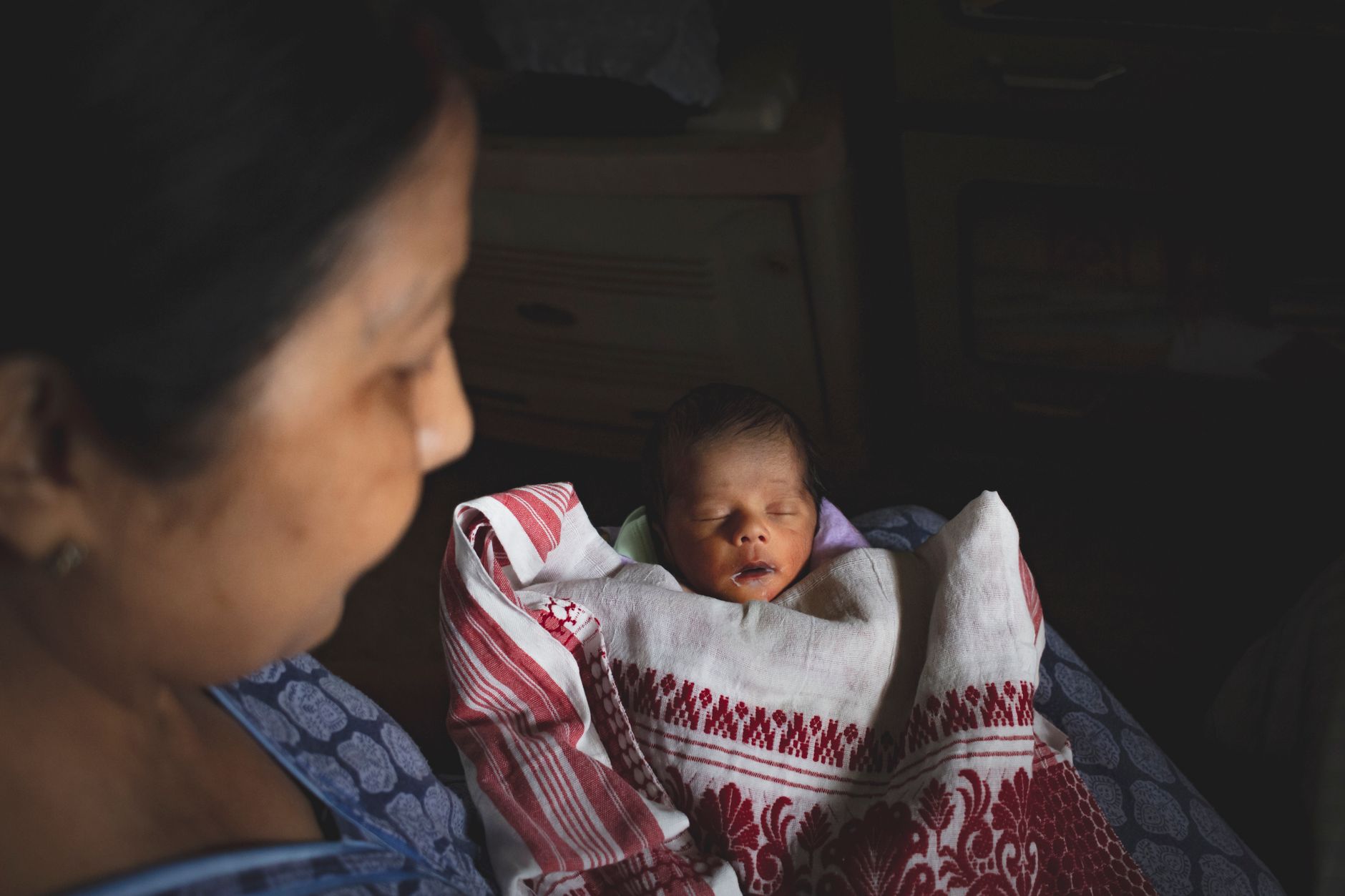

That drained, puffy-eyed look in a photo taken months after delivery is real, not something you're imagining. Cleveland Clinic notes that postpartum recovery comes with some symptoms lasting months after you give birth — it isn't a process that wraps up in six to eight weeks. Feeling back to yourself day to day and still looking tired in a ceremony photo are not contradictions; hormonal shifts, sleep loss, and sometimes anemia or thyroid changes are all still at work behind the scenes.
Not medical advice — consult your doctor for a personal evaluation if fatigue feels excessive or comes with other symptoms.
Why Ceremony Photos Are the Moment It Hits You
In India, the first formal photos after birth often come months in, not days — a naamkaran, mundan, or a big family gathering where relatives unable to visit the hospital finally see the baby, and you, up close. By then you've stopped tracking your own recovery day by day; you're managing feeds, sleep, and a baby that's now smiling and holding their head up. So it's jarring to see a photo and notice puffy eyes, dull skin, or a flatness in your expression that you hadn't clocked in the mirror.
Comments from relatives ("you look so tired," "are you eating enough") rarely help. The honest answer is usually biological, not a sign of failing at self-care — and it's worth understanding what's actually happening before you assume something is wrong with you.
Why It Shows on Your Face Longer Than You Feel It
Two things are working against you at once in those months: your hormones and your sleep.
Right after delivery, Cleveland Clinic explains, the levels of estrogen and progesterone increase tenfold during pregnancy but drop sharply after delivery — one of the steepest hormone swings the body goes through.
At the same time, your sleep stays fragmented for far longer than the newborn stage feels like it should. The American Academy of Pediatrics' HealthyChildren.org notes that infants wake up at the end of each sleep cycle — as often as every one or two hours — so a parent's own sleep is broken on the same schedule, night after night, well past the point where visitors assume you're "settled."
That broken sleep is what actually shows up in photos. Cleveland Clinic explains that poor sleeping habits cause the skin under your eyes to appear pale, letting blood vessels show through more easily — exactly what reads as dark circles in a photo, even on a day you feel reasonably alert. A camera and direct light pick up months of accumulated sleep debt in a way a quick glance in the mirror often doesn't.
What's Normal — and What's Worth Getting Checked
Looking tired at four or five months post-delivery, on its own, still fits a normal recovery timeline — Cleveland Clinic notes that recovery comes with some symptoms lasting months after you give birth, not a schedule that wraps up in six to eight weeks. But a few specific, treatable explanations are common enough in India that they deserve a direct check instead of an assumption that you'll "grow out of" it.
Anemia. This is the single most likely medical contributor for many Indian mothers. A study of postnatal women in Gujarat, India, published in a peer-reviewed journal, found that the prevalence of anemia among lactating women (Hb: <12 g/dL) was 91.36% — a striking number that makes low iron a reasonable first thing to check with a simple blood test. A peer-reviewed review on postpartum anemia management found that postpartum anemia's consequences include fatigue and postpartum depression, along with a shorter duration of breastfeeding and impaired mother-child interaction — reasons to treat it rather than push through it.
Thyroid changes. Less commonly discussed, but real. NIH's StatPearls clinical reference states that the hypothyroid phase of postpartum thyroiditis may be symptomatic, with constipation, dry skin, fatigue, impaired concentration, cold intolerance, and paresthesia. This phase can appear anytime within the first year after delivery, so a thyroid panel is worth asking for if fatigue arrives alongside those other symptoms, not just around the six-week mark.
Postpartum depression. This is the one to name plainly. The short-lived "baby blues" pass within about two weeks; postpartum depression is different. NIH's StatPearls clinical reference states that, left untreated, it can last for months, resulting in significant mental health dysfunction. If low mood, flatness, or loss of interest sits alongside the physical tiredness, that combination is worth raising with a doctor directly — it's a medical condition, not a phase to sit through.
| Sign | Likely explanation | What to do |
|---|---|---|
| Dark circles, pale/dull skin, tired in photos but functioning fine day to day | Sleep debt plus normal postpartum hormone shifts | Usually eases gradually; no urgent action needed |
| Fatigue plus pale skin/nails, breathlessness on exertion | Possible anemia — common postpartum in India | Ask for a hemoglobin check |
| Fatigue plus dry skin, constipation, feeling cold, trouble concentrating | Possible postpartum thyroiditis | Ask for a thyroid panel (TSH) |
| Fatigue plus persistent low mood, flatness, loss of interest, lasting weeks | Possible postpartum depression | Talk to your doctor — this needs treatment, not time |
What Actually Helps Day to Day
You can't out-schedule a newborn's sleep cycle, but a few things make the fatigue easier to carry while your body catches up.
Split the night shift with your partner. Whoever isn't feeding that stretch can be the one resettling the baby afterward, or you can alternate "on" nights so each of you gets a longer stretch of sleep a few times a week. This is a father's job as much as a mother's, not something he "helps" with.
Ask relatives to help with tasks, not just hold the baby. Redirect some of the ceremony-visit energy toward meals, laundry, or watching the baby for an hour so you can nap.
A single photo is not the whole picture. Bright ceremony lighting and camera flash exaggerate paleness and shadows under the eyes far more than a quick glance in the mirror does. If you feel functional day to day, that matters more than how one photo turned out.
Get the basic blood work done anyway. A hemoglobin and thyroid check at your next follow-up is quick and inexpensive at most diagnostic labs, and rules out the two most treatable explanations above — worth doing even if you feel fine most days.
Frequently Asked Questions
Is it normal to still look tired in photos 4-6 months after delivery? Yes, on its own. Postpartum recovery can involve symptoms lasting months, and disrupted sleep keeps showing on your face well past the newborn stage. It's worth a doctor visit when it comes with other symptoms like pale skin, breathlessness, feeling cold, or low mood.
Could it be anemia even if I'm eating well? It's common enough in India that it's worth checking regardless. One Indian study found anemia in over 91% of lactating women it studied. A simple hemoglobin test at your next visit will tell you either way.
How is this different from postpartum depression? Tiredness from sleep debt and hormones is physical and tends to ease as the baby sleeps longer and your hormones settle. Postpartum depression is different — it can last for months if untreated and typically comes with persistent low mood, flatness, or loss of interest in things, not just looking tired. Raise that combination with your doctor directly.
Why do dark circles look worse in photos than in the mirror? Poor sleep makes the skin under your eyes appear paler, letting blood vessels show through more — camera flash and direct light exaggerate this more than a quick glance in a dim bathroom mirror does.
When should I bring this up with a doctor? If fatigue is severe, doesn't ease with rest, or comes with pale skin, breathlessness, feeling unusually cold, constipation, or a persistent low mood, bring it up at your next checkup rather than waiting for a scheduled visit. Postpartum thyroid changes and anemia are both treatable once identified.
Will this affect my milk supply or my baby? Fatigue itself doesn't directly reduce milk supply, but untreated anemia is linked to a shorter duration of breastfeeding and impaired mother-child interaction — another reason to get it checked rather than manage through it alone.