
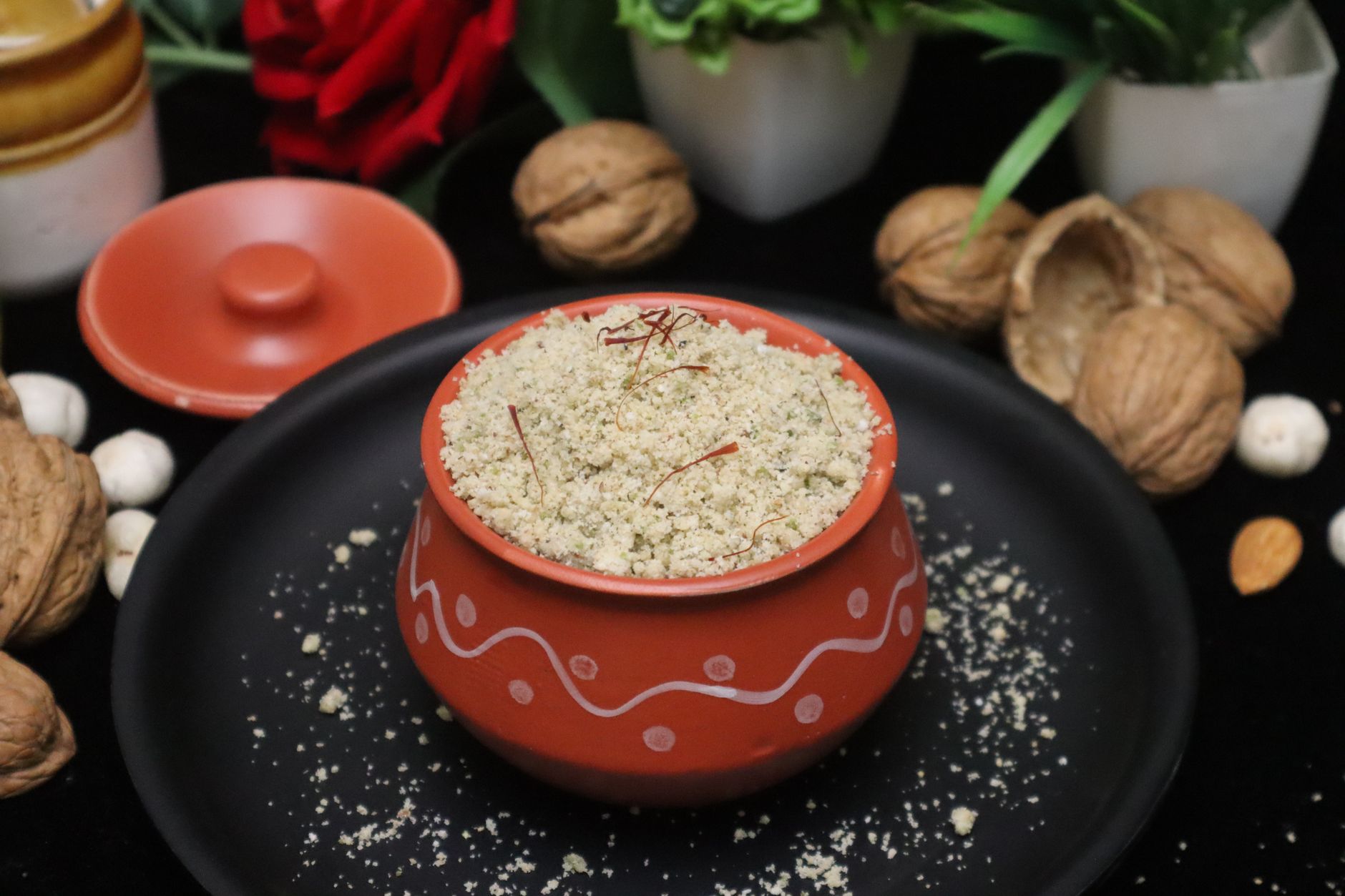
Packaged gond laddoo, panjiri, and methi laddoo delivery kits can be a genuine help in the first weeks postpartum, but they are not a shortcut to good nutrition by themselves — you still have to read the label. Some kits are close to homemade; others are mostly sugar and refined flour with a confinement-food label on the box.
Not medical advice — consult your obstetrician, pediatrician, or a registered dietitian for guidance specific to you.
Why This Question Matters More in India
In many Indian families, a new mother's first weeks are built around confinement foods — gond (edible gum) laddoo, panjiri, methi (fenugreek) laddoo, and dry-fruit mixes — traditionally made by a mother, mother-in-law, or dai over days of soaking, roasting, and grinding. That support isn't available to every family: parents in a new city, both working before the birth, or without extended family nearby increasingly turn to postpartum food-kit brands that ship a week's or month's supply of laddoo, panjiri, and soups to the door.
That's a reasonable trade — the question is what's actually in the box. A 2020 ICMR-NIN report states that a breastfeeding mother needs about 600 extra kilocalories a day above her pre-pregnancy requirement in the first six months (520 extra kcal/day from 7–12 months), and confinement food exists to help supply that. A kit that's mostly deep-fried, sugar-heavy laddoo is trying to solve the right problem with a fairly blunt tool.
What to Check on the Label Before You Order
Sugar content, first. Traditional laddoo recipes use jaggery or sugar as a binder, and commercial kits often lean on it heavily for shelf life and taste. WHO recommends that free/added sugar stay under 10% of total daily energy intake — easy to blow past if you're eating three or four sugar-laden laddoo a day on top of regular meals. Ask the brand for a nutrition label per piece, not just an ingredient list, and do the math against your day.
Protein and micronutrients, not just calories. A peer-reviewed review on PubMed Central states that lactating women need roughly 25 grams of additional protein per day, and that requirements for most micronutrients rise compared with pregnancy — with the exception of vitamin D, vitamin K, calcium, fluoride, magnesium, and phosphorus. A box of laddoo built mainly on refined flour, ghee, and sugar can be calorie-dense but protein- and micronutrient-poor. Kits that include dals, whole nuts, seeds (til, flax), and dry-fruit powder in real quantity — not just listed for flavor — do better on this front than pure sugar-and-flour mixes.
Don't expect methi laddoo to be a milk-supply fix. Methi (fenugreek) is the headline ingredient in most lactation-marketed kits. The NIH's LactMed database (Drugs and Lactation Database) states that one meta-analysis found fenugreek to have a mild galactogogue effect with an unknown safety profile, while another meta-analysis found no good evidence that it increases milk supply at all — and that caution is warranted with high doses, particularly for women with diabetes or those on warfarin. If a brand's marketing promises a milk-supply boost from its methi laddoo, treat that as a claim to verify with your doctor, not a given. On quantity: LactMed notes that studies on fenugreek for milk supply typically used 1 to 6 grams a day, while doses of about 25 grams or more a day start to lower cholesterol and blood sugar instead — useful context if you're eating several methi laddoo daily and wondering whether you're overdoing it, though it's still not a substitute for asking your doctor about your specific situation.
Freshness and preservatives. Home-cooked confinement food is generally made in small batches for near-term eating. A delivery kit sitting in transit and then in your fridge or pantry needs either genuine preservation (vacuum packing, refrigeration in transit) or a short, clearly stated shelf life. Ask directly: how is it packed, what preservatives (if any) are used, and how long after opening is it meant to be eaten? A vague answer is a worse sign than a specific, short shelf life.
Homemade vs. Delivered: A Practical Comparison
| Homemade (family-made) | Packaged delivery kit | |
|---|---|---|
| Ingredient control | Full — you know exactly what went in | Depends entirely on reading the label |
| Sugar levels | Usually adjustable to taste | Often higher, for shelf life and mass appeal |
| Freshness | Best — eaten within days of making | Varies; check stated shelf life and storage |
| Effort required from you/family | High — days of prep, someone has to be available | Low — ordered and delivered |
| Cost | Ingredient cost + time | Rs. 1,500 – Rs. 5,000+ for a week to a month's supply |
| Best for | Families with someone available and willing to cook | Parents without family nearby, or with both parents working before the birth |
Neither column is the "right" answer for everyone. With a parent or mother-in-law genuinely available and willing to cook, homemade tends to be fresher and cheaper. Without that support at home — a real and common situation for nuclear families in Indian cities — a well-chosen kit is a legitimate way to get through the fourth trimester without also becoming your own confinement-food producer.
What a Kit Can't Replace
Two things matter for postpartum recovery and infant feeding that no laddoo box — homemade or delivered — will cover on its own.
Iron, if you're anaemic. Postpartum anaemia is common, and WHO's guideline on iron supplementation in postpartum women states that oral iron supplementation, alone or combined with folic acid, may be given for 6–12 weeks after delivery to reduce anaemia risk in settings where gestational anaemia is a public health concern — which describes India, given how widespread anaemia is here. Dry fruits and jaggery in a laddoo help, but they don't substitute for supplementation your doctor prescribes based on your blood work.
Vitamin D drops for the baby. The American Academy of Pediatrics (HealthyChildren.org) states that breastfed infants need a supplemental vitamin D, because breast milk is a poor source of it regardless of what the mother eats. No amount of gond laddoo, however well made, changes that — the baby's vitamin D still needs to come from drops your pediatrician prescribes.
And on supply specifically: La Leche League International states that milk production is driven mainly by supply and demand — the more milk the baby removes, the more the body makes. Feeding or pumping frequency does more for your supply than any single food, kit or homemade.
Where to Buy
If you decide a kit makes sense for your household, treat it like any other online purchase: check the label, check reviews for freshness complaints, and start with a small trial pack before committing to a month's subscription.
| What to look for | Where to check |
|---|---|
| Postpartum/confinement food kits | Amazon.in |
| Gond laddoo (packaged) | FirstCry |
| Panjiri mix | Amazon.in |
Frequently Asked Questions
Are packaged postpartum food kits safe to eat? Most are, in the sense of being made in licensed kitchens — but "safe" isn't the same as "nutritionally ideal." Check the sugar content, ask how fresh it is when it arrives, and don't assume a lactation claim on the box is medically proven; the evidence for fenugreek boosting milk supply is mixed.
Will eating gond laddoo or panjiri increase my milk supply? Not reliably by itself. Milk supply responds mainly to how often milk is removed — frequent feeding or pumping — rather than to any specific food. Confinement foods support your overall energy and nutrition needs, which matter, but they aren't a proven galactogogue on their own.
How much extra should I be eating while breastfeeding? ICMR-NIN's guidance puts it at roughly 600 extra kilocalories a day in the first six months postpartum, dropping to about 520 extra kcal/day from 7–12 months, on top of your regular pre-pregnancy diet. A kit should be one part of hitting that, not your only source of extra calories.
Do I still need iron or vitamin D supplements if I'm eating confinement food? Yes, if your doctor has prescribed them. Confinement food is not a substitute for iron supplementation if you're anaemic, which WHO recommends for 6–12 weeks postpartum in high-anaemia settings, or for your baby's prescribed vitamin D drops.
Is homemade always better than a delivered kit? Fresher and more controllable, usually — but only if someone is actually available and willing to make it well. A kit with a clean ingredient list, reasonable sugar levels, and a short, honestly stated shelf life is a perfectly reasonable choice for a household without that support.
Can dad or other family members help with this instead of just mum eating alone? Yes — nothing about confinement food is mother-only. Whoever is doing the cooking or ordering, both parents should look at the label together and track supply as a shared task, the same way you'd split night feeds.