Pelvic floor therapy is physiotherapy for the muscles that support your bladder, uterus, and bowel — and it matters after every delivery, not only a vaginal one. A cross-sectional study in Scientific Reports found that women who had a caesarean were less likely to report urinary incontinence than women who delivered vaginally, but more likely to report painful intercourse afterward — so a C-section does not fully protect your pelvic floor either way.
Not medical advice — consult your obstetrician or a pelvic floor physiotherapist for guidance specific to your recovery.
Why the Pelvic Floor Needs Attention, Whichever Way You Delivered
Both parents often assume pelvic floor work is only for vaginal deliveries. It isn't. Every pregnancy — regardless of delivery mode — puts weeks of extra weight and pressure on these muscles, and the NHS advises that pelvic floor muscle exercises strengthen the muscles around your bladder, vagina, and bottom, which helps stop incontinence, improve prolapse, and make sex more comfortable. That's the whole case for taking this seriously, whether you had a vaginal birth or a caesarean.
When to Start
There's no need to wait months to begin. AIIMS-DST clinical practice guidelines developed with FOGSI state that moderate-intensity physical activity should resume four weeks after a normal delivery and six weeks after a caesarean delivery — pelvic floor exercises fit well inside that window, and gentle versions can often begin sooner with your doctor's sign-off.
If you had a catheter during labour or surgery, hold off until it's out. NHS maternity guidance states that it can take up to three months for your pelvic floor muscles to get strong again, so don't be discouraged if progress feels slow in the early weeks — consistency matters more than speed.
For most parents, the natural moment to raise pelvic floor concerns with a doctor is the six-week check. WHO's postnatal care guidelines recommend at least three additional postnatal contacts for healthy women and newborns — between 48 and 72 hours, between 7 and 14 days, and during week six after birth — and that six-week visit is a good place to ask for a pelvic floor physiotherapy referral if you're having any symptoms.
It's Not Just About Incontinence
Pelvic floor therapy also covers two other extremely common postpartum issues that rarely get discussed openly.
Diastasis recti — the separation of the abdominal muscles down the midline — is close to universal in the early weeks. A study in Annals of Medicine found that the incidence of diastasis recti was 89.4%, most commonly as a combined upper and periumbilical separation. A pelvic floor physiotherapist can assess the gap and guide safe core rehabilitation instead of leaving you to guess with generic ab exercises.
Pelvic organ prolapse — a sensation of heaviness or bulging in the vagina — is far more common than most people realise. A review in Medicina (Kaunas) found that pelvic organ prolapse affects about 50% of women undergoing routine gynaecological examination. It is not something to feel embarrassed about raising with a physiotherapist or your doctor.
What a Session Actually Involves
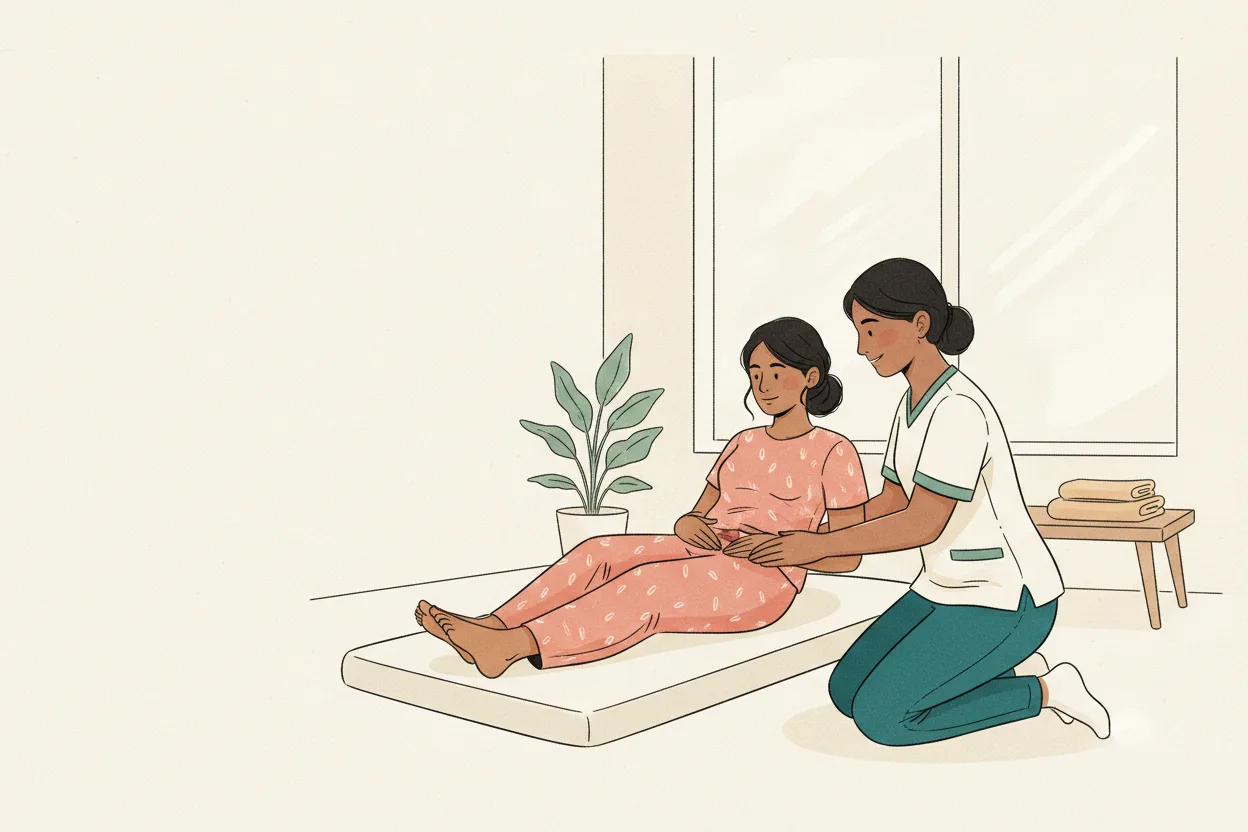
A first pelvic floor physiotherapy appointment isn't invasive or awkward in the way many parents fear. Cleveland Clinic explains that during your appointment, your physical therapist may use sensors and video to monitor your pelvic floor muscles as you relax or clench them — this is called biofeedback, and it helps you learn to actually feel and coordinate muscles that are hard to isolate on your own. Most therapists also check your posture, breathing pattern, and abdominal separation, and build you a short home routine to repeat daily.
This is also why an assessment matters more than reaching for generic Kegel advice online. Cleveland Clinic explains that the pelvic floor can also become too tight rather than weak — a spasm-like condition called a hypertonic pelvic floor — and that injury to the pelvic muscles during pregnancy or childbirth is a recognised risk factor for it. A physiotherapist can tell whether you need strengthening, relaxation, or both, which a self-taught Kegel routine can't.
Does Pelvic Floor Therapy Actually Work?
Yes — with the right kind of guidance. A systematic review found that pelvic floor muscle training showed benefits in reducing urinary incontinence and improving quality of life, particularly when delivered with structured support — meaning a few sessions with a trained physiotherapist tend to work better than trying to self-teach Kegels from a video.
How to Find a Pelvic Floor Physiotherapist in India
Pelvic floor physiotherapy is a growing but still niche specialty here, so it takes a bit of searching:
- Ask your obstetrician or the hospital where you delivered for a referral — most large maternity hospitals in metro cities now have a women's health physiotherapist on staff or on call.
- Search for "women's health physiotherapist" or "pelvic floor physiotherapist" specifically — general physiotherapy clinics vary widely in whether they offer this specific training.
- Home-visit physiotherapy services are common in Indian cities and can be useful in the early weeks when travel is hard with a newborn.
- Confirm the therapist has specific pelvic health or women's health training, not just a general physiotherapy degree — ask directly before booking.
Frequently Asked Questions
Do I need pelvic floor therapy if I had a C-section? Yes, it's still worth considering. A cross-sectional study in Scientific Reports found that women who had a caesarean were more likely to report painful intercourse afterward than those who had a vaginal delivery, even though they reported less urinary incontinence — pregnancy itself, not just the mode of delivery, affects the pelvic floor.
How soon after delivery can I start pelvic floor exercises? AIIMS-DST guidelines developed with FOGSI place resumption of moderate physical activity at four weeks after a normal delivery and six weeks after a caesarean — check with your doctor first, especially if you had a catheter, since NHS maternity guidance says to wait until it's removed before starting.
Is the gap in my stomach muscles normal? It's extremely common. A study in Annals of Medicine found diastasis recti in 89.4% of the postpartum women studied, so a visible or palpable gap in the first weeks is not unusual — a pelvic floor physiotherapist can assess whether it needs targeted rehab.
What actually happens in a pelvic floor physiotherapy session? Cleveland Clinic explains that the therapist may use sensors and video to monitor your pelvic floor muscles as you relax and clench them, so you can learn to feel and control them accurately — it's a clinical, clothed assessment, not an invasive procedure.
Does pelvic floor therapy really make a difference, or can I just do Kegels on my own? Structured guidance helps. A systematic review found that pelvic floor muscle training reduced urinary incontinence and improved quality of life, particularly when delivered with structured support, rather than self-guided attempts alone.
When should I bring this up with my doctor? The six-week postnatal visit is the natural checkpoint — WHO's postnatal care guidelines recommend a postnatal contact during week six after birth, and that's a good time to mention any heaviness, leaking, or pain and ask for a physiotherapy referral.