
That intensely itchy rash spreading across your stretch marks in the third trimester is most likely PUPPP (pruritic urticarial papules and plaques of pregnancy) — uncomfortable, but not a threat to your baby. StatPearls (NIH) states it "usually affects primigravidas in their third trimester of pregnancy," meaning it's most common in first-time mothers, late in pregnancy.
Not medical advice — consult your obstetrician or dermatologist for a diagnosis specific to you.
Why This Rash Catches Indian Parents Off Guard
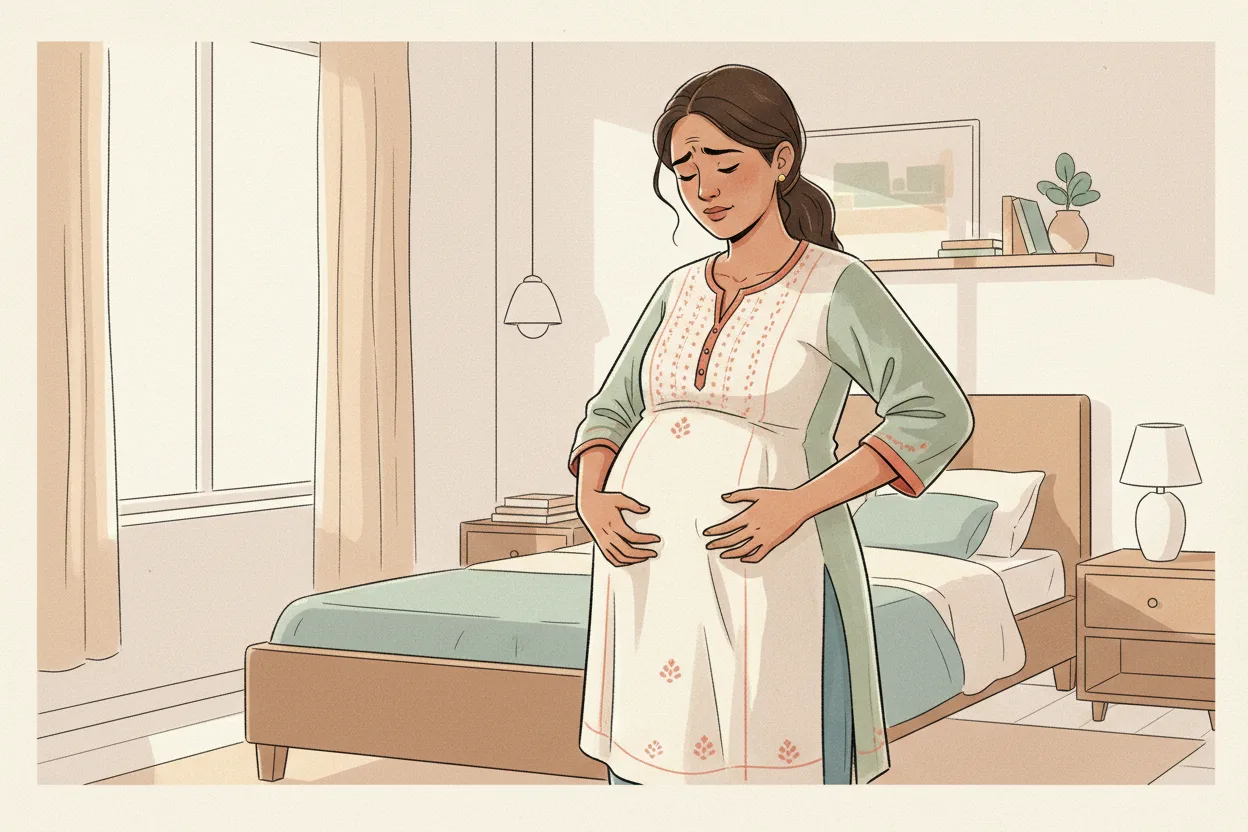
By the third trimester, Delhi or Chennai heat, synthetic fabric linings, and general pregnancy skin changes already make many women itchy — so a new rash often gets waved off as "just heat rash" or an allergy to a new soap. It also gets mistaken for eczema flaring up. PUPPP has a specific look and timing that separates it from both, and — more importantly — there are a couple of other pregnancy rashes that look similar on day one but need urgent attention. That's the distinction worth getting right before you self-treat with a random cream from the chemist.
What PUPPP Actually Looks Like
Cleveland Clinic explains that "PUPPP rash is a patch of itchy, hive-like bumps that form in the stretch marks on your belly. It can spread to other parts of your body, like your thighs, breasts and arms." The bumps typically start inside existing stretch marks rather than on smooth skin, which is one of the clues doctors look for.
Because it usually shows up in the last few months of a first pregnancy, per StatPearls (NIH), a rash that fits this pattern in a second or third pregnancy, or one that starts much earlier, is worth flagging to your doctor rather than assuming it's the same thing.
It's also genuinely uncommon, so you're not imagining that few people around you have dealt with it: StatPearls (NIH) reports an incidence of about 0.5% in single pregnancies — though it's far more frequent in twin and triplet pregnancies, where reported rates climb into the mid-teens percentage-wise.
Is PUPPP Dangerous to My Baby?
This is usually the first question, and the reassuring answer is no. A study indexed on PubMed (NIH) found that "perinatal outcome is comparable to pregnancies without PUPPP." The rash is miserable to live with for a few weeks, but it does not carry the same risks as some of its look-alikes below — which is exactly why telling them apart matters.
PUPPP or Something More Serious? Know the Red Flags
Not every itchy pregnancy rash is PUPPP. StatPearls (NIH) states that "when a new rash develops during pregnancy, prompt evaluation is necessary to identify potential risks to both the mother and fetus" — so treat any new rash as worth a doctor's look, not a self-diagnosis.
| Pattern | Likely condition | Why it matters |
|---|---|---|
| Itchy bumps starting in stretch marks on the belly, third trimester, first pregnancy | PUPPP | Comparable perinatal outcomes to pregnancies without it |
| Intense itching on palms and soles, no visible rash | Possible cholestasis of pregnancy | Needs a bile acid blood test — StatPearls (NIH) notes that "bile acid levels 40 µmol/L or greater, and particularly more than 100 µmol/L, are statistically significant for increased adverse events in the fetus" |
| Rash starting around the belly button, progressing to blisters | Possible pemphigoid gestationis | StatPearls (NIH) states it "carries important risks, including preterm birth, fetal growth restriction related to placental dysfunction, transient neonatal skin lesions from transplacental maternal antibodies" — needs a dermatologist's evaluation |
If your itching is centered on your palms and soles with little or no rash to see, or a belly-button rash is turning into blisters, don't wait it out — call your obstetrician the same day rather than trying home remedies first.
Safe Relief and Treatment Options
For confirmed PUPPP, a 2011 review in Annals of Dermatology (via PMC/NIH) found that "symptomatic treatment with topical corticosteroids with or without antihistamines is usually sufficient to control pruritus and skin lesions." Only the more severe, widespread cases typically need a short tapering course of oral steroids, which your doctor will prescribe and monitor directly.
For the antihistamine itself, NHS Specialist Pharmacy Service advises that "loratadine and cetirizine are the preferred antihistamines for pregnant women," with chlorphenamine as an alternative when a sedating option is needed for nighttime itching. Don't pick these up over the counter without checking with your doctor first — dose and duration should be confirmed for your specific pregnancy.
Alongside whatever your doctor prescribes, StatPearls (NIH) notes that general measures like these "offer additional symptomatic relief":
- Loose, breathable cotton clothing — more comfortable against already-irritated skin, especially in India's humidity.
- Cool, soothing baths or showers over hot ones — hot water tends to worsen itching.
- Frequent application of a fragrance-free moisturizer, applied right after bathing while skin is still damp.
- Short nails to limit skin damage from scratching at night.
When to See a Dermatologist in India
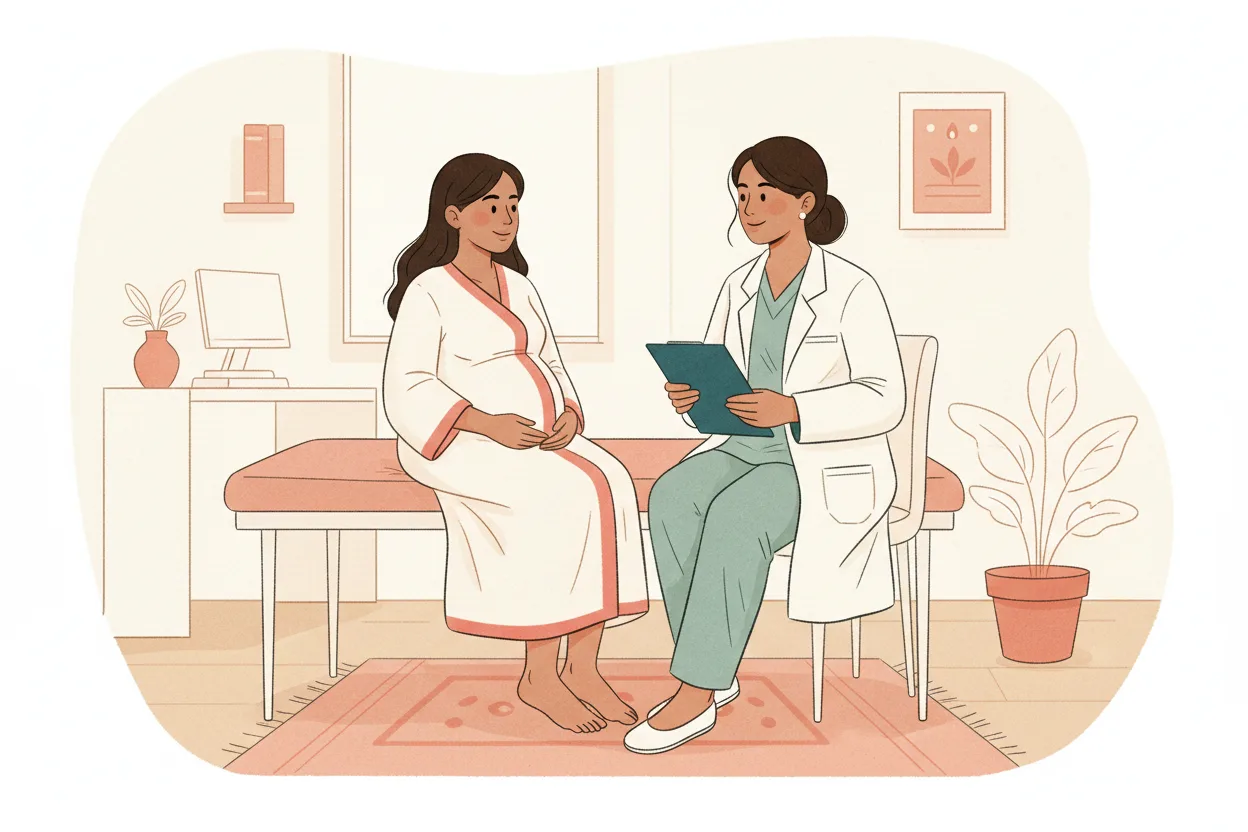
Book a visit — in person or via teleconsultation with your OB's referred dermatologist — as soon as a new rash appears, rather than waiting to see if it resolves. Most maternity hospitals in Indian metros have a dermatologist on call or a fast referral pathway for pregnancy-specific rashes, since the timing of diagnosis matters more than the rash itself. Carry photos of the rash's progression on your phone — it helps the doctor judge how fast it's spreading, which matters for telling PUPPP apart from its more serious look-alikes.
Frequently Asked Questions
Will PUPPP go away after delivery? Yes. StatPearls (NIH) states that PUPPP "typically" resolves "over an average of 4 weeks spontaneously or with delivery," without leaving any scarring or skin discoloration. Continue any treatment your doctor prescribes until then.
Can PUPPP affect a second pregnancy the same way? It's uncommon — PUPPP is most typical in first pregnancies. StatPearls (NIH) notes it "usually affects primigravidas," so a similar-looking rash in a later pregnancy is worth a fresh evaluation rather than assuming it's a repeat.
Is it safe to just use a steroid cream from my last skin flare-up? No — see your doctor first. Even though topical corticosteroids are typically the mainstay treatment, the strength, area of use, and duration in pregnancy should be confirmed by your obstetrician or dermatologist rather than reused from an old prescription.
How is PUPPP different from normal pregnancy itching? Ordinary pregnancy itch tends to be mild and diffuse. PUPPP specifically starts as hive-like bumps inside stretch marks on the belly before it may spread — a visible, localized rash rather than just itchy skin.
My palms and soles are itchy but I don't see any rash — should I worry? Yes, this pattern is different from PUPPP and needs prompt attention. StatPearls (NIH) links this exact symptom to cholestasis of pregnancy, which is checked with a simple blood test for bile acids. Call your obstetrician the same day.
Can I just wait a few days to see if the rash gets better on its own? It's better not to. StatPearls (NIH) states that any new pregnancy rash needs prompt evaluation — waiting only delays telling harmless PUPPP apart from a look-alike condition that does need urgent care.