
Yes, you can usually colour your hair during pregnancy. ACOG states that most experts think using hair dye during pregnancy is not toxic for your fetus, because only a small amount of the chemicals in dye is absorbed through your scalp during normal use. The real work is choosing the right formula and timing it well.
Not medical advice — always check with your OB-GYN before your appointment, especially if you have sensitive skin or a history of allergic reactions.
Why This Question Comes Up So Often in India
Grey coverage is rarely optional once you're managing client calls, family functions, and a baby shower (godh bharai) in the same month. At the same time, many Indian households are full of conflicting advice — an aunt who swears dye caused a cousin's difficult delivery, a mother-in-law who insists only henna is "natural" and therefore safe. MotherToBaby, an NIH-affiliated fact sheet service, states that getting or performing hair treatments is not expected to significantly increase the chance of birth defects when used correctly. That's reassuring, but "used correctly" is doing real work in that sentence — and it's the part worth getting right.
When to Start Colouring
If you'd rather wait, that's a reasonable precaution rather than a medical requirement. Cleveland Clinic advises that many doctors recommend holding off on hair colour until week 13 of pregnancy — after the first trimester — just to be safe. This lines up with general first-trimester caution around chemical exposure while the fetus's major organs are forming, so it's a sensible default if you don't have an urgent event before then.
What to Avoid: PPD and "Black Henna"
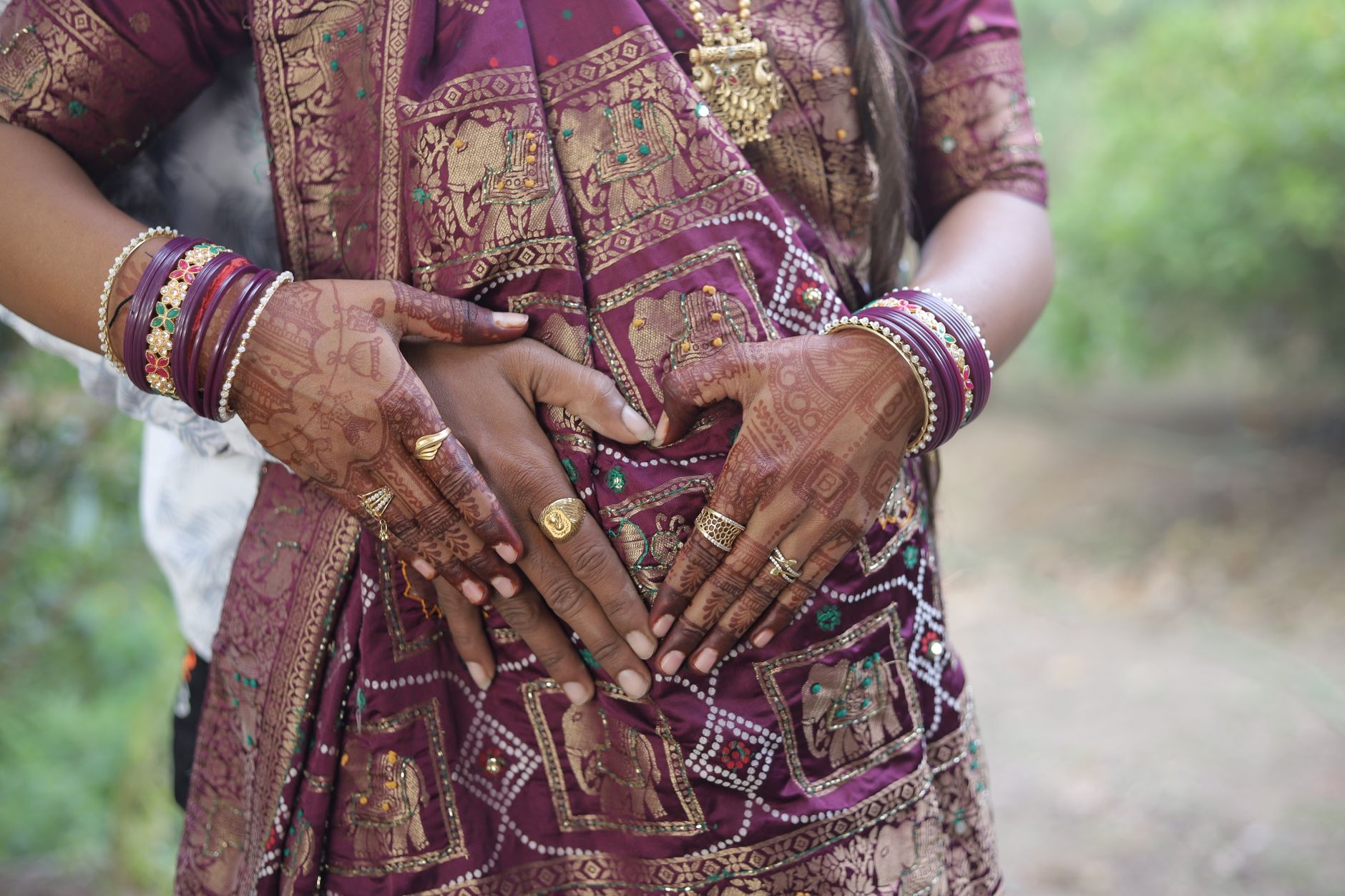
The ingredient to watch for is PPD (paraphenylenediamine), a common allergen in dark permanent dyes and in adulterated henna. Cleveland Clinic warns that PPD, sometimes added to henna to make it darker and longer-lasting — commonly sold as "black henna" — can cause dangerous skin reactions, including permanent scarring. This matters directly in India, where black henna is often used for temporary tattoos at weddings and ceremonies, not just hair colour: check the label or ask your salon whether a "black henna" product contains PPD before it touches your skin.
If PPD exposure genuinely can't be avoided — say, your usual salon colour or a family ceremony — a study on PPD hair-dye allergy published via PMC found that a patch test is recommended before hair dyeing is attempted. A patch test simply means applying a small amount of the product to your inner arm or behind your ear 48 hours before your full appointment, and checking for redness, itching, or swelling.
Safer Application: Ammonia-Free and Well-Ventilated
Two practical choices lower your chemical exposure without giving up colour altogether.
Choose ammonia-free. Healthline recommends choosing an ammonia-free, or bleach-free, semi-permanent hair colour as a safer treatment during pregnancy. Ammonia-free formulas typically have a milder smell too, which helps if pregnancy has made you more sensitive to strong odours.
Ventilate the room. The NHS advises applying hair dye in a well-ventilated room to minimise contact with any fumes. At a salon, that means asking for a chair near a window or door rather than a closed-off back room; at home, keep a window or exhaust fan running the whole time the colour is processing.
Ammonia-Free, PPD-Free Products in India
| Product Type | Typical Price (INR) | Where to Buy |
|---|---|---|
| Ammonia-free permanent hair colour | ₹150 – ₹450 | Amazon.in / Nykaa |
| Ammonia-free semi-permanent gloss/tint | ₹300 – ₹900 | Amazon.in |
| PPD-free, vegetable/herbal-based colour | ₹200 – ₹650 | Nykaa / FirstCry |
| Pure henna (unmixed, no additives) | ₹100 – ₹300 | Amazon.in |
Read the ingredient list before you buy — "ammonia-free" and "PPD-free" are separate claims, and a box can be one without the other. When in doubt, take the box to your OB-GYN appointment and ask.
Frequently Asked Questions
Is it actually safe to dye my hair while pregnant? Generally, yes. ACOG states that most experts think hair dye is not toxic to the fetus during normal use, since your scalp absorbs only a small amount of the chemicals.
Why do doctors say to wait until week 13? It's a precaution, not a rule. Cleveland Clinic notes that many doctors recommend holding off until week 13, after the first trimester, just to be safe.
Is henna a safer alternative to chemical dye? Plain henna itself isn't the concern — the risk is henna adulterated with PPD to darken it faster, sold as "black henna." Cleveland Clinic warns this can cause dangerous skin reactions, including permanent scarring. Ask your salon exactly what's in the mix before it goes on your skin.
Do I need a patch test even if I've used the same dye for years? If you can't avoid PPD exposure, yes. A PMC-published study on PPD allergy found that a patch test is recommended before dyeing, since sensitivity to PPD can develop or worsen over time — including during pregnancy.
Does colouring my hair raise the risk of birth defects? MotherToBaby, an NIH-affiliated service, states that hair treatments used correctly are not expected to significantly increase the chance of birth defects.
What's the single easiest change to make my next colour appointment safer? Two things, both simple: choose an ammonia-free, semi-permanent formula and ask for a well-ventilated spot in the salon rather than a closed back room.