
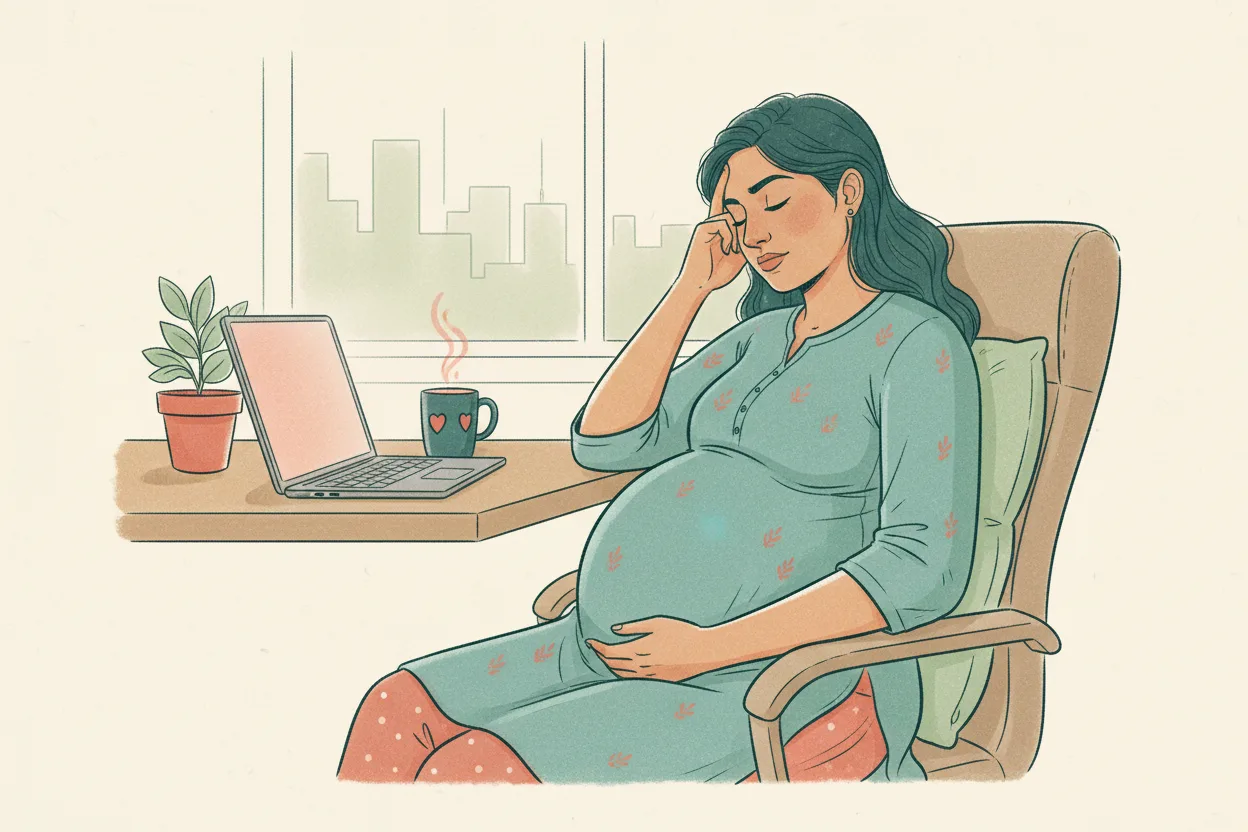
If you can barely make yourself open your laptop in the third trimester, you are not lazy and you are not failing at your job. About 6 in 10 pregnant women report significant fatigue during the third trimester — the exhaustion is a real, common physical experience, not a personal failing.
Not medical advice — consult your obstetrician-gynaecologist or doctor for guidance specific to you.
Why Motivation Craters Right Now
It isn't in your head, and it isn't about caring less about your work. Sleep disturbance is close to universal by the third trimester, driven by backache, frequent urination, the baby moving at night, heartburn, and leg discomfort — none of which switch off when your alarm goes.
That broken sleep does more than make you tired the next day. Fragmented sleep in late pregnancy is linked to measurably worse concentration and working memory, which explains why you can reread the same email three times and still not absorb it — that's a real cognitive effect, not a lack of willpower.
And if a manager is piling on deliverables before your leave starts, the timing works against you specifically. Women who keep working in the last month of pregnancy get less nighttime sleep, less daytime sleep, and more fatigue than women who have already stopped working — so a heavier workload right now collides with a body that is already running on less rest, not more.
Normal Fatigue vs. What Needs a Doctor's Attention
Most late-pregnancy exhaustion is expected. But a few reasons behind severe fatigue are easy to mistake for "just pregnancy tired" and are worth ruling out, especially since some show up more in Indian women specifically.
| What you're feeling | Likely just pregnancy | Worth flagging to your doctor |
|---|---|---|
| Tired most days, better after rest | Yes | — |
| Foggy, slower at tasks you used to breeze through | Yes | — |
| Exhaustion out of proportion to how much you're sleeping, with no let-up | — | Yes |
| Low mood or numbness alongside the fatigue, not just tiredness | — | Yes |
| Headache that won't go away, blurred vision, or swelling in your face and hands | — | Yes, urgently |
Two common medical causes sit behind that "out of proportion" exhaustion. Fatigue caused by an underlying thyroid problem is often mistaken for ordinary pregnancy tiredness, so persistent, unusually severe fatigue is worth flagging rather than assumed normal. And iron deficiency anaemia is especially prevalent among pregnant women in India, another common medical cause of severe fatigue that's worth getting checked rather than pushing through — if a blood test confirms it, India's national Anemia Mukt Bharat programme's standard correction is one daily iron-folic acid tablet (60 mg elemental iron plus 500 mcg folic acid) for about 180 days, with a doubled daily dose if you're already anaemic, so ask your doctor whether you're on the right dose rather than assuming any iron tablet will do.
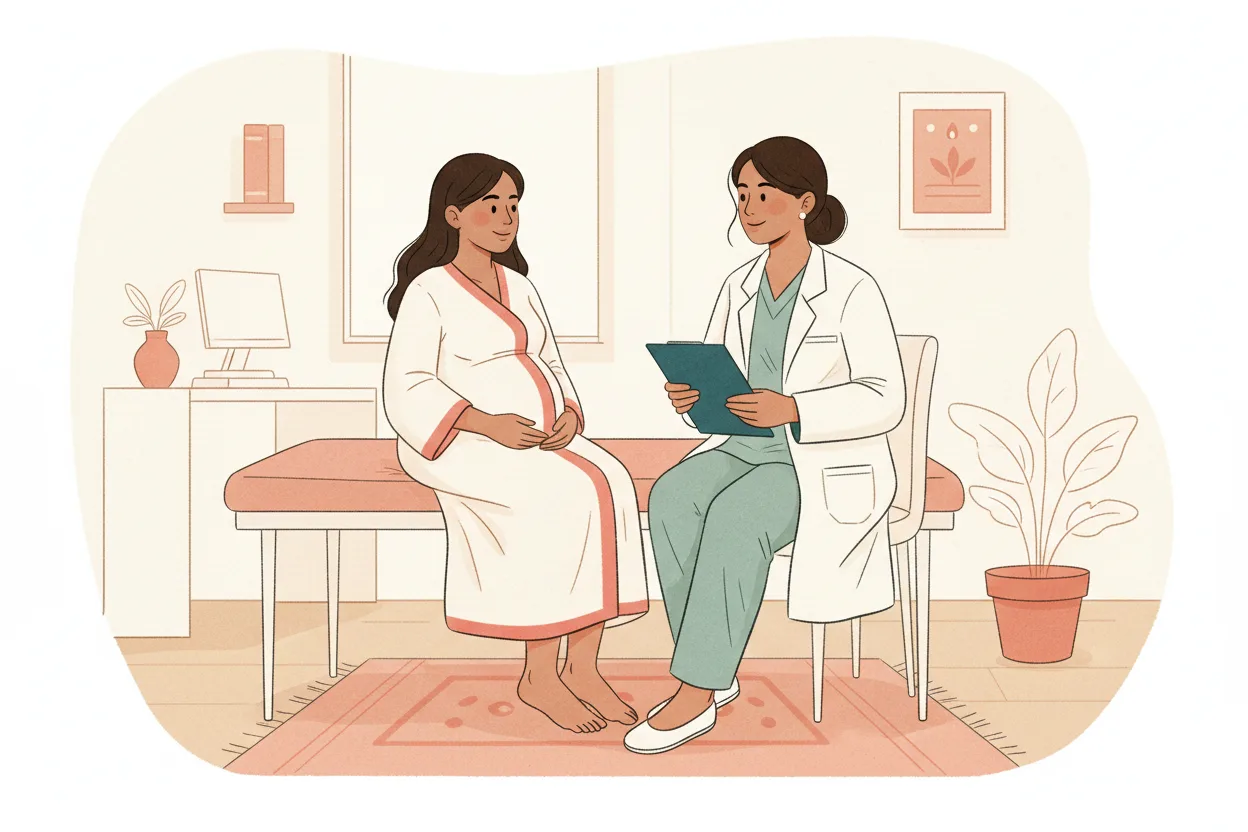
Low motivation can also be mood, not just the body. Antenatal depression — which can look like low motivation and exhaustion rather than obvious sadness — is more common in the second and third trimesters than in the first. It's worth naming, not shrugging off, because antenatal depression is one of the most common risk factors for postpartum depression — treating it now is also protecting the months after delivery. If the flatness at your desk comes with losing interest in things you'd normally enjoy, or a sense of dread about the day, mention it at your next antenatal visit — it's treatable, and naming it early helps.
Finally, don't mistake a warning sign for tiredness. A headache that does not go away or gets worse, changes in vision, or swelling of the face and hands are possible preeclampsia warning signs that need urgent medical attention that same day — not rest, and not a wait-and-see approach.
What Actually Helps Right Now
You can't out-willpower a body that's genuinely under-slept, but a few things do help. If your doctor has cleared you for it, staying physically active in pregnancy can meaningfully reduce fatigue along with depression and anxiety symptoms, rather than worsening the exhaustion — a short daily walk counts, this doesn't have to mean a gym session.
Beyond that, protect the basics you do control:
Bring the fatigue into the open at work. Most managers respond better to "I'm running on very little sleep most nights right now, so I need to protect my mornings for the highest-focus work" than to silently underperforming and hoping no one notices.
Batch your hardest thinking for whenever your energy is highest. If mornings are marginally better than afternoons (or the reverse), move meetings and deep work accordingly rather than fighting your own clock.
Say the plan out loud, in writing, once. A short note to your manager on what you can realistically take on before your leave starts avoids the guessing game where they keep adding and you keep absorbing it silently.
A pregnancy pillow or wedge for propping yourself upright at your desk or in bed (Rs. 700 – Rs. 1,800 on Amazon.in or FirstCry) can ease the backache that's disrupting your sleep in the first place — a small, practical lever on what's keeping you up at night.
Talking to Your Manager and HR in India
A slowdown doesn't require a medical explanation you're not comfortable sharing. A simple version works: you're in your final weeks, your workload needs to taper before your leave starts, and you'd like to align on priorities now rather than at the last minute.
If your organisation is large enough to have a formal HR policy, loop them in alongside your manager — they can confirm your maternity leave start date and any phase-down options, and having HR involved takes the pressure off a single manager to informally "grant" you a lighter load. It helps to know your actual entitlement going in: India's Maternity Benefit (Amendment) Act, 2017 gives 26 weeks of paid leave to women in factories, shops, and other establishments with ten or more employees who've worked at least 80 days in the preceding 12 months — a concrete number to anchor the start-date conversation instead of a vague one. If leave timing itself feels like a source of stress, raise it early: many women find it easier to negotiate a slightly earlier start to leave than to keep negotiating workload week by week right up to their due date.
Frequently Asked Questions
Is it normal to have zero motivation to work in the third trimester? Yes — most pregnant women report significant fatigue by the third trimester, and that level of tiredness genuinely reduces drive and focus. It's a physical state, not a character issue.
How is this different from just being lazy or unmotivated? Poor sleep in late pregnancy measurably affects concentration and working memory — the same task takes more effort to complete because your brain is working with less rest, not because you care less about doing it.
Could my exhaustion be something else, like low iron or thyroid? It's worth asking your doctor, especially if the fatigue feels disproportionate to your sleep. Both thyroid problems and iron deficiency anaemia, which is especially common in pregnant Indian women, are frequently mistaken for ordinary pregnancy tiredness.
When should I actually worry, rather than just rest more? When fatigue comes with a headache that won't go away, vision changes, or swelling in your face and hands — those need urgent medical attention the same day, not more rest.
Can exercise really help if I'm already this tired? Research suggests exercise can meaningfully improve fatigue, along with depression and anxiety symptoms in pregnancy, when your doctor has cleared you for it. A short walk is often more restorative than it feels like it will be.
Should I tell my manager I'm struggling, or just push through quietly? Speak up early. Continuing to push through a heavy load in your last month is itself linked to less sleep and more fatigue than stopping work sooner — naming the problem to your manager or HR now is more effective than absorbing it silently until leave starts.