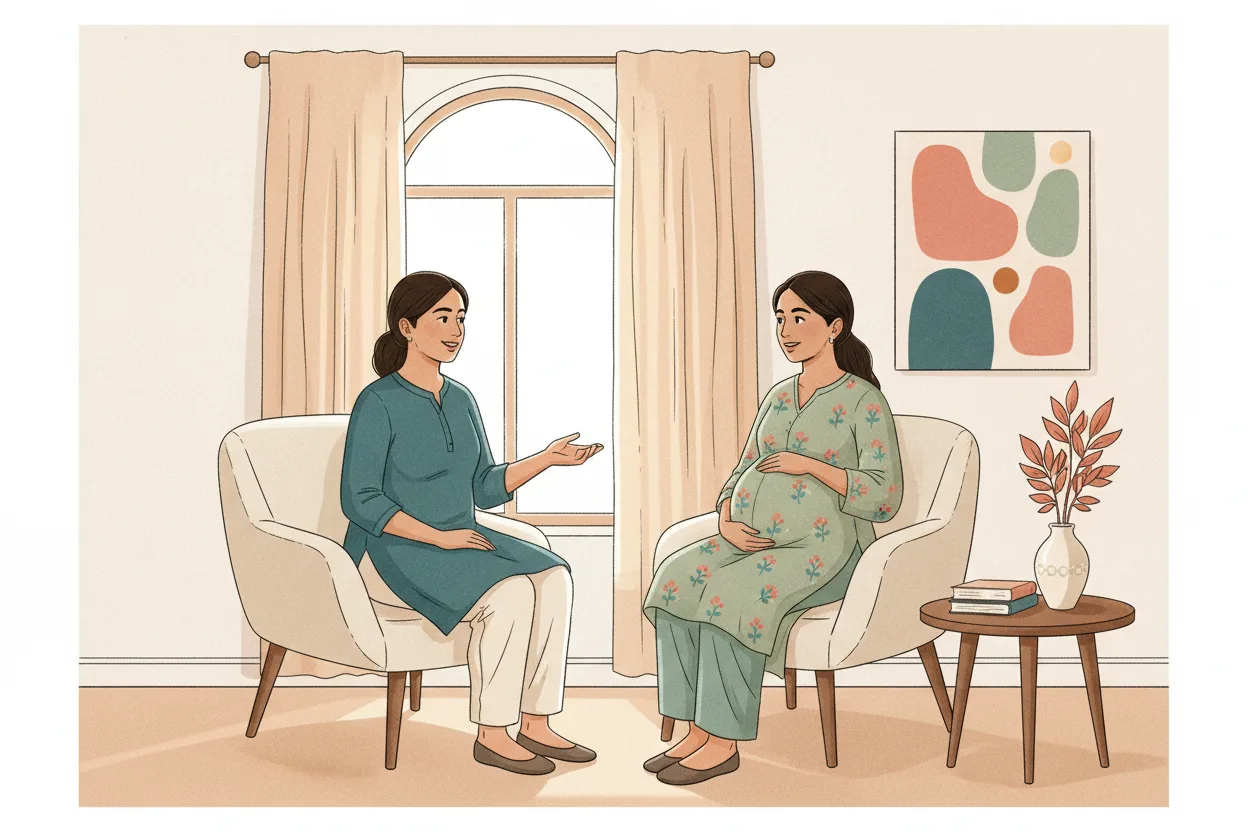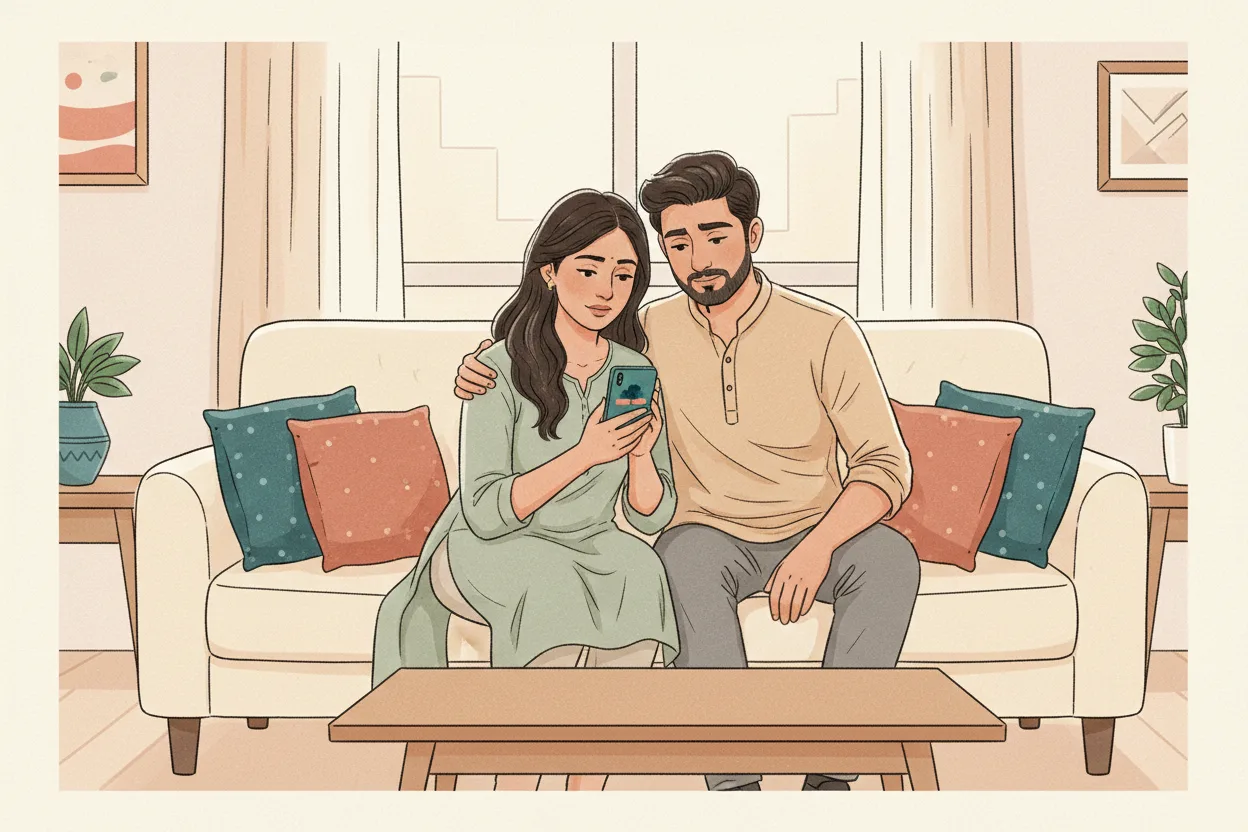
Finding out you're pregnant when you weren't trying can feel like the ground shifting under a life you'd already mapped out. Nearly half of all pregnancies worldwide are unintended, so the shock, the grief, even the flash of resentment you might be feeling right now is a common reaction, not a shameful one.
Not medical advice — consult your gynaecologist for guidance specific to you.
Why This Hits Differently in an Indian Household
In many Western accounts of a surprise pregnancy, the couple's biggest challenge is deciding what to do next, privately, on their own timeline. In an Indian household, you're often also managing when and how to tell parents and in-laws, whether that trip you'd booked or that job offer you'd been chasing has to be quietly shelved, and a wave of unsolicited opinions the moment the news is out. None of that changes what you're allowed to feel first: surprised, unready, even briefly resentful about the plans that just got rearranged. You're entitled to sit with that before you manage anyone else's reaction to it.
Give yourselves a private stretch of time — even just a week or two — before you loop in extended family. There's no rule that says news has to travel the day you find out.
It's Normal to Grieve the Plans You Had
The trip, the year off, the promotion you were angling for — it's fair to feel a real loss here, and it doesn't mean you'll be a reluctant or unloving parent. Feelings about a pregnancy are rarely fixed at the moment you see the test. A peer-reviewed study found that 68% of women describe their unintended pregnancy as "wanted" once you ask them later in the pregnancy — meaning most people who start out ambivalent or shaken end up somewhere warmer as things move forward. You don't have to feel ready today to feel ready eventually.
That said, don't grieve alone. A cross-sectional study in a peer-reviewed journal found that adjusting for relationship quality reduced the odds of psychological distress in people with an unplanned pregnancy — in plain terms, feeling supported by your partner measurably softens how hard this hits. Talk to each other before you talk to anyone else, and try to name the fear out loud rather than letting it sit as silence or snapping at each other.
The First Two Weeks: What Actually Needs Doing
Once the shock settles a little, a short, concrete list helps more than open-ended worry. Here's what matters in the near term:
| Do this | Why it matters | Timeframe |
|---|---|---|
| Book your first antenatal visit | WHO's antenatal care guidelines recommend a first contact within the first 12 weeks; India's National Health Mission guidance calls for early registration and a first ANC visit in the first trimester too | As soon as you can get an appointment |
| Start (or continue) a folic acid supplement | NICHD advises that a supplement with at least 400 micrograms of folic acid, started before or as soon as pregnancy is confirmed, lowers the risk of neural tube defects | Today |
| Stop drinking alcohol | A peer-reviewed narrative review found no threshold of alcohol consumption during pregnancy has been shown safe — this applies from now, whatever happened before you knew | From today |
| Stop smoking, if you smoke | A MotherToBaby fact sheet advises stopping completely as early in pregnancy as possible — and it's never too late to quit, since quitting at any point still cuts your baby's exposure | From today |
| Decide together when to tell family | Purely a personal-timing call — many couples wait past the first trimester before telling extended family, partly because early pregnancy loss is common in the first weeks and they'd rather process a loss privately if it happens | Your call, no deadline |
On that last point: a StatPearls clinical review notes that 10% to 20% of clinically recognized pregnancies end in early pregnancy loss, most within the first trimester. That's not meant to add to your worry — it's context for why so many couples quietly wait before announcing, and why it's completely reasonable if you want to do the same.
When the Worry Doesn't Ease
A bit of anxiety in the first days is expected. If it isn't lifting — if you're feeling persistently low, panicked, or unable to focus on daily life — that's worth raising with a doctor, not just riding out. NICHD's Action Plan for Depression and Anxiety During Pregnancy and After Birth advises that you talk to a health care provider if you feel unsure — screening for exactly this is a normal, built-in part of antenatal care, not a separate, harder step you have to seek out.
And again: this isn't something to carry solo. The same study on relationship quality and psychological distress found that partner support is one of the clearest levers you both have here. Checking in on each other daily, even briefly, does real work.
Frequently Asked Questions
Is it normal to feel scared instead of happy when we find out? Yes. Nearly half of pregnancies worldwide are unintended, and fear or grief at first doesn't predict how you'll feel later — most women who start out ambivalent come to describe the pregnancy as wanted as it goes on.
Do we have to tell our parents right away? No. There's no medical or social requirement to announce early. Many couples wait until after the first trimester, partly because early pregnancy loss is more common in the first weeks and they'd rather have that privacy if needed.
I had a few drinks before I knew I was pregnant. Should I panic? No — but stop now. No amount of alcohol has been shown safe during pregnancy, so the useful move is to stop as soon as you know, not to spiral about what already happened. Mention it to your doctor at your first visit so they have the full picture.
I smoke. Do I need to quit right away? Yes, as completely and as soon as you can. A MotherToBaby fact sheet advises stopping smoking as early in pregnancy as possible, and that it's never too late to quit — quitting at any point still reduces your baby's exposure, so don't let an early slip stop you from stopping now.
How soon do we actually need to see a doctor? Within the first 12 weeks, per both WHO's antenatal care guidelines and India's National Health Mission guidance, which both call for early registration and a first-trimester ANC visit.
Do I need to start folic acid even though I'm already pregnant? Yes, start now if you haven't already. NICHD advises at least 400 micrograms daily to lower the risk of neural tube defects — the protective effect is strongest very early, so today is better than next week.
What if one of us can't shake the anxiety? Say so, to each other and to your doctor. NICHD's guidance is straightforward: talk to a health care provider if you feel unsure. Support and screening for this is a standard, expected part of antenatal care in India, not an overreaction.