
Yes, whey protein is generally safe to have during pregnancy for most women, and it can genuinely help you meet protein targets that rise as your pregnancy progresses. But the research is nuanced: more protein is not automatically better, and how much you need depends on your diet, your trimester, and your own health picture.
Not medical advice — talk to your obstetrician or a registered dietitian before starting any supplement, including whey protein.
Why Protein Needs Go Up in Pregnancy
Your body needs more protein as your pregnancy progresses, not a flat amount throughout. A 2024 review of ICMR-NIN dietary guideline changes reports that pregnancy adds extra protein on top of your regular, non-pregnant intake — an additional 8 g a day in the second trimester, rising to an additional 18 g a day in the third trimester.
For many Indian women, closing that gap through food alone is genuinely hard. A 2021 review of maternal diets in India, published in Nutrients, found that about half of pregnant women had inadequate energy intake, 35% had inadequate protein intake, and 20% had inadequate fat intake — a pattern seen especially among women eating mostly plant-based diets. That's the real-world context that makes protein supplements a reasonable question to ask, not a fad.
Is Whey Itself Safe and Useful?
Whey is a well-studied, common protein — it's simply milk protein in powder form, and most protein supplements are built around it. The NIH Office of Dietary Supplements notes that whey is a complete protein, providing all the essential amino acids (EAAs) your body needs but cannot make on its own. That's a meaningful advantage over protein sources that are missing one or more EAAs.
What the Research Actually Shows About Supplementing
This is where nuance matters, and it's worth reading carefully before you buy a tub of powder.
The upside — balanced supplementation helps. A 2025 systematic review and meta-analysis in Women's Health found that women given balanced protein-energy supplementation during pregnancy had a 26% lower risk of having a small-for-gestational-age (SGA) baby than women who weren't supplemented (RR 0.74, 95% CI 0.59–0.93). "Balanced" here means protein alongside adequate calories — not a protein-only mega-dose.
The catch — more is not automatically better. A Cochrane systematic review (Kramer, 2000) found that high-protein supplementation, as distinct from balanced protein-energy supplementation, was linked to a lower birth weight, not a higher one — an adjusted mean difference of -58.4 g. In other words, stacking extra protein on top of an already-adequate diet isn't a "more is safer" situation. A 2021 review on high-protein diets in pregnancy found that a "high" total daily protein intake is generally defined as more than 100 g a day (versus a moderate 80–90 g/day), and concluded that for healthy pregnant women, high-protein diets show no clear benefit — so there's no upside to chasing extremely high totals. This is the single biggest reason to treat whey as a way to close a real gap in your diet, not as a general pregnancy booster to maximize.
| Supplementation type | What the evidence shows |
|---|---|
| Balanced protein-energy (protein + adequate calories) | Lower risk of a small-for-gestational-age baby |
| High-protein (protein stacked on top of an already-adequate diet) | No birth-weight benefit — associated with lower birth weight instead |
If You Have Gestational Diabetes
Protein timing can matter here, specifically. A randomised controlled trial published in Diabetologia found that a pre-meal 20 g whey protein isolate supplement, taken through the third trimester, improved post-meal blood sugar control and reduced glucose swings in women with gestational diabetes (GDM) — under both controlled and everyday, free-living conditions. If you have GDM, this is a specific, worth-discussing use case for whey — bring the study to your endocrinologist or dietitian rather than self-dosing.
So Should You Take It?
There's no single right answer for every woman, and that's the honest answer. The American Dietetic Association's statement, cited in the National Academies' Nutrition During Pregnancy report, advises that individual recommendations on supplements and diets should come from your physician and a registered dietitian — not a one-size-fits-all rule from a blog or a tub label.
A useful way to frame the conversation with your doctor:
- If your diet is genuinely falling short on protein (common on vegetarian or low-dairy diets), a moderate, food-plus-supplement approach aimed at closing that specific gap fits the balanced-supplementation evidence above.
- If your diet already meets your protein needs, adding a large scoop "just in case" isn't supported by the evidence — it isn't shown to help, and high-protein stacking has shown the opposite effect on birth weight.
- If you have gestational diabetes, ask specifically about a pre-meal whey protein isolate, since that's the scenario with trial evidence behind it.
Whichever you choose, involve your partner in the practical side — tracking meals, planning protein-rich groceries, and prepping food are shared jobs, not just the pregnant parent's responsibility.
Protein-Rich Foods Worth Building Meals Around
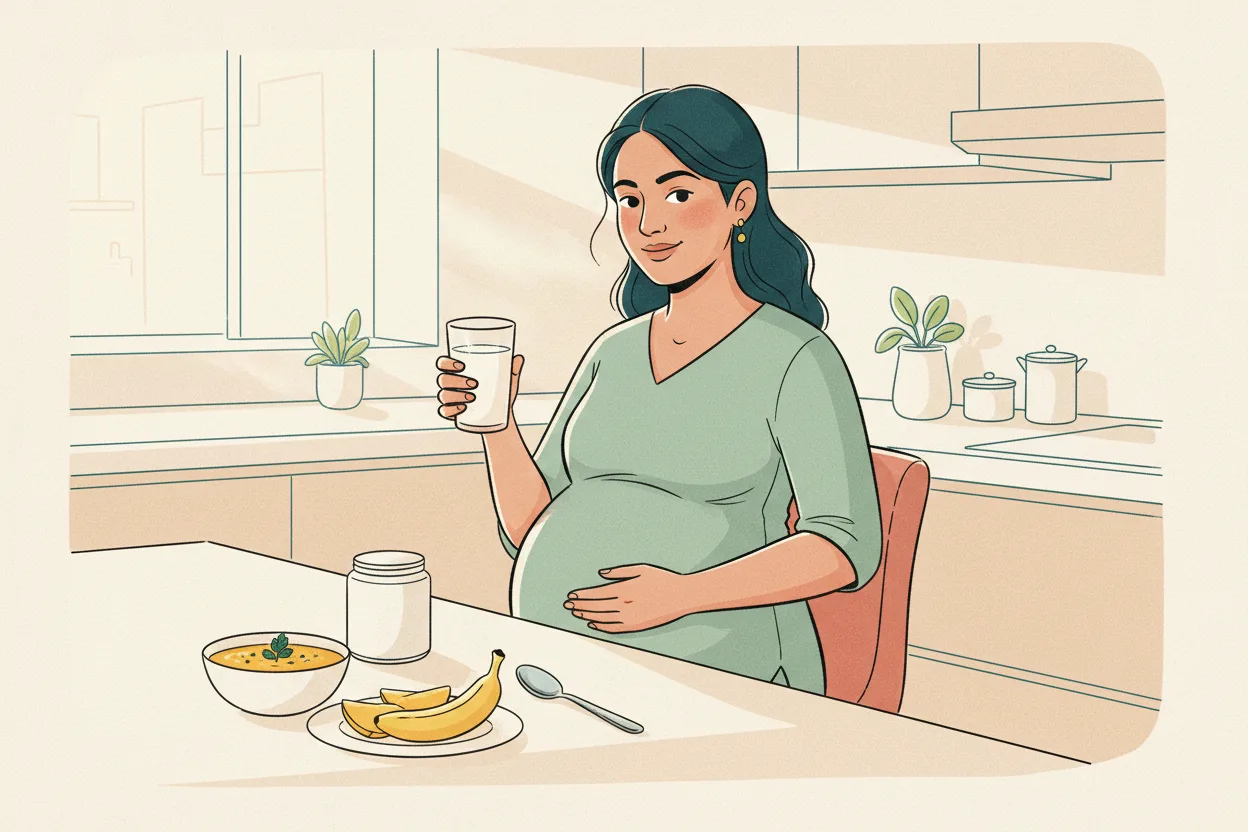
Before reaching for a supplement, it's worth knowing what's already in a typical Indian kitchen. Dal and other lentils, paneer, curd, milk, eggs, chicken, fish, soy chunks (nutrela), and nuts are all everyday, accessible protein sources. A whey supplement is meant to top up a gap in this kind of diet, not replace it.
Whey Protein Products in India
| Product type | Typical price range (INR) | Where to look |
|---|---|---|
| Whey protein isolate, unflavoured | Rs. 1,800 – Rs. 3,500 (1 kg) | Amazon.in |
| Whey protein isolate, flavoured | Rs. 1,500 – Rs. 3,000 (1 kg) | Amazon.in |
| Pregnancy-specific protein powder | Rs. 600 – Rs. 1,200 (400 g) | FirstCry |
Choose an unflavoured or lightly flavoured isolate with a short ingredient list, and confirm the specific product with your doctor or dietitian before adding it to your routine. It's also worth checking whether a product carries independent third-party testing: the NIH Office of Dietary Supplements notes that several independent organizations quality-test supplements and award a seal confirming the product is properly manufactured, matches its label, and doesn't contain harmful levels of contaminants — a useful thing to look for on the packaging or product page.
Frequently Asked Questions
Is whey protein safe every trimester of pregnancy? The research on whey timing that exists specifically covers pre-meal use through the third trimester in women with gestational diabetes. For general use across pregnancy, talk to your obstetrician or a registered dietitian about what fits your trimester and your diet.
How much extra protein do I actually need? ICMR-NIN's guidelines call for an additional 8 g of protein a day in the second trimester and an additional 18 g a day in the third trimester, on top of your regular non-pregnant intake.
Can I just take a big scoop of whey "to be safe"? No — the evidence doesn't support that. High-protein supplementation stacked on an already-adequate diet was linked to lower birth weight, not higher, in a Cochrane review. The goal is closing an actual gap, not maximizing intake.
I eat mostly vegetarian — should I be more worried about protein? It's worth checking with your dietitian. Indian research found that inadequate protein intake in pregnancy is common, especially among women on plant-based diets — so this is a legitimate thing to review, not something to assume is fine by default.
Is whey protein a complete protein like meat or eggs? Yes. The NIH notes that whey supplies all the essential amino acids your body cannot make on its own, the same standard used to describe other complete proteins.
Should I choose a supplement over just eating more protein-rich food? Food first, in general — dal, paneer, curd, eggs, chicken, fish, and soy are all accessible everyday sources. A supplement is a reasonable way to close a specific, real gap your doctor or dietitian has identified, not a replacement for a varied diet.
I'm lactose intolerant — can I still have whey protein? Whey is milk-derived, so it does carry some lactose — in fact, NIDDK (part of the NIH) lists protein powders among the everyday products that contain lactose, alongside milk itself. That said, the same NIDDK guidance notes that many people can have about 12 g of lactose — roughly the amount in one cup of milk — without symptoms or with only mild ones, and whey protein isolate is processed to remove most of the lactose that whey concentrate retains. If you're lactose intolerant, mention it to your doctor or dietitian and consider an isolate over a concentrate.