
Not medical advice — consult your paediatrician if you have concerns about your baby's hair loss.
Scant hair, slow growth, or sudden hair loss in the first year is one of the most common worries among Indian parents — especially in families where thick, full hair from birth is seen as a sign of health. The reality is more straightforward: baby hair follows its own independent schedule, and most of what parents worry about is completely normal.
Why Newborn Hair Falls Out
Many babies are born with a full head of dark hair. By 2–4 months, that hair starts falling out — sometimes dramatically. According to the AAP, baby hair loss peaks at around 3 months of age. This is called physiological hair shedding, and it happens to babies of all ethnicities, including Indian babies with thick dark birth hair.
The mechanism is the same as stress-related adult hair loss (telogen effluvium): the hair follicles enter a resting phase and then shed the old hair to make way for permanent hair. There is nothing wrong with your baby. The hair will come back.
You may notice the hair loss as patches at the back of the head (from where baby rests), a general thinning across the scalp, or very sparse growth that seems not to progress for months. All of these are part of the same normal process.
When Hair Grows Back — and What to Expect
The AAP's guidance is reassuring: full regrowth after the initial shedding can take 6–8 months, and the full cycle from loss to full growth lasts approximately 12 months. Most babies have a noticeably fuller head of hair by their first birthday, though the timing varies.
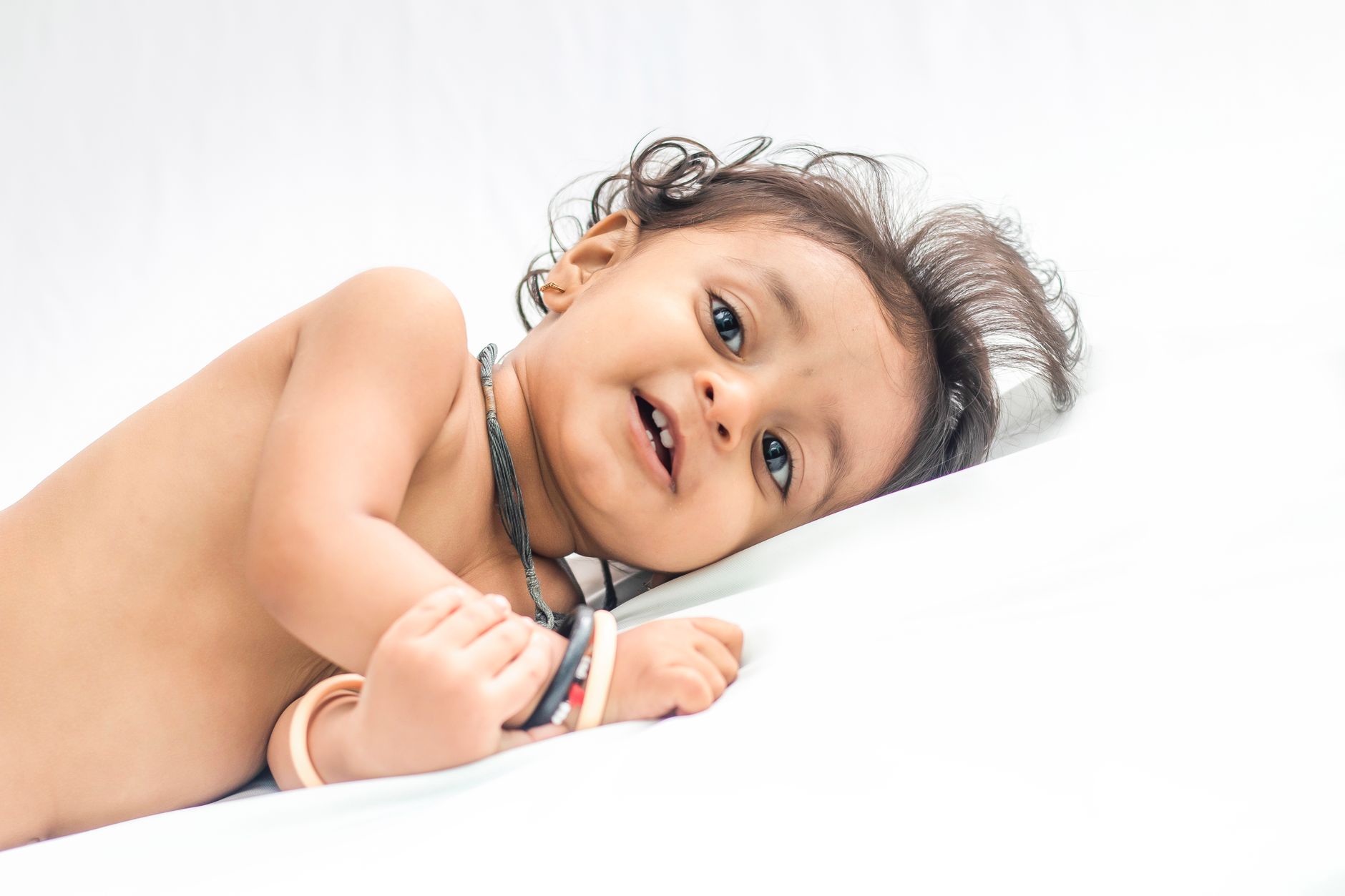
One thing that surprises many parents: the permanent hair that replaces the birth hair may be different in color and texture. A baby born with straight black hair might grow in curly. A baby with very fine birth hair might grow thicker hair. This is normal — the birth hair (lanugo-like soft hair) is not the same as the mature hair that follows.
Realistic milestones:
| Age | What to expect |
|---|---|
| 0–1 month | Birth hair present, may be thick or sparse |
| 2–4 months | Shedding peaks; bald patches, general thinning |
| 4–6 months | Regrowth begins; fine new hair visible at hairline |
| 6–9 months | New hair fills in; may be different in texture |
| 9–12 months | Continued growth; most babies have fuller coverage |
Why Some Babies Have More Hair Than Others: Genetics
The AAP confirms that the amount, texture, and color of hair at birth "vary from one newborn to another." The differences are primarily genetic — a baby inherits their hair follicle density, thickness, and growth pattern from both parents and earlier generations in the family.
This means comparisons with another family's baby, or with how the mother or father looked at the same age, are the most useful frame of reference — not a general ideal. If both parents have fine hair, expecting a very thick-haired baby at 6 months is unrealistic. Genetics set the ceiling; nothing you do changes the follicle count your baby was born with.
When to See a Doctor
Most baby hair concerns are normal variation. The situation that warrants a paediatric check is alopecia areata — a condition where the immune system attacks hair follicles, causing distinct round or oval smooth patches of complete hair loss. A 2023 case report in PMC/NIH noted that fewer than 10 cases of alopecia areata in infants under 6 months old have ever been documented; it is exceptionally rare in very young babies.
Signs that suggest alopecia areata rather than normal shedding:
- Perfectly round or oval smooth bald patches with sharply defined edges
- No hair regrowth after 6–8 months
- Patches that are spreading rather than stabilizing
- Bald patches with redness, scaling, or broken hairs at the edges (which can suggest a fungal infection — tinea capitis — which is a separate condition)
If you see any of these signs, visit your paediatrician. Normal shedding produces diffuse thinning, not perfectly circular smooth patches.
Hair Care: What Helps and What Doesn't
What actually helps: Keep the scalp clean and the hair free of product buildup. The NHS recommends washing a baby's hair with plain water, or a liquid cleanser suitable for babies. A gentle wash 2–3 times a week is sufficient for most babies.
The oil massage question: Hair oil massage (champi) is a deeply embedded practice in Indian families, often passed down as essential for hair growth. The evidence does not support this. The AAP explicitly states: "Stop using any ointments or oils in the hair. Reason: they block the hair follicles." Oil left on the scalp can clog follicles rather than stimulate them.
If your family's champi tradition is important, a gentle, brief scalp massage with no oil — or very small amounts washed off immediately after — keeps the relationship and the ritual without the potential for follicle blockage. The massage itself (the physical stimulation) is unlikely to harm, and may be soothing. The oil sitting on the scalp overnight or for extended periods is what the AAP cautions against.
Cradle cap (seborrhoeic dermatitis): A related issue is cradle cap — thick, yellow-brown crusty scales on the scalp. This is not a hair growth problem, but it can coincide with the shedding phase. Gentle washing and a soft brush are typically sufficient; do not pick or scrub at the crust. If it is extensive or spreading to the face, mention it at your next paediatric appointment.
Frequently Asked Questions
My 10-month-old still has very scant hair compared to other babies. Is something wrong? Probably not — hair growth varies widely by genetics and individual pace. If your baby has no other developmental concerns, is gaining weight, and the scalp looks healthy (no bald patches with smooth, sharp edges), this is most likely a normal variation. Mention it at the next check-up, but it is unlikely to require any intervention.
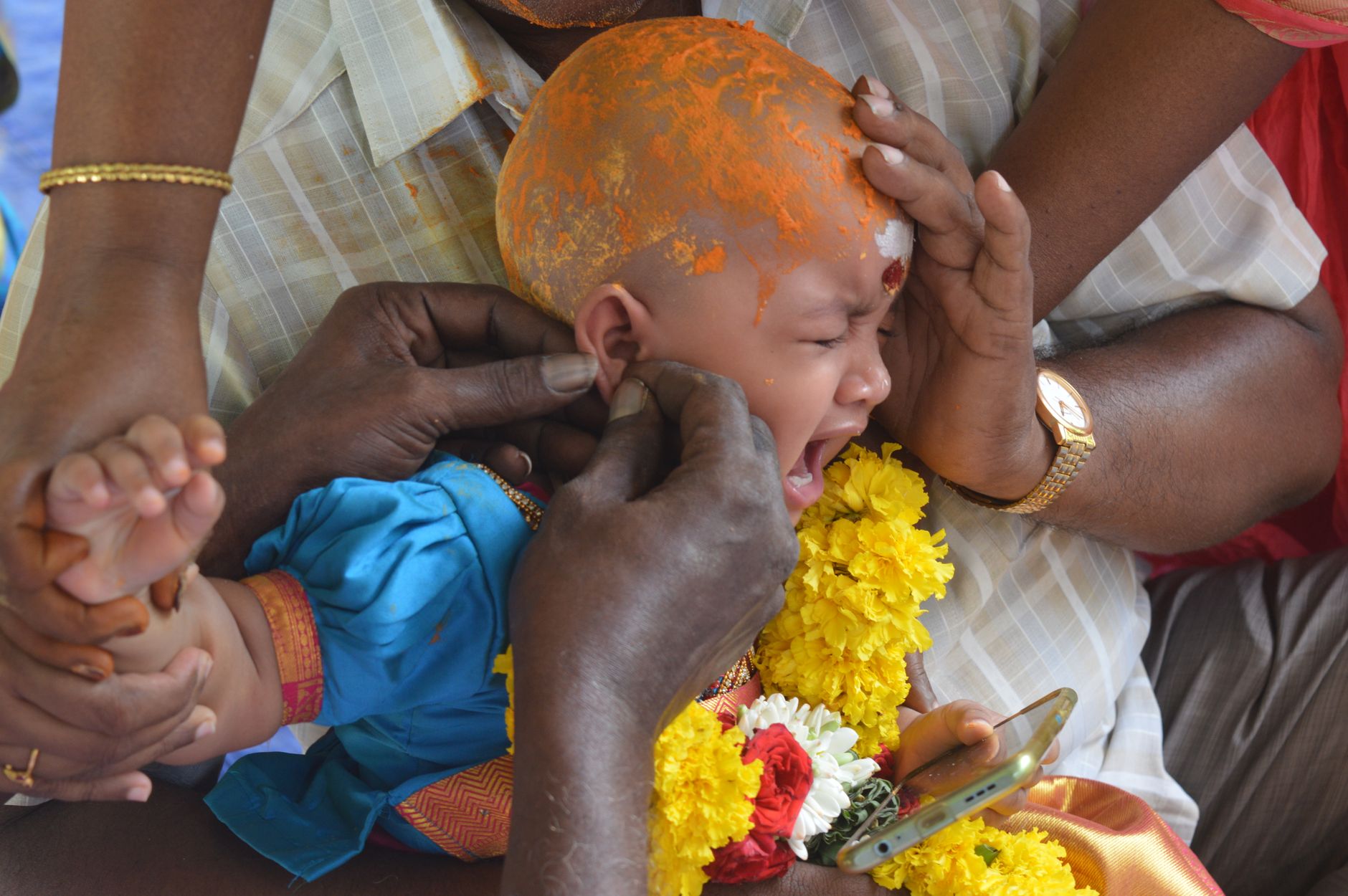
My mother-in-law says shaving baby's head will make the hair grow back thicker. Is this true? No. Shaving does not affect the hair follicles, which are under the skin. The "shaved hair looks thicker" perception happens because blunt cut ends look thicker than tapered natural ends — but the follicle count and diameter are unchanged. The mundan ceremony has cultural significance, but it does not change the biology of hair growth.
Should I apply coconut oil, almond oil, or bhringraj oil to stimulate growth? The AAP's guidance is to keep oils off the scalp. There is no peer-reviewed evidence that any oil applied to the scalp increases hair follicle density or accelerates growth in infants. If a brief, gentle massage is calming for your baby, do it without oil or rinse thoroughly afterward.
My baby's new hair looks completely different from the hair they were born with. Is that normal? Yes — this is very common. The AAP notes that the mature hair may differ in color and texture from birth hair. Some babies with very dark birth hair grow in lighter hair during infancy before it darkens again later. Texture changes from straight to curly (or vice versa) are also documented.
When does baby hair stop being "baby hair" and become permanent hair? Most of the permanent hair is in place by 12–18 months. After that, the hair continues to grow in length and density, but the follicle pattern is established. Some children have continued changes in texture into the toddler years.