A good baby playmat gives your baby a cushioned, low-toxicity spot to spend tummy time and floor play, and in India that mostly comes down to three things: enough thickness to be comfortable on tile or marble flooring, a foam material that doesn't off-gas, and BIS certification. Here's how to shop for one, and how to look after it once it's home.
Not medical advice — consult your pediatrician for guidance specific to your baby.
Why a Play Mat Is Worth Having
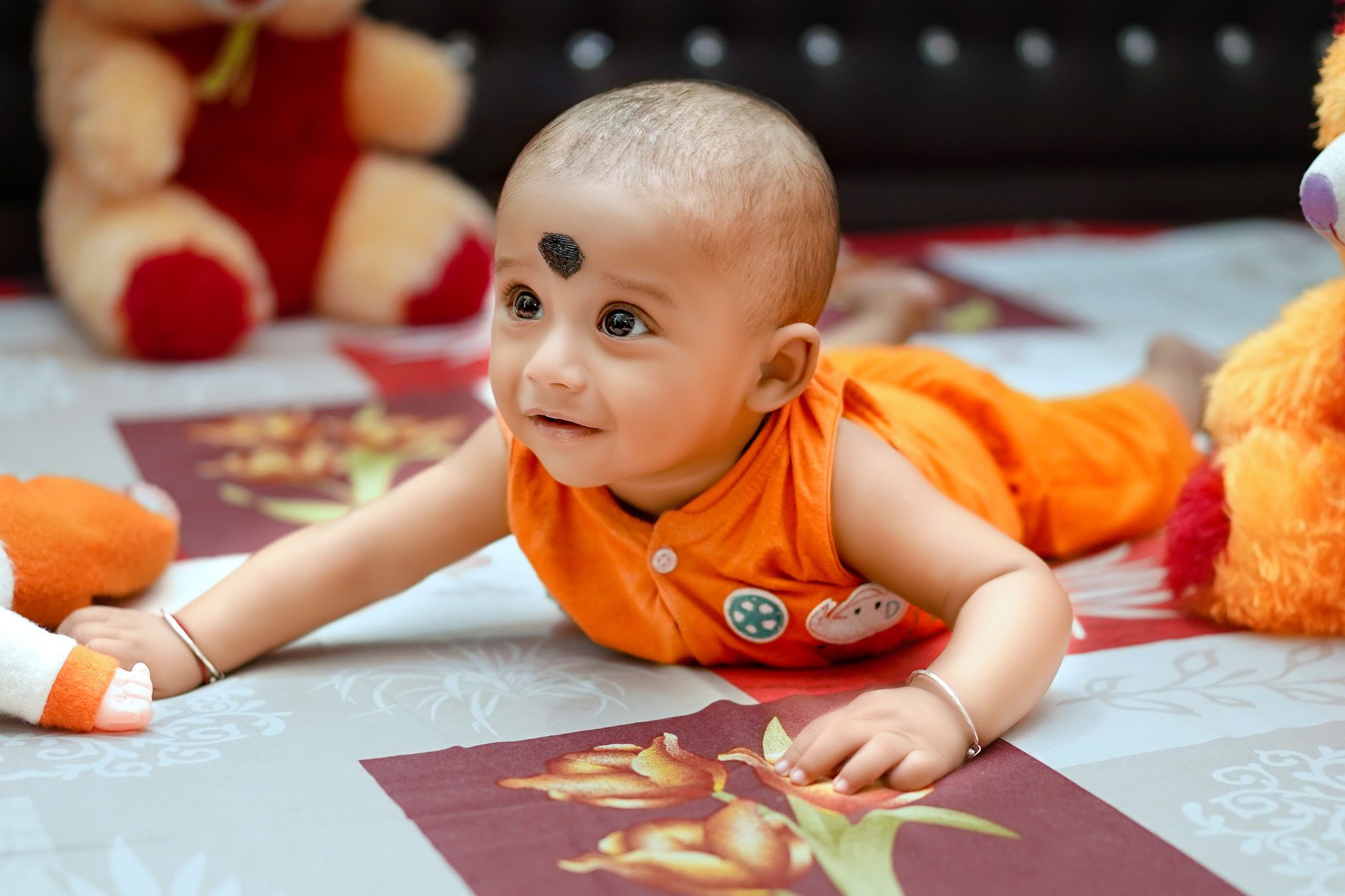
HealthyChildren.org (the AAP's parenting site) recommends supervised tummy time 2 to 3 times a day for a few minutes at a stretch, building up the time as your baby gets stronger. A dedicated mat gives you a consistent, clean spot to do this, whether you're on tile, marble, or wood flooring. NICHD's Safe to Sleep campaign explains that regular tummy time also helps prevent flat spots from forming on the back of your baby's head. Both parents can take turns getting down on the mat with baby — it doesn't need to be one person's job.
Thickness: What Actually Matters
Playmats sold in India range from thin 6mm foldable mats to thick 16-20mm interlocking foam tiles. A thin 6mm mat is easy to roll up, carry between rooms, or pack for a trip to the grandparents' house, but it offers less cushioning. A thicker 16-20mm mat gives a firmer buffer against a hard floor and holds up better once your baby is pulling up and occasionally landing on their bottom — worth the extra bulk if the mat is staying in one spot, like a corner of the living room or nursery.
For a small apartment, a foldable or roll-up mat in the 10-12mm range is often the practical middle ground: enough cushioning for daily tummy time, without permanently taking over the floor space.
Material Safety: What to Check Before You Buy
This is the part worth spending time on, because not all foam is equal.
Look for BIS certification. The Bureau of Indian Standards (BIS) states that safety of toys has been brought under compulsory BIS certification (as per IS 9873) with effect from September 2020, under the Toys (Quality Control) Order issued by the Ministry of Commerce and Industry. Play mats that include toy pieces — interlocking alphabet tiles, attached rattles, or activity arches — fall under this requirement. Check for the ISI mark or a BIS registration number on the packaging before you buy.
Ask what the foam is made of. A 2023 study in Environmental Science & Technology (indexed on PubMed/NIH) found that some foam play mats, particularly polyethylene (PE) ones, emitted high levels of formamide and ammonia — gases your baby can be exposed to while lying face-down on the mat for tummy time. If a new mat has a strong chemical smell out of the box, air it out thoroughly in a ventilated room for a few days before your baby uses it, or look for a different mat.
Avoid heavily plasticized vinyl or PVC pieces where you can. A 2021 review in the journal Toxics (hosted on PMC/NIH) found that phthalate plasticizers, sometimes used in plastic and vinyl children's products, have been linked to endocrine and reproductive health concerns — which is why it's worth choosing mats and toy pieces that are labeled phthalate-free.
Skip mats with small or detachable pieces if your baby is under 3. HealthyChildren.org (the AAP's parenting site) advises avoiding toys with small or detachable parts, since babies and toddlers still explore objects by putting them in their mouths. Interlocking puzzle-mat edges, small alphabet cutouts, and clip-on toys are worth checking closely before you hand the mat over to a baby who mouths everything.
Cleaning and Storing a Playmat in Indian Weather
Foam mats sit directly on the floor and absorb ambient humidity, which makes cleaning routine matter more here than in a drier climate.
Keep the room dry. The CDC advises keeping indoor humidity below 50%, using ventilation, a fan, or a dehumidifier, to stop mold from growing on foam mats and other surfaces — a real concern during the monsoon months in most Indian cities. Wipe the mat dry after any spill and avoid leaving it on a damp floor overnight.
Set a cleaning cadence, not just a spot-clean routine. The New York City Department of Health advises that toys and shared play items used by a child still in diapers should be cleaned daily and whenever visibly dirty, while items used by a child out of diapers can be cleaned weekly and when visibly dirty. A play mat used daily by a baby still in diapers falls into the more frequent camp — treat it like the toys on it.
Choose your disinfecting method carefully. It's tempting to reach for a UV sanitizing wand or leave the mat in direct sun to disinfect it, but a 2025 study in Ecotoxicology and Environmental Safety (indexed on PubMed/NIH) found that disinfecting foam play mats with UV light or UV-bleaching released more volatile organic compounds and microplastics than cleaning with a diluted chlorine-bleach solution. A quick wipe-down with a mild, diluted bleach solution (check the manufacturer's care instructions first) is the better routine choice over a UV sanitizer.
Playmats in India: Price and Where to Buy
| Type | Thickness | Typical Price (INR) | Where to Buy |
|---|---|---|---|
| Foldable/roll-up foam mat | 6-10mm | Rs. 800 - Rs. 2,000 | Amazon.in / FirstCry |
| Interlocking puzzle-tile mat | 10-12mm | Rs. 1,200 - Rs. 3,000 | Amazon.in / FirstCry |
| Thick premium foam mat | 16-20mm | Rs. 3,000 - Rs. 8,000+ | Amazon.in / FirstCry |
A thicker premium mat is worth it if it's going to live in one spot long-term; a thinner foldable one makes more sense if you're moving between rooms, traveling, or working with limited floor space.
Frequently Asked Questions
How thick should a baby playmat be? There's no single sourced number — it depends on your floor and how you'll use the mat. A 6-10mm foldable mat is easier to store and carry, while a 16-20mm mat gives firmer cushioning against a hard floor and holds up better long-term. Either works for supervised tummy time; the thickness is a comfort and durability choice, not a safety cutoff.
Is BIS certification actually mandatory for play mats? For mats that include toy pieces — attached rattles, interlocking alphabet tiles, activity arches — yes. BIS states that toy safety under IS 9873 has been compulsory since September 2020. Check for the ISI mark before buying.
Do foam playmats release harmful chemicals? Some can. A 2023 study found that certain polyethylene foam mats emitted high levels of formamide and ammonia. Air out a new mat in a ventilated room for a few days, and choose phthalate-free foam where the packaging specifies it, since phthalates have been linked to endocrine and reproductive health concerns.
What's the best way to clean a play mat during monsoon? Keep the room's humidity below 50% with a fan or dehumidifier, and wipe the mat dry after spills rather than letting it sit damp. For disinfecting, a diluted chlorine-bleach solution released fewer pollutants than UV-light sanitizing in one 2025 study, so skip the UV wand.
How often should I actually wash a play mat? The New York City Department of Health advises cleaning toys and shared play items daily (and whenever visibly dirty) for a child still in diapers, versus weekly for a child out of diapers. A daily-use mat under a diapered baby is worth wiping down that often, not just when it looks obviously dirty.
At what age can my baby use a mat with small pieces, like an alphabet puzzle mat? The AAP advises avoiding toys with small or detachable parts for babies and toddlers under 3, since they still explore objects by mouthing them. Save interlocking alphabet or number mats with small cutout pieces for closer to age 3, or supervise closely and keep loose pieces out of reach until then.
Do I need a play mat if my baby also gets floor time on a rug or bedsheet? A dedicated mat isn't mandatory, but it gives a consistent, easy-to-clean, cushioned surface for daily tummy time, which the AAP recommends doing 2-3 times a day. Whatever surface you use, make sure it's firm enough to support your baby's tummy time and easy to keep clean.