Pack for shade, heat, and safe sleep first — the swimwear and sand toys can wait. A beach or resort staycation with a baby goes smoothly when you've planned around a handful of real risks: sun, heat, drowning, and where baby will actually sleep.
Not medical advice — consult your pediatrician before travelling with a young baby, especially in the first few months.
Why a Beach Staycation in India Needs Its Own Checklist
A weekend at a Goa, Kerala, or Andaman resort with a baby isn't the same trip as a hill-station getaway. You're dealing with strong sun, high heat and humidity, a pool or the sea right outside your room, and — very often — a resort kitchen and buffet that isn't set up for a baby's food. Both parents should go in with the same checklist: one of you watching the water while the other handles sun, snacks, and naps means nobody is stretched too thin.
Sun, Heat, and Bugs: The Non-Negotiables
Sun protection is about shade, not sunscreen, for young babies. AAP's HealthyChildren.org advises that you "keep babies younger than 6 months out of direct sunlight" and "find shade under a tree, an umbrella, or the stroller canopy." Pack a beach umbrella or a UPF pop-up tent, and use the stroller canopy as your default shade on walks between the room and the beach. Once baby is 6 months or older, AAP's HealthyChildren.org advises choosing "a sunscreen that says 'broad spectrum' on the label" with "a sun protection factor (SPF) of at least 15," noting that "for babies, mineral-based sunscreens are best" — look for zinc oxide or titanium dioxide on the label, and apply it 15-30 minutes before heading out.
Heat can turn serious fast. AAP's HealthyChildren.org warns that "high temperatures and extreme heat can cause children to become sick very quickly," leading to dehydration, heat exhaustion, heat cramps, and heat stroke — and the CDC's Travelers' Health guidance notes that "young children... are more likely to get heat-related illness and become ill more quickly compared to healthy adults." Watch for the CDC's listed heat exhaustion symptoms — "excessive thirst, profuse sweating, headache, dizziness or confusion, nausea" — and head indoors to cool baby down if you see any of these. Plan beach time for early morning or late afternoon, and keep the room cool for naps.
Go light on repellent, and lean on netting instead. AAP's HealthyChildren.org advises that "until infants and children are at least 2 years old, their skin may be different than the skin of an older child or adult," so repellent should be "applied sparingly when needed." For a young baby, a mosquito net clipped over the stroller or carrier at dusk is the gentler option for most of the evening.
Getting There: The Car Seat Still Matters on a Short Drive
The airport-to-resort transfer or a drive down the coast is still a car ride, and the same rules apply as any other trip. AAP's HealthyChildren.org recommends that "all infants and toddlers should ride in a rear-facing seat as long as possible until they reach the highest weight or height allowed by their car safety seat manufacturer" — not just until age 2. Carry your own rear-facing seat rather than relying on the resort cab having one.
If a flight is part of the trip — Goa, Kerala, and the Andamans often mean one — plan for the takeoff and landing, not just the transfer. AAP's HealthyChildren.org advises that "having babies drink from the breast or a bottle or suck on a pacifier during takeoff and landing can ease discomfort," so time a feed for those two windows rather than mid-flight.
Water Safety: The Pool Is the Bigger Risk, Not the Sea
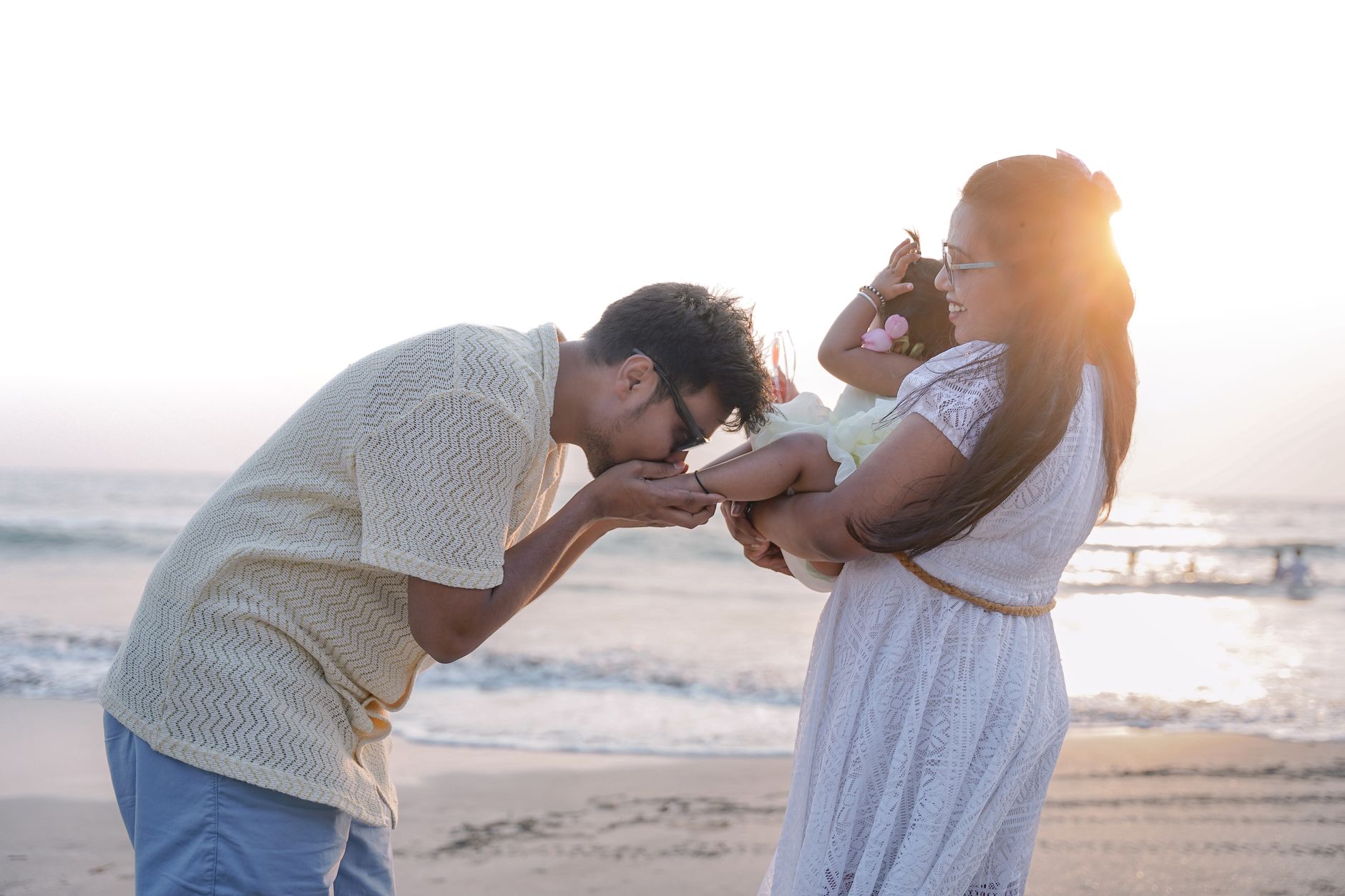
Resort pools and unattended balconies with a view of the water lull parents into a false sense of security. AAP's HealthyChildren.org recommends "staying within arm's length, providing constant 'touch supervision,' whether it's bath time or swim time" — for both the pool and the sea, one adult should be within arm's reach of baby at all times, phone down. Agree between the two of you who has "water duty" at any given moment, so it's never assumed the other parent is watching.
Feeding and Hydration: When You Actually Need That Travel Kettle
Exclusively breastfed babies under 6 months don't need extra water, even in beach heat. A systematic review on PubMed Central (NCBI) found "no evidence among studies of infant hydration that infants under the age of 6 months require supplementary food or fluids in hot weather conditions." Feed on demand a little more often in the heat and skip the extra water bottle.
Once baby is on solids, a small amount of extra water is normal — a bit more in the heat. For babies 6-12 months old, AAP's HealthyChildren.org advises that "they only need about 4-8 ounces per day... because the rest of their liquids are coming from breastmilk or formula," and that this "may need to be adjusted depending on... environmental conditions like high heat and humidity." A sippy cup of water alongside meals covers this on a hot beach day.
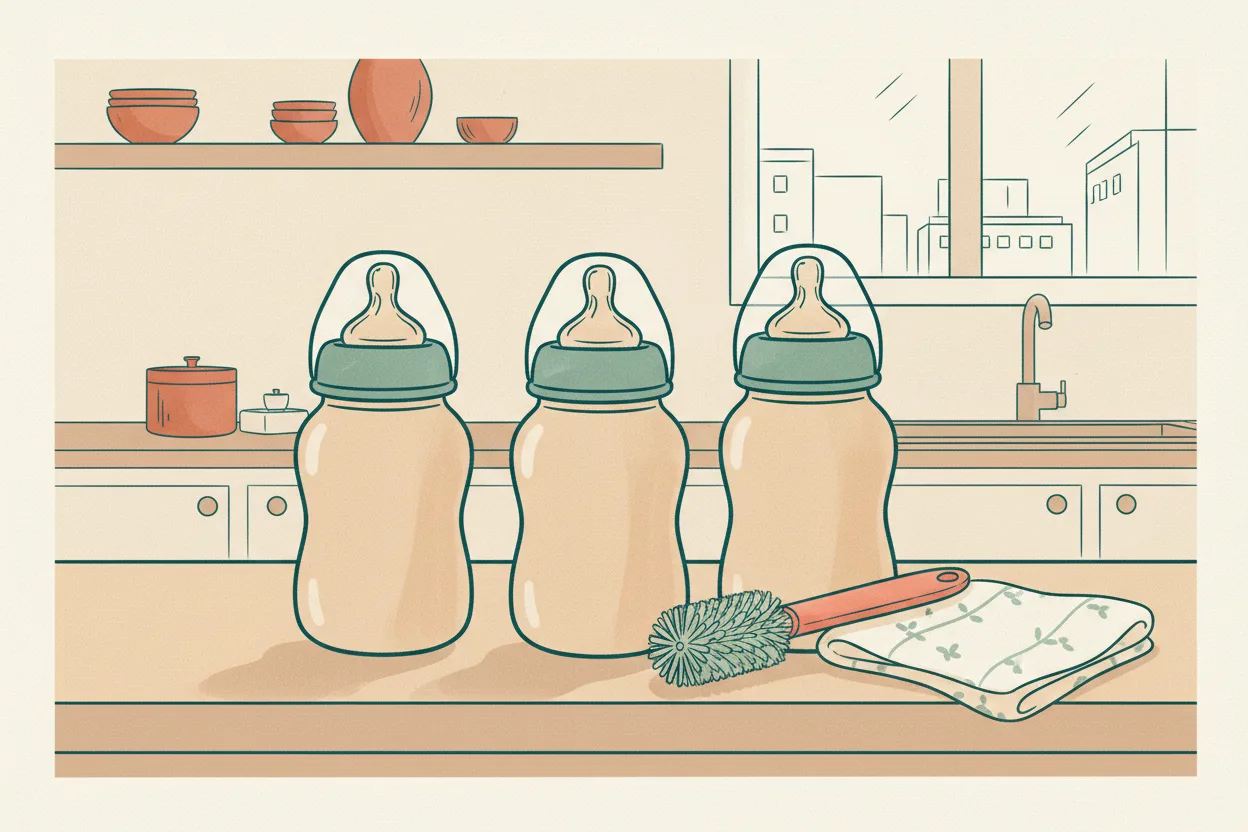
Where the travel kettle earns its place is water safety, not hydration. If you're mixing anything for baby — formula, cereal, or rehydration solution — and you're unsure about the resort's tap water, the CDC's Travelers' Health guidance states that "tap water can be disinfected by boiling, filtering, or chemically treating it." A compact travel kettle to boil water, or a portable water purifier bottle, covers this without relying on the resort kitchen.
Sleep: Bring Baby's Own Safe Sleep Space
Resort cots vary wildly in quality, so don't assume the one in your room is safe to use as-is. AAP's HealthyChildren.org advises placing baby "in a crib, bassinet, portable crib or play yard that meets the safety standards of the Consumer Product Safety Commission (CPSC)," on a firm flat surface with nothing but a fitted sheet — no pillows, blankets, or bumpers. Carrying a lightweight travel crib or play yard from home means you're not gambling on what the resort provides.
The Packing Checklist
| Category | What to Pack | Why |
|---|---|---|
| Sun & heat | Beach umbrella or UPF pop-up tent, stroller with canopy, light breathable clothing, wide-brim hat | Shade is the primary sun protection under 6 months |
| Insects | Mosquito net for stroller/carrier, age-appropriate repellent | Gentler than repellent-first for young skin |
| Travel | Your own rear-facing car seat | Applies on transfers, not just long drives |
| Water safety | Swim diaper, arm floaties/puddle jumper (for toddlers, supervised) | Doesn't replace touch supervision |
| Feeding | Travel kettle or portable water purifier, feeding bowl/spoon, bibs, wipes | For preparing food/drinks safely, not for extra hydration |
| Sleep | Portable travel crib or play yard, fitted sheet, blackout cloth for the window | Resort cots aren't guaranteed to meet safety standards |
| Health | Thermometer, ORS sachets, baby-safe sunscreen (6 months+), first-aid basics | For heat-related symptoms and minor scrapes |
Products That Actually Help
| Product | Price Range | Where to Buy |
|---|---|---|
| Travel/foldable baby crib or play yard | Rs. 3,500 – Rs. 9,000 | Amazon.in / FirstCry |
| Compact travel kettle | Rs. 800 – Rs. 2,000 | Amazon.in |
| UPF beach/pop-up sun tent | Rs. 1,200 – Rs. 2,500 | Amazon.in |
| Mosquito net for stroller/carrier | Rs. 300 – Rs. 700 | FirstCry |
| Reusable swim diaper | Rs. 400 – Rs. 900 | Amazon.in |
Frequently Asked Questions
Do I need sunscreen for a baby under 6 months at the beach? Shade comes first. AAP's HealthyChildren.org advises keeping babies under 6 months out of direct sunlight altogether, using an umbrella, tree, or stroller canopy for shade rather than relying on sunscreen. Ask your pediatrician before using any sunscreen on a very young baby.
Should I carry extra water for my breastfed baby in the heat? No, if baby is under 6 months and exclusively breastfed. Research reviewed on PubMed Central (NCBI) found no evidence that these babies need supplementary fluids even in hot weather — just feed on demand, more often if it's very hot.
Is the resort's tap water safe for making baby's food? Don't assume it is. The CDC recommends boiling, filtering, or chemically treating water before using it, which is exactly what a travel kettle is for.
Can my baby sleep in the resort's cot? Only if you can confirm it's a firm, flat surface with a fitted sheet and nothing else in it. AAP's HealthyChildren.org's safe sleep guidance calls for a crib, bassinet, portable crib, or play yard meeting recognized safety standards — if you're not sure about the resort's cot, bring your own travel crib.
Do I really need to bring our car seat for a short resort transfer? Yes. AAP's HealthyChildren.org recommends rear-facing seating for as long as possible regardless of trip length, and most resort cabs won't have one installed.
Who should watch the pool while the other parent unpacks or naps? Decide this explicitly rather than assuming. AAP's HealthyChildren.org's water safety guidance calls for constant touch supervision — arm's length — around any water, so one parent should have clear, undistracted "water duty" at all times.