

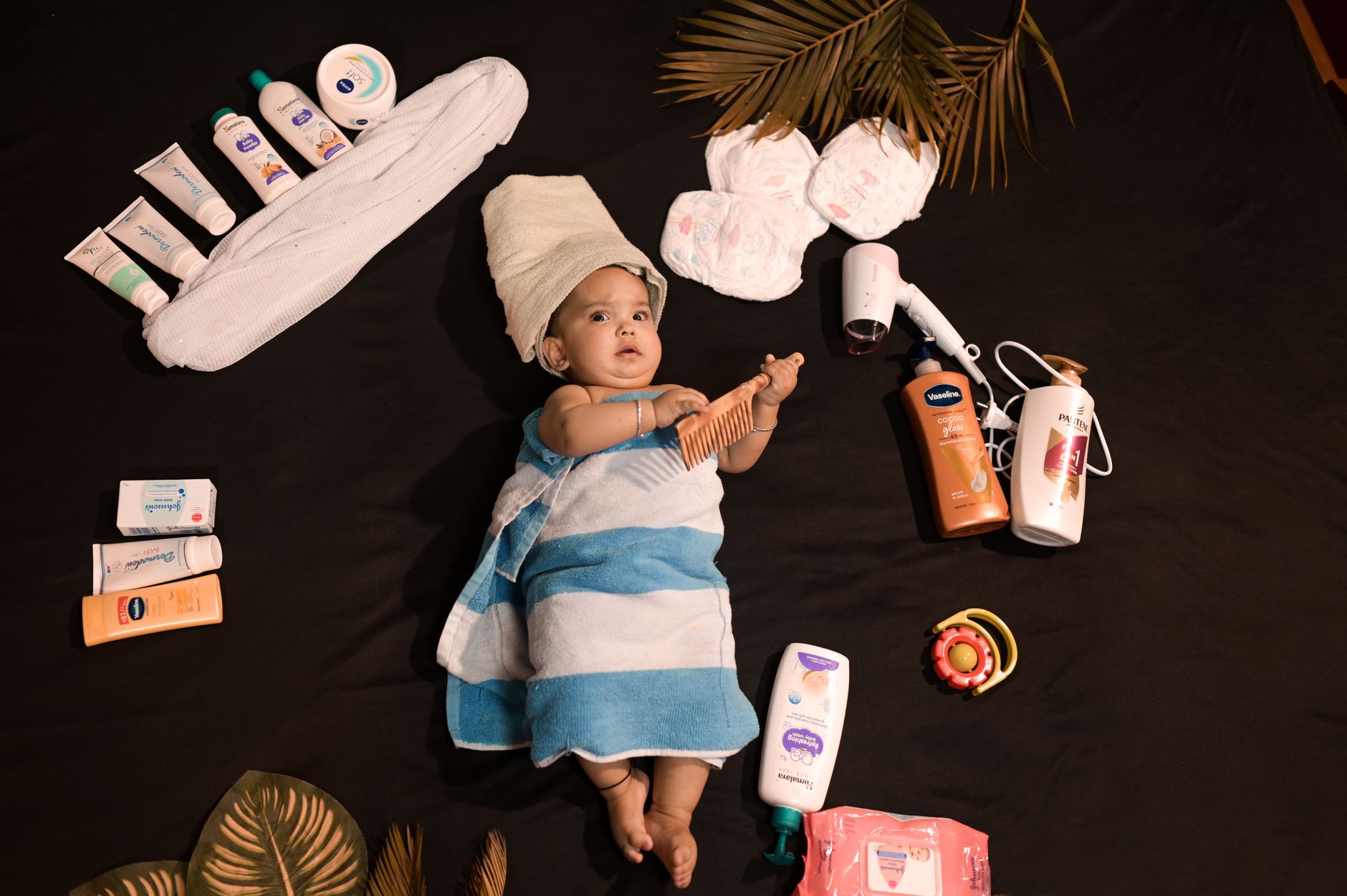
A plain coconut oil massage plus a fragrance-free, hypoallergenic lotion after every bath is the routine the evidence actually supports for most newborns — not the mustard oil many households default to. The American Academy of Pediatrics recommends applying that lotion right after a bath to prevent dry skin or eczema, and an evidence-based Indian consensus statement on neonatal skin care specifically advises against mustard oil for infant massage.
Not medical advice — consult your pediatrician about any product or ingredient before using it on your newborn's skin.
Why Newborn Skin Needs Different Care Than Yours
A 2022 review of infant skin barrier research in Pharmaceutics found that it takes about two years after birth for a baby's skin barrier to closely resemble adult skin. Until then, a newborn's skin is thinner, loses moisture faster, and absorbs more of whatever is applied to it — which is exactly why the "whatever's on the shelf" approach that works for adults isn't automatically right for a baby.
That matters for both parents, not just mum. Whoever is on bath duty that evening — dad included — is choosing what goes on a skin barrier that's still finishing its own development.
Coconut Oil vs Mustard Oil vs Sunflower Oil: What the Research Shows
Oil massage is a near-universal part of Indian newborn care, but the three most common oils sit at very different points on the evidence scale.
| Oil | What the research found |
|---|---|
| Coconut oil | Backed by a randomized controlled trial in preterm babies |
| Mustard oil | An Indian consensus statement advises against it |
| Sunflower (seed) oil | Studied for skin-barrier recovery and infection prevention |
A randomized controlled trial published in Indian Pediatrics found that coconut oil massage produced significantly greater weight gain in preterm babies compared with mineral oil or no oil at all. It's the traditional Indian massage oil with the strongest evidence behind it.
Mustard oil is the other traditional default in many homes, but the Indian consensus statement on neonatal skin care states that although it's routinely used for infant massage across the subcontinent, it isn't recommended because it slows skin-barrier recovery and increases water loss through the skin. A cluster-randomized trial in newborns found something similar — that mustard oil may cause further skin-barrier damage, while sunflower seed oil can actually help the barrier recover.
Sunflower oil has a second point in its favour specifically for fragile skin: a Cochrane systematic review found that applying sunflower and other vegetable oils to preterm infants' skin may reduce invasive infection, though it had little or no effect on mortality. That finding is about preterm infants in clinical settings, not a reason to self-treat a sick baby at home — but it's a useful data point if your pediatrician discusses skin care for a premature baby.
Ingredients Worth Skipping
Three things to keep off the shopping list, whichever brand you land on:
Mustard oil for massage. As above, the Indian neonatal skin-care consensus advises against it despite how common it is.
Talc-based baby powder. The AAP's HealthyChildren.org states that talc-based baby powder can contain asbestos fibers. If you want a powder in the routine, look for a talc-free, cornstarch-based option instead.
Camphor-, menthol-, or eucalyptus-added massage oils and balms. Some Ayurvedic and branded massage oil blends add camphor or other fragrant "cooling" ingredients. A study on camphor and essential-oil balm use in infants found that balms and oils containing terpenic compounds such as camphor, menthol, and eucalyptus are potentially toxic for infants, with adverse events reported in babies and young children. Check the label on any "baby massage oil" or balm for these ingredients before using it.
Beyond that, favour fragrance-free formulas — the AAP's post-bath advice above is specifically for a fragrance-free, hypoallergenic lotion, and heavily perfumed lotions are a common cause of skin irritation complaints in the first few months.
Building a Simple Daily Routine
A simple two-step routine works well for most homes:
- Massage (optional, once a day): coconut oil, warmed slightly, applied with gentle strokes before bath time. In Indian and other Asian newborn care practice, oil massage is commonly started from the first day of birth, so there's no need to wait for a milestone like the umbilical cord stump falling off before starting a gentle routine. Either parent can do this — it's a nice hands-on job for whoever gets home in time for the evening bath.
- How long: studies of whole-body massage in healthy term newborns have used widely varying protocols, most often sessions of about 15 minutes given one to three times a day — there's no single standardized "correct" duration, so a short, gentle session is enough.
- After every bath: pat the skin dry rather than rubbing, then apply a fragrance-free, hypoallergenic lotion while the skin is still slightly damp.
- Skip: mustard oil for massage, camphor- or menthol-added massage oils, and talc-based powder.
If a patch of skin looks red or cracked and stays that way through this routine, bring it up with your pediatrician rather than reaching for a new product — persistent rashes are worth an actual look.
Products Worth Buying (INR)
| Product | Price Range | Where to Buy |
|---|---|---|
| Cold-pressed coconut oil (massage) | Rs. 150 – Rs. 400 | Amazon.in / FirstCry |
| Fragrance-free hypoallergenic baby lotion | Rs. 150 – Rs. 500 | Amazon.in / FirstCry |
| Baby massage oil (branded, e.g. Figaro) | Rs. 100 – Rs. 350 | Amazon.in / FirstCry |
| Cornstarch-based (talc-free) baby powder | Rs. 150 – Rs. 400 | Amazon.in / FirstCry |
Check the ingredient list before buying any "baby massage oil" blend — some branded options mix in mustard oil or added fragrance, which defeats the point of choosing a specific oil for the reasons above.
Frequently Asked Questions
Is mustard oil really unsafe for newborn massage? Not "unsafe" in an acute sense, but the Indian neonatal skin-care consensus statement advises against it because it slows skin-barrier recovery and increases water loss through the skin — despite being the traditional choice in many households. Coconut or sunflower oil are the better-evidenced alternatives.
Does coconut oil massage actually help a baby gain weight? A randomized controlled trial in Indian Pediatrics found significantly greater weight gain in preterm babies massaged with coconut oil compared with mineral oil or no massage. That trial was in preterm babies specifically; talk to your pediatrician about what applies to your baby.
Should I avoid talcum powder completely? HealthyChildren.org, from the AAP, notes that talc-based baby powder can contain asbestos fibers. A talc-free, cornstarch-based powder avoids that concern if you want to keep powder in the routine.
When should I apply lotion — before or after the bath? The AAP recommends patting your baby dry and applying a fragrance-free, hypoallergenic lotion right after the bath, while skin is still slightly damp, to help prevent dryness.
Is my baby's skin as tough as mine yet? No — research on infant skin barrier development shows it takes about two years for a baby's skin barrier to closely resemble adult skin, which is why gentler, fragrance-free products matter most in this first stretch.
Can oil massage reduce infection risk for a premature baby? A Cochrane review found that applying sunflower and other vegetable oils to preterm infants' skin may reduce invasive infection, though it had little effect on mortality. This is specific to preterm babies in medical care — discuss it with your NICU team rather than acting on it at home.