
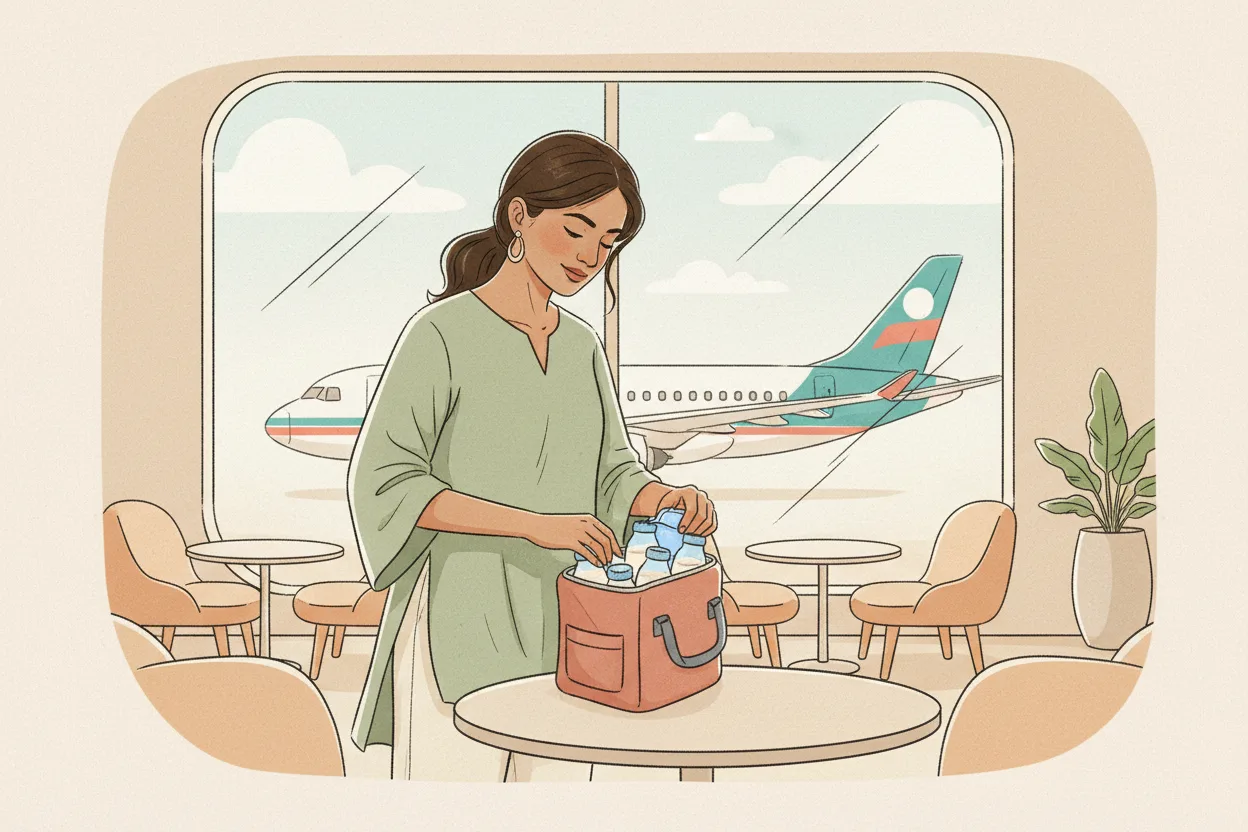
A good insulated cooler bag packed with frozen ice packs is enough to carry pumped milk through a long flight. The CDC states that breast milk can be stored in an insulated cooler with frozen ice packs for up to 24 hours while traveling — comfortably covering most India routes and layovers.
Not medical advice — consult your pediatrician or a lactation consultant for guidance specific to your baby.
How Long Milk Actually Stays Cold and Safe
Before you pack, it helps to know the baseline storage windows you're working with once milk is out of the cooler bag. AAP's HealthyChildren.org states that freshly expressed milk can remain at room temperature for up to 4 hours, or up to 6–8 hours if very cleanly expressed, and that refrigerated milk is best used within 4 days.
A cooler bag is a middle option between those two — colder than a countertop, not as cold as a freezer. The CDC states an insulated cooler with frozen ice packs keeps milk safely cold for up to 24 hours, which is why it's the standard way to move pumped milk through a flight, a layover, and the drive home.
Two rules matter once you land:
- If milk in the cooler bag has completely thawed but still feels cold, the CDC advises putting it straight in the refrigerator and using it within the next day, or discarding it.
- The CDC's Human Milk Storage Guidelines state that thawed milk should never be refrozen, and any milk left over from a feeding should be used within 2 hours.
Pack a small notecard or sticky label in your kit with your pumping time on each bottle — it makes these windows easy to track when you land tired and jet-lagged.
Your Cooler Bag + Ice Pack Kit
You need three things: an insulated bag sized for your storage bottles or bags, enough frozen ice packs to surround them (not just sit on top), and a way to keep the bag sealed and upright in your carry-on. A soft-sided cooler bag with a wide zip opening packs more efficiently in cabin baggage than a rigid one.
| Item | Price Range (India) | Where to Buy |
|---|---|---|
| Insulated breast milk cooler bag (soft-sided, 4–6 bottle capacity) | Rs. 700 – Rs. 1,800 | Amazon.in / FirstCry |
| Reusable gel ice packs (slim, contoured) | Rs. 250 – Rs. 600 for a set | Amazon.in |
| Storage bottles or breast milk storage bags | Rs. 300 – Rs. 900 per pack | FirstCry |
| Insulated tote/backpack (for a full-day multi-flight itinerary) | Rs. 1,200 – Rs. 3,000 | Amazon.in |
Freeze your gel packs solid the night before, and pack them touching the bottles on all sides rather than in one corner, so the cold reaches every bottle evenly for the full flight. For a long-haul flight with a layover, ask the cabin crew about the galley freezer for a mid-flight top-up; many airlines will accommodate this if you ask at boarding.
Getting Through Airport Security
If any leg of your journey is screened by the US TSA — for example a US-bound flight or a US layover — TSA states that breast milk in quantities greater than 3.4 ounces (100 ml) is allowed in carry-on baggage, that your child does not need to be present or traveling with you for this to apply, and that ice packs, gel packs, and other accessories needed to cool it are also allowed in carry-ons. Declare the milk and ice packs separately from your other liquids at the tray so security can screen them on their own.
For domestic Indian flights, keep your milk and ice packs in a separate, easily accessible pouch inside your carry-on rather than buried under clothes and gifts — that way they're quick to pull out and screen, and you keep the queue moving. Keep bottles upright during the check.
Building Your Stash Before You Fly
Don't try to build your travel supply in the final few days before departure. The CDC's Yellow Book (travel health guidance) states that building a supply takes time and patience, and is most successful when begun gradually, many weeks in advance of departure. Start pumping an extra session a day as soon as your trip is on the calendar, and freeze in small, flight-sized portions (60–90 ml) rather than large batches — small portions thaw faster and waste less if only part of a bottle is used.
For a rough packing target, La Leche League International states that a baby between one and six months old takes in about 3–5 ounces (roughly 90–150 ml) per feeding and nurses around 8 times a day (range 4–13). That works out to a ballpark of 700 ml–1.2 L of stashed milk for every full day you expect to be away from your baby — adjust up or down based on how many ounces your own baby typically takes per feed.
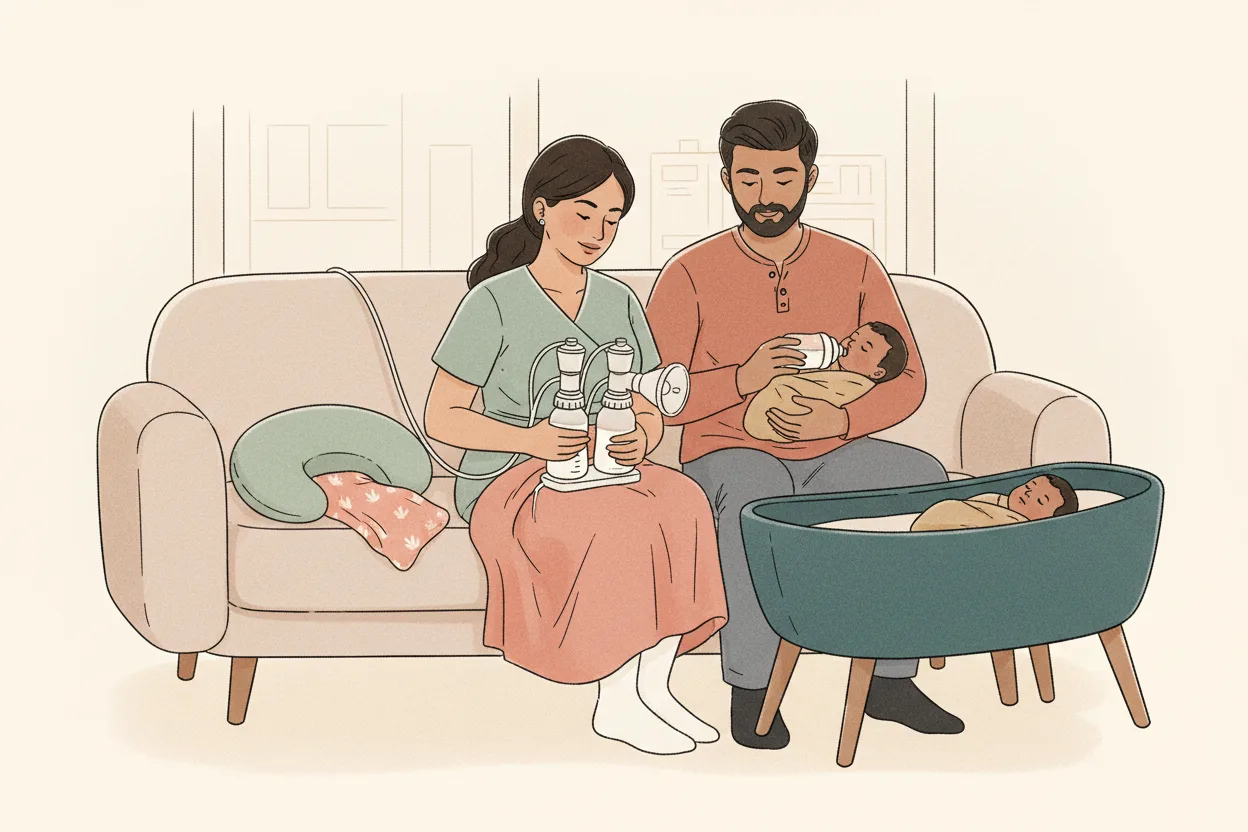
If travel means you'll be away from your baby for stretches of the trip — a wedding function, a work commitment, a long transit day — keep expressing on your baby's usual schedule. UNICEF states that a parent should try to express as often as they would feed their baby, because when breast milk is not regularly removed it can lead to plugged ducts, mastitis, and a drop in supply. Set a phone reminder matched to your baby's normal feed times, adjusted for whatever time zone you're flying into.
Frequently Asked Questions
How long will milk actually stay cold in a cooler bag during a long flight? The CDC states up to 24 hours in an insulated cooler with frozen ice packs, which covers nearly every domestic or international itinerary out of India, including a layover.
Can I carry more than 100 ml of pumped milk through security? On legs screened by the US TSA, yes — TSA explicitly allows breast milk over the standard liquid limit, along with the ice packs to keep it cold, even without your baby traveling with you. Pack it separately from your other liquids so it's easy to screen.
What do I do if the milk has completely thawed by landing? Check the temperature. The CDC advises that if it's thawed but still feels cold, refrigerate it and use it within a day, or discard it. Never refreeze it once it has thawed.
Do I need to keep pumping on my baby's schedule while traveling? Yes, especially on stretches when you and your baby are apart. UNICEF recommends expressing as often as your baby would normally feed to protect your supply and avoid plugged ducts or mastitis.
How many weeks ahead should I start freezing a stash for the trip? Start as soon as the trip is confirmed. The CDC's Yellow Book notes that a good stash takes time and works best when built gradually, many weeks in advance, rather than rushed right before departure.
Is a rigid cooler box better than a soft cooler bag? Either works as long as it holds frozen ice packs snugly against the bottles. A soft-sided bag is easier to fit into overhead cabin baggage; a rigid box holds its shape better if you're checking it or storing it under a car seat for a long road-and-flight combination trip.