
Yes — most parents of twins end up using a double electric pump, and usually sooner than they expected. Twin pregnancies carry a higher risk of preterm birth than single pregnancies, which is often what starts the pumping before direct nursing is fully established. Buying one before delivery, rather than scrambling for one from a hospital bed, is worth planning for.
Not medical advice — consult your pediatrician or a lactation consultant for guidance specific to you and your babies.
Why pumping looks different with twins
With one baby, a pump is often a "nice to have" for topping up a feed or building a freezer stash before you're back at work. With twins, it frequently becomes part of the daily routine from week one — feeding, timing, and appetite rarely sync up perfectly between two babies, and twin and higher-order pregnancies are more likely to arrive early, sometimes needing a NICU stay before direct feeding is possible.
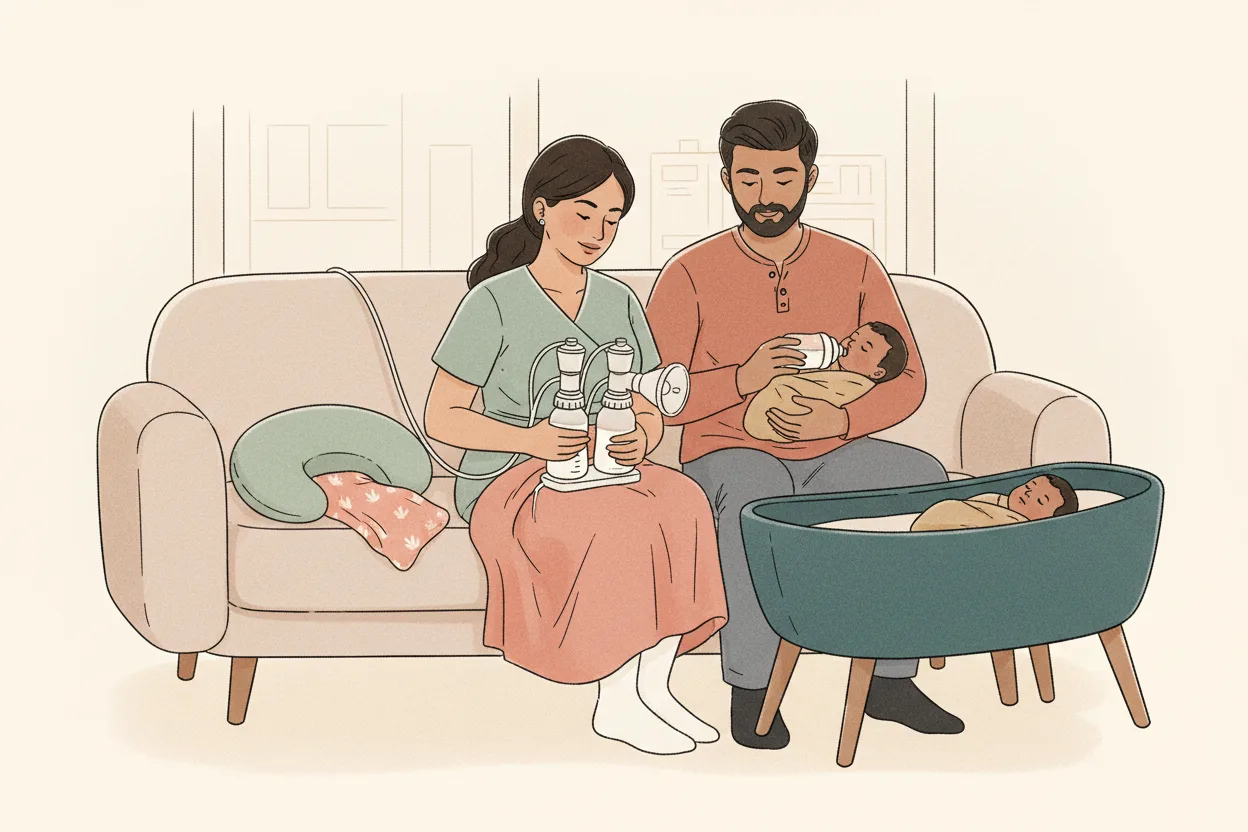
That doesn't mean you're doing anything less than breastfeeding. WHO's infant feeding guidance is clear that expressed milk fed to the baby still counts as exclusive breastfeeding for the first six months. In an Indian household, this often plays out with both parents involved: one feeding while the other pumps or preps bottles, and grandparents or a nanny helping keep a simple feed log for both babies.
Do you need one before delivery?
If you're planning to nurse both babies directly and they're born close to term, you may not need a pump on day one — you can buy one in the first week if it turns out you need it. But with a real chance of an early delivery or a NICU stay, it helps to have one ready in advance.
Stanford Medicine's newborn nursery guidance for mothers of multiples advises pumping after each nursing session to fully empty the breast, and removing milk 10–12 times a day in the first few days when a baby can't yet nurse directly — this is what builds a strong supply for two babies from the start. If your babies spend any time in the NICU, this is the window where having your own pump ready matters most.
Single vs. double electric: what the research actually shows
For twins, a double electric pump (pumping both breasts at once) isn't just a convenience — it measurably helps. A comparative study in the Journal of Human Lactation found that simultaneous double pumping produced higher milk volumes than pumping one side at a time, reaching statistical significance across most comparisons tested. That's the core reason double electric pumps like the Spectra S1 Plus are the standard recommendation for parents building a supply for two babies rather than one.
| Pump type | Best for | Typical price (India) |
|---|---|---|
| Manual single pump | Occasional use, travel backup | Rs. 1,200 – Rs. 2,500 |
| Single electric pump | One baby, occasional pumping | Rs. 4,000 – Rs. 8,000 |
| Double electric pump (e.g. Spectra S1 Plus) | Twins, exclusive pumping, NICU parents | Rs. 15,000 – Rs. 22,000 |
One detail that's easy to overlook: a 2024 pilot study in the Journal of Human Lactation found that using a correctly, often smaller, sized flange significantly increased milk output compared with the standard one-size flange most pumps ship with. If pumping feels uncomfortable or output seems low, an ill-fitting flange is a common, fixable cause — most pump brands sell flange inserts in smaller sizes separately.
The pump itself isn't the whole story, either. A study in the Journal of Perinatology found that mothers who combined hand expression and breast massage with electric pumping ("hands-on pumping") increased their milk volume by 48%, even while pumping less. For twins, where every extra ounce matters, a few minutes of hand compression during and after a pumping session can outperform relying on suction alone.
Building and storing a supply for two
Because you're feeding two babies, you'll likely rely on stored milk more than a parent of one baby would. AAP's guidance states that freshly expressed milk can stay at room temperature for up to 4 hours, in the refrigerator for up to 4 days, and in the freezer for several months. Label each bottle or bag with the date so older milk gets used first.
Because twins are more likely to arrive early or spend time in the NICU, pump hygiene deserves extra attention: AAP's guidance notes that sanitizing pump parts (not just washing them) is especially important if a baby is under 2 months old, was born prematurely, or has a weakened immune system — circumstances that apply to many twin pregnancies. Wash all parts that touch milk after every session, and sanitize (boiling or a steam sanitizer bag) at least once a day in the early weeks.
You also don't have to pick one feeding style and stick to it. La Leche League International notes that parents of twins commonly mix approaches — feeding both babies together at home, but separately (one on the breast, one on a bottle of expressed milk) when out, at night, or when only one parent is available. There's no single "correct" system; what matters is that it works for your household.
Bottle-feeding expressed milk without hurting your supply
When one twin is on a bottle of expressed milk while the other nurses — a common setup for dad's turn at a feed — how the bottle is offered matters. The Australian Breastfeeding Association recommends paced bottle-feeding, where the baby controls the flow rather than being fed on the caregiver's timeline, because it helps protect the baby's ability to breastfeed well and supports the mother's ongoing milk supply. In practice: hold the bottle horizontally, let baby pause and restart, and switch sides partway through, just as at the breast.
What to actually buy
| Item | Why it helps with twins | Where to buy |
|---|---|---|
| Double electric pump (e.g. Spectra S1 Plus) | Simultaneous pumping for higher output and time savings | Amazon.in / FirstCry |
| Correctly sized flange inserts | Fixes discomfort and low output from a standard-size flange | Amazon.in |
| Milk storage bags (freezer-safe) | Building and labelling a stash for two babies | Amazon.in / FirstCry |
| Insulated cooler bag with ice packs | Transporting pumped milk safely, including to/from the NICU | Amazon.in |
| Twin nursing/feeding pillow | Supports positioning two babies for feeds or bottles | FirstCry |
Frequently Asked Questions
Do I really need a double pump, or will a single one work for twins? A single pump can work, but it produces less milk overall than simultaneous double pumping and takes longer per session. For two babies, most parents find it worth the difference.
Should I buy the pump before my twins are born? It's worth having one ready given the higher preterm birth risk with twin pregnancies — if your babies need NICU time, you'll want to start pumping right away.
How often should I pump if my twins can't nurse directly yet? Stanford's guidance for mothers of multiples suggests removing milk 10–12 times a day in the first few days to establish supply, pumping after each nursing attempt to fully empty the breast.
Does pumping instead of direct nursing still count as breastfeeding? Yes. WHO's guidance counts expressed milk fed to the baby as exclusive breastfeeding for the first six months.
Can dad handle a bottle feed without it affecting my supply? Yes, if it's paced bottle-feeding — baby controls the pace rather than being fed quickly — which protects both baby's breastfeeding skills and your supply. It's a good way for the other parent to take a full feed independently.
How long can I keep pumped milk before I need to use or freeze it? Up to 4 hours at room temperature, up to 4 days in the fridge, and several months in the freezer. Label bottles with the date so you use the oldest milk first.