


The position you breastfeed in affects latch and nipple health. Get it right in the first week and feeding becomes significantly easier.
WHO recommends exclusive breastfeeding for the first six months of life, followed by continued breastfeeding alongside complementary foods up to two years or beyond. Positioning is the foundation of making that achievable.
Not medical advice — consult your lactation consultant or pediatrician for personal guidance.
Finding What Works for You
There's no single "right" setup. You'll feed wherever you're comfortable — on your bed, a sofa, a glider or nursing chair, or sitting cross-legged if you prefer. What makes feeding work is the latch and your posture, not the furniture.
Two things make the early weeks in India a little different:
Lots of advice, often conflicting. Your mother, your mother-in-law, and visiting relatives may each have a "correct" way you should feed. There isn't one — any position with a good latch where you and baby are comfortable is the right position.
Feeding with family around. In a joint or multi-generation home, you'll often feed with relatives nearby or guests visiting. A light nursing cover or muslin drape, and a hold you can manage discreetly in your own room, makes that easy and stress-free.
According to the American Academy of Pediatrics (AAP), there is no single right way to hold your baby — every mother and baby pair finds what works for them. That principle applies equally to Indian homes.
The Core Positions — and When Each Works
Cradle Hold
The most common position. Baby lies across your body, stomach to stomach, with their head in the crook of your arm on the same side as the breast you are using. Your forearm supports their body; your hand cups their bottom or upper thigh.
The AAP notes that feeding in more than one position can help prevent nipple soreness and clogged milk ducts, because different positions drain different areas of the breast more effectively. The cradle hold is a good default, but rotating positions through the day has real benefits.
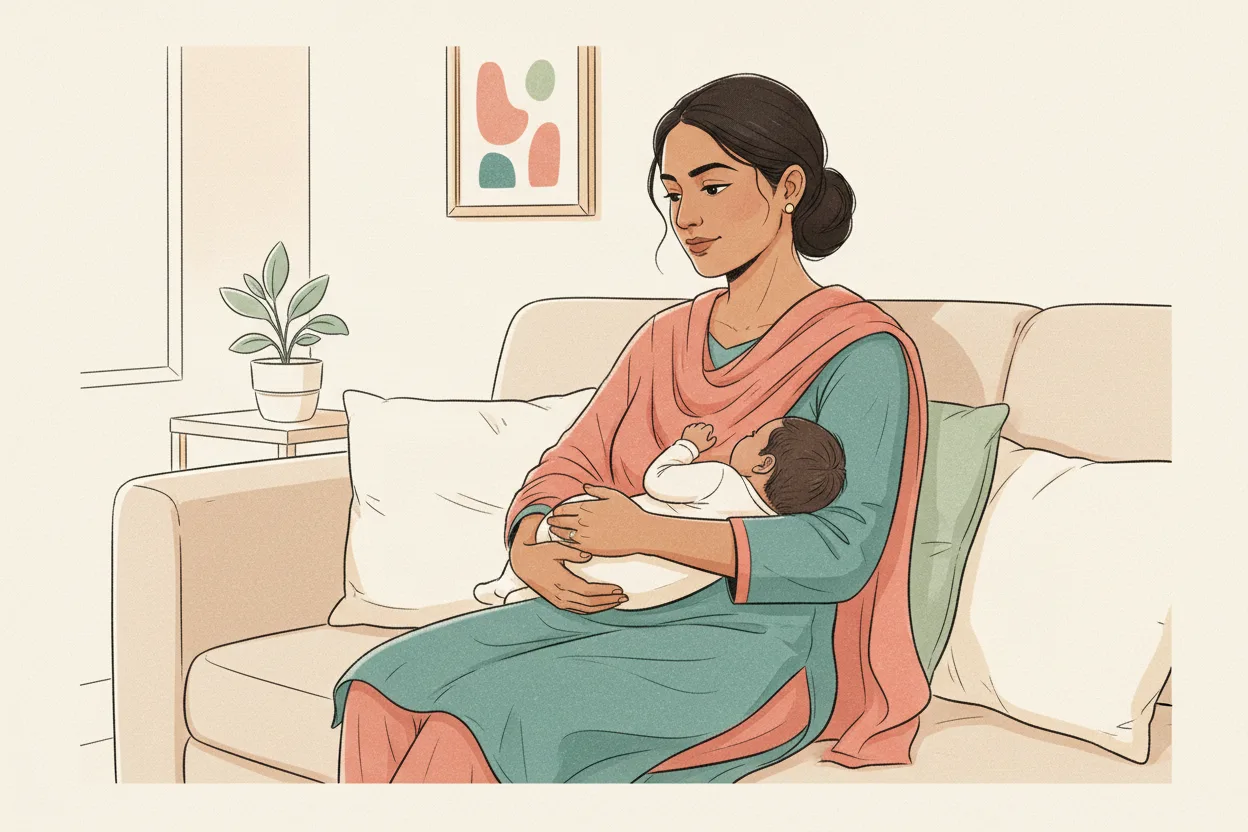 Cradle hold: baby lies across your body, head in the crook of your arm on the same side as the breast.
After a C-section: The NHS advises that the cradle hold may be uncomfortable after a caesarean because baby lies across the abdomen near the scar. The football hold or side-lying position works better while you heal.
Making it comfortable: Works anywhere you can sit with support — bed, sofa, or chair. A nursing pillow or a folded bolster under your arm brings baby up to breast height and reduces shoulder fatigue during longer sessions.
Cross-Cradle Hold
Similar to the cradle, but you switch arms: the hand opposite to the breast you are using supports baby's head and upper back, giving you more precise control over head positioning.
The AAP describes the cross-cradle hold as a good position for a baby who has difficulty latching on. The extra control helps you guide baby's head onto the breast more precisely — many lactation consultants start new mothers with this hold for that reason.
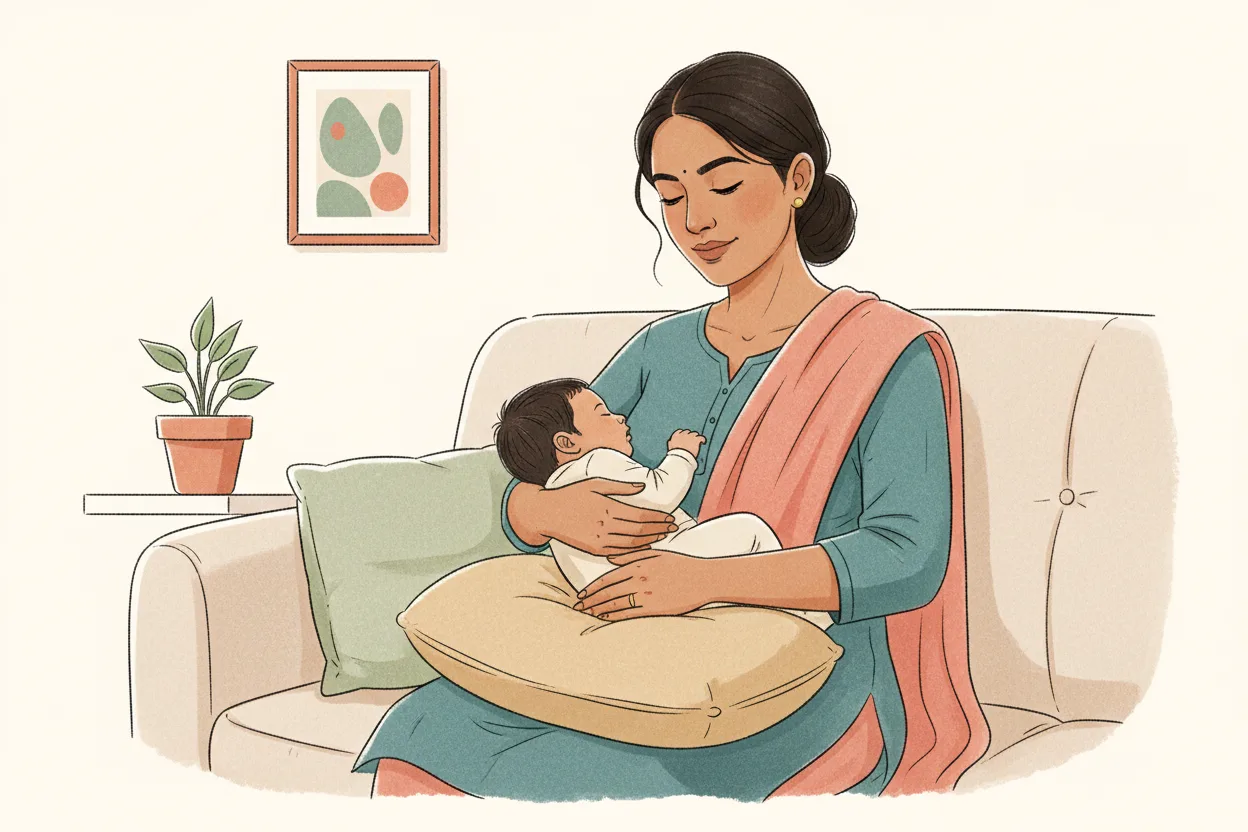 Cross-cradle hold: the hand opposite the feeding side cradles baby's head, giving you more control over the latch.
Making it comfortable: Works on a bed, sofa, or chair, and is easy to manage sitting cross-legged with a firm pillow on your lap.
Football Hold (Clutch Hold)
Baby is tucked under your arm along your side, face up, with their body along your forearm and your hand supporting their head at breast level — similar to carrying a bag under your arm.
The AAP recommends the football hold particularly for those nursing twins, mothers with large breasts or flat nipples, and premature babies. The NHS confirms it is a good option after a C-section because there is no pressure on the abdomen or scar area.
Making it comfortable: Needs a firm surface to your side — a bolster or rolled blanket behind your back helps keep the position stable. Works well on a wide bed or sofa.
Side-Lying Position
Both you and baby lie on your sides, facing each other, stomach to stomach. Baby's mouth lines up with your lower breast.
The NHS describes side-lying as a good position after a caesarean or difficult delivery, and for night feeds. Baby's weight is fully off your abdomen, making it one of the more comfortable post-surgery options.
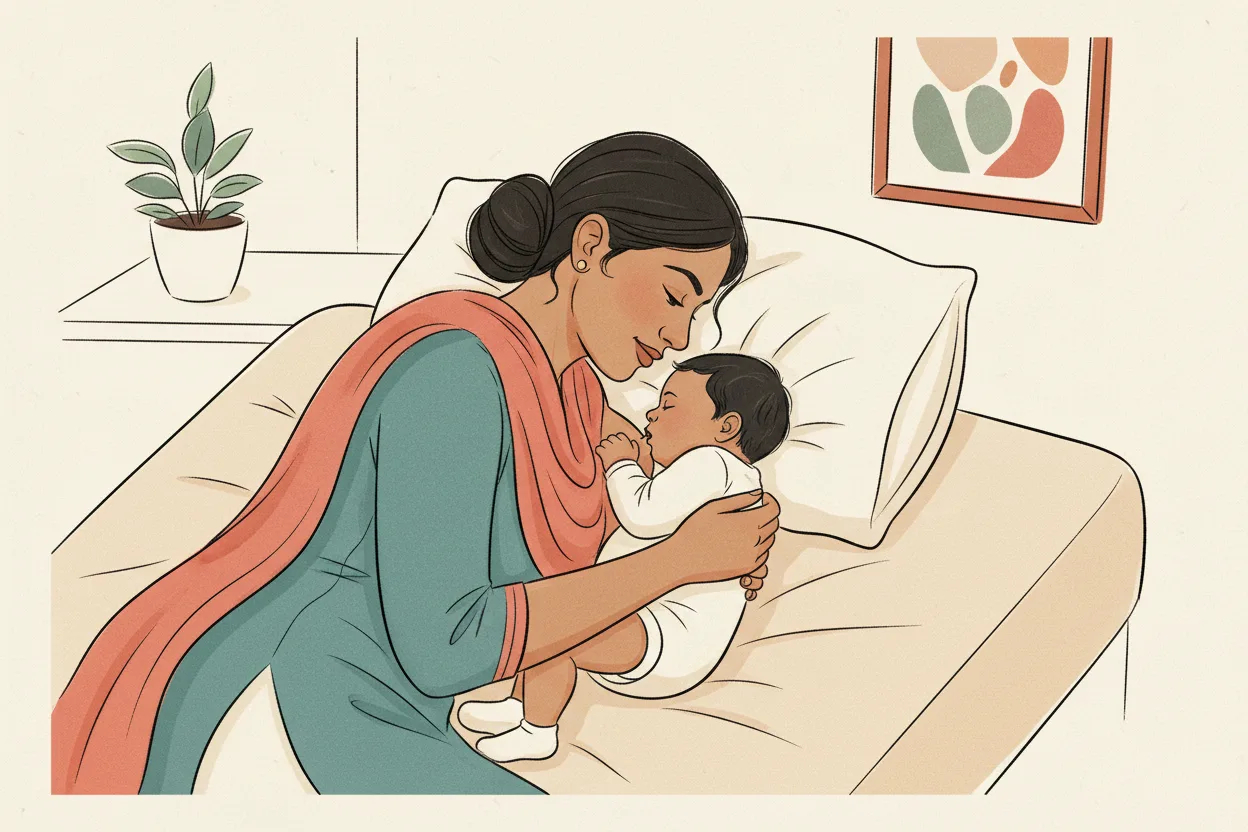 Side-lying: you and baby lie facing each other — handy for night feeds and while recovering from a C-section.
Making it comfortable: Useful for night feeds, when you're tired, or while recovering from a C-section. Feed on a firm mattress with no loose pillows or bedding near baby — and once the feed is done, move baby onto their own firm, flat surface and put them to sleep on their back.
Cross-Legged Hold (If You Prefer Sitting Up)
Many mothers find it most comfortable to sit cross-legged — on the bed, on a sofa, or on the floor — rather than in a chair. If that's you, place a nursing pillow or a firm regular pillow on your lap to bring baby up to breast height, then use a cradle or cross-cradle hold.
The core principle per the AAP is to bring baby to the breast, not the breast to the baby. Keep your back straight — lean against a wall for support. Hunching causes back and shoulder pain in longer sessions and pulls baby off alignment with the breast.
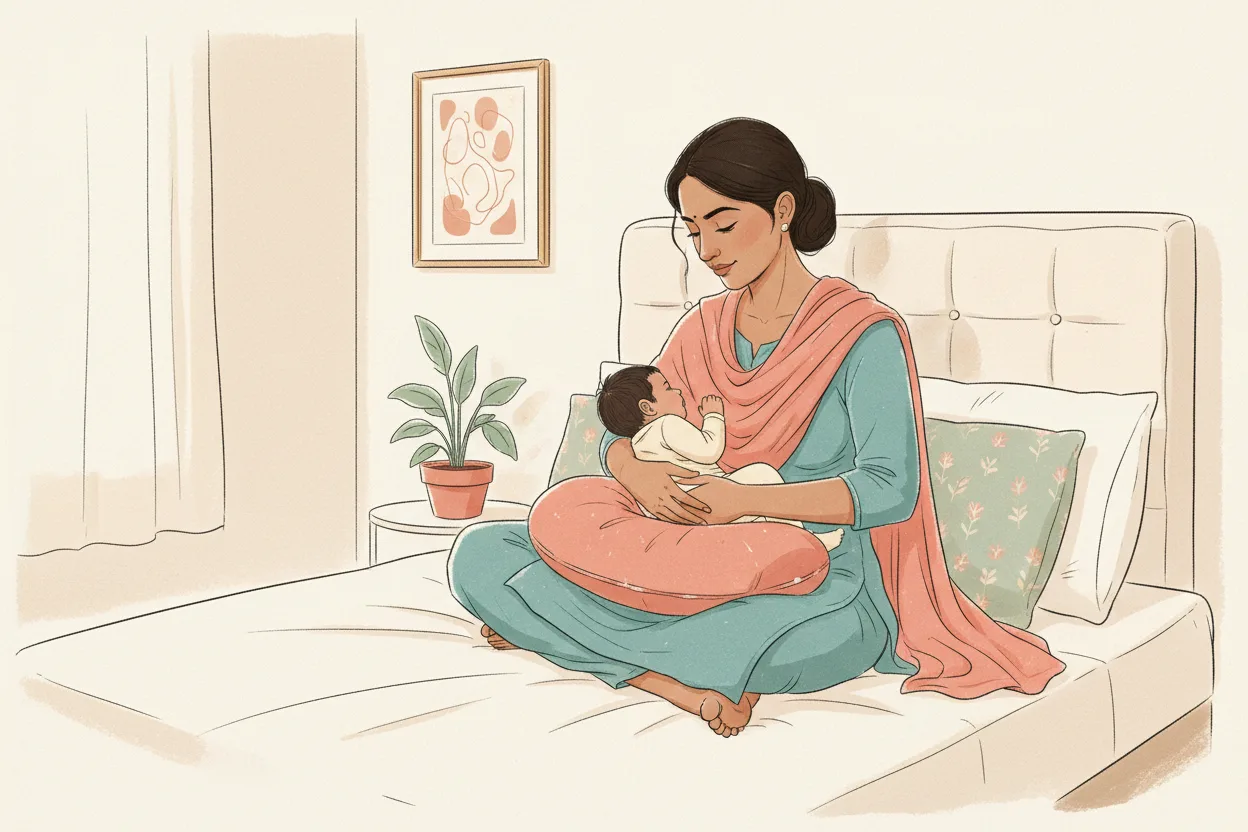 Cross-legged on the bed with a nursing pillow on your lap brings baby to breast height — lean against the headboard to keep your back straight.
Getting the Latch Right
Position sets you up; the latch is what makes it work. A poor latch causes nipple damage quickly and makes feeding painful.
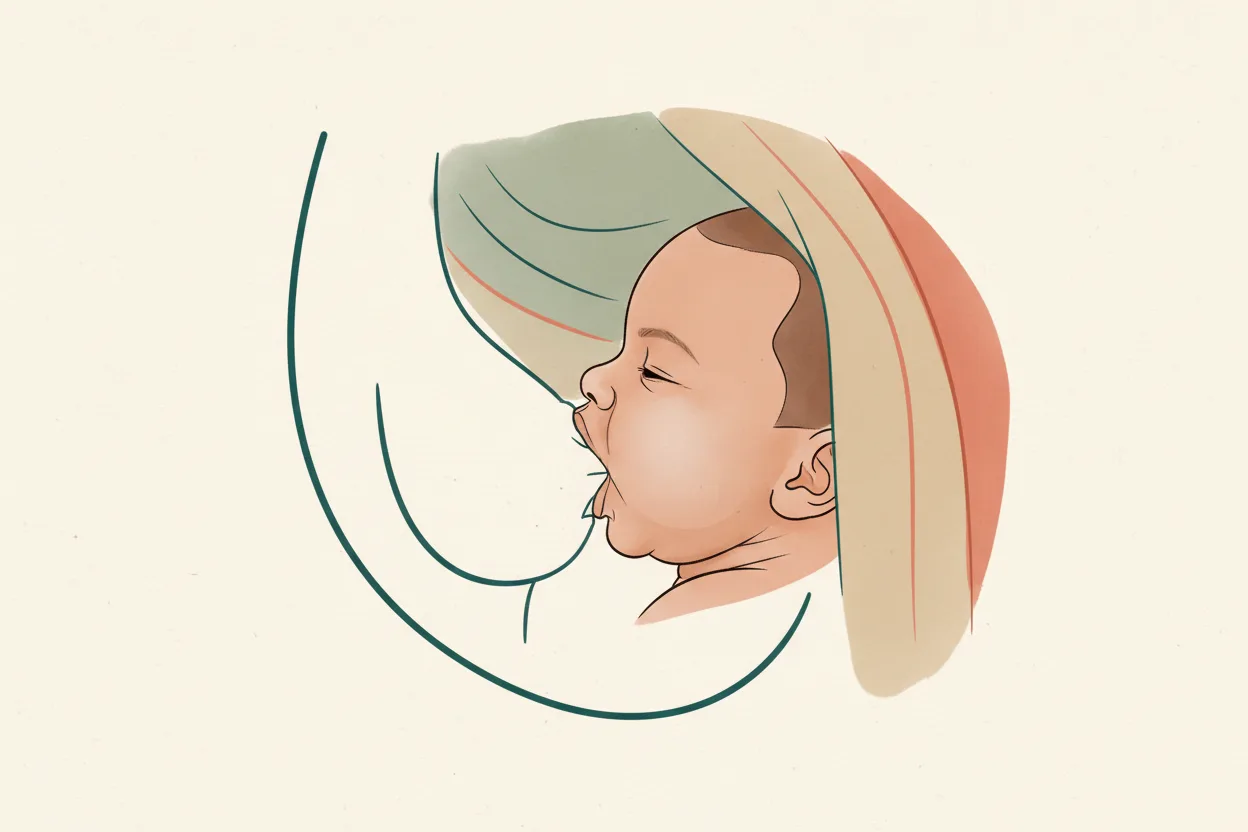 A good latch: baby's mouth is wide open with lips flanged outward like a fish, chin touching, taking in a big mouthful — not just the tip.
Signs of a good latch — per the AAP:
- Baby's lips are turned outward, not curled in
- Baby's chin is touching your breast
- You see more of the areola above baby's upper lip than below
- The NHS adds: baby's cheeks look full and rounded as they feed
- You hear rhythmic swallowing, not clicking or smacking
Signs of a poor latch — per the AAP:
- Dimples (indentations) in baby's cheeks while they suckle
- Clicking noises, or lips curled inward
- The CDC notes: baby is only suckling on the nipple, not taking in the areola; or breastfeeding hurts throughout the feed
How to break the latch: The AAP advises inserting your little finger into the corner of baby's mouth to break the suction before removing them. Never pull baby off directly — this can cause nipple trauma.
About pain: The AAP states that slight discomfort when baby first latches on is normal. But pain beyond the first minute or so of nursing is a sign of improper latching and should be corrected immediately. If correcting the latch doesn't resolve the pain, see a lactation consultant (IBCLC).
How to Know Baby Is Getting Enough
The CDC lists these as signs your newborn is getting enough milk:
- Breastfeeding 8–12 times per day, including at night
- You can see and hear baby swallowing during feeds
- Baby seems settled after a feeding
- Baby is back to their birth weight by day 10–14
The AAP adds a concrete diaper benchmark: by day 7 onwards, fewer than 6 wet diapers and 4 stools per day is a warning sign that needs prompt attention. If you see this, call your paediatrician the same day.
On feeding frequency: WHO recommends breastfeeding on demand — "as often as the child wants, day and night" — especially in the first weeks. Frequent feeding signals your body to produce more milk.
Products That Actually Help
| Product | Price Range | Where to Buy |
|---|---|---|
| Nursing pillow (C-shaped or horseshoe) | Rs. 600 – Rs. 2,000 | Amazon.in / FirstCry |
| Nursing cover / muslin drape | Rs. 400 – Rs. 900 | FirstCry |
| Nursing bra (front-opening) | Rs. 350 – Rs. 1,200 | Amazon.in |
A nursing pillow is the single most useful purchase — it brings baby up to breast height so you're not hunching, whether you feed on a chair, sofa, bed, or sitting cross-legged. A firm bolster or folded blanket under your arm does much the same job if you'd rather not buy one.
Frequently Asked Questions
How long does it take to get a comfortable latch? Most mothers and babies establish a comfortable latch by the end of the second week. The first few days are typically the hardest. If pain persists beyond two weeks, see a lactation consultant (IBCLC) — many offer home visits in Indian cities.
Can I breastfeed sitting cross-legged on the bed or floor? Yes, if it's comfortable for you. Put a nursing pillow or firm pillow on your lap to bring baby up to breast height, keep your back straight, and lean against a wall or the headboard for support. The key is not to hunch — bring baby to the breast, don't lean the breast down — and that applies whether you're on a chair, a sofa, or sitting cross-legged.
My mother-in-law says I should only feed in one position. Do I need to? No. The AAP notes that using more than one position can actually help prevent nipple soreness and clogged milk ducts, since different positions drain different areas of the breast. Any position where baby latches well and you are comfortable is a good position.
Is it safe to breastfeed lying down? Yes. The NHS recommends the side-lying position for night feeds and after a caesarean. Between feeds, move baby to their back on a firm surface.
How do I know if my baby has a poor latch? The CDC lists three signs: baby is suckling only on the nipple, breastfeeding hurts, and baby keeps coming off the breast. Break the latch and try again. If you cannot get a comfortable latch after a few attempts, get help from a lactation consultant the same day.
Should I feed on a schedule or on demand? On demand. WHO recommends breastfeeding "as often as the child wants, day and night." Frequent feeding in the early weeks establishes your milk supply. Schedules can come later once supply is well established.
Illustrations: RaisingWell.