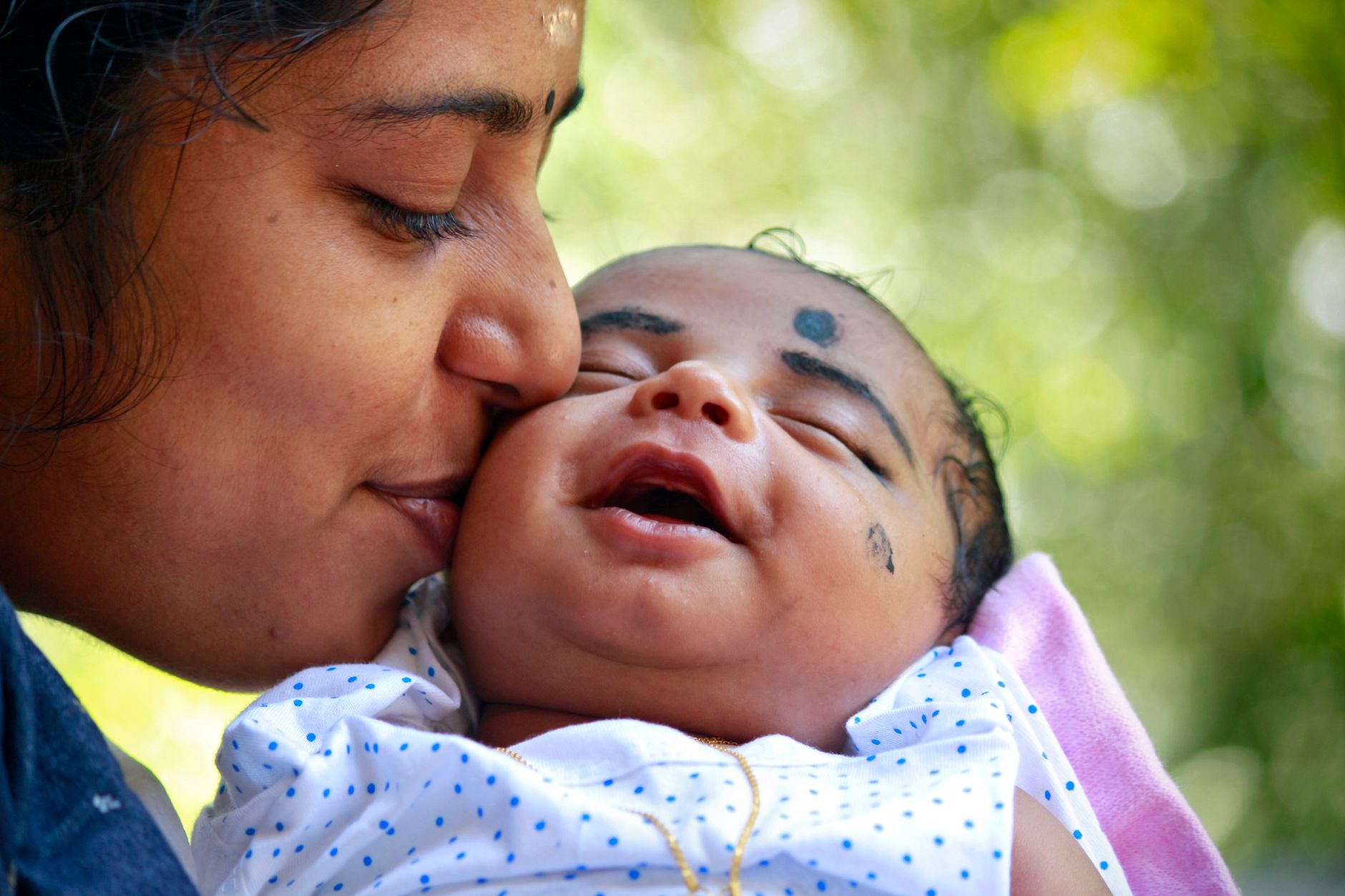

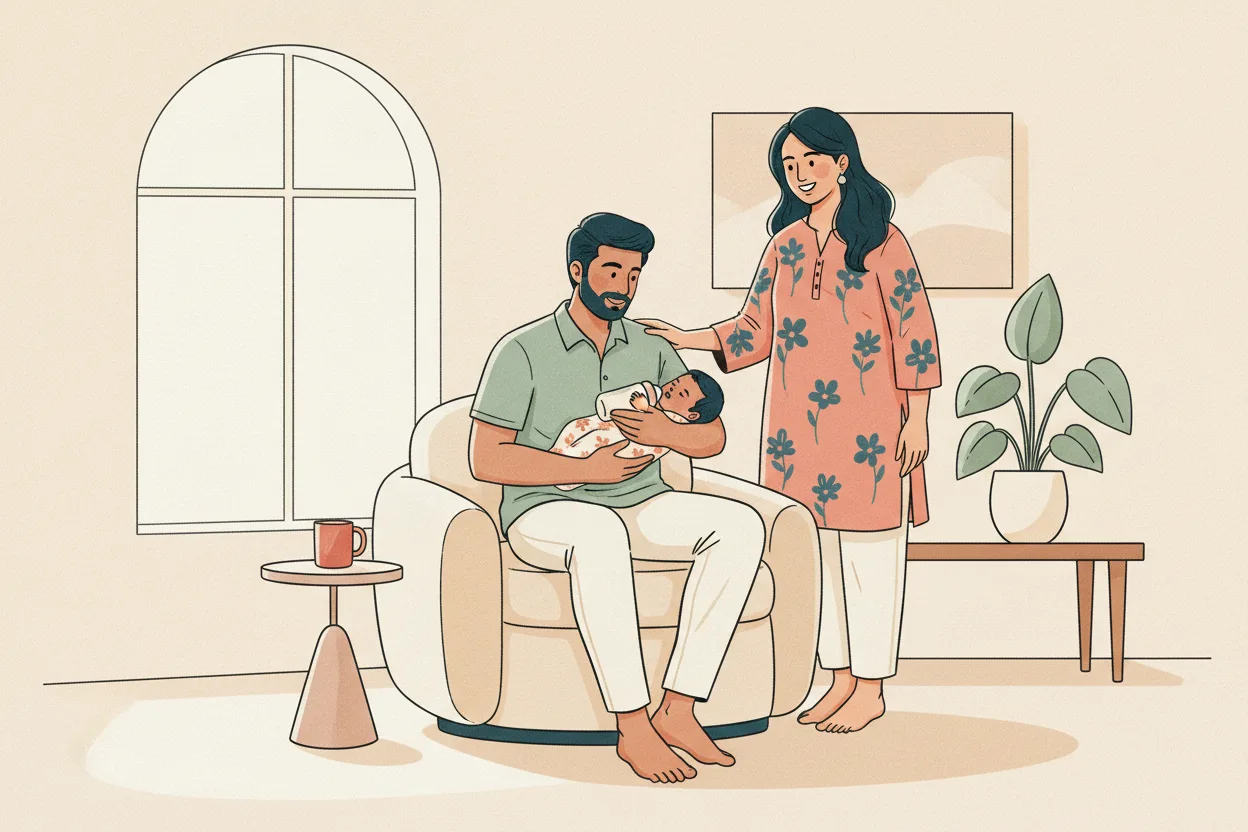
Formula feeding is a safe, healthy way to feed your baby, whether you couldn't breastfeed, decided not to, or stopped partway through. Your bond with your baby isn't decided by where the milk came from — it's built in the feeding itself, the eye contact, and the thousand ordinary moments around it.
Not medical advice — consult your pediatrician for guidance specific to you and your baby.
Why This Decision Feels So Loaded in India
In most Indian families, breastfeeding isn't just a feeding choice — it's watched, commented on, and often treated as a test of how devoted a mother is. A relative asking "doodh nahi hai kya?" (don't you have milk?) in the first week home, or an aunty announcing that "formula babies fall sick more," can turn a private decision into a public one. That pressure doesn't just feel unpleasant — it has a measurable effect. A 2024 study in Frontiers in Public Health found that "perceived pressure to breastfeed was associated with increased anxiety, stress and birth trauma symptoms four weeks later" — and that held true regardless of whether the mother ended up breastfeeding at all.
That single finding reframes the whole conversation: the pressure itself is the problem, not your feeding method.
What Actually Happens When You Stop or Skip Breastfeeding
A lot of the guilt around formula feeding rests on an assumption — that stopping breastfeeding is what hurts a mother's mental health. The research says something more specific and, honestly, more reassuring.
A 2016 study in the Journal of Advanced Nursing found that among mothers who stopped breastfeeding, "in a regression analysis only the specific reasons of stopping breastfeeding for physical difficulty and pain remained predictive of depression score." In other words, it's the pain and struggle that predicts depression risk — not the decision to stop itself. If breastfeeding wasn't working for you, or you simply chose not to start, that decision on its own isn't what the data links to worse mental health.
Bonding tells the same story. A 2021 study in the journal Nutrients found that once depression, anxiety, and parity were accounted for, researchers "did not find significant associations in either direction (breastfeeding methods to maternal–infant bonding, and vice versa)." Your feeding method is not a proxy for how attached you are to your baby.
And on postpartum depression specifically, a 2022 study in Frontiers in Psychiatry found "no significant differences in the severity of postpartum depression symptoms between groups" of mothers who breastfed, mixed-fed, or formula-fed. Formula feeding, on its own, does not put you at higher risk.
When It's a Medical Call, Not a Failure
Sometimes the decision isn't really a choice at all — it's medical. WHO and UNICEF's guidance on acceptable medical reasons for using breast-milk substitutes states that certain medications, including "sedating psychotherapeutic drugs, anti-epileptic drugs and opioids," are "better avoided if a safer alternative is available" while breastfeeding — which is one reason doctors sometimes advise a mother on psychiatric medication to formula-feed instead. If you're managing a mental health condition and your doctor has recommended you avoid breastfeeding for now, that's sound, guideline-backed medical care — not a shortcut you're taking.
Is Formula Actually "As Good"?
Nutritionally, yes. The American Academy of Pediatrics, via HealthyChildren.org, states that "even though formula feeding is not identical to breastfeeding, formulas do provide appropriate nutrition. Both approaches are safe and healthy for your baby." Formula isn't a compromise food — it's a complete one.
You also don't need to chase a specific brand or price point to get that. NHS guidance states that "all infant formulas will meet your baby's nutritional needs, regardless of brand or price." The formula that's easiest for you to access and afford, prepared correctly, does the job.
Your Mental Health Is Not a Side Issue
Some mothers hold on to breastfeeding — even when it's causing real distress — because they've absorbed the idea that their own wellbeing comes second. It shouldn't. A 2023 review in Cureus found that "untreated PPD can have long-lasting consequences for both mothers and infants," including "impaired mother-infant bonding, disrupted cognitive development in infants, and an increased risk of behavioral and emotional difficulties in children." Protecting your own mental health isn't selfish — it's one of the most direct things you can do for your baby too.
If you're feeling persistently low, anxious, or overwhelmed, that's worth raising with your obstetrician, pediatrician, or a mental health professional at your next visit, regardless of how you're feeding.
Feeding With Confidence, Not Guilt
A few things make formula feeding easier to settle into once you've made the decision:
Get your pediatrician's sign-off on quantities and schedule. How much and how often depends on your baby's age and weight — ask at your next visit rather than guessing from a tin's generic chart.
Follow the mixing instructions exactly. Too much or too little powder relative to water changes the nutrition your baby gets, so measure carefully every time rather than eyeballing it.
Share the load with your partner. One real advantage of formula feeding is that feeds aren't tied to one parent's body — your partner can take a full share of night feeds, which means actual, split-down-the-middle recovery sleep for both of you.
Prepare a script for relatives. No medical explanation is owed to anyone. "This is what works for our family" is a complete sentence, and repeating it calmly, without debate, usually ends the conversation faster than justifying it.
Frequently Asked Questions
Will my baby bond with me less if I formula feed? No. A 2021 study in Nutrients found no significant link between feeding method and maternal-infant bonding in either direction. Bonding comes from holding, responding, and being present during feeds — not from what's in the bottle.
Is it normal to feel guilty about not breastfeeding? It's extremely common, and it's often driven by outside pressure rather than anything about your baby's actual wellbeing. Research shows that the pressure to breastfeed itself raises anxiety and stress — separate from whether you actually breastfeed. Naming that pressure for what it is can take some of the weight off.
Is formula milk actually safe and nutritious enough for my baby? Yes. The AAP states that formula "provides appropriate nutrition" and is "safe and healthy," and the NHS confirms that any formula meets your baby's nutritional needs "regardless of brand or price."
My doctor put me on medication and said I shouldn't breastfeed. Is that really necessary? It can be. WHO/UNICEF guidance recognizes that certain medications, including some psychiatric drugs, are a legitimate medical reason to avoid breastfeeding when a safer alternative — formula — is available. Follow your doctor's specific advice for your situation.
Can stopping breastfeeding cause postpartum depression? The evidence points elsewhere: one 2016 study found it was the physical difficulty and pain of breastfeeding that predicted depression score, not the act of stopping, and a 2022 study found no difference in depression severity across breastfeeding, mixed-feeding, and formula-feeding mothers.
When should I get help for how I'm feeling, not just how I'm feeding? Any time you feel persistently low, anxious, or not like yourself — don't wait for a scheduled visit. Untreated postpartum depression has real, lasting effects on both mother and baby, so raise it with your doctor as soon as it comes up, regardless of how your baby is being fed.