Yes. This is common, and it is one of the better-documented things about early motherhood. A 2007 study of 202 postpartum women published in the journal Sleep found that their infant dreams contained anxiety in 75% of cases and the infant in peril in 73%, with post-awakening anxiety in 41%, confusion in 51%, and a need to check on the infant in 60%.
Read that again. The dream where someone is coming for your baby is not a glitch in you. It is close to the standard issue of this period.
Not medical advice — consult your doctor for personal guidance.
Why the dreams got this vivid, and this specific
Two things changed at once, and they stack.
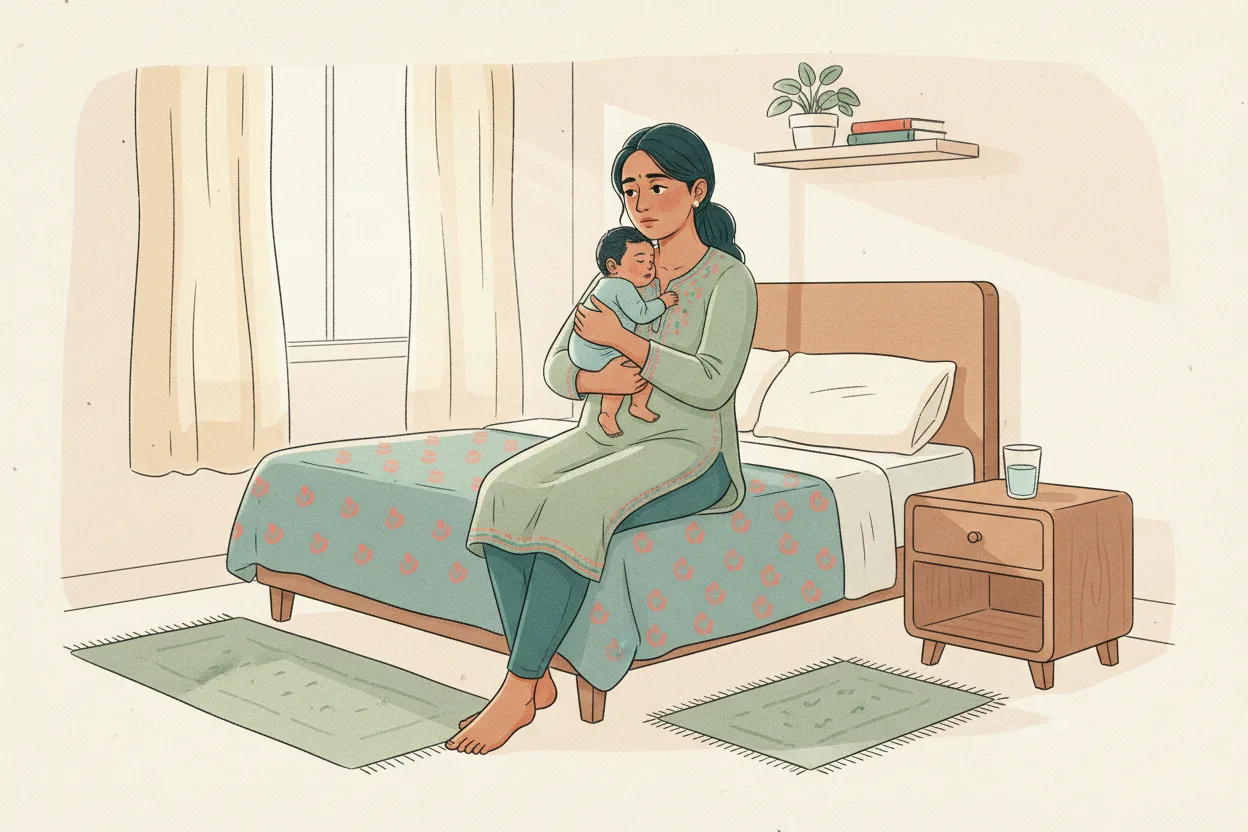
You are waking out of dreaming sleep now. The US National Heart, Lung, and Blood Institute explains that dreaming usually happens during REM sleep, and that you have more REM sleep later in the night. Before the baby, you slept through most of those stretches and lost the dreams on the way past. A dream you sleep through is one you never find out about. Now something wakes you several times a night, right in the window when dreaming is densest — and you surface holding the whole thing, in colour.
The rest is your body in its first month after birth. The same authors concluded that the pattern may reflect the pervasive emotional influence of maternal concerns or changes instigated by severe sleep disruption, rapid eye movement sleep deprivation, and altered hormone levels. Concern, broken sleep and hormones, all at once.
Here is the part worth sitting with. The hypervigilance underneath these dreams is real, and it is not malfunctioning. It is a threat-detection system that has correctly worked out that something very small now depends on you entirely, and has turned itself all the way up. It is doing its job badly rather than doing the wrong job — scanning at 3am, with no actual threat to find, so it writes one.
That is also why the dreams are so specific. A system watching for danger to your baby produces dreams about danger to your baby. Being chased is the same machinery with the camera turned around.
The thing you are most afraid to say out loud
A dream about harm coming to your baby is not a wish to harm your baby. These are different things, and the research is unusually clear about it.
Fairbrother and Woody, following one hundred women to four and twelve weeks after birth, reported that postpartum intrusive thoughts of accidental harm to the infant were universal, that close to half the sample reported unwanted thoughts of intentionally harming their infant, that little evidence of an association between these thoughts and aggressive parenting was found, and that such thoughts are a relatively normative experience of the early postpartum period. That study assessed women at exactly the point you are at now.
Cleveland Clinic's clinicians write that having disturbing, unwanted thoughts about your infant child is not the same as acting on them, and that being alarmed by those thoughts is a sign you are unlikely to hurt your baby. A 2022 study in the Journal of Clinical Psychiatry drawing on an unselected sample of 763 postpartum women concluded that it found no evidence that the occurrence of either unwanted intrusive thoughts of intentional, infant-related harm or OCD is associated with an increased risk of infant harm.
The horror you feel on waking is not a verdict on you. It is the measure of how badly you want her safe.
When this deserves a conversation rather than patience
Nightmares alone, in a month this fragmented, are the expected weather. What changes the picture is what the nights are doing to your days.
Cleveland Clinic notes that postpartum anxiety affects about 1 in 5 women, describing unwanted scary thoughts of your infant being harmed, checking things repeatedly, and staying up all night because you are afraid your baby will stop breathing — and that getting treatment is the way to recover from it. Perinatal OCD is the other name worth knowing: those same clinicians describe intrusive thoughts about harm as the most common type of obsession in postpartum OCD, treated effectively with cognitive behavioural therapy. Both are real conditions with real treatments, and neither is a character verdict.
Book the appointment if the frightening images are following you into the daytime, if you are checking compulsively, if you are avoiding being alone with the baby, or if you cannot sleep even when your baby is sleeping. That last one matters: the NHS lists being unable to sleep at night even when your baby is asleep among the signs of postnatal depression — a picture covered in our guides to the first fortnight and the weeks after it. NICE's antenatal and postnatal mental health guideline tells clinicians to recognise that anxiety disorders, obsessive-compulsive disorder among them, are under-recognised throughout pregnancy and the postnatal period. Under-recognised means you may have to raise it first.
In India, Tele-MANAS answers free on 14416, a nationwide government helpline connecting callers to mental health professionals, confirmed by the Press Information Bureau. For ongoing care, see our note on finding a perinatal therapist. A separate and far less common illness, postpartum psychosis, affects around 1 in 1,000 mothers and is treated as a medical emergency — that is not what is described here, but it is worth knowing the name exists.
If the dreams replay a frightening birth or a NICU stay rather than inventing new threats, that is a different track: see birth trauma and flashbacks. If the fear is fed by what you are reading about children being hurt, that has its own fix.
What actually helps right now
Be suspicious of anyone selling sleep hygiene as a cure. It is sensible. It is not treatment. The honest split:
| What you are doing | What it is |
|---|---|
| Getting out of bed when sleep will not come | Sensible, and a core move in the therapy that does work |
| Dimming the phone, winding down before bed | Sensible housekeeping |
| Resting when the baby rests, sharing the nights | The standard practical advice, and the highest-yield thing here |
| Cognitive behavioural therapy | The actual treatment the NHS offers for insomnia |
| Sleeping tablets | Rarely prescribed now, and a conversation for your doctor, not a plan |
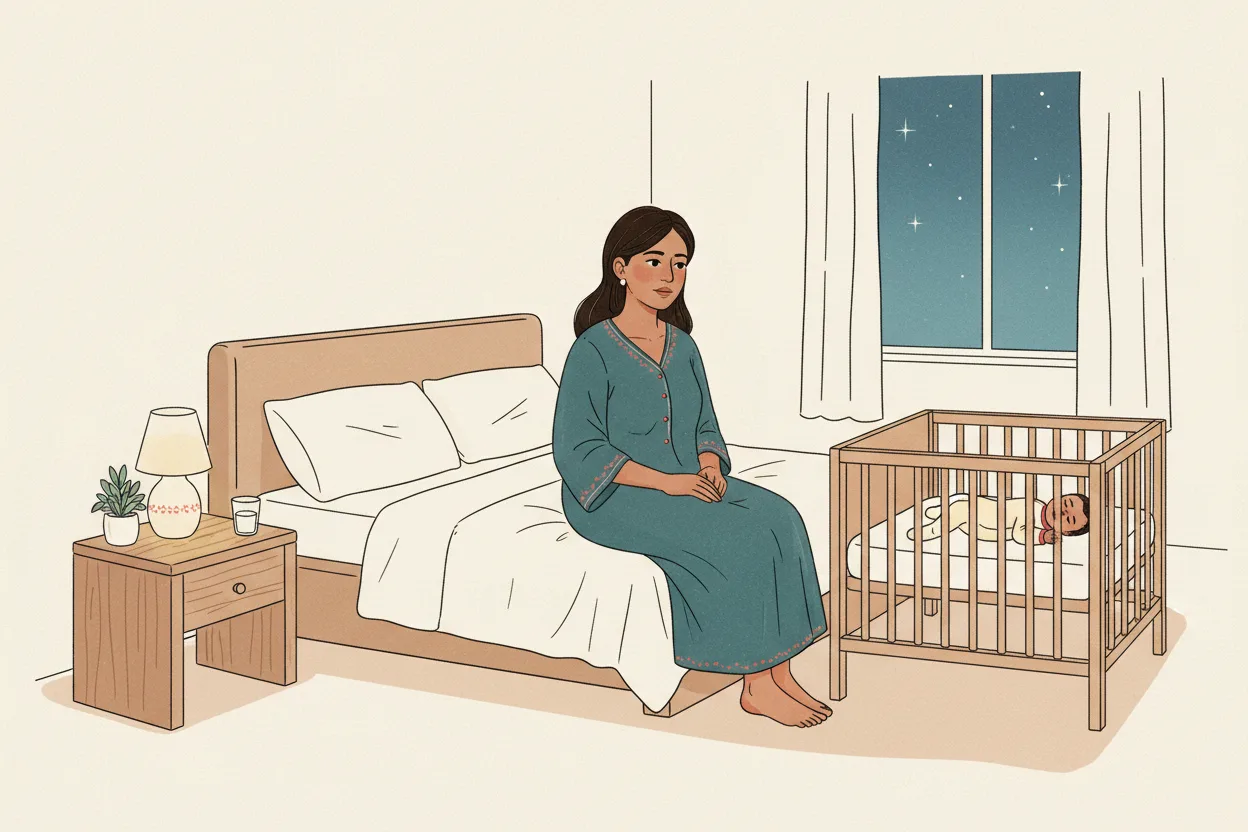
In the small hours, just after one. Do not lie there arguing with it. The NHS self-help advice for insomnia is to only go to bed when you are sleepy and to relax at least 1 hour before bed — the practical version at four weeks is to get up, keep the lights low, drink some water, do something dull in another room, and go back when your body is actually asking to. Check the baby once if you need to. Checking once settles the alarm. Checking eleven times feeds it.
Protect the sleep that exists. The NHS advises resting when your baby sleeps and sharing the nights where you can — your partner taking the nappy change and the settling after a feed, so you get one unbroken block. If your mother or mother-in-law is staying through the confinement weeks, this is the thing to actually spend that help on. Not the cooking, not the visitors. One protected stretch of sleep.
Expect it to ease rather than to be fixed. The NHS is clear that the phase when your baby wakes several times a night will not last forever, because babies sleep for longer periods as they get older. As the nights knit back together, you stop surfacing through every dream, and most of this quietly goes with it.
You asked whether this is normal. It is an ordinary reaction to an extraordinary stretch, in a brain that is working slightly too hard at loving her. That is all this is.