For a newborn's crib, get a fitted waterproof crib protector that pulls tight like a regular sheet, in TPU or PUL-backed cotton terry rather than plain rubber or PVC. For an older baby or toddler's bed, a flat dry sheet with a wide no-slip border works better because it needs to survive being kicked around all night. Both need replacing sooner in India's heat and humidity than the packaging usually promises.
Not medical advice — consult your pediatrician if you notice a persistent rash or skin irritation.
Why This Choice Plays Out Differently in India
Two things change the calculation here compared to a cooler, drier climate: heat plus humidity, and how long this stage actually lasts. A thick, non-breathable sheet that's fine in an air-conditioned Western nursery can leave a baby sweaty and uncomfortable through an Indian summer night. And because full nighttime bladder control develops later than daytime control, waterproof protection is a multi-year purchase, not a newborn-only one, which changes what's worth spending on.
Dry Sheet vs Waterproof Mattress Protector: What Each Material Actually Does
| Material | Breathability | How Long It Typically Lasts | Price (INR) | Best For |
|---|---|---|---|---|
| Plain cotton dry sheet (no waterproof backing) | High | Wicks moisture, doesn't block it — needs a waterproof layer underneath | Rs. 150 – 350 | Layering on top of a real waterproof sheet, for comfort |
| Rubber or PVC sheet | Low | Cracks or peels with daily washing | Rs. 200 – 500 | Budget short-term use, travel |
| TPU/PUL-backed cotton terry | Medium–high | Holds up to regular machine washing | Rs. 400 – 900 | Daily crib and cot use, newborn through toddler |
| Zippered waterproof mattress encasement | Medium | Multi-year, whole-mattress coverage | Rs. 800 – 1,800 | Full mattress protection and allergen control |
The terry-cotton-backed TPU sheet is the sweet spot for most families: it blocks liquid, machine-washes without cracking, and stays cooler against the skin than solid rubber or vinyl.
Getting the Crib Setup Right, Not Just Absorbent
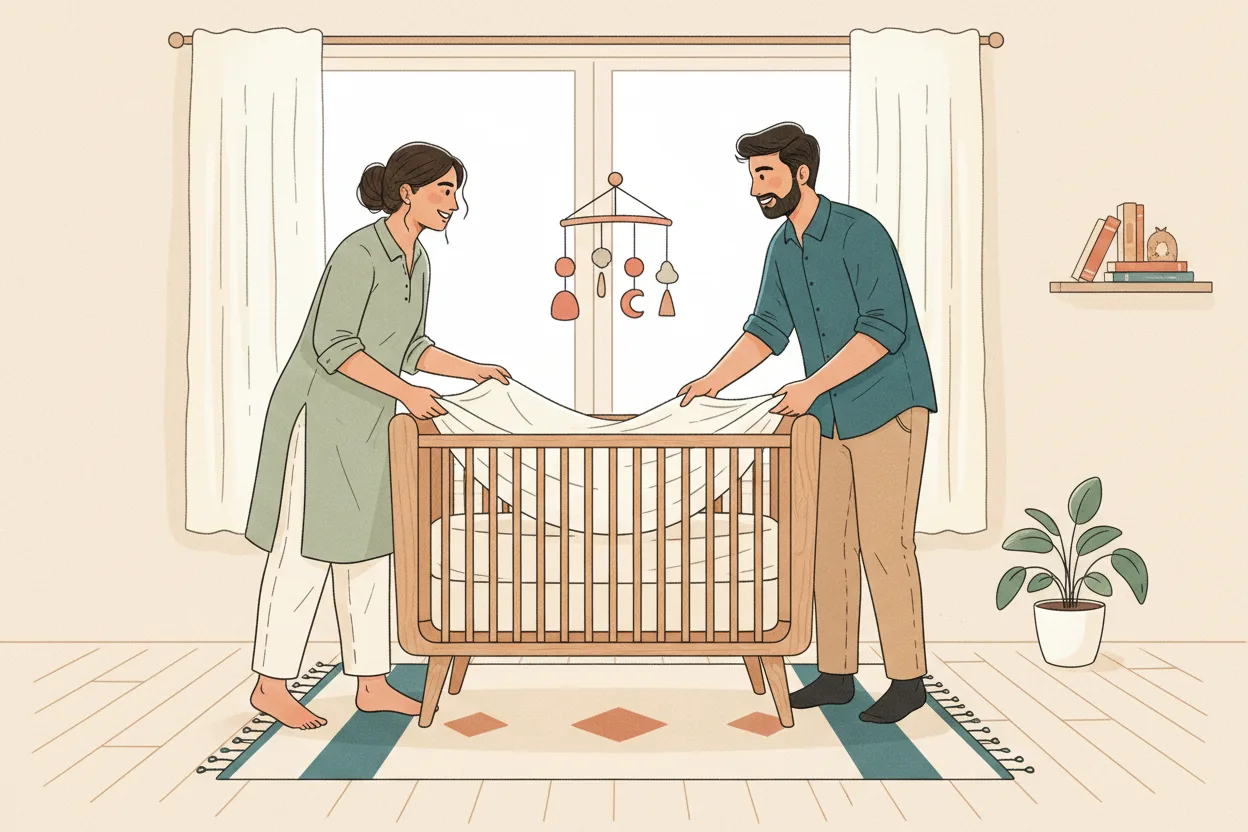
If your baby sleeps in a crib or bassinet, the protector has to disappear under one fitted sheet — it can't be an extra loose layer on top. NICHD's Safe to Sleep guidance states that you should use a sleep surface for baby that is firm, flat, level, and covered only with a fitted sheet. In practice, that means a waterproof crib protector that fits the mattress like a fitted sheet is fine; a folded towel, a loose rubber mat, or an extra dry sheet laid on top of the regular sheet is not, because it becomes exactly the kind of soft, shifting layer that guidance is warning against.
Whatever you put under baby also has to let heat escape. A narrative review in Frontiers (NIH/PMC) on hyperthermia and SIDS found that hyperthermia mainly results from excessive clothing and bedding insulation relative to the room's actual temperature. A thick rubber sheet plus a blanket on a warm, humid night works against a baby's body, not for it — pick the thinnest waterproof layer that still holds a leak, run a fan or AC to manage room temperature, and skip the extra blanket on top.
Preventing Rashes When the Sheet Gets Wet
Heat and dampness together are the main skin trouble here. The AAP's HealthyChildren.org explains that heat rash develops when the openings of sweat glands become blocked, trapping sweat underneath the skin — and that's most likely in hot, humid weather or wherever air can't circulate around a child. A breathable terry top layer, and a fan directed at the cot rather than a sealed, still room, both help.
Speed also matters once a leak happens. The AAP's HealthyChildren.org states that moisture from leaving a wet or soiled diaper on too long can cause skin to chafe — the same logic applies to a wet sheet under damp clothes overnight. Keep a spare sheet and a change of clothes within arm's reach so a leak gets fixed in minutes, not discovered at the morning wake-up.
Which Materials to Prefer, and Why PVC Is Worth Skipping
Where you have a choice, lean toward TPU (thermoplastic polyurethane) or PUL (polyurethane laminate) backing over plain PVC or vinyl sheeting. The NIH-funded TESIE study (NIH/PMC) found that children who lived in homes with 100% vinyl flooring had urinary concentrations of a phthalate metabolite that were 15 times higher than children in homes without it. That study looked at flooring, not bedding specifically, but it's a reasonable reason to prefer a non-PVC waterproof layer that sits against a baby's skin every night, when a TPU/PUL option does the same waterproofing job.
Managing Humidity and Dust Mites
India's humidity works against your sheets in a second way, beyond drying time. WHO's Guidelines for Indoor Air Quality (via NCBI Bookshelf) states that relative humidity greater than approximately 50% increases indoor dust mite levels, and low ventilation can raise allergy symptoms further. Dry sheets fully in direct sun or on a hot dryer cycle rather than air-drying indoors during the monsoon, and keep the nursery ventilated or dehumidified where you can.
A zippered mattress encasement earns its higher price if allergies run in the family. A clinical study in NIH/PMC found that minimizing dust mite allergen exposure by encasing mattresses, alongside counseling on avoiding indoor allergens, improved asthma control for the adult patients in that trial. It was conducted in adults rather than babies, but the underlying mechanism — sealing the mattress so allergen can't accumulate in it — is the reason pediatricians and allergists commonly suggest the same encasements for a child's cot when there's a family history of asthma or eczema.
When to Size Up (and Why This Isn't a One-Time Purchase)
Plan to keep a waterproof layer on the bed well past the newborn stage. The AAP's HealthyChildren.org notes that although most children are toilet trained between 2 and 4 years of age, some children may not be able to stay dry at night until they are older — which is completely normal, not a sign anything is wrong. Move from a crib-sized protector to a toddler or single-bed-sized flat dry sheet once your child moves to a bigger bed, and keep one on hand through the preschool years rather than assuming you're done once daytime training is complete.
Products Worth Buying
| Product | Price Range (INR) | Where to Buy |
|---|---|---|
| TPU/PUL-backed cotton terry crib protector (fitted) | Rs. 500 – 900 | Amazon.in / FirstCry |
| Cotton dry sheet, flat, with non-slip border | Rs. 250 – 500 | FirstCry / Amazon.in |
| Zippered waterproof mattress encasement | Rs. 900 – 1,800 | Amazon.in |
| Travel-size waterproof mat (for grandparents' house, hotel stays) | Rs. 300 – 600 | FirstCry |
Buy at least two of whatever you choose for daily use — one on the bed while the other is in the wash, especially in the monsoon months when drying takes longer.
Frequently Asked Questions
Can I just put a plastic sheet under the fitted sheet in my newborn's crib? Keep the crib itself to a single fitted sheet with nothing extra layered underneath or on top. NICHD's guidance is direct that a baby's sleep surface should be covered only with a fitted sheet. If you want waterproofing, buy a fitted waterproof crib protector designed to go directly under the regular fitted sheet, rather than adding a separate loose plastic sheet on top.
Will a waterproof sheet overheat my baby in summer? It can, if the material doesn't breathe and you add extra bedding on top. Research on hyperthermia and SIDS points to excessive bedding insulation as the main driver of overheating, not the presence of a thin waterproof layer alone. Choose a breathable TPU or terry-backed sheet, skip extra blankets, and use a fan or AC to manage the room temperature.
My baby keeps getting a rash where the sheet touches their skin. Why? Blocked sweat glands and prolonged dampness are the two usual causes. Heat rash forms when sweat gets trapped under blocked skin pores, and separately, leaving damp skin against a wet surface too long can cause chafing. Switch to a more breathable material, and change the sheet as soon as it's wet rather than leaving it until morning.
Are PVC dry sheets actually unsafe? The strongest evidence is about vinyl flooring, not bedding specifically — a study found much higher phthalate exposure in children living with 100% vinyl flooring. It's a reasonable precaution to pick TPU or PUL-backed cotton over plain PVC for a surface against your baby's skin every night, since it does the same job without the material concern.
Does a mattress protector really help with allergies? Encasing a mattress can meaningfully cut dust mite allergen levels. A clinical study found that encasing mattresses and counseling on allergen avoidance improved asthma control for the patients studied, and keeping indoor humidity below roughly 50% also curbs dust mite growth — both worth doing if asthma or eczema run in the family.
At what age can we stop using a waterproof sheet altogether? There's no fixed age — some children aren't reliably dry overnight until well past toddlerhood, even after daytime toilet training is done. Keep a properly sized waterproof protector on the bed through the preschool years, and only drop it once your child has had several consistently dry weeks in a row.