
Your baby's first monsoon needs three things from you: mosquito control, a dry home, and a plan for outings. Get those right and the season is mostly just extra laundry.
Why the First Monsoon Needs Extra Prep
A newborn's skin, airway, and immune system are all still new. Monsoon adds standing water (mosquitoes), damp indoor air (mold), and humidity (heat rash, diaper rash) — all at once. None of this means keeping baby indoors all season. It just means a few specific habits matter more from June through September.
Not medical advice — consult your pediatrician for concerns specific to your baby.
Mosquito-Proofing the Nursery
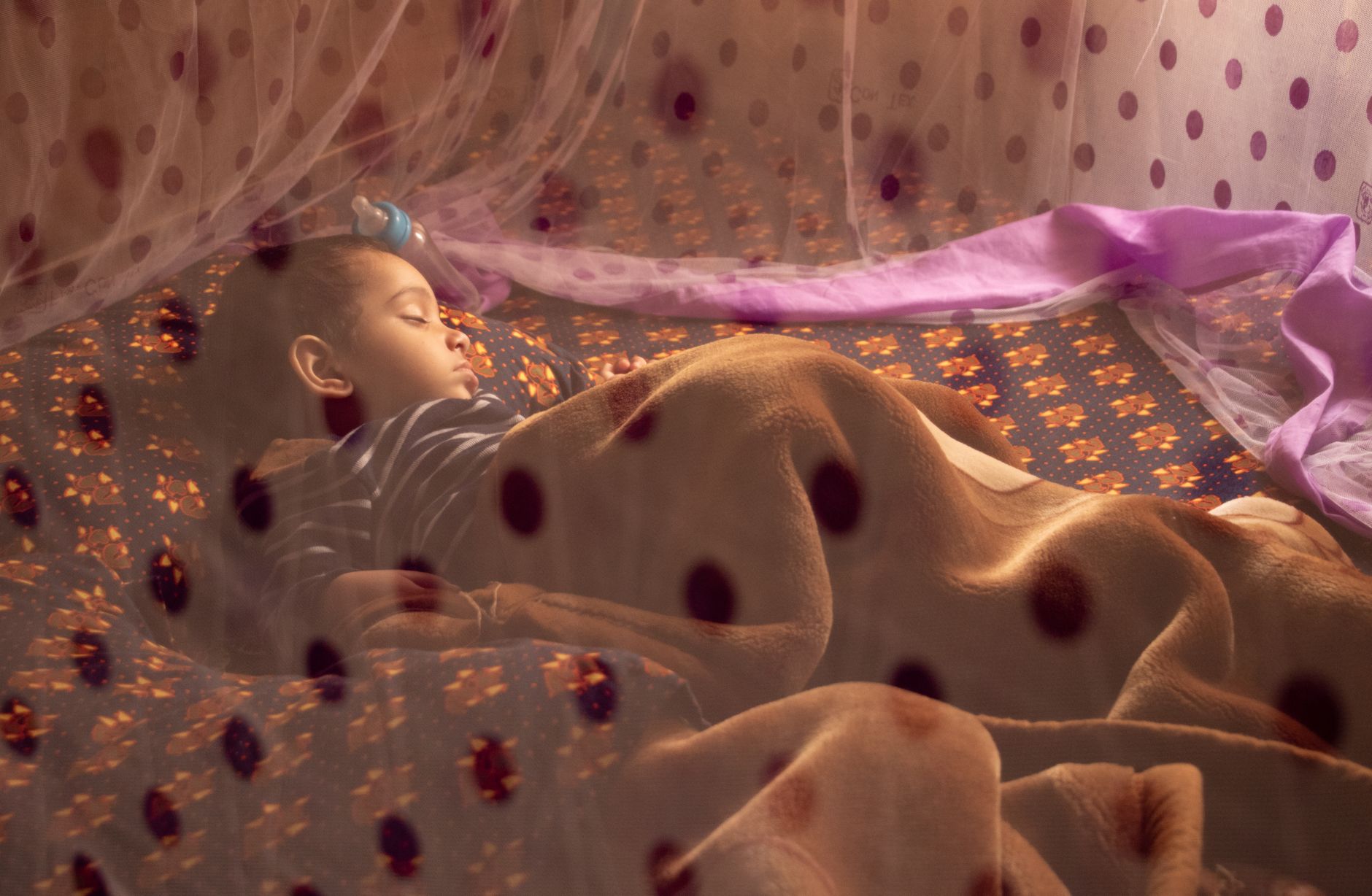
Mosquitoes peak with the rains, and a newborn can't use repellent the way an adult can. The CDC recommends covering strollers and baby carriers with mosquito netting — do the same for the crib or cot, and check the net has no tears and is tucked fully under the mattress, not just draped over the sides.
Netting protects your baby but doesn't shrink the mosquito population in your home — for that, stop them breeding. WHO's dengue fact sheet states that prevention means covering, emptying, and cleaning water-storage containers weekly, and treating any water storage that can't be emptied. Walk the home and terrace once a week and check:
| Spot to check | What to do |
|---|---|
| Coolers, buckets, drums | Empty and dry weekly, or cover tightly |
| Flowerpot saucers, AC trays | Empty daily — these fill fast in rain |
| Terrace/balcony drains | Clear leaves and debris so water doesn't pool |
| Overhead tanks | Keep the lid sealed |
A plug-in mosquito repellent in the room (not directly over the crib) plus netting over the cot covers both the "keep them out" and "kill what's already in" angles.
Even with good prevention, know what to watch for. The CDC advises going to a clinic or emergency room immediately if anyone in the family develops warning signs after a fever — persistent vomiting, bleeding from the nose or gums, belly pain, or feeling extremely tired or restless — since these can signal the illness is progressing to severe dengue.
Damp-Proofing the Home
Humidity during monsoon climbs fast, and damp walls or wet laundry indoors invite mold. The EPA states that mold can trigger asthma episodes in people who are sensitive to it — worth knowing if there's any asthma history in the family.
Practical steps that make the biggest difference:
- Run an exhaust fan or keep a window cracked in the bathroom after every bath.
- Wipe down window sills and any wall that shows condensation.
- If you use a dehumidifier or AC in dry mode, run it in the baby's room for a few hours a day during the wettest weeks.
- Check under the crib mattress and any storage boxes on the floor monthly — these are the spots mold starts unnoticed.
Where to Dry Laundry Indoors
With baby, laundry roughly doubles, and monsoon often means you can't hang it outside for days. A drying rack near a window or fan, rotated for cross-ventilation, is the standby most Indian parents already use — the goal is airflow, since clothes left damp for 24+ hours start to smell musty and can carry the same mold risk mentioned above.
A tumble dryer or dryer-function washing machine is a genuine time-saver in monsoon-heavy cities (Mumbai, Kolkata, coastal Karnataka/Kerala) if it fits your budget — roughly Rs. 12,000–25,000 on Amazon.in. If not, a rack plus a ceiling fan on low, left running overnight, gets cottons dry by morning.
Baby's Skin and Diaper Care in Humid Weather
Humidity plus heat is a common combination for two skin issues: heat rash and diaper rash.
For heat rash, the AAP's HealthyChildren.org advises dressing your child in loose-fitting cotton clothes when warm, and avoiding extra layers or tightly wrapped blankets. Skip the onesie-plus-swaddle combo on humid days — a single loose cotton layer is enough, even at night.
For diaper rash, more common in humid weather since skin stays moist longer between changes, the AAP's HealthyChildren.org advises that moisture from a wet or soiled diaper left on too long causes chafing, and recommends changing diapers frequently. In monsoon, check every 2–3 hours and give baby some nappy-free time on a waterproof mat daily so skin can air out.
Water and Hygiene During Monsoon
Waterborne illness risk rises during monsoon as municipal supplies mix with runoff. If you're ever unsure about a water source — for cleaning bottles or your own drinking water — WHO's Guidelines for Drinking-water Quality state that heating water to a rolling boil is sufficient to inactivate pathogenic bacteria, viruses, and protozoa. A full rolling boil, then cooled, is a reliable fallback whenever tap or stored water is doubtful.
Hand hygiene matters more too. The CDC states handwashing can prevent 1 in 3 diarrhea-related sicknesses and 1 in 5 respiratory infections like colds or flu. Keep sanitizer by the door for anyone coming in from the rain before they hold the baby.
More broadly, WHO's diarrhoeal disease fact sheet states key measures against diarrhoea include safe drinking water, sanitation, handwashing with soap, exclusive breastfeeding for six months, good hygiene, and rotavirus vaccination — worth confirming baby's rotavirus doses are on schedule heading into the wettest months.
Managing Outings
Outings can continue right through monsoon — a little planning around timing and cover is really all that changes.
- Check the forecast, not just the sky. Monsoon showers can start with little warning; plan outings for gaps in the forecast rather than by looking outside at 8 am.
- Cover the carrier or stroller. A rain cover or a light net over the pram keeps both rain and mosquitoes off during a walk.
- Carry a dry-change kit. One spare onesie, a hand towel, and a plastic bag for wet clothes fits in any diaper bag and saves an outing that gets rained out.
- Choose covered destinations for the first few months — malls, covered markets, or a relative's home — over open parks, simply because a sudden downpour with a newborn in tow is more hassle than risk.
Monsoon Gear Checklist
| Item | Price Range (INR) | Where to Buy |
|---|---|---|
| Mosquito net for crib/cot | Rs. 400 – Rs. 1,200 | Amazon.in / FirstCry |
| Stroller/carrier rain cover | Rs. 500 – Rs. 1,500 | Amazon.in |
| Plug-in mosquito repellent | Rs. 150 – Rs. 400 | Amazon.in |
| Drying rack (indoor, foldable) | Rs. 800 – Rs. 2,500 | Amazon.in / FirstCry |
| Waterproof changing mat | Rs. 300 – Rs. 900 | FirstCry |
Frequently Asked Questions
Is it safe to take a newborn out in monsoon at all? Yes, with normal precautions — a covered stroller or carrier and skipping outings when it's actively pouring. The goal is to stay dry and keep mosquitoes off during the walk, as the CDC recommends with netting over strollers and carriers.
How often should I empty water containers at home? Weekly, at minimum, for anything that holds water and can't be sealed — coolers, buckets, plant saucers. WHO calls out a weekly cover-empty-clean routine as a core dengue prevention step.
My baby has a rash in the diaper area that wasn't there before monsoon — is this normal? Humid weather makes diaper rash more common because skin stays damp longer between changes. The AAP advises frequent changes and keeping the area dry. If it doesn't improve in 2–3 days, has blisters, or looks infected, call your pediatrician.
Do I need to boil water for baby even with a filter? Not if you trust the filter and municipal supply. But if the supply looks discolored or you're staying somewhere with an uncertain source, WHO's guidelines confirm a rolling boil is sufficient to make water microbiologically safe.
Is mold in one corner of the house a real health risk for my baby? It can be, especially with asthma or allergies in the family — the EPA notes mold can trigger asthma episodes in sensitive individuals. Clean small patches with soap and water and improve ventilation; get large or recurring patches professionally treated.
Should I worry about diarrhea risk specifically because of monsoon? It's a real seasonal uptick, which is why WHO lists hygiene, safe water, and rotavirus vaccination among key preventive measures. Keep up hand hygiene, boil water when unsure of the source, and confirm baby's rotavirus schedule with your pediatrician.
What if someone in the family gets a fever after being bitten by mosquitoes — when should we worry about dengue? Most fevers aren't severe dengue, but know the warning signs. The CDC advises going to a clinic or emergency room right away if persistent vomiting, bleeding from the nose or gums, belly pain, or extreme tiredness or restlessness show up after a fever — these can mean the illness is progressing and needs prompt care.