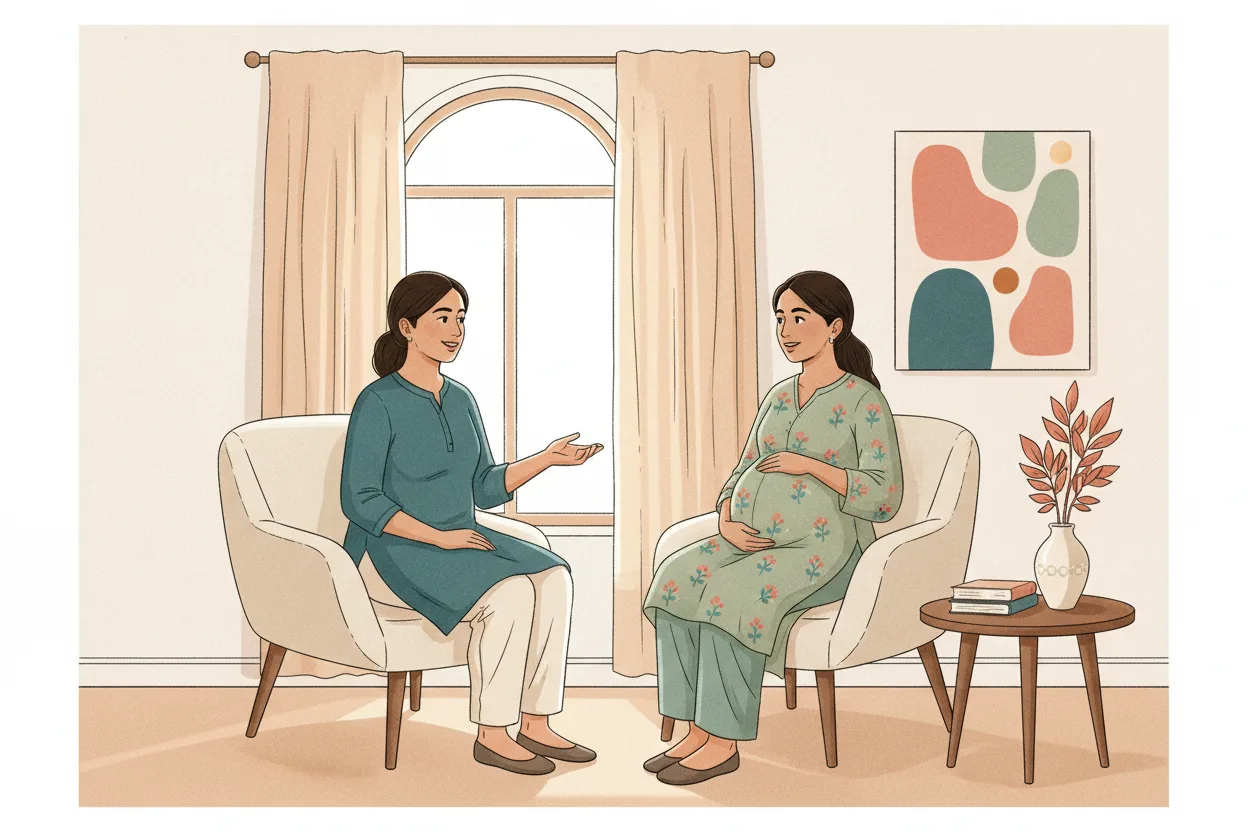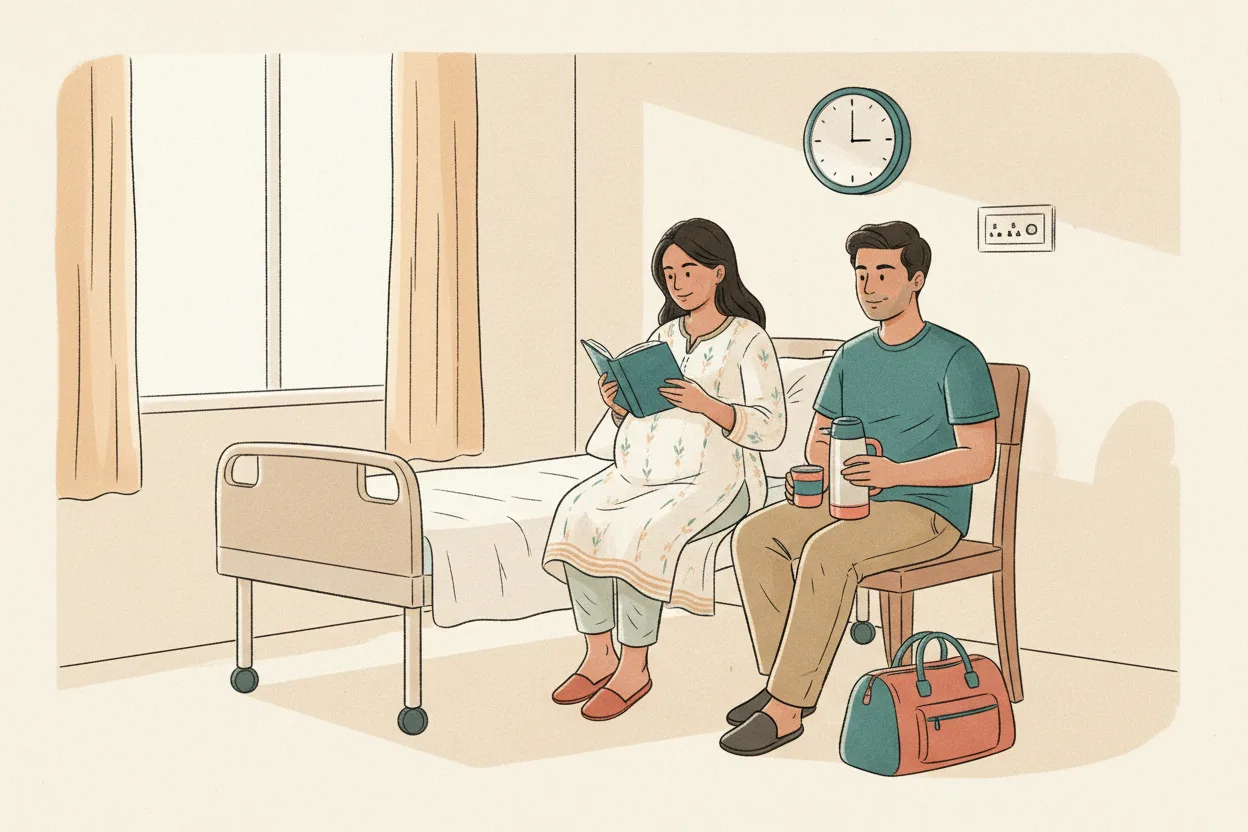
In the next two weeks, about six things genuinely matter. Everything else in your thirty open tabs — pram, cot, nursery, cord blood, birth plan, names — can wait months at no cost to you or the baby. That gap between "now" and "later" is the only thing worth sorting today, and almost nothing online sorts it for you.
Not medical advice — consult your obstetrician for guidance specific to your pregnancy.
The Short List: What Is Actually Time-Sensitive
1. Start folic acid
The NHS recommends taking 400 micrograms of folic acid every day from as soon as you find out you are pregnant and through the first 12 weeks, because taking it in that window reduces the chance of your baby having a neural tube defect such as spina bifida. This is time-critical in a way almost nothing else in early pregnancy is — the window is the first trimester, and it does not reopen.
One thing to know before you compare notes with the internet: India's Ministry of Health & Family Welfare antenatal-care guidelines state that a woman registered in the first trimester should be given 5 mg of folic acid once a day till 12 weeks of pregnancy. That is a different figure from the one on UK and US pages, and which applies to you is a question for your obstetrician — not something to settle from a comment thread.
2. Book the first antenatal visit
The same MoHFW guidelines state that the first visit or registration should ideally take place in the first trimester, before or at the 12th week of pregnancy, and that a woman coming later is still registered and cared for according to her gestational age. So a late start is fixable — but an early one is what buys you the screening windows below.
The NHS describes the first appointment — often called the booking appointment — as happening at 8 to 12 weeks and taking around an hour, covering your history, your blood pressure, a urine test, a blood group test and a conversation about screening. In Indian private practice that is usually one unhurried consult plus a pathology slip. If you have not settled on a doctor yet, that is its own decision, written up separately in choosing an obstetrician in early pregnancy.
3. The dating scan — and the one window that really closes
This is the item most worth acting on this week. The NHS states that a dating scan is offered at around 10 to 14 weeks of pregnancy, and — the part nobody puts in the headline — that you will not be offered the combined screening test if your dating scan happens after 14 weeks.
The NHS explains that the combined test has two parts: a blood test when you are between 10 and 14 weeks pregnant, and an ultrasound measuring the fluid at the back of the baby's neck between 11 and 14 weeks. If you are more than 14 weeks pregnant you are offered the quadruple test instead, which checks for Down's syndrome but is not as accurate as the combined test. That is a real, dated window — unlike almost everything else you have been reading.
One line for the relatives who will ask: under India's PC&PNDT Act, as the National Health Mission explains, prenatal sex determination is banned and scans are permitted only to look for specified conditions.
4. Get your current medicines and supplements reviewed
The NHS advises checking any medicine, including painkillers, with your pharmacist, midwife or doctor before taking it in pregnancy — and, just as importantly, never stopping a medicine prescribed to keep you healthy without first checking with your doctor. If you take something daily for thyroid, PCOS, migraine, reflux or anxiety, booking that review is a first-trimester task; quietly stopping it because of something you read is the real hazard here.
Supplements get the same treatment. The NHS advises avoiding supplements and multivitamins containing vitamin A (retinol), because too much of it can harm your baby's development. So the hamper of multivitamins and oils that arrives with the good news goes to your doctor first, not into your morning routine. (For later, there is a separate piece on prenatal supplements.)
5. Stop the two things worth stopping, and cap the third
The NHS advises that if you are pregnant or planning to become pregnant you should not drink alcohol, because drinking in pregnancy increases the risk of miscarriage, premature birth and your baby having a low birthweight.
The NHS states that stopping smoking reduces the risk of complications in pregnancy and birth and reduces the risk of stillbirth, and that secondhand smoke can also reduce your baby's birthweight. That makes it your husband's item as much as yours — and a reasonable thing to ask of anyone who smokes inside your home.
Caffeine is a cap, not a ban. The NHS advises no more than 200mg of caffeine a day, putting a cup of instant coffee at around 100mg and a cup of tea at around 75mg. Two chai and a filter coffee already takes you to the line.
6. Learn the three reasons to put the phone down and call someone
- Bleeding with any of these. The NHS lists as needing immediate emergency care bleeding in pregnancy along with severe pain in your tummy, pain in your shoulder, feeling sick, faint or dizzy, or heavy bleeding that soaks a pad soon after you put it on.
- Pain low down on one side. The NHS describes an ectopic pregnancy as a fertilised egg implanting outside the womb, usually in a fallopian tube, with symptoms that can include tummy pain low down on one side, vaginal bleeding or a brown watery discharge, and pain in the tip of your shoulder.
- Vomiting you cannot get ahead of. The NHS advises that if you are being sick frequently and cannot keep food down, you tell your midwife or doctor or contact the hospital as soon as possible, because there is a risk you may become dehydrated.
For scale: the NHS notes that nausea and vomiting in pregnancy is very common in early pregnancy, and that hormonal changes in the first 12 weeks are probably one of the causes. Feeling wretched is not in itself the alarm. Not keeping fluids down is.
The List You Are Allowed to Close
Everything here has a natural decision point weeks or months from now. Put it in a note titled "later" and shut the tab.
| Decision | When it actually needs deciding |
|---|---|
| Pram, cot, carrier, car seat | Late second or third trimester |
| Nursery or room setup | Third trimester |
| Cord blood banking | Third trimester, if at all |
| Birth plan, delivery hospital, packing | Second and third trimester |
| Feeding plans, pumps, lactation support | Late pregnancy and after birth |
| Baby names | Any time in the next eight months |
| Daycare, nanny, return-to-work plan | After the birth |
Two of those arrive dressed as emergencies, so they are worth a line each.
Cord blood banking sales calls start early and sound urgent. A 2016 PLoS One study of cord-blood-banking awareness among expectant parents in India notes that experts do not recommend cord blood banking for unproven future uses, and that private banking is indicated where there is an older affected sibling who would be a candidate for a stem cell transplant. A call in week seven is a marketing calendar, not a clinical one.
Vaccines feel urgent too, and are not yet. The NHS states that the whooping cough vaccine is usually offered at around 20 weeks of pregnancy and can be given any time from 16 to 32 weeks — a second-trimester conversation your obstetrician will raise.
Questions You Did Not Know to Ask at the First Visit
Write these down before you go, and write the answers down in the room.
- Which of my current medicines and supplements do I keep, which change, and which stop — can you write that on the prescription?
- What is my due date by the scan, and on which dates does my first-trimester screening window open and close?
- Which blood tests are you sending today, and which results should I chase myself if nobody calls me?
- Who do I call at 2am, and which hospital do I go to if I cannot reach you?
- What would make you want to see me earlier than my next scheduled visit?
- What is the plan for the rest of this trimester — which visits, which scans, roughly when?
One Honest Thing About Your Information Diet
Your instinct to research is an asset. It is how you will notice a missing test result and how you will ask the second question when the first answer is vague. What needs changing is not the appetite but the sourcing.
Obstetric information has a steep quality gradient, and forum threads sit at the bottom of it. A content analysis published in Maternal & Child Nutrition found that among pregnancy-related nutrition web pages, 39.7% contained accurate information, 22.8% contained mixed information and 37.5% contained inaccurate information, with an average reading grade of 11.8.
Four questions that separate guidance from content:
- Does the page name the specific trial, review or national standard behind a statement, and link to it?
- Is the publisher an institution with something to lose — a health ministry, a college of obstetricians, a peer-reviewed journal?
- Is the page selling you something further down?
- Would you accept this as a citation in your own work?
By that filter your reading list is short: your obstetrician, one national health authority, and one hospital or ministry page for anything specific. Reading the same advice in twenty voices feels like diligence. Mostly it just raises your pulse.
Only you and your husband know yet, and you can keep it that way as long as you like. When the news does travel it arrives with a set of family rules about food, travel, lifting and temple visits — all much easier to field once your own doctor's plan is written down in front of you.
FAQ
I only found out last week. Have I already missed the folic acid window?
Almost certainly not. The NHS recommends starting as soon as you find out you are pregnant and continuing for the first 12 weeks, so starting now is exactly what it is designed for.
My mother-in-law says I should stop my thyroid tablets. Should I?
No. The NHS is explicit that you should never stop a medicine prescribed to keep you healthy without first checking with your doctor. Take the question to your obstetrician, who can review it properly.
Should I lock in cord blood banking now?
A 2016 PLoS One study from India notes that experts do not recommend cord blood banking for unproven future uses, and that private banking is indicated where an older sibling is affected by a relevant disease. There is no first-trimester deadline, so this belongs on the later list.
I feel awful and I am terrified something is wrong. How do I tell?
The NHS notes that nausea and vomiting is very common in early pregnancy. The line to watch is whether you can keep anything down: the NHS advises telling your midwife or doctor, or contacting the hospital as soon as possible, if you are being sick frequently and cannot keep food down.