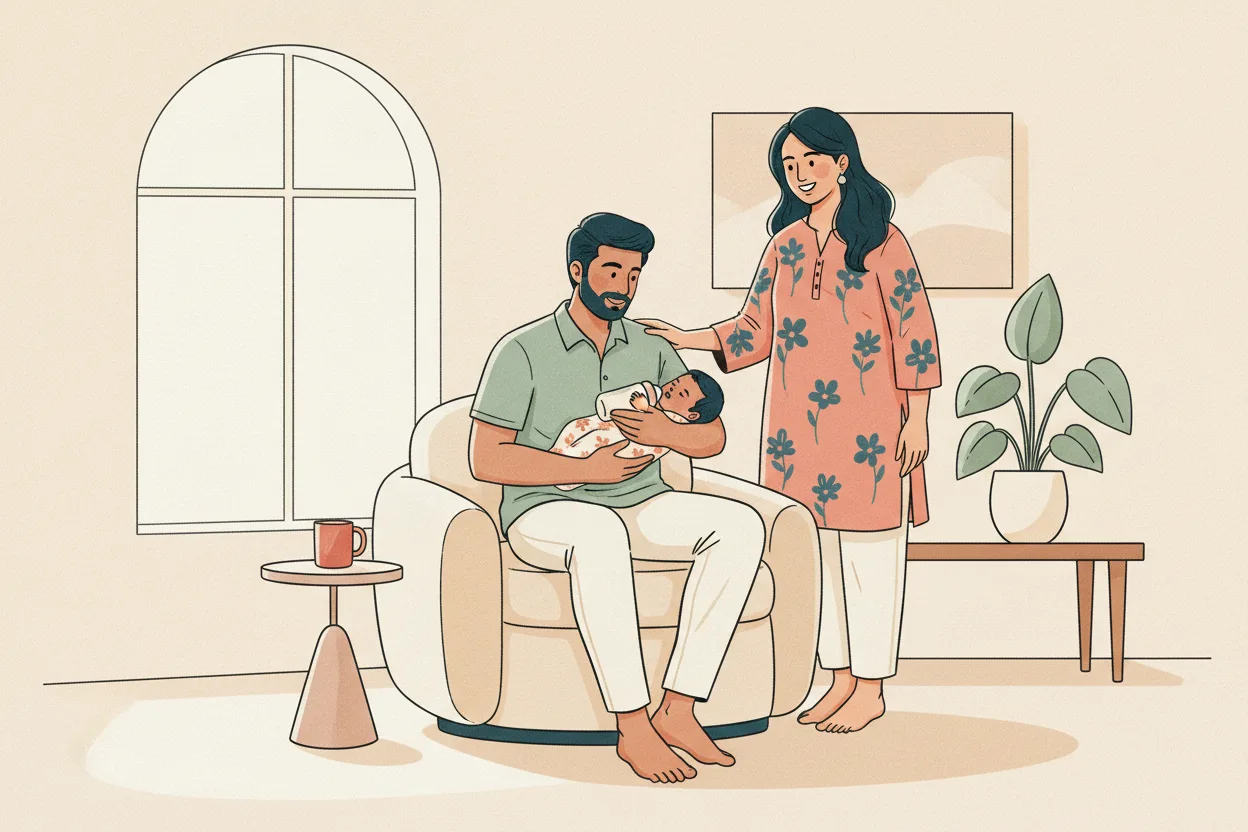

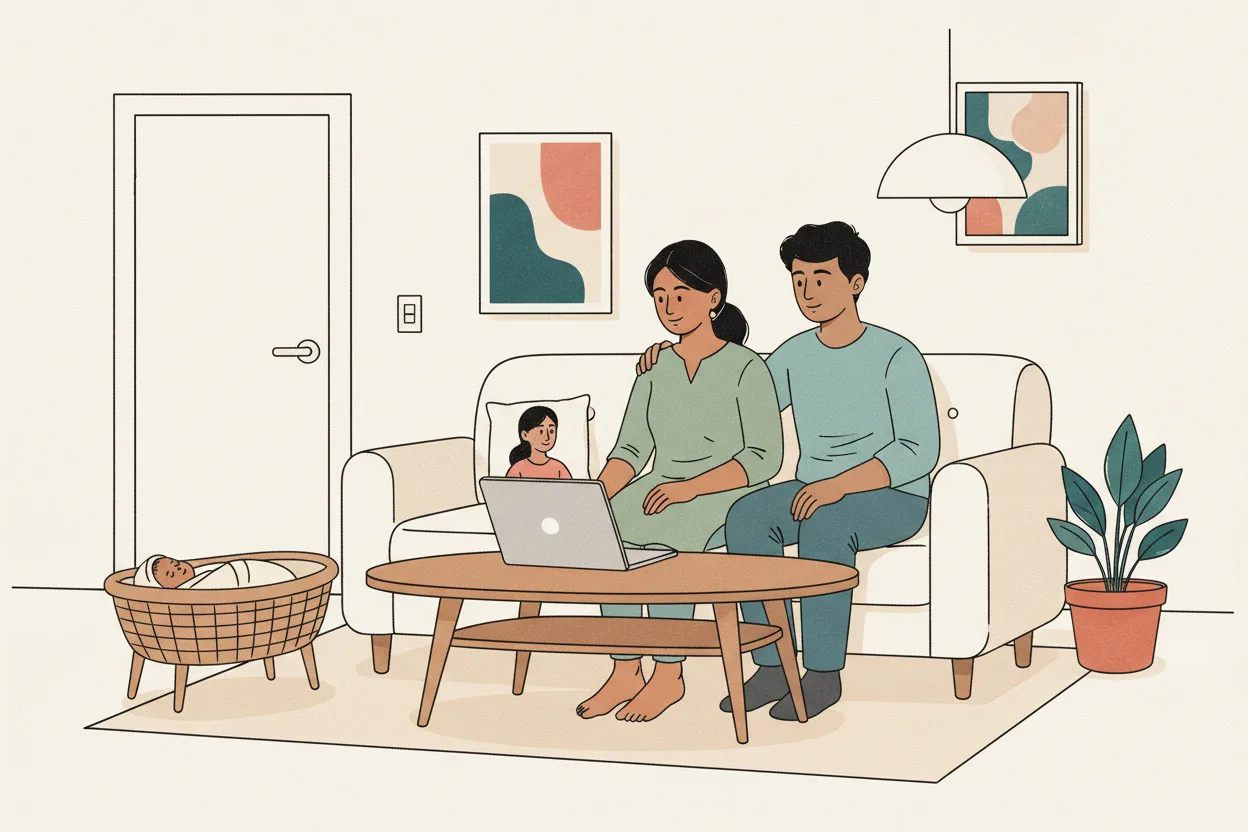
The one credential that separates a real online postpartum therapist from a friendly-sounding video call is Rehabilitation Council of India (RCI) registration. Check that first, then vet for real experience with the postpartum period specifically — not general life coaching or wellness content.
Not medical advice — consult a qualified mental health professional or your doctor if you're worried about yourself, your partner, or your baby.
Why Credentials Matter More on a Screen
In a clinic, you can glance at a certificate on the wall. On a video call, you can't — so you have to ask. The Rehabilitation Council of India's guidelines state that no one may practice as a rehabilitation professional anywhere in India — which covers clinical psychology — unless they hold a recognised qualification and are enrolled on the Central Rehabilitation Register. Before you book a paid session, ask the therapist for their RCI registration number. A genuine professional gives it without hesitation; anyone who deflects the question is not who you want managing your care during the postpartum months.
Don't just take the number on faith, either. The Rehabilitation Council of India's own citizen services page points to its CRR registration ePortal, where you can look up a professional's registration directly rather than relying on what they tell you.
This matters for both parents, not only mum. If you're screening a therapist for either of you, the registration question is the same.
Baby Blues, Postpartum Depression, or Something Else
Feeling weepy, overwhelmed, or short-tempered in the first couple of weeks after birth is common and usually passes on its own. NIMH, part of the US National Institutes of Health, states that mood changes or feelings of anxiety and unhappiness that are severe, or that last longer than two weeks after childbirth, may be signs of postpartum depression — and that women with postpartum depression generally will not feel better without treatment. If it's been more than two weeks and things aren't lifting on their own, that's the point to start looking for a therapist rather than waiting it out.
This is far more common in India than the "baby blues" framing suggests. A systematic review and meta-analysis of postpartum depression in India found a pooled prevalence of around 22% among Indian mothers — meaning roughly one in five, not a rare outlier needing to explain herself.
It isn't only mothers who go through this. A meta-analysis of 43 studies, cited in NIH-indexed research, found that fathers experience postnatal depression too, with the highest rates of depressive symptoms reported when the baby is 3 to 6 months old. If dad is struggling as much as mum, look for a therapist or platform that works with both parents, not just the mother.
When to Skip the Waitlist Entirely
Most postpartum mood struggles are not emergencies, and therapy on a normal booking timeline is the right response. A small number are. The NHS states that postpartum psychosis is a serious mental illness that should be treated as a medical emergency. If you or your partner notice confusion, hallucinations, delusions, or any thoughts of harming yourself or the baby, don't wait for a scheduled session — go to a hospital emergency department immediately.
For urgent support outside a booked appointment, an IIIT-Bangalore–NIMHANS press release on the Tele MANAS programme states that India runs a toll-free, 24/7 national helpline — 14416 or 1-800-891-4416 — connecting callers anywhere in the country to mental health support in the language of their choice. The Department of Empowerment of Persons with Disabilities also lists a second government helpline, KIRAN (1800-599-0019), for mental health support and rehabilitation. Save both numbers in your phone before you need them, not after.
Does Video-Call Therapy Actually Work?
Yes — it isn't a lesser stand-in for in-person care. A systematic review and meta-analysis found that telehealth interventions could effectively reduce the symptoms of depression and anxiety in women with postpartum depression. The screen is not the limiting factor; the right therapist and the right approach are.
The approach matters more than the medium. A Cochrane review found that both psychosocial and psychological interventions were effective in reducing depressive symptoms — this includes structured talk therapies like cognitive behavioural therapy (CBT) and interpersonal therapy (IPT). When you're shortlisting someone, ask directly whether they practice CBT or IPT for postpartum depression and anxiety, rather than offering general counselling.
What to Check Before You Book
Go through this list on a call or in a message thread before you pay for a first session:
- Their RCI registration number — ask for it directly, and note it down.
- Real, stated experience with postpartum depression or anxiety, not general wellness coaching.
- A named approach — CBT, IPT, or another structured talk therapy for postpartum mood.
- Whether they work with fathers too, if that's relevant to your household.
- Session cost, typical session length, and how many sessions before you reassess together.
- Whether they coordinate with a psychiatrist if medication ever becomes part of the conversation — under the Mental Healthcare Act, 2017, a clinical psychologist cannot prescribe or recommend medicine outside what their own profession authorises, so a real one will refer you onward for that rather than offer it themselves.
Where Online Postpartum Therapy Comes From in India
| Option | What it looks like | Good fit when |
|---|---|---|
| Independent RCI-registered psychologist, video call | One-to-one sessions you book directly, usually weekly | You want continuity with one therapist who knows your history |
| Hospital or clinic telepsychiatry department | Video consults run through a hospital's mental health or ob-gyn department | You want easy handoff to a psychiatrist if needed |
| Larger teletherapy platform | An app or website that matches you to a therapist from a roster | You want to compare a few therapists before committing to one |
Whichever route you choose, the RCI registration check and the postpartum-specific experience check apply equally.
Frequently Asked Questions
Is online therapy actually as good as seeing someone in person after birth? Research specifically on postpartum depression and anxiety found that telehealth interventions could effectively reduce symptoms — it isn't a downgrade from in-person care. What matters more is finding a therapist with real postpartum experience and a structured approach.
Do online therapists in India need the same qualifications as in-person ones? Yes. Rehabilitation Council of India rules apply regardless of format — no one may practice as a clinical psychologist anywhere in India without being enrolled on the Central Rehabilitation Register. Ask for the registration number before your first paid session, online or offline.
Can fathers use postpartum therapy too, or is it only for mothers? Fathers can and do need support. A meta-analysis of 43 studies found the highest rates of paternal depressive symptoms occur when the baby is 3 to 6 months old. If that's relevant in your household, ask a prospective therapist whether they see fathers as well.
How do I know if what I'm feeling is baby blues or postpartum depression? NIMH draws the line at severity and duration: mood changes that are severe, or that last longer than two weeks after birth and don't lift on their own, may be postpartum depression rather than baby blues. That's the point to start looking for a therapist.
What counts as an emergency rather than something to book therapy for? The NHS treats postpartum psychosis — confusion, hallucinations, delusions — as a medical emergency, not something to wait on. Go to a hospital emergency department. For urgent support outside office hours, Tele MANAS (14416) and KIRAN (1800-599-0019) are free, 24/7 government helplines.
What therapy approach should I actually ask for? A Cochrane review found both psychosocial and psychological interventions effective for postpartum depression, including CBT and IPT specifically. Asking a prospective therapist which of these they practice is a reasonable, specific question — and a real professional will answer it clearly.