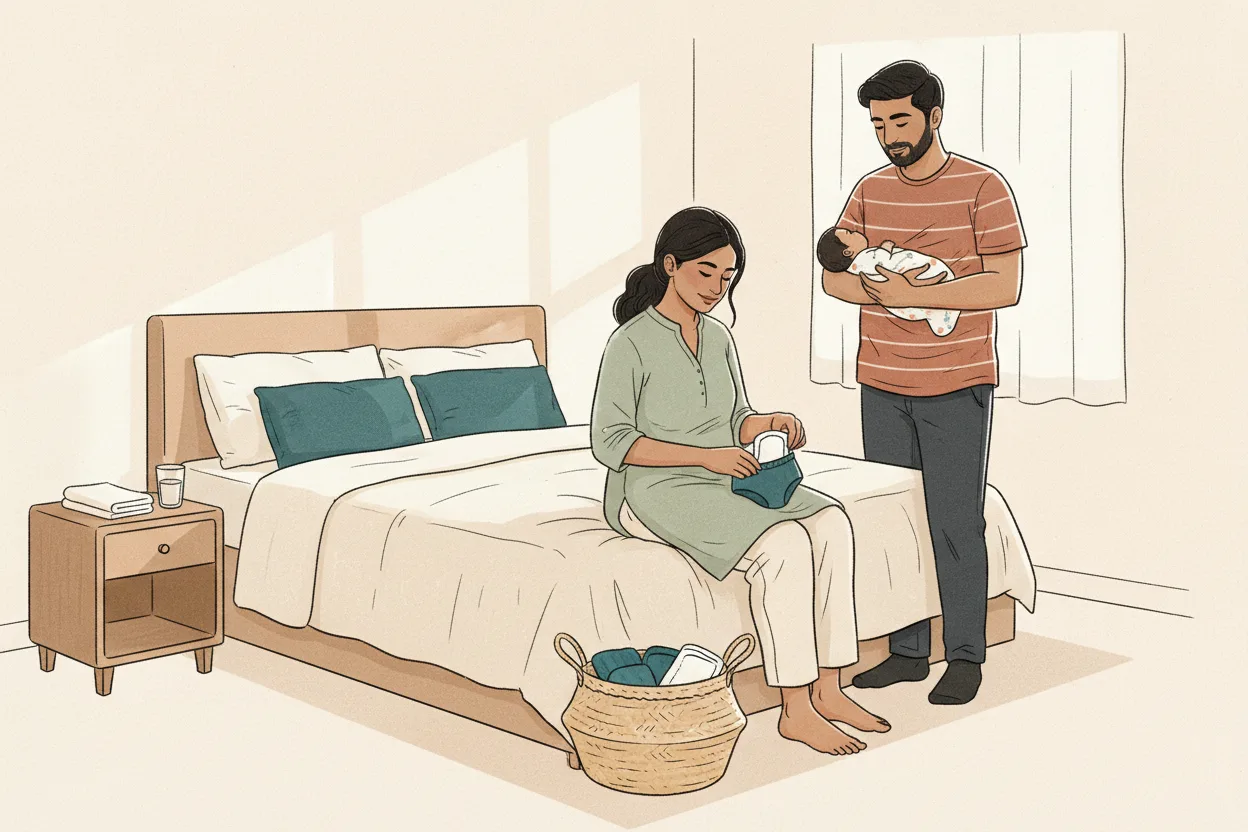

A postpartum anal fissure that keeps tearing open weeks or months after delivery is rarely a sign that the original wound never healed — it usually means something is still making your stools hard enough to retear it, over and over. A NIH-published review on preventing postpartum constipation explains that pain from a raw perineum, a repaired episiotomy or perineal tear, or pain from a caesarean section can make a new mother hesitate to pass a bowel movement when the urge arises — and that hesitation, on top of iron supplements, labour painkillers, and dehydration during labour, is exactly what sets up the hard, straining stools that keep the cycle going.
Not medical advice — consult your obstetrician or a colorectal doctor for personal guidance.
Why This Keeps Happening
If your first fissure showed up in the early postpartum weeks, you were already at higher risk before delivery. A 2022 review in Frontiers in Surgery found that constipation during pregnancy increases the risk of developing a perianal fissure or hemorrhoid up to sixfold after childbirth. So if constipation was already part of your pregnancy, the fissure isn't a fluke — it's a continuation of the same underlying stool problem, and it will keep recurring until that problem is actually fixed rather than just soothed each time.
There's also a timing issue working against you. A NIH-published clinical review on anal fissure states that acute fissures typically heal with medical management after 4 to 6 weeks, while chronic fissures persist beyond 6 weeks. If yours is still tearing at the three- or four-month mark, it has almost certainly crossed into that chronic category — and a chronic fissure is far less likely to close on its own with the same basic care that would have worked in week two. That's the point where "just wait it out" stops being a reasonable plan.
Fixing the Stool, Not Just the Wound
The single biggest lever you have is what leaves your body each day. The NHS advises that the core of managing a fissure is to drink lots of fluids and eat plenty of fibre to keep your stool soft — for a fissure that keeps retearing, this matters more than any cream you put on it, because a soft stool simply can't retear the skin the way a hard, straining one does.
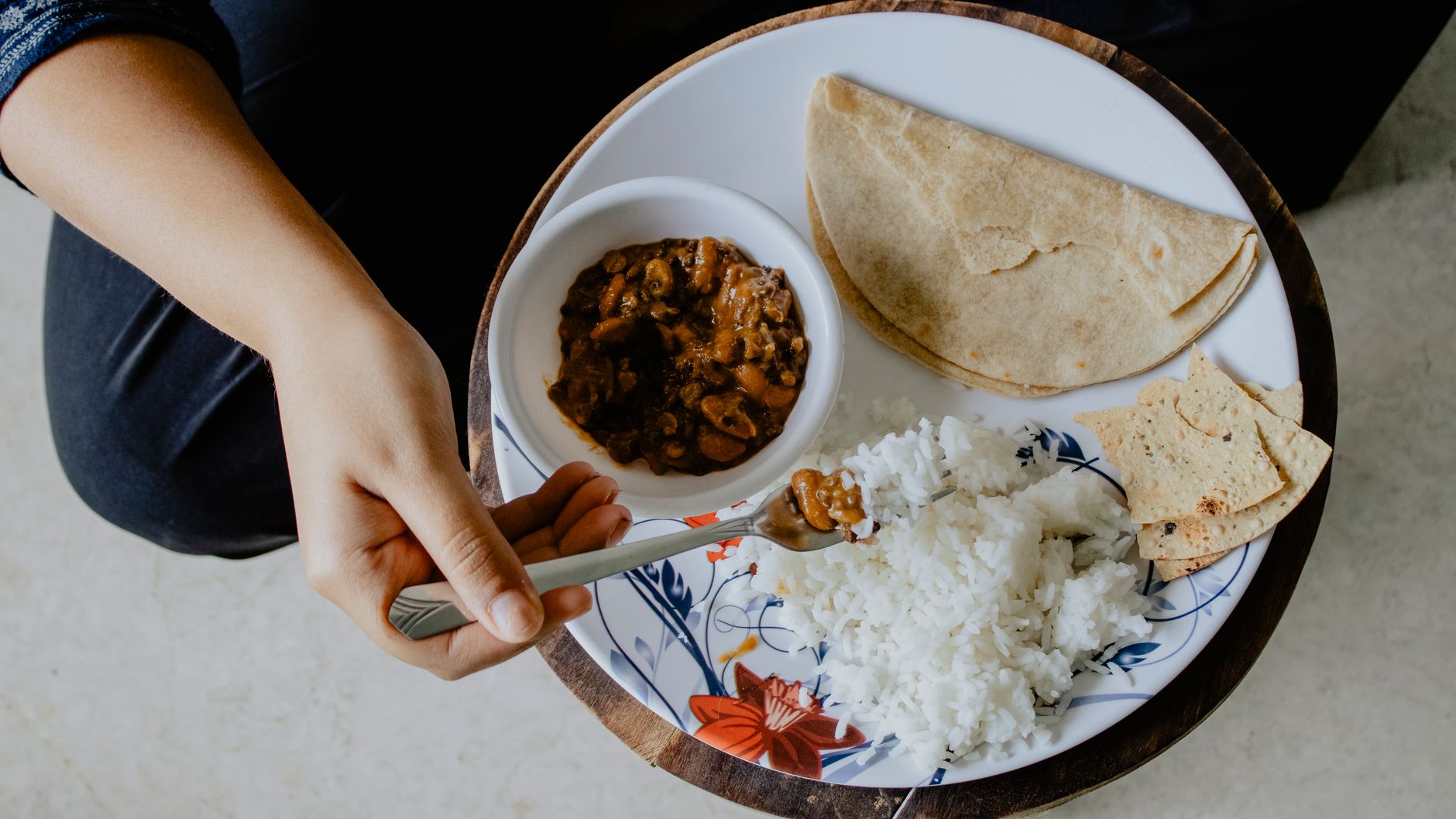
In an Indian kitchen, that's easier to act on than it sounds — it's mostly about which staples you reach for by default, not a special diet:
| Everyday swap | Why it helps |
|---|---|
| Atta roti / brown rice instead of only refined maida items | Whole grains carry far more fibre than refined flour |
| A bowl of dal at both main meals | Legumes are one of the densest everyday fibre sources |
| Papaya, guava, or pear as your daily fruit | Fibre plus water content, easy on a sore gut |
| Oats or dalia (broken wheat) for breakfast | A fibre-forward start to the day, especially if breakfast is otherwise light |
| A large glass of water with every meal, not just when thirsty | Fibre needs fluid to work — one without the other can make things worse |
None of this is about restriction — it's about making sure fibre and fluids are actually on the plate at every meal, especially during the postpartum weeks when appetite is unpredictable and well-meaning relatives may be steering your diet toward "safe," low-fibre comfort foods.
It helps to have an actual number to aim for rather than just "eat more fibre." An NCBI Bookshelf clinical guide on dietary fibre states that the recommended daily intake is about 25g for women (38g for men), or roughly 14g per 1,000 kcal eaten — a useful mental target when you're building meals around dal, whole grains, and fruit. If food alone isn't getting you there, isabgol (psyllium husk) is a reasonable bridge: the NIH's LactMed database states that psyllium is acceptable to use during breastfeeding, so a spoonful stirred into water is a safe way to close the gap while your diet catches up.
Sitz Baths: Why They Actually Help
If you've been told to sit in a basin of warm water after every bowel movement, there's a real mechanism behind it, not just tradition. A systematic review on sitz baths for anal fissure found that warm sitz baths are effective in treating sphincter spasms — and it's that spasm, more than the tear itself, that causes much of the pain and keeps the area from relaxing enough to heal between bowel movements.
A clean basin or tub with plain warm (not hot) water for 10–15 minutes, done after each bowel movement and once or twice more through the day, is the practical version of this. Pat the area dry afterwards rather than rubbing it.
Gentle pelvic floor exercises are worth starting alongside sitz baths, not instead of them. An NHS pelvic health patient information leaflet advises waiting until any catheter has been removed before you start, but once that's done, gentle squeezes after a vaginal delivery can support healing of stitches and help swelling go down — a small addition that works alongside, not instead of, the diet and sitz-bath routine above.
When Diet and Sitz Baths Aren't Enough
If you've genuinely fixed the stool — soft, regular, no straining — and the fissure is still retearing, the next step is medical, not dietary. Cleveland Clinic explains that when basic measures don't resolve a fissure, a doctor may prescribe a topical nitroglycerin or a calcium-channel-blocker ointment (diltiazem or nifedipine) to relax the sphincter and let it heal, with a Botox injection into the sphincter used as a last resort when ointments alone haven't worked.
When to See a Colorectal Doctor, Not Just Your OB
Your obstetrician is the right person to see in the first six weeks after delivery. But a fissure that is still tearing at three or four months, or one that hasn't responded to diet, sitz baths, and prescribed ointment, has outgrown "routine postpartum recovery." An NCBI Bookshelf clinical reference on anal fissure states that referral to a colorectal surgeon is appropriate when fissures are refractory to medical therapy, become chronic, or are associated with complications requiring procedural intervention. Ask your OB-GYN directly for that referral — a proctologist or colorectal surgeon, not a repeat scan or another round of the same cream, is the correct next step.
Even the stronger treatments aren't a guaranteed permanent fix, which is worth knowing before you get discouraged by one relapse. A systematic review on botulinum toxin for chronic anal fissure found a 30%–40% recurrence rate over one to three years after Botox — which is exactly why a colorectal surgeon may eventually discuss a minor surgical procedure for a fissure that keeps coming back despite treatment. That's not a sign you did something wrong; it's a known pattern with this condition, and it's precisely what a specialist is there to manage.
The usual procedure at that stage is a lateral internal sphincterotomy, and the recovery is shorter than most people expect. Cleveland Clinic explains that most people return to their normal activities after a week or two, depending on how strenuous those activities are, though it takes about six weeks for the area to heal completely — a timeline worth knowing if you're weighing surgery against continuing to manage a fissure that won't stay closed.
Frequently Asked Questions
Is it normal to still have a fissure 3–4 months after delivery? Not really — it should be treated differently at that point. A NIH-published clinical review classifies a fissure that hasn't healed within about 6 weeks as chronic, and chronic fissures are much less likely to close on their own. At three or four months, ask for a colorectal referral rather than continuing to wait.
Will drinking more water alone fix this? Fluids matter, but the NHS pairs "drink lots of fluids" with "eat plenty of fibre" as a single piece of advice — you need both together to keep stool soft enough to stop retearing the fissure.
Why do I keep putting off going to the bathroom, even though I know that makes it worse? This is extremely common and has a physical cause, not just a mental one. A NIH-published review notes that pain from a raw perineum, an episiotomy repair, or a C-section can make a new mother hesitate to go when the urge arises — which then lets the stool sit and harden further.
Do sitz baths actually do anything, or is it just something my mother insists on? There's real evidence behind it. A systematic review found warm sitz baths effective specifically for the sphincter spasm that causes much of the pain and slows healing — so it's worth keeping up even if it feels repetitive.
My gynaecologist says everything "looks fine" — why does it still hurt and tear? A fissure that keeps recurring or isn't responding to treatment needs a different specialist. An NCBI Bookshelf clinical reference states that referral to a colorectal surgeon is appropriate once a fissure becomes chronic or is refractory to medical therapy — that's a normal, expected next step, not an overreaction.
Will I need surgery? Not necessarily, and it isn't the first step. Doctors typically start with topical ointments and, if needed, Botox before considering a procedure. Surgery tends to come up only after a fissure keeps recurring despite these treatments — and even Botox has a real chance of the fissure returning, so a discussion about a minor procedure at that stage is common, not unusual.