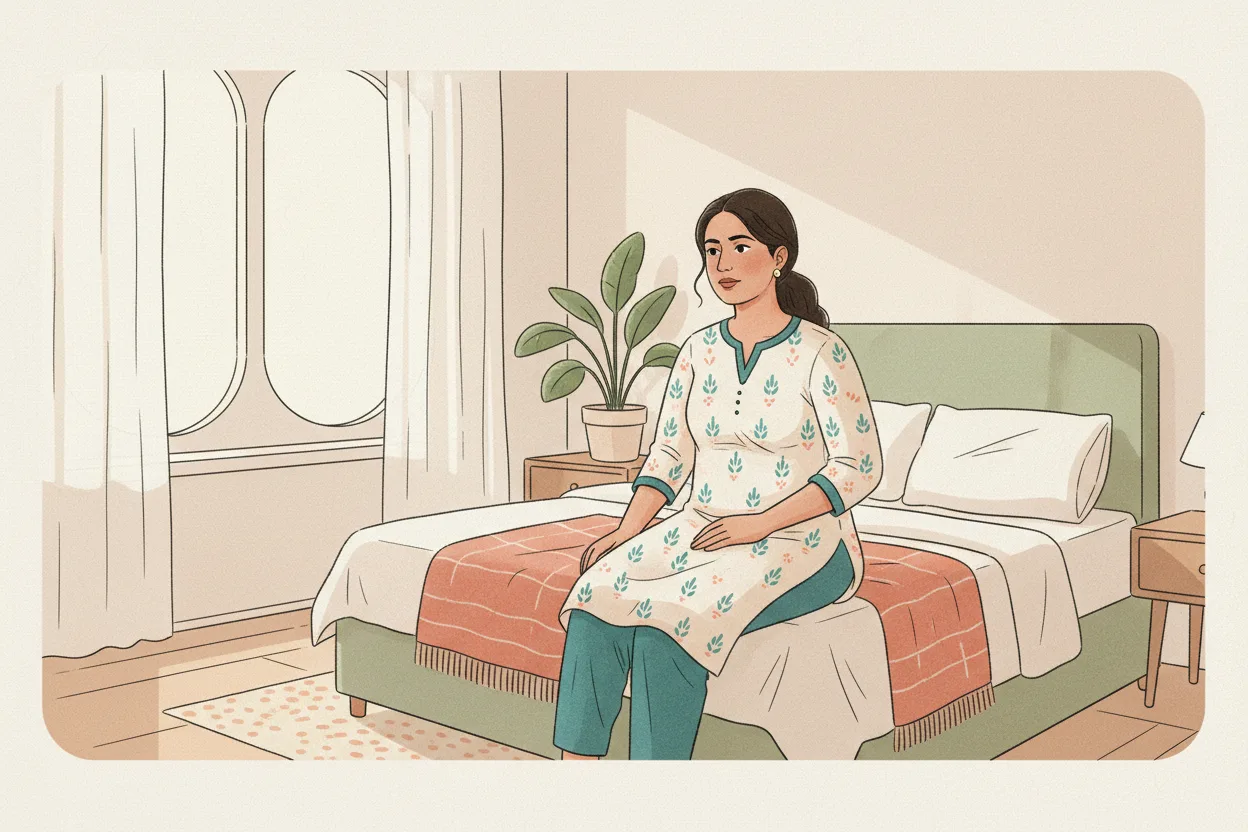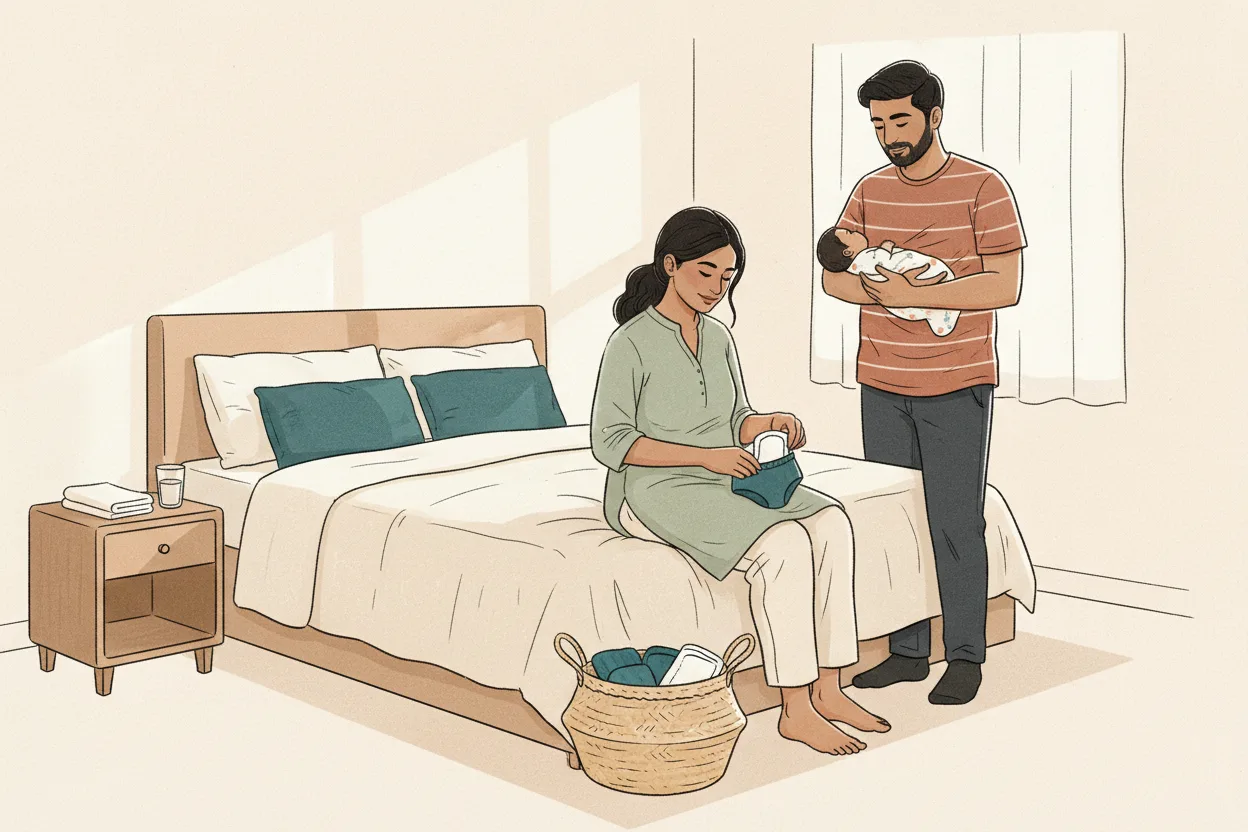

No period for three months postpartum? If you are breastfeeding, that is completely normal. Breastfeeding triggers a hormonal change that suppresses ovulation — and a review on lactational infertility (PubMed) notes that many nursing mothers may have up to one to two years of lactational amenorrhoea.
Not medical advice — consult your gynaecologist or obstetrician for personal guidance.
Why Breastfeeding Delays Your Period
When you nurse, your body produces high levels of prolactin — the hormone that drives milk production. A 2022 review in Frontiers in Endocrinology found that high prolactin levels suppress hypothalamic Kiss1 neurons that directly control the pulsatile release of GnRH — the hormone that normally triggers ovulation and your monthly cycle. No GnRH pulses means no ovulation and no period.
This natural absence of periods is called lactational amenorrhoea. It is not a health problem. It is a well-documented hormonal response to frequent nursing.
What's Normal: The Timeline
How long your period stays away depends on how often your baby nurses and whether you are exclusively breastfeeding.
StatPearls (NCBI Bookshelf) notes that in mothers who are not breastfeeding, menstrual function returns in most cases by the sixth to eighth week postpartum. For breastfeeding mothers, the timeline is much longer — and there is no fixed "deadline" for your period to return while you are still nursing frequently.
A review on lactational infertility (PubMed) states that many women who continue to breastfeed may still have up to one to two years of good contraceptive protection from prolonged lactational amenorrhoea. The more frequently your baby nurses — especially on demand, without formula supplementation — the longer ovulation stays suppressed.
The key turning point is when your baby starts solid foods. WHO recommends exclusive breastfeeding for the child's first six months to achieve optimal growth, development, and health. Once solids are introduced and nursing frequency drops, prolactin levels typically fall with it — this is often when periods gradually resume.
The Catch: You Can Still Get Pregnant
Many families assume that having no periods means it is impossible to conceive. This is not true.
A 2018 study in PLOS ONE (PMC) found that about 33 percent of breastfeeding women who resume periods within the first three months postpartum will have their first ovulation before their first bleed — and this figure rises to 87 percent if the first menses occurs after the first twelve months. You can ovulate, and therefore conceive, before you ever see a period return.
The Lactational Amenorrhoea Method (LAM) is a structured way to use breastfeeding as contraception, but it requires all three conditions to hold simultaneously. A prospective trial (PMC/BMJ) found that LAM was 99 percent effective when used correctly — that is, during lactational amenorrhoea and full or nearly full breastfeeding for up to six months. The three conditions are: no period has returned, the baby is under six months old, and you are feeding fully on breast milk. If any one condition lapses, the protection drops and a separate contraceptive method is needed.
Speak with your gynaecologist about family planning options well before your baby turns six months old.
Warning Signs That Need Urgent Attention
Lactational amenorrhoea is normal. Heavy or alarming bleeding is not. Cleveland Clinic states that passing several large blood clots — anything larger than a golf ball — may be a sign of a problem; other warning signs requiring immediate medical attention include dizziness, blurred vision, a rapid heartbeat, and pale clammy skin. These can indicate postpartum haemorrhage. If you notice any of these, go to the hospital immediately — do not wait.
Common Myths Indian Families Often Get Wrong
"No period means you cannot get pregnant." False. A 2018 study in PLOS ONE (PMC) shows that the majority of breastfeeding women who see their first period return after the first year postpartum have already ovulated before that bleed. Use reliable contraception if another pregnancy is not planned.
"Your period should return within three months no matter what." Also false. A PubMed review on lactational infertility confirms that breastfeeding women may have up to one to two years of amenorrhoea. Frequent, on-demand nursing keeps prolactin high, and there is no fixed deadline for the first period to return.
"Heavy discharge right after delivery means your period is back." No. What you experience in the first weeks after birth is lochia — the uterine lining shedding from pregnancy, not menstruation. It gradually lightens on its own. Your first true period comes only after ovulation resumes.
Frequently Asked Questions
Is it normal to have no period at all while breastfeeding? Yes. A review on lactational infertility (PubMed) confirms that breastfeeding women may have up to one to two years of amenorrhoea. Frequent, on-demand nursing suppresses the hormones that trigger ovulation — so having no periods for six months, twelve months, or longer is medically expected while you are still nursing frequently.
Can I use breastfeeding as contraception? Only under strict conditions. A prospective trial (PMC/BMJ) found LAM to be 99 percent effective when periods have not yet returned, the baby is under six months, and you are exclusively or nearly exclusively breastfeeding. If any one of these conditions is not met, you need a separate contraceptive method. Discuss your options with your gynaecologist.
When will my period return after my baby starts solids? The timing varies from person to person. As nursing frequency drops, prolactin levels fall and ovulation can resume. WHO recommends exclusive breastfeeding for the first six months — so major reductions in nursing frequency typically begin around that time, and periods often follow sometime after.
I see large blood clots after delivery — should I worry? Cleveland Clinic states that passing several large blood clots (anything larger than a golf ball) may be a sign of a problem. If paired with dizziness, rapid heartbeat, or pale clammy skin, go to the hospital immediately — do not wait.
My mother-in-law says no period means "something is stuck." What should I say? Reassure her that the delay is a well-documented, normal hormonal response to nursing. StatPearls (NCBI Bookshelf) confirms that menses returns by six to eight weeks only in non-breastfeeding mothers. For breastfeeding mothers, a much longer delay is entirely expected — nothing is "stuck."
Does breastfeeding permanently affect my cycle? No. Once your nursing frequency drops and ovulation resumes, your cycle returns. Some parents find the first cycle or two slightly different from the pre-pregnancy pattern, which settles on its own.