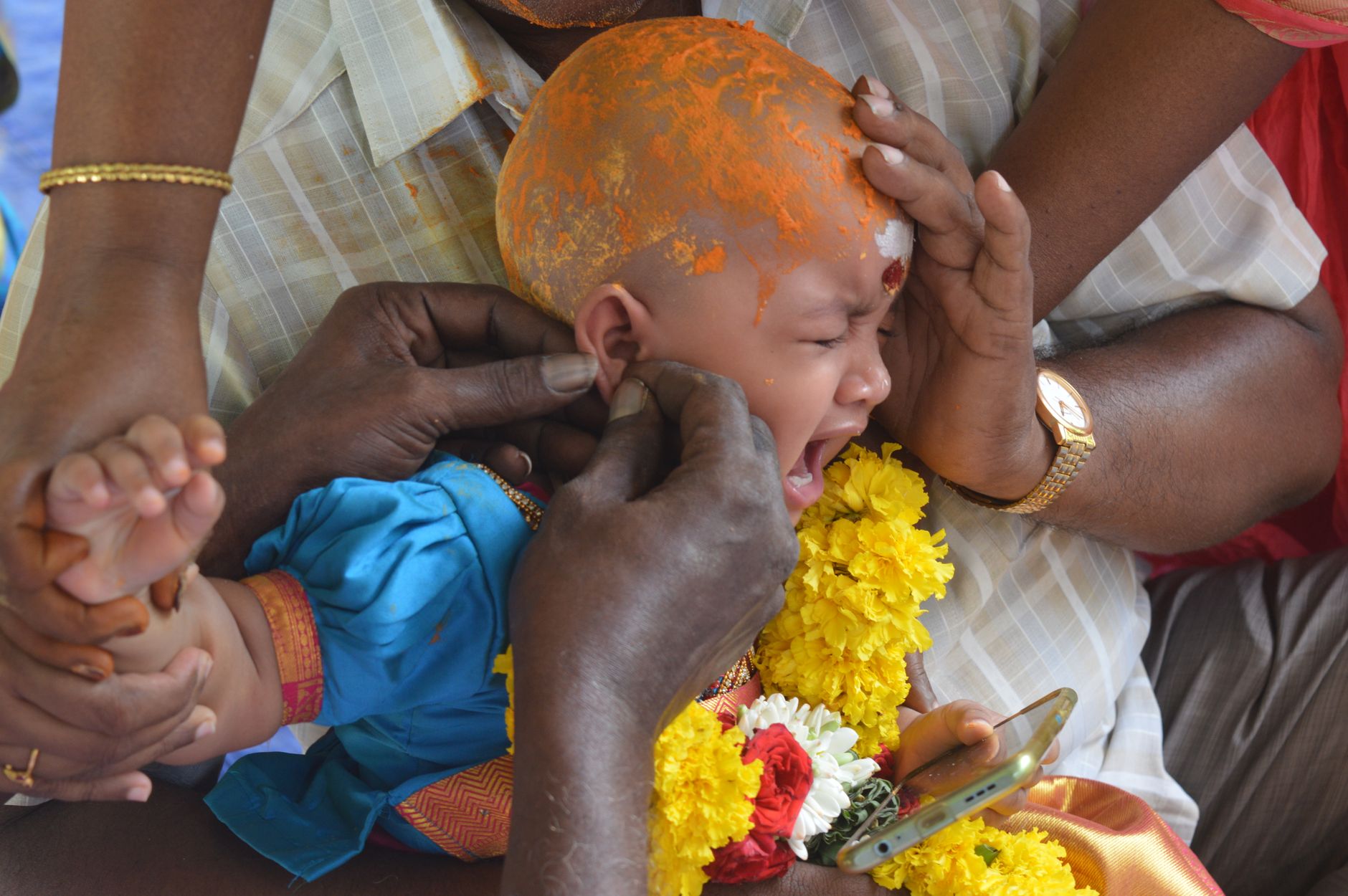

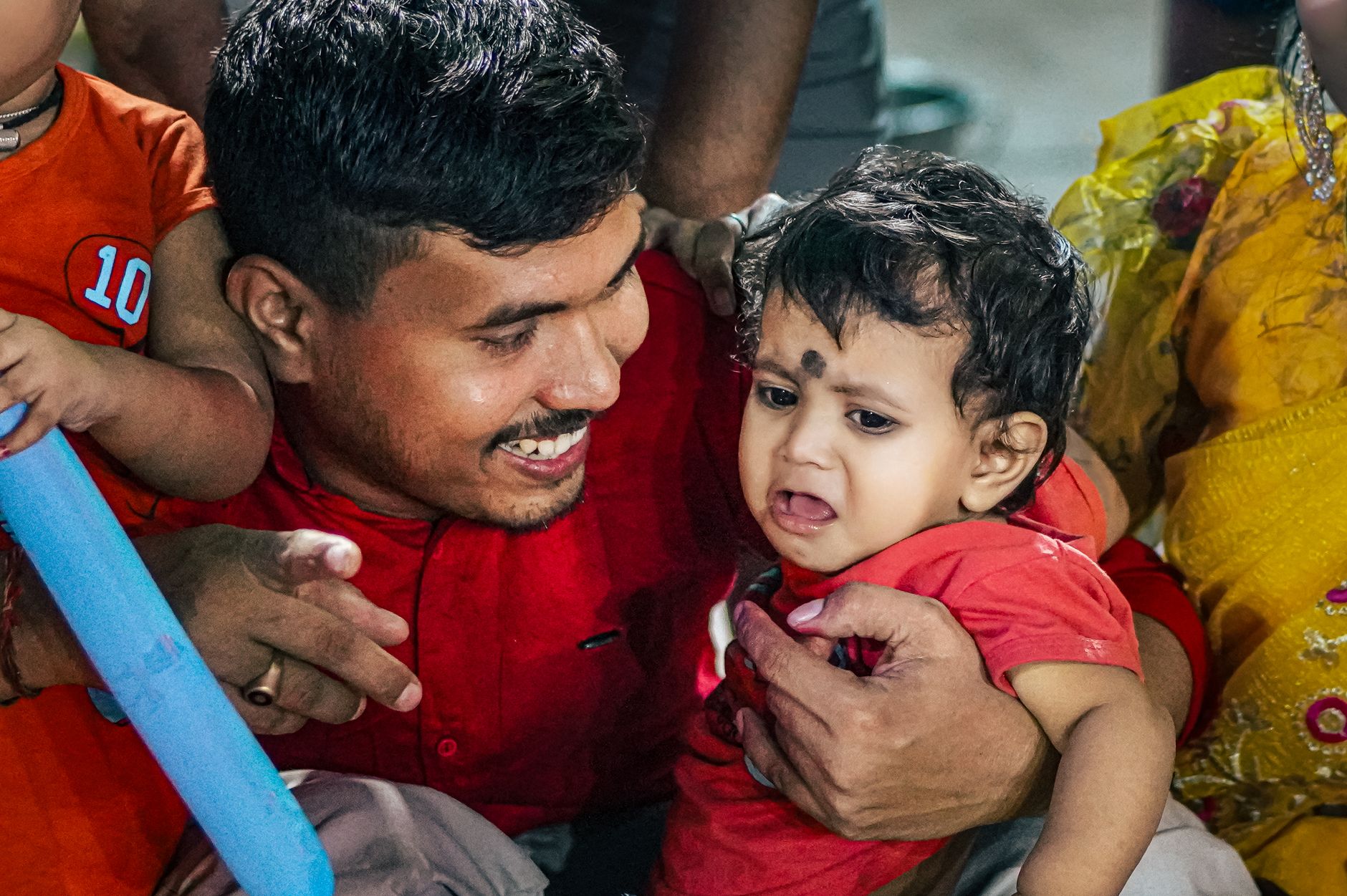
Fever, fussiness, and crying after the polio vaccine are normal and almost always minor. A prospective observational study from North India (PMC) found that fever is the most common reaction — occurring in nearly half of all vaccinated babies — while excessive crying was reported in 16% of cases; every single one of these reactions was minor and resolved on its own.
Not medical advice — consult your paediatrician for personal guidance.
India's Polio Vaccine Schedule: Two Vaccines Working Together
Your baby receives two different types of polio vaccine under India's national programme.
A 2024 immunogenicity study in Indian infants (PMC) found that India's EPI schedule includes four doses of bOPV — the oral drops — at birth, 6, 10, and 14 weeks, combined with IPV, the injectable vaccine. The oral drops are given at pulse polio camps and government health centres; the injectable IPV is part of the routine immunisation schedule at your paediatrician's clinic, given at 6 and 14 weeks alongside Pentavalent and PCV vaccines.
CDC explains that IPV is now the standard polio vaccine used in high-income countries, while OPV is still widely used globally — and both provide strong protection against polio. India's combined approach is intentional: the two vaccines complement each other to maximise coverage.
What to Expect in the First 48 Hours
After the oral drops (OPV): Your baby may be a little fussier or feed less enthusiastically for a day. Some babies show no reaction at all. There is no injection site to worry about.
After the IPV injection: A post-marketing surveillance study of IPV in Indian children (PMC) found that injection-site pain affected about 10% of children; redness appeared in under 2% and swelling in under 2%. The most common systemic reaction was fever. No serious adverse event was reported during the study period.
A prospective observational study from North India (PMC) found that across all immunisations, fever was the most common reaction (47.6% of all reported adverse events), excessive crying was reported in 16% of cases, and all of them were minor with no serious outcomes identified.
CDC explains that soreness or swelling at the injection site, fever, fussiness, and loss of appetite are expected reactions after routine childhood vaccinations and typically go away within a few days.
Most reactions appear within 12–24 hours and settle by the second day after vaccination.
How to Keep Your Baby Comfortable
These practical steps help most babies through the post-vaccination period:
- Fever: Ask your paediatrician at your visit what paracetamol dose is right for your baby's weight — have it on hand if needed. Give it only when fever appears, not beforehand. A systematic review on prophylactic antipyretics and vaccine immunogenicity (PMC) found that prophylactic administration of paracetamol decreased the immune response to certain vaccine antigens in all included studies, which is why giving it before symptoms arise is not recommended.
- Injection-site redness: Hold your baby's thigh gently. A warm cloth laid on the spot for a few minutes can ease local discomfort or redness.
- Fussiness: Extra feeds, skin-to-skin contact, and gentle rocking all help.
- Reduced appetite: Offer feeds more often. A slight dip in appetite for a day is common after vaccination; watch that wet nappies continue at the usual frequency.
The Safety Record: What the Data Actually Show
Both OPV and IPV have decades of well-documented safety data.
WHO Global Advisory Committee on Vaccine Safety (GACVS) states that IPV and IPV-containing vaccines have an excellent safety profile, and reviews have not documented any serious adverse events causally related to IPV.
A systematic review in PMC found that there have been no serious adverse events reported from any studies of newborn OPV or IPV dosing over approximately 50 years of data.
A note on VAPP: WHO Health Product Policy and Standards notes that although OPV is a safe vaccine, on rare occasions adverse events may occur — vaccine-associated paralytic poliomyelitis (VAPP) is the most important of these rare adverse events. StatPearls (NIH/NCBI) states that VAPP occurs at an estimated rate of 0.42 per million doses of OPV, and IPV carries no risk of vaccine-associated paralytic polio. India's combined OPV + IPV schedule reduces this already-tiny risk further. To put it in perspective: WHO's poliomyelitis fact sheet states that wild poliovirus itself leads to irreversible paralysis in 1 in 200 infected people — making vaccination, and its minimal risk, the overwhelmingly safer choice.
When to Call Your Paediatrician
CDC explains that most post-vaccination reactions are minor and go away within a few days. Call your paediatrician the same day if your baby shows any of these:
- Fever that seems high or won't settle with paracetamol
- Fever that persists beyond 48 hours after vaccination
- Crying that won't settle after 3 hours
- The injection site becomes more red, warm, or swollen after 24 hours
- Your baby is unusually drowsy or hard to rouse
In rare situations, get your baby to the nearest hospital promptly if you see:
- Difficulty breathing
- Swelling of the face or throat
- A seizure
These serious reactions are extremely uncommon — but knowing the signs means you can act quickly.
Pulse Polio Camps vs Routine Immunisation
Pulse Polio National Immunization Days are the door-to-door and booth drives where your baby receives oral drops only. They are free, quick, and run on nationally set dates in January and February each year. They target all children under 5, regardless of their vaccination history.
Routine immunisation at your paediatrician's clinic or government health centre covers the full schedule: IPV alongside Pentavalent, PCV, and other vaccines at each scheduled visit. Your baby needs both — the pulse polio drives support nationwide immunity, and the routine schedule gives your baby individually timed, complete protection.
Keep your baby's immunisation card safe. It records every vaccine, the batch number, and the next due date — bring it to every paediatrician visit and to every pulse polio booth session.
Frequently Asked Questions
My baby cried for a long time after the polio drops. Is that normal?
Yes. The North India observational study (PMC) found that excessive crying occurred in 16% of babies after vaccination and was classified as a minor reaction in every case. Extra feeds, skin-to-skin time, and gentle rocking usually help them settle within a few hours. If crying is truly inconsolable after 3 hours, call your paediatrician.
My baby's thigh is red and swollen after the IPV injection. What should I do?
The IPV post-marketing surveillance study in Indian children (PMC) found that injection-site redness and swelling are known local reactions, each occurring in under 2% of children. Hold the thigh gently and apply a warm cloth for comfort. Monitor over the next day; if the redness spreads significantly or the area feels very warm, consult your paediatrician.
My baby received OPV drops and an IPV injection on the same day. Is that safe?
Yes. A 2024 immunogenicity study in Indian infants (PMC) confirms that India's EPI schedule is designed to give bOPV and IPV together at the same visit — at 6 and 14 weeks. Receiving them on the same day is standard practice, not an error, and giving them simultaneously does not reduce effectiveness.
What is VAPP, and should I be worried about it?
VAPP (vaccine-associated paralytic poliomyelitis) can, in very rare cases, occur as an adverse event linked to the live OPV. StatPearls (NIH/NCBI) states that the rate is approximately 0.42 per million OPV doses — extremely low. WHO Health Product Policy and Standards notes that IPV carries no such risk. India's combined schedule — OPV drops plus IPV injection — is specifically designed to minimise this risk while maximising population-wide immunity.
When is my baby due for the next polio dose?
India's EPI schedule includes OPV doses at birth, 6, 10, and 14 weeks, and IPV at 6 and 14 weeks. Your paediatrician will note the next due date on your baby's immunisation card. Bring the card to every visit and to pulse polio booth sessions — it is your baby's complete vaccination record.