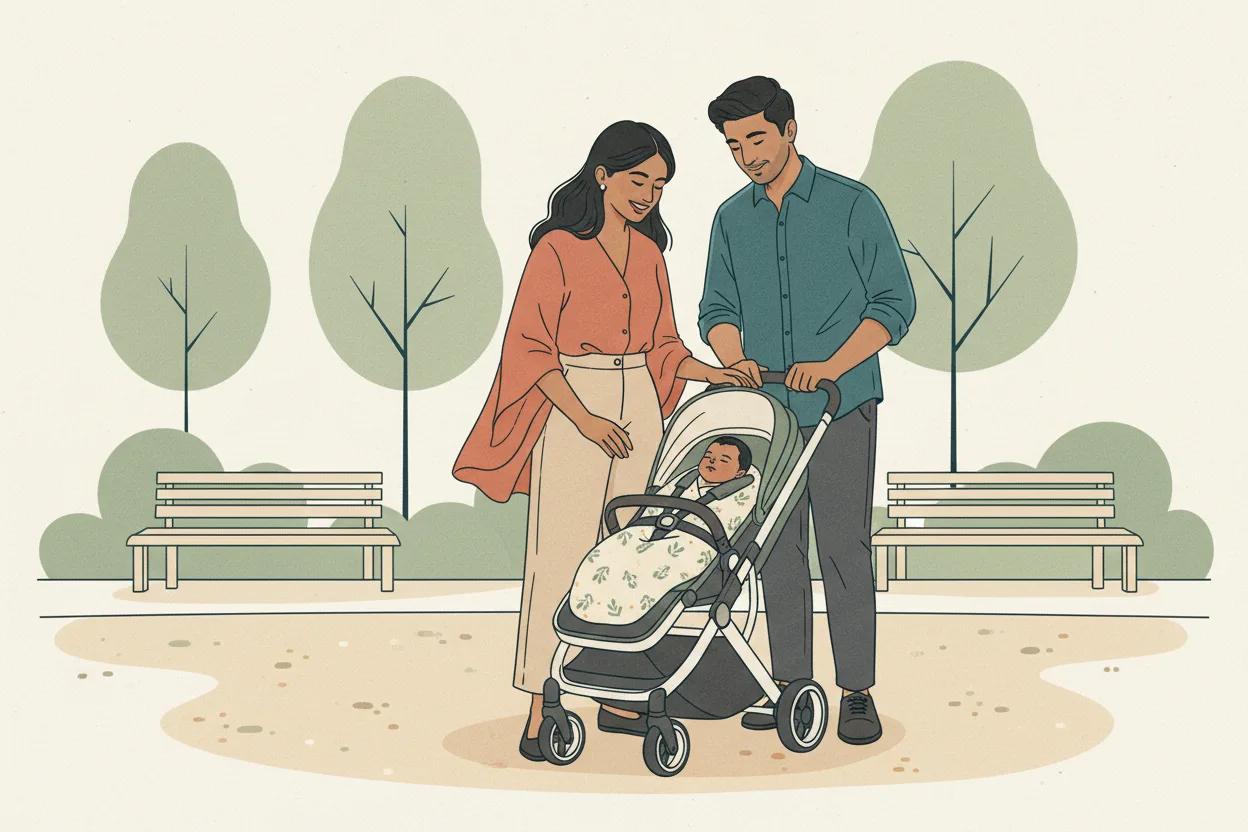

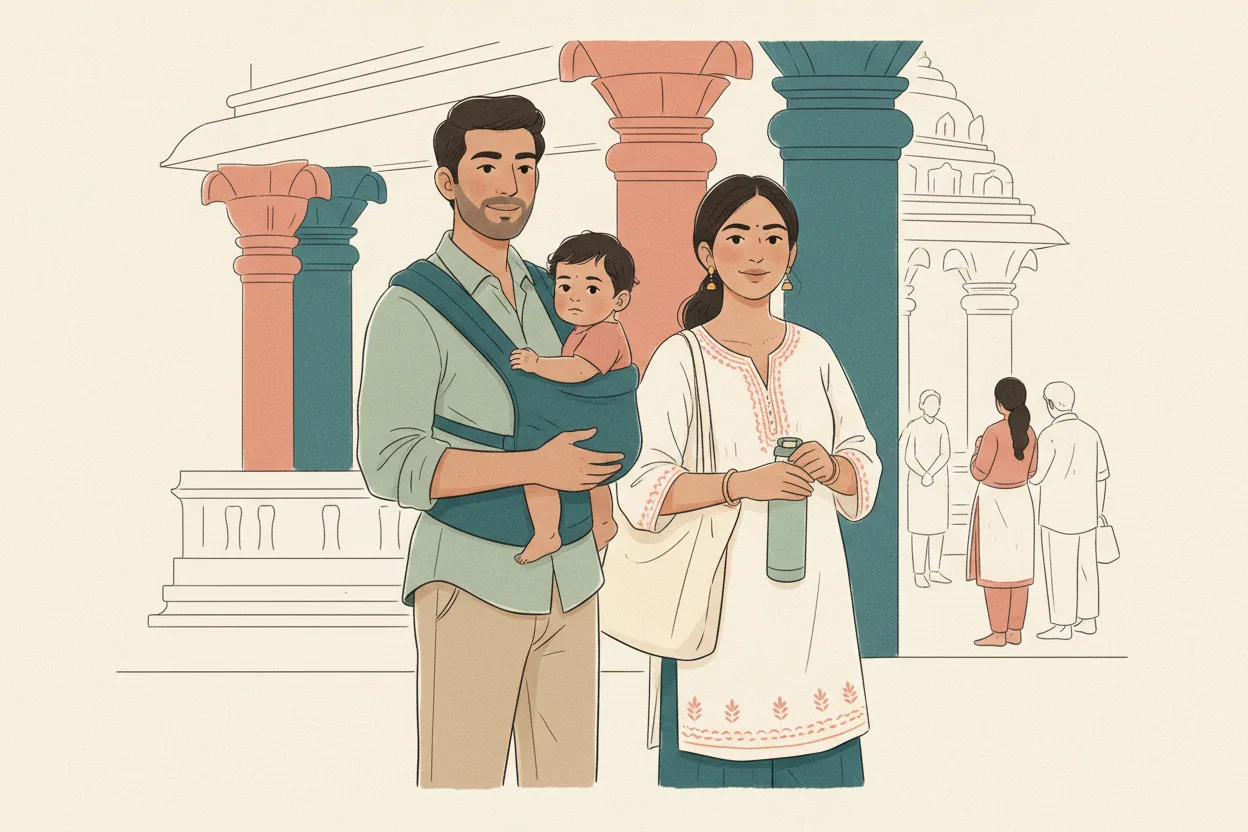
Taking a 1-2 year old on a temple pilgrimage in India works if you plan around three things: the journey there, the wait once you arrive, and hygiene on the road. None of it requires special gear beyond what a routine family trip needs — just a bit more planning around naps, queues, and food.
Not medical advice — consult your pediatrician before travel, especially about vaccines and any altitude concerns for hill temples.
Road vs Rail — Getting There
For temple towns within four to six hours of home, driving gives you more control: you set the pace, stop whenever your toddler needs a feed or a nappy change, and skip a crowded platform with a toddler in tow. For longer distances, an overnight train can work better, since your toddler sleeps through most of the journey instead of being strapped into a car seat for eight hours straight.
Whichever way you travel by road, keep your toddler in their own car seat for the drive — the American Academy of Pediatrics (AAP) recommends that infants and toddlers stay rear-facing as long as possible, until they reach the highest weight or height allowed by their car seat's manufacturer, before switching them to forward-facing. Carry your own seat rather than relying on a taxi or a relative's car to have one. Many hired taxis in India don't have ISOFIX or LATCH lower anchors — that's fine, since the AAP's HealthyChildren.org advises that installing a car seat with the vehicle's own seat belt is equally safe as using LATCH, as long as the belt locks and holds the seat tightly.
Winding ghat roads up to hill temples can bring on car sickness in a toddler who was fine on the highway. The AAP's HealthyChildren.org advises having your child look at things outside the car, not at books or a tablet, which settles most stomachs on the climb.
Surviving the Darshan Queue
Darshan lines can run anywhere from a short wait to several hours, especially during festival season or on weekends, and most major temples keep strollers out past the main gate — plan to carry your toddler in a soft carrier or on your hip for that stretch rather than fighting a stroller through the crowd.
Children overheat and dehydrate faster than adults in a standing, open-air queue. The AAP's HealthyChildren.org advises offering water frequently, before your toddler even asks for it, so carry a filled bottle rather than counting on buying one inside.
If part of the wait is in direct sun before the doors open, the AAP's HealthyChildren.org states that sunscreen needs reapplying every two hours, so pack a small tube in your bag instead of relying on a single application from the morning. For the queue itself, the AAP advises choosing a broad-spectrum sunscreen with an SPF of 15 or higher, which covers most travel-size options sold in India.
Hygiene and Health on the Road
Prasad, roadside food, and shared water sources are part of temple travel, and they're also where most travel stomach upsets start. The CDC's Travelers' Health guidance advises washing hands with soap and water, or using a hand sanitizer that's at least 60% alcohol, before eating anything — make this a habit for your toddler before every prasad or snack, not just at mealtimes.
Pack a few sachets of oral rehydration solution (ORS) regardless of how careful you are. The CDC Yellow Book states that infants and young children dehydrate faster than adults from travel diarrhoea, and ORS alongside their usual food is the main way to prevent and treat it — start it at the first loose stool rather than waiting to see if it gets worse.
Stroller Access and Changing Facilities
Stroller access varies a lot by temple. Large pilgrimage complexes such as Tirupati, the Vaishno Devi base camp, or Shirdi have designated stroller and pram parking near the entrance, but the inner sanctum and most darshan lines are stroller-free zones — you'll carry your toddler or use a carrier for that stretch regardless of what you brought. Smaller temple towns often have no stroller infrastructure at all, so a lightweight umbrella stroller you can fold one-handed is more useful on this kind of trip than a bulky travel-system pram.
Changing facilities are hit or miss. Larger temple complexes and their attached dharamshalas often have a baby-changing corner or at least a clean toilet block; smaller ones may not have either. Carry a portable changing mat, and pack more diapers than the trip length suggests — extra supply covers a delayed return journey.
What to Pack
| Item | Why it's worth carrying | Where to Buy |
|---|---|---|
| Lightweight umbrella stroller | Folds one-handed at security checks and on stairs | Amazon.in / FirstCry |
| Soft structured baby carrier | For darshan queues and inner sanctums where strollers aren't allowed | Amazon.in / FirstCry |
| ORS sachets | First response to travel stomach upsets | Amazon.in |
| Alcohol-based hand sanitizer | Before prasad and roadside food | Amazon.in |
| Broad-spectrum sunscreen (travel size) | Reapplying through a long outdoor queue | Amazon.in / Nykaa |
| Portable changing mat | Smaller temple towns rarely have changing facilities | FirstCry |
Family-Friendly Stays Near Temple Towns
Book a room with an attached bathroom and, where possible, a mini-fridge for milk or leftover food — many dharamshalas near major temples now offer family rooms alongside the traditional dormitory-style options, and mid-range hotel chains have branches in most large temple towns. Ask for a ground-floor or lift-accessible room when you book; carrying a stroller, luggage, and a toddler up several flights of stairs gets old fast.
If your trip spans more than a couple of nights, build in a rest day between temple visits rather than back-to-back darshan days. A toddler dealing with crowds, noise, and new faces every single day tends to melt down faster than one getting an easy morning at the hotel in between.
Frequently Asked Questions
How long can a toddler realistically wait in a darshan queue? Most toddlers manage a short queue fine if they've eaten and had water recently; a longer wait can mean an overtired, cranky toddler near the end, which passes once you're moving again. Aim for early morning or evening darshan slots, when queues at major temples tend to be shorter than around midday.
Do temples allow strollers all the way to the sanctum? Rarely. Even temples with stroller parking near the gate keep the inner sanctum and the final approach stroller-free, so budget for carrying your toddler through that last stretch no matter what you bring for the rest of the trip.
Is DEET mosquito repellent safe to use on a toddler during evening aarti? Nemours KidsHealth advises choosing a repellent with a 10%-30% DEET concentration for a young child, rather than a stronger adult-strength formula, and applying it only to exposed skin.
How would I know if my toddler has altitude sickness at a hill temple? The CDC's Travelers' Health guidance notes that a child who cannot yet talk may just seem fussy, which is easy to mistake for tiredness or crowd-overstimulation instead of altitude. Watch for unusual fussiness that doesn't settle with food, water, or rest as you climb.
What if my toddler gets a stomach upset partway through the trip? Start ORS and keep offering their usual food and milk — the CDC Yellow Book states that ORS alongside a child's normal diet is the main way to prevent and treat the dehydration that comes with travel diarrhoea. See a doctor promptly if it doesn't improve or your toddler seems unusually lethargic.
Do we need to complete our child's vaccines before this kind of trip? Check with your pediatrician well before you travel. The CDC Yellow Book advises that children who haven't received all their recommended vaccine doses might not be fully protected, so it's worth timing a pilgrimage trip around your child's existing vaccine schedule rather than around it. If your trip falls during monsoon season or takes you to a rural temple town with high mosquito exposure, the Indian Academy of Pediatrics advises asking your pediatrician about the Japanese encephalitis vaccine, which it recommends for short-term travelers to rural areas as well as those staying longer in endemic districts.